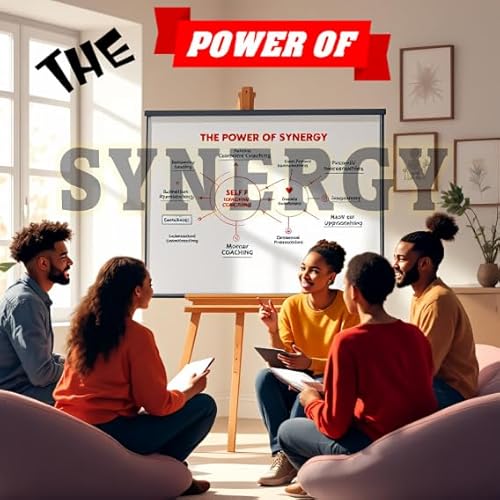
『The Power of Synergy, June 1, 2026』のカバーアート

The Power of Synergy, June 1, 2026

The Power of Synergy, June 1, 2026

無料で聴く

ポッドキャストの詳細を見る
The Power Of Synergy with Gabrielle Cardona The Human Factor: Technology, Personality, Connection, and the Power of Synergy Gabrielle Cardona Opens the Call-In Coaching Show In this episode of The Power of Synergy, host Gabrielle Cardona introduces the program as a call-in advice show focused on life and relationships. She explains that she normally charges for individual coaching, but the show gives listeners a chance to receive practical advice at no cost. Gabrielle describes herself as a relationship coach with more than 20 years of experience and says her work focuses on teaching people what is right about them rather than labeling what is wrong. Coaching People Toward What Works Gabrielle recalls several early coaching experiences, including clients ranging from a 12-year-old girl to a 67-year-old man who wanted to learn how to be happy. She also tells the story of meeting her first client, a district attorney, in a coffee shop. When he asked why his life looked perfect on paper but he still was not happy, Gabrielle used personality-function language to explain that his career required too much social interaction and not enough time for his natural introverted intuition. She uses the story to show that many people are not broken or mentally ill; they may simply be living in ways that conflict with their nature. Technology and the Loss of Human Connection The central theme of the episode is what Gabrielle calls the human factor. She argues that technology and social media have made people more disconnected, less trusting, less self-aware, and less capable of healthy face-to-face conversation. Gabrielle says social media is often anti-social because people say things online they would not say in person if they had to be accountable. She asks listeners to consider whether technology has improved their relationships or weakened their ability to relate directly to others. The Computer Gender Joke and Human Accountability Gabrielle shares a joke from her oldest son about whether a computer is more like a man or a woman. She uses the joke not only for humor, but also to illustrate how people project their frustrations and misunderstandings onto technology and onto each other. Her larger point is that tools can be useful, but they become toxic when people use them to avoid accountability, direct communication, and genuine human interaction. She argues that power, influence, and responsibility must go together. No Neutral Energy and No Inertia Gabrielle introduces two principles of human interaction. First, she says there is no neutral energy: people either have a positive or negative effect on those around them. Second, she says there is no inertia in relationships: people are either moving toward one another or away from one another. When people move together in a healthy way, she says they can synchronize and create synergy, empowering each other rather than merely adding to each other. When they remain together in negative energy, they can end up hurting each other. Personality Function and Daily Alignment Gabrielle then explains personality function using Myers-Briggs-style language, focusing on dominant, auxiliary, tertiary, and inferior functions. She gives the example of her husband as an ESTP, explaining that his dominant function is extroverted sensing, while his auxiliary function is introverted thinking. She says this means he thrives through hands-on, physical, people-oriented activity, but needs solitude when making logical decisions. Gabrielle uses this example to show that people can understand themselves and others better when they know which activities energize them and which ones drain them. Matching Work to Nature Through the ESTP example, Gabrielle explains that different people need different kinds of daily activity to stay healthy. Some need physical, sensory interaction with people; others need quiet reflection, analysis, or solitary work. She says conflict in relationships often arises when people expect others to function the same way they do. By understanding someone’s natural pattern, people can offer love in more useful ways, such as giving someone space to think rather than taking their need for solitude personally. Humans, Animals, and Emotional Substitutes Gabrielle also discusses what she sees as the growing tendency to substitute animals, sex toys, or technology for human relationships. She says animals can provide comfort and companionship, but they cannot fully replace human emotional connection. She cautions that when people demand from animals what only humans can provide, they may be using the animal to fill a deeper relational or spiritual void. For Gabrielle, people need real human bonds, not only substitutes that cannot truly reciprocate on the same level. Laughter, Connection, and the Chemistry of Happiness Gabrielle talks about happiness chemistry through the acronym DOSE: dopamine, oxytocin, serotonin, and endorphins. She says two human experiences can release...
adbl_web_anon_alc_button_suppression_t1
まだレビューはありません