エピソード

  • HELP - My Loved One Needs More care!
    2026/08/05

    Send us Fan Mail

    Where Do I Take My Child or Loved One Who Needs More Care?

    What if we tried all the meds and weekly treatments, and it's no longer enough?

    In this episode, Heleen Woest sits down with Larisa Klein, MA, an Advanced Treatment Placement Specialist, to unpack one of the most terrifying moments a family can face: realizing their child or loved one needs more care than outpatient therapy can provide.

    IOP. PHP. Residential. Detox.
    The options feel overwhelming, and the stakes couldn’t be higher.

    Larisa’s entire role is guiding families and clinicians through that wall. She has personally visited and vetted programs across the country. She isn’t guessing. She knows.

    In this episode, we cover:

    • What a Treatment Placement Specialist actually does — and why their help is free
    • The difference between IOP, PHP, residential care, and detox
    • How to know which level of care someone truly needs
    • Why 41% of people with co‑occurring disorders receive no treatment
    • How the Stages of Change model affects timing (and why pushing too hard backfires)
    • What real trauma‑informed care looks like, beyond surface behavior
    • When outpatient wrap‑around teams aren’t enough

      Connect with Larisa Klein, MA
      Advanced Treatment Placement Specialist
      Larisa.Klein@AcadiaHealthcare.com
    • Visit Heleen's Blog to learn more about this topic and the research behind it: https://www.lifesolutions.io/blog/

    • Watch the video version of this episode on YouTube: https://www.youtube.com/@heleenwoest/videos

    • Explore upcoming topics that are dropping soon on The Missing Piece: https://www.lifesolutions.io/podcast/
    続きを読む 一部表示
    49 分
  • Dying for Sex
    2026/07/14

    Send us Fan Mail

    Content Warning: This episode contains explicit discussions about sex, childhood sexual abuse, BDSM, and death. Listener discretion is advised.

    Today we are talking about the FX mini-series Dying for Sex, based on the true story of Molly Kochan. After a terminal breast cancer diagnosis, Molly realizes she has never had an orgasm with a partner. She leaves her marriage and goes on a wild journey of sexual self-discovery before she dies. But this story is about so much more than sex—it is a profound look at childhood sexual abuse, dissociation, and what it takes to actually stay in your body and experience true intimacy.

    Host Heleen Woest is joined by Certified Sex Therapist Melinda Arnold to unpack the clinical and psychological themes of the show. We explore why dissociation is such a massive barrier to connection, how gender roles keep us from honesty, and the surprising ways that BDSM and consensual power exchange can help survivors reclaim their bodies and their absolute right to say "no."

    We also dive into the existential aspects of dying, the beauty of platonic love, and the crucial role of somatic work in healing. For those who don't have the stomach to watch the explicit series, we made this episode so you can learn from it without actually having to watch it.

    Show Notes Links:• Melinda Arnold's Bio & Contact: https://www.waypointpdx.com/melindaarnold

    • Visit Heleen's Blog to learn more about this topic and the research behind it: https://www.lifesolutions.io/blog/

    • Watch the video version of this episode on YouTube: https://www.youtube.com/@heleenwoest/videos

    • Explore upcoming topics that are dropping soon on The Missing Piece: https://www.lifesolutions.io/podcast/
    続きを読む 一部表示
    55 分
  • The Epidemic of Family Estrangement
    2026/07/11

    Send us Fan Mail

    Family estrangement is a silent epidemic leaving a trail of devastation in its wake. In this episode, Heleen Woest, LPC, sits down with fellow therapist and friend Felicia Wallberg, LPC, to unpack the rising tide of young adults cutting ties with their parents — and the profound grief it leaves on both sides.

    Together, they explore the emotional dialect gap between generations, how modern trauma language and attachment theory are reshaping the way adult children interpret their childhoods, and why parents who genuinely tried their best are often the ones being cut off. They also tackle the social media trend of "you don't owe your parents anything," the paradox of staying bonded to abusive parents while estranging from imperfect ones, and what repair can actually look like when both sides are willing.

    Whether you are a therapist holding space for clients on either side of this divide, a parent stuck in complicated grief, or an adult child exhausted from trying to be heard — this conversation offers compassion, nuance, and practical guidance.

    This is Part 1 of a multi-part series. Stay tuned for future episodes featuring therapists from younger generations who share their perspectives on navigating best practices from both sides of the divide.

    Resources & Links

    Dr. Joshua Coleman — Rules of Estrangement (book recommendation)

    Felicia Wallberg's bio: https://www.waypointpdx.com/feliciawallberg

    Support Groups for Parents of estranged Adult Children (launching Fall 2026): https://www.waypointpdx.com/groups


    • Visit Heleen's Blog to learn more about this topic and the research behind it: https://www.lifesolutions.io/blog/

    • Watch the video version of this episode on YouTube: https://www.youtube.com/@heleenwoest/videos

    • Explore upcoming topics that are dropping soon on The Missing Piece: https://www.lifesolutions.io/podcast/
    続きを読む 一部表示
    48 分
  • PART ONE: Addiction - Video Games and Screens
    2026/06/30

    Send us Fan Mail

    Guest: Dillon Robertson, LPC:
    Email: Dillon@waypointPDX.xom
    Bio: https://www.waypointpdx.com/dillon-robertson

    In PART ONE, we get into video game and screen addiction. Also tune in for PART TWO where we will talk about Pornography and the different and cutting edge treatments for these behavioral and digital addictions.

    35% of people with Internet Gaming Disorder also have ADHD. The neurodivergent brain is wired to seek dopamine - and screens deliver it faster than anything else in human history.

    What if the addiction isn't the problem at all, but a symptom of a brain that was never properly understood?

    Today, we are diving into the complex, often misunderstood world of behavioral and digital addictions.


    Research on Video Game Addiction

    • Systematic review & meta-analysis (2023) – Epidemiology and effects of video game addiction. Link: ScienceDirect
    • Gaming disorder & executive functioning (2024) – Meta-analytic structural equation modeling. Link: ScienceDirect
    • Longitudinal risk profiles (2026) – Changes in gaming disorder risk over time. Link: ScienceDirect


    Violent Video Games & School Shootings
    Consensus:

    • APA Task Force: Violent video games show small, short-term increases in aggression, not real-world violent crime or school shootings. Link: APA Task Force Report
    • Time-series analyses: No evidence linking violent video games to homicides or aggravated assaults; some data suggest violent crime decreases as violent gameplay increases. Link: Markey et al., 2015
    • Racial stereotype research: Media more likely to blame video games when shooters are white, despite lack of evidence. Link: Markey et al., 2019
    • Cross-sectional study: Violent gameplay associated with higher odds of weapon carrying, but findings are correlational and require caution. Link: CDC study (2014)

    TREATMENTS:
    We will talk more about the treatment options for these addictions.
    ADHD Medication, Ketamine-assisted psychotherapy, and GLP-1

    LINKS

    Learn more about Dillon:
    https://www.waypointpdx.com/dillon-robertson

    • Visit Heleen's Blog to learn more about this topic and the research behind it: https://www.lifesolutions.io/blog/

    • Watch the video version of this episode on YouTube: https://www.youtube.com/@heleenwoest/videos

    • Explore upcoming topics that are dropping soon on The Missing Piece: https://www.lifesolutions.io/podcast/
    続きを読む 一部表示
    55 分
  • Everything NEURODIVERGENT - Trauma of Misdiagnosis or Late Diagnosis
    2026/06/10

    Send us Fan Mail

    Guest: Rachel Ward, PMHNP

    Do not miss this important information on the latest studies in Neurodivergence.

    We talk with psychiatric nurse practitioner Rachel Ward about why ADHD and autism are so often misread as anxiety, depression, or personality disorders and what that costs people over years of care. We break down dopamine, “no brakes” emotional reactivity, and how better testing and better relationships can finally match treatment to the actual brain in front of us.
    • neurodivergence misdiagnosis in adults, especially women and AFAB clients
    • ADHD as attention dysregulation, not a character flaw
    • why SSRIs can cause emotional flattening for some neurodivergent patients
    • how stimulants can create a pause between emotion and reaction
    • the “anxiety buddy” pattern of running on adrenaline and urgency
    • ADHD and autism comorbidity and family-line patterns
    • using Creyos testing to map executive function strengths and gaps
    • pharmacogenetic testing, medication metabolism, COMT markers, hormone pathways
    • alternatives when families are not ready for stimulants, including saffron and guanfacine
    • addiction as comorbid with neurodivergence and treating core symptoms first
    • differentiating trauma from neurodivergence and teasing out borderline overlap

    🔗 Links & Resources:

    Connect with Rachel Ward: https://www.somethinghumanhealth.com


    • Visit Heleen's Blog to learn more about this topic and the research behind it: https://www.lifesolutions.io/blog/

    • Watch the video version of this episode on YouTube: https://www.youtube.com/@heleenwoest/videos

    • Explore upcoming topics that are dropping soon on The Missing Piece: https://www.lifesolutions.io/podcast/
    続きを読む 一部表示
    53 分
  • Sexual Wholeness After Trauma
    2026/06/01

    Send us Fan Mail

    Healing from sexual trauma can feel like graduating from the hardest work of your life, until you start dating again, enter a new relationship, or try to build intimacy with someone safe and kind and your body still reacts like danger is near. That confusing gap is what we name and unpack with Melinda Arnold, a certified sex therapist at Waypoint Counseling Services. We talk in plain language about why “I’m doing better” can still collide with desire, touch, arousal, and vulnerability, and why that doesn’t mean you failed or therapy didn’t work.

    We walk through a framework that goes beyond trauma recovery as symptom control. Melinda explains the arc from trauma to regulation and then to reclamation. Regulation is learning your nervous system, noticing triggers early, and building enough safety to stay present. Reclamation is bigger: reclaiming sexual identity, pleasure, and choice, especially for survivors who quietly assume a satisfying, connected sex life is not in the cards. We explore what it can look like to move toward sexual wholeness with patience, consent, and honest communication, rather than pushing through or shutting down.

    We also dig into “sexual disruption” and why sexual pain and fear are not always rooted in a single overt assault. Purity culture, religious shame, and other high-control environments can teach people to equate arousal and desire with immorality, discourage curiosity, and make belonging feel conditional. We talk about how those messages shape the body and relationships over time, and why rebuilding self-knowledge and critical thinking is a core part of healing.

    If this conversation resonates, subscribe, share it with someone who needs a hopeful framework, and leave a review. What message about sex did you grow up with, and how is it still affecting you today?


    🔗 Links & Resources:
    · Connect with Melinda: https://www.waypointpdx.com/melindaarnold


    • Visit Heleen's Blog to learn more about this topic and the research behind it: https://www.lifesolutions.io/blog/

    • Watch the video version of this episode on YouTube: https://www.youtube.com/@heleenwoest/videos

    • Explore upcoming topics that are dropping soon on The Missing Piece: https://www.lifesolutions.io/podcast/
    続きを読む 一部表示
    47 分
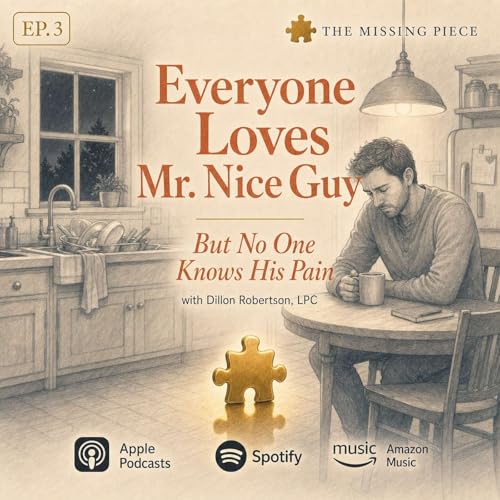
  • Everyone Loves Mr. Nice Guy (But No One Knows His Pain)
    2026/06/01

    Send us Fan Mail

    In this episode of The Missing Piece, we dive deep into the "Mr. Nice Guy" profile with our guest, Licensed Professional Counselor Dillon Robertson. We discuss the men who have spent their entire lives showing up for everyone else while neglecting their own needs. We clarify that this isn't a weakness, but a learned behavior—one that can quietly erode relationships and build deep-seated resentment. Listen in to discover what this pattern looks like, where it originates, and actionable steps to break the cycle while remaining true to yourself. Connect with Us:

    · Guest Bio & Contact (Dillon Robertson ): https://www.waypointpdx.com/dillon-robertson

    · Support Groups: https://www.lifesolutions.io/groups

    · Blog: https://www.lifesolutions.io/blog

    · Podcast Page: https://www.lifesolutions.io/podcast


    • Visit Heleen's Blog to learn more about this topic and the research behind it: https://www.lifesolutions.io/blog/

    • Watch the video version of this episode on YouTube: https://www.youtube.com/@heleenwoest/videos

    • Explore upcoming topics that are dropping soon on The Missing Piece: https://www.lifesolutions.io/podcast/
    続きを読む 一部表示
    46 分
  • Mystery Illness - "It's all in your head"
    2026/06/01

    Send us Fan Mail

    Guest: Rachel Ward, PMHNP

    Have you ever known something was wrong with your body, only for doctors to tell you "you're fine" or "it's just anxiety"?

    In this episode of The Missing Piece, psychiatric nurse practitioner Rachel Ward shares her personal and professional experience with mystery illnesses. We discuss the frustration of being dismissed by the medical system and validate the experiences of those who feel unheard.

    Whether you're a patient seeking answers or a professional looking to better support your clients, this episode is for you.

    🔗 Links & Resources:

    Connect with Rachel Ward: https://www.somethinghumanhealth.com

    • Visit Heleen's Blog to learn more about this topic and the research behind it: https://www.lifesolutions.io/blog/

    • Watch the video version of this episode on YouTube: https://www.youtube.com/@heleenwoest/videos

    • Explore upcoming topics that are dropping soon on The Missing Piece: https://www.lifesolutions.io/podcast/
    続きを読む 一部表示
    38 分