エピソード

  • S9 Ep8: Johns Hopkins President Emeritus William Brody on Leading with Uncommon Sense
    2026/06/18
    Dean Lloyd Minor welcomes William Brody, MD, PhD, president emeritus of Johns Hopkins University, for a conversation about leadership, critical thinking, and lessons from his career spanning academia, medicine, and entrepreneurship. They discuss insights from Brody's 2026 book "Uncommon Sense: Rethinking Ordinary Problems in Extraordinary Ways," including the roles of preparation and opportunity in success, the importance of authenticity in leadership and the value of building meaningful relationships over collecting accolades. They also explore Brody’s philosophy as president of Johns Hopkins, as well as the benefits of questioning conventional wisdom.
    続きを読む 一部表示
    42 分
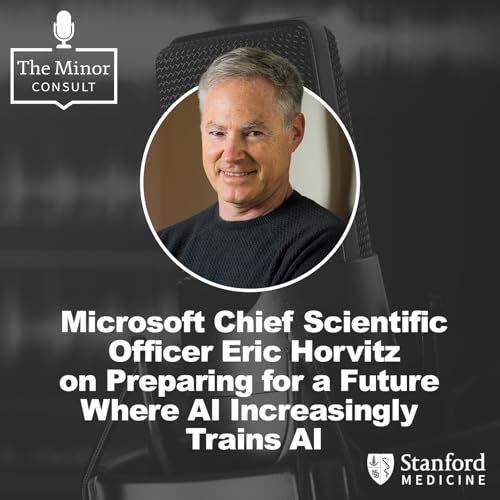
  • S9 Ep6: Microsoft Chief Scientific Officer Eric Horvitz on Preparing for a Future Where AI Increasingly Trains AI
    2026/04/22
    Dean Lloyd Minor welcomes Eric Horvitz, MD, PhD, chief scientific officer at Microsoft, for a conversation about the rapid evolution of AI and its implications for how we think, work, and make decisions. They discuss the accelerating pace of AI advances, the need to safeguard human judgment and agency, and the growing role of these technologies in health care — from easing administrative burden to supporting complex clinical decisions. They also explore how AI is reshaping scientific discovery and what it will take to guide its development responsibly.
    続きを読む 一部表示
    41 分
  • S9 Ep5: Physician-Journalist Dhruv Khullar on How AI Is Rewriting the Clinician and Patient Experience
    2026/02/18
    Dean Lloyd Minor welcomes Dhruv Khullar, MD, contributing writer to The New Yorker and associate professor at the Weill Cornell School of Medicine, for a conversation about AI’s evolving role in health care. They discuss its potential to enhance diagnosis, reduce administrative burden, improve the patient experience, and accelerate drug discovery, while also examining the risks of overreliance and clinician de-skilling. They also explore how AI will reshape medical education, and why communication, trust, and the enduring practice of healing will remain central to the future of medicine.
    続きを読む 一部表示
    26 分
  • S9 Ep4: Lucy Shapiro’s Big Idea: Using Cell Biology to Fight Superbugs
    2026/01/14

    In this episode of the Big Idea series, Dean Lloyd Minor welcomes Lucy Shapiro, PhD, for a conversation about how her unconventional thinking unlocked new insights about how bacterial cells behave, fundamentally changing how scientists understand cells and laying the groundwork for systems biology. They explore how her research informed new approaches to treating infections and other diseases, and how these advances opened new paths for developing antibacterial and antifungal drugs to fight superbugs. They also discuss the biological threat posed by antimicrobial resistance and ways that the global community can prepare for the next pandemic.

    続きを読む 一部表示
    36 分
  • S9 Ep3: Stanford Graduate School of Business Dean Sarah Soule on What Makes a Great Leader
    2025/12/10
    Dean Lloyd Minor welcomes Sarah Soule, Dean of the Stanford Graduate School of Business, for a conversation about how leaders, organizations, and the GSB itself are evolving in a rapidly changing world. During the GSB’s centennial year, they explore the school’s leadership model — emphasizing self-awareness, perspective taking, communication, and deep listening — and how its entrepreneurial culture has inspired alumni whose bold ideas became transformative companies. They also discuss the future or organizational behavior and her vision for the school’s next chapter, including new initiatives in investing, leadership development, and the future of work and AI.

    続きを読む 一部表示
    39 分
  • S9 Ep2: Eric Topol’s Big Idea: Controlling How Well We Age
    2025/11/12
    In this episode of the Big Idea series, Dean Lloyd Minor welcomes Eric Topol, MD, author of Super Agers: An Evidence-Based Approach to Longevity, for a conversation about why immune health may be more important than genetics in promoting healthy aging. They explore how lifestyle factors like sleep, diet, and exercise strengthen the body’s defenses, shaping longevity beyond our genes. They also discuss how emerging technologies, from wearable sensors to genetic risk tools, could make personalized prevention a reality for all.
    続きを読む 一部表示
    31 分
  • S9 Ep1: Karl Deisseroth’s Big Idea: Decoding Brain Circuits to Understand the Human Mind
    2025/10/15
    In an episode of his Big Idea series, Dean Lloyd Minor welcomes Stanford neuroscientist Karl Deisseroth, MD, PhD, for a conversation about how his groundbreaking research is reshaping our understanding of the brain and the experiences that define us as human. They delve into the origins of optogenetics — a revolutionary technology Deisseroth pioneered using light to map how the brain drives emotion and behavior — and they explore his vision for Stanford Medicine’s Human Neural Circuitry research program. Deisseroth also reflects on the beauty of scientific discovery, the role of humility in research, and how advances in brain science are opening new avenues for understanding and treating mental illness.

    続きを読む 一部表示
    41 分