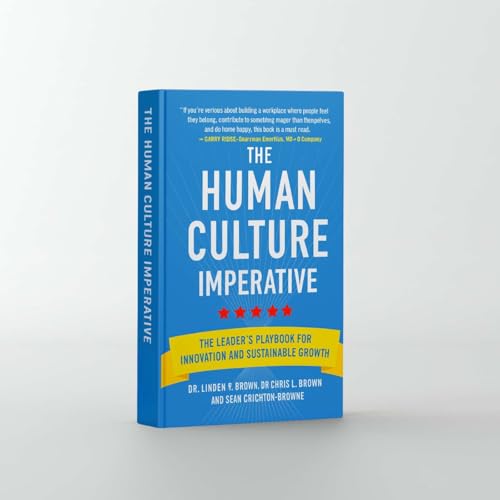
• Chapter 12: What’s Next? The Risk of Doing Nothing
    2025/09/22

    This chapter centers on the importance of implementing a customer-focused, human-centered culture for achieving sustainable business growth. It outlines a practical approach called the Engagement Framework, which integrates customers, employees, and leaders, supported by the Market Responsiveness Index (MRI) measurement tool for gauging performance and growth. The sources conclude with actionable steps for leaders, such as gathering teams and launching an MRI pilot, and include extensive endnotes, author biographies for Linden Brown, Chris L. Brown, and Sean Crichton-Browne

    続きを読む 一部表示
    13 分
  • Chapter 11: The Human Imperative, Leading in the Age of Disruption, Technology, and AI - Have We Lost Our Way to Technology?
    2025/09/16

    This chapter emphasizes the crucial role of humanity in an era dominated by technology and artificial intelligence. It argues that while AI offers immense potential for efficiency and innovation, it should serve to amplify human capabilities rather than replace them, drawing parallels to the story of a lighthouse keeper and a cyclist using an electric bike. The text highlights how customer-centric cultures are better positioned to integrate AI successfully by fostering trust, empowering employees, and aligning technology with genuine customer needs. Ultimately, effective leadership in this evolving landscape means guiding "blended teams" of humans and AI, prioritizing human values, critical thinking, and emotional intelligence to drive sustainable growth and meaningful progress. This podcast has been created using Google Notebook LM.

    続きを読む 一部表示
    20 分
  • Chapter 10: Learning from Human Experiences Stories to Ignite - The Bad, The Good, and The Ugly
    2025/09/16

    This chapter emphasizes the profound role of human experiences and storytelling in shaping effective leadership and resilient organizational cultures. It illustrates how empathy, vulnerability, and genuine connection—derived from both positive achievements and significant failures—are more impactful than mere facts or figures in fostering trust and inspiring action. The narratives highlight that prioritizing people (employees and customers) over rigid policies or short-term gains, through transparent communication and a commitment to cultural transformation, ultimately drives sustainable success and loyalty in businesses. This podcast has been created using Google Notebook LM.


    続きを読む 一部表示
    18 分
  • Chapter 9: Building a Global Network of Certified Experts - Igniting a Worldwide Force for Customer-Centric Change
    2025/09/16

    This chapter, titled "Building a Global Network of Certified Experts," highlights the MarketCulture Academy's mission to foster customer-centric cultures through various educational programs, particularly emphasizing the Market Responsiveness Index (MRI) methodology. The chapter showcases numerous leaders and innovators who champion customer experience (CX), including Shep Hyken, Diane Magers, Ian Golding, and Vivek Bhaskaran, by sharing their individual journeys and insights. Each expert's story underscores the pivotal role of internal culture in achieving customer satisfaction and business growth, demonstrating how they leverage the MRI to measure and improve organizational responsiveness. Ultimately, the text emphasizes that authentic leadership, cultural alignment, and strong community collaboration are critical for driving sustainable, human-focused customer-centric transformation worldwide. This podcast has been created using Google Notebook LM.


    続きを読む 一部表示
    16 分
  • Chapter 8: The Leader’s Playbook - Making Customer Culture a Daily Habit
    2025/09/16

    This chapter, titled "The Leader's Playbook," emphasizes that customer-centricity is not merely a slogan, but a daily habit that must be embedded into an organization's DNA through consistent leadership and repeatable actions. It highlights the importance of "customer muscle memory," a concept built through four vital sources of customer reality—asking customers, bringing in employee stories, direct experiences, and deep listening—to ensure leaders remain connected to customer experiences as a necessity, not a luxury. The text introduces six practical exercises designed to integrate customer focus into daily routines, such as customer engagement meetings, storytelling, culture huddles, visual symbols, changing roles, and customer immersion programs. These activities aim to foster empathy, collaboration, and strategic alignment across all levels of an organization, ultimately driving engagement, loyalty, and sustainable growth by consistently putting the customer first. This podcast was created using Google Notebook LM.

    続きを読む 一部表示
    21 分
  • Chapter 7: Strategic and Tactical Initiatives - The Glue That Holds Us Together
    2025/09/16

    This chapter outlines how strategic and tactical initiatives are crucial for an organization's long-term success, emphasizing that both overarching vision and daily actions must align. It introduces eight behavioral disciplines—customer insight, customer foresight, competitor insight, competitor foresight, peripheral vision, empowerment, collaboration, and strategic alignment—as practical frameworks for driving change. The text provides four essential practices and subsequent tactical behaviors for each discipline, offering a guide for businesses to cultivate a customer-centric culture. Ultimately, the goal is to transform organizations by fostering adaptability, employee engagement, and unified efforts towards sustained growth and competitive advantage. This podcast was created using Google Notebook LM.

    続きを読む 一部表示
    19 分
  • Chapter 6: The Higher Purpose Beyond Profit - The Human Legacy of Leaders
    2025/09/11

    This chapter explores the concept of leadership focused on a higher purpose beyond profit, emphasizing the creation of a human legacy. It introduces "path-benders" as leaders who reshape trajectories by clarifying vision, removing obstacles, and providing support, ultimately building a high-engagement culture and a new generation of human-first leaders. The text provides examples of such leaders from various industries, illustrating how they foster a human multiplier effect through their values and actions. It also highlights eight non-financial benefits of a customer-centric culture, stressing that these contribute to long-term value and competitive advantage. Ultimately, the chapter argues that a leader's most enduring legacy is human, not financial, driven by shared values and ethical behavior. This podcast has been created using Google Notebook LM.

    続きを読む 一部表示
    23 分
  • Chapter 5: How Human-Centric Organisations Drive Exponential Growth - I'll Believe It When I see It
    2025/09/10

    This chapter of "The Human Culture Imperative" presents a compelling argument for human-centric organizational cultures as a primary driver of exponential growth. It highlights two distinct leadership perspectives on culture change: those who demand evidence before belief and those who believe in order to see the potential for transformation. The chapter introduces the MRI (MarketCulture Readiness Index) as a crucial tool for measuring customer-centric behaviors and aligning culture with strategic goals. Through 14 detailed case studies from diverse industries like telecommunications, healthcare, and finance, the text illustrates how companies used the MRI to identify cultural challenges, foster employee engagement and collaboration, and ultimately achieve significant improvements in customer satisfaction, revenue, and market share. Ultimately, the source asserts that leadership commitment, measurable data, and compelling narratives are essential for cultivating resilient, market-responsive cultures that lead to sustained performance. This podcast was created using Google Notebook LM.

    続きを読む 一部表示
    17 分