エピソード

  • Structural Engineering Explained: Foundations, Costs And Cracks
    2026/08/06

    Why does your structural engineer cost you more than expected?

    Engineering fees often take the blame, but the real cost drivers lie elsewhere.

    This episode unpacks what a structural engineer does on a residential project, from foundations and load paths to deflection and embodied carbon. We look at the design decisions, not the fees, that push steel tonnage and construction costs up.

    We also cover underpinning, why it is one of the most expensive interventions a homeowner can make, and how to tell which cracks in a wall need attention and which are simply a house settling. A £40 soil test can save thousands off a foundation bill.

    Get these decisions right and a project runs efficiently. Get them wrong and the cost, and the carbon, only grows.

    "A good engineer should be trying to find efficient solutions." - Alison Wallis

    You’ll hear about:

    • What a structural engineer does
    • Which building elements engineers design
    • When engineers join a residential project
    • Why efficient load paths cut costs
    • Explaining deflection in plain terms
    • How architects and engineers share options
    • Design decisions that drive up costs
    • Beam shape versus material weight costs
    • Foundations, clay soil, and tree roots
    • Embodied carbon in concrete and steel
    • Cheap tests that reduce foundation depth
    • Underpinning costs and cracks worth worrying about

    Connect with Alison:

    LinkedIn - https://www.linkedin.com/in/alison-wallis-a5302919/

    Weave Engineers - https://www.weaveengineers.co.uk/

    Connect with us:

    Tima Patel - https://www.linkedin.com/in/tinapatel/

    Bart Kolosowski - https://www.linkedin.com/in/bartkolosowski/

    Produced by Between Tracks - https://www.betweentracks.com/

    続きを読む 一部表示
    58 分
  • Party Wall Act Explained: What Homeowners Need to Know
    2026/07/23

    Do you know if your renovation actually needs a party wall notice?

    Most homeowners assume the Party Wall Act exists to stop them building.

    In this episode, we unpack the Party Wall Act with a chartered party wall surveyor, covering exactly which works trigger it, from loft conversions and rear extensions to basement digs and chimney breast removals. We explain the notice periods, the difference between consent and a formal award, and why early, open conversations with neighbours nearly always save time and money.

    We also get into the practical traps: building too far from the boundary line, serving notice before planning permission is secured, and letting too many surveyors get involved on a single job. The episode sets out how the award process actually works, who pays for it, and what genuinely causes delays.

    Get the process right and the act works in your favour. Get it wrong, and a simple extension can turn into a costly, drawn-out dispute.

    "Consent trumps everything" in the party wall process. — Jonny Callard

    You’ll hear about:

    • What the Party Wall Act actually covers
    • Notice periods for different types of work
    • Why consent overrides the statutory process
    • Common works that trigger the act
    • The three and six metre excavation rules
    • Party structures in flats and leasehold buildings
    • Why moving closer to boundaries can help
    • Sharing a wall with your neighbour
    • How the surveyor and award process works
    • The role of the third surveyor
    • Who pays for surveyors and consultants
    • What really causes party wall delays

      Connect with Jonny Callard:

      LinkedIn - https://www.linkedin.com/in/jonnycallard/

      Thomas & Thomas Surveyors - https://ttsurveyors.com/

      Connect with us:

      Tima Patel - https://www.linkedin.com/in/tinapatel/

      Bart Kolosowski - https://www.linkedin.com/in/bartkolosowski/

      Produced by Between Tracks - https://www.betweentracks.com/

    続きを読む 一部表示
    58 分
  • The Hidden Costs Quietly Killing Your Renovation Budget
    2026/07/10

    Are your renovation decisions quietly draining your budget?

    The advice to get a structural survey is well established. The advice to get professional input before you even make an offer is not.

    In this episode, we dig into the decisions that add cost without improving your home. Buying a property without the right professional input, skimping on surveys, engaging contractors before there is anything to price against. We cover what to check before you purchase, why a measured survey is non-negotiable, and how developing the brief properly shapes both the design and the budget.

    We also look at how contract terms, unrealistic timelines and late design decisions quietly inflate construction costs in ways that are almost impossible to see coming.

    Get these decisions wrong and you will spend more, build less, and end up with a home that does not work for you. Get them right and every pound goes further.

    "The best projects are done in partnership." - Uwe Schmidt-Hess

    You’ll hear about:

    • Why buying without advice adds hidden cost
    • Planning history and freeholder risks
    • Building Safety Act and tall buildings
    • Pre-purchase architect advice explained
    • Why cheap measured surveys cost more
    • How early contractor quotes mislead you
    • The danger of skipping cost consultants
    • Contracts, bonds and unrealistic timelines
    • Brief development versus chasing an aesthetic
    • On-site changes and abortive work costs
    • Why partnership makes projects cost-effective

    Connect with Uwe Schmidt-Hess:

    LinkedIn - https://www.linkedin.com/in/uwe-schmidt-hess-4a868383/

    Patalab - https://patalab.com/

    Connect with us:

    Tima Patel - https://www.linkedin.com/in/tinapatel/

    Bart Kolosowski - https://www.linkedin.com/in/bartkolosowski/

    Produced by Between Tracks - https://www.betweentracks.com/

    続きを読む 一部表示
    56 分
  • Why Your Design and Budget Must Evolve Together
    2026/06/12

    Should budget or design come first?

    The assumption is that a design can always be scaled back once the costs land.

    We explore why setting a budget and developing a design in isolation is one of the most costly mistakes in residential projects. We cover what happens when design runs ahead of budget, why early-stage cost planning is essential, and how hidden costs, from structural work and party wall obligations to long lead-time materials and contractor delays, can derail even well-resourced projects.

    We also look at why the full project team, including quantity surveyors and contract administrators, should be engaged from the outset, and why timely decision-making is as critical as the design itself.

    Get this wrong and you face a tender bomb. Get it right and your project stays coherent from brief to build.

    "There's nothing worse than a tender bomb." - George Charalambous

    You’ll hear about:

    • Budget vs design: the chicken and egg
    • Why cost and scope must evolve together
    • Hidden costs beyond the build price
    • What happens when design outruns budget
    • Early-stage cost plans and QS involvement
    • Structural work and its cost impact
    • Planning consultants and associated fees
    • Party wall: the most-overlooked cost
    • Long lead times and material delay costs
    • Timely decision-making on site
    • Choosing the right contractor: cost vs value
    • When to prioritise specialist expertise

    Connect with George Charalambous:

    LinkedIn - https://www.linkedin.com/in/george-charalambous-mrics/

    T&T Surveyors - https://ttsurveyors.com/

    Connect with us:

    Tima Patel - https://www.linkedin.com/in/tinapatel/

    Bart Kolosowski - https://www.linkedin.com/in/bartkolosowski/

    Produced by Between Tracks - https://www.betweentracks.com/

    続きを読む 一部表示
    49 分
  • How Home Projects Waste Money Before Work Starts
    2026/05/21

    Are you spending money before your project has even begun?

    The assumption is that the sooner works start on site, the sooner the project is finished. In reality, a premature start is one of the fastest ways to waste significant money.

    We cover where the real pre-construction money traps are, from missing permissions and party wall awards to CIL charges, overcomplicated building management systems, and the VAT savings most homeowners never know to ask about.

    We also look at why cutting corners on fees and structural elements almost always costs far more than it saves.

    The right advice before a spade goes in the ground is not a cost. Getting it wrong almost certainly is.

    "You need checks and balances on bigger, more complex projects." - Sam Wiseman

    You’ll hear about:

    • Why rushing to start costs more
    • Getting the right team early
    • The true price of cutting fees
    • Hidden permissions people routinely miss
    • Party wall awards explained clearly
    • Risks of overcomplicated smart home systems
    • Spatial planning: building for how you live
    • Community Infrastructure Levy explained
    • VAT reductions most homeowners overlook
    • Why contracts protect everyone equally
    • What actually goes wrong on site
    • When a QS can save a stalled project

    Connect with Sam Wiseman:

    LinkedIn - https://www.linkedin.com/in/sam-wiseman-634ba313a/

    Stockdale Project Management & Quantity Surveying - https://stockdaleuk.com/

    Connect with us:

    Tima Patel - https://www.linkedin.com/in/tinapatel/

    Bart Kolosowski - https://www.linkedin.com/in/bartkolosowski/

    Produced by Between Tracks - https://www.betweentracks.com/

    続きを読む 一部表示
    53 分
  • An Architect's Guide to Getting Your Brief, Budget and Plan Right First
    2026/05/07

    Is your renovation idea as viable as you think it is?

    The figure in a homeowner's head and the layout they've settled on are rarely either accurate or final.

    We explore how to properly stress-test a project before it costs you serious money. We cover how the brief-writing process uncovers what you need, why hand-drawn sketches outperform any online room planner, and how to approach budget conversations honestly from day one.

    We also get into planning risk, building regulations, and the unexpected costs that regularly blindside homeowners who haven't done the groundwork. Fire consultants, redundant sewers, and trees in the garden are just some of the hidden factors that can reshape a budget before a spade goes in the ground.

    A great design doesn’t just look special it feels special; this episode will help you design the home you’re dreaming off.

    "You can tell a great space when you walk into it." — Andrew Dobson

    You’ll hear about:

    • Why the brief rarely starts clearly
    • Using sketches to stress-test ideas
    • Hand-drawn sketches versus online tools
    • Budget as control, not just aspiration
    • Why clients hide their real budget
    • Sizing extensions realistically from the outset
    • Assessing planning risk early
    • Building regulations and fire consultants
    • Hidden site constraints adding cost
    • When to bring in a QS or cost plan
    • Treating the existing house as an asset
    • The step-by-step design development process

    Connect with Andrew Dobson:

    LinkedIn - https://www.linkedin.com/in/andrew-dobson-architect/

    Instagram - https://www.instagram.com/andrewdobsonarchitects/

    Website - https://www.andrewdobsonarchitects.co.uk/

    Connect with us:

    Tima Patel - https://www.linkedin.com/in/tinapatel/

    Bart Kolosowski - https://www.linkedin.com/in/bartkolosowski/

    Produced by Between Tracks - https://www.betweentracks.com/

    続きを読む 一部表示
    44 分
  • How to Navigate the Planning System Without Fear
    2026/04/30

    Is the planning system really as unpredictable as everyone says?

    Plenty of homeowners treat a refusal as a catastrophe and an approval as a green light to break ground. Neither assumption holds up.

    We walk through the entire planning process from first principles. That means understanding whether your project needs full planning or permitted development, how to structure an application that makes it easy for a planning officer to say yes, and what a robust set of supporting documents looks like.

    We then get into what happens when things do not go to plan. Refusals come with reasons and those reasons are a roadmap. We weigh up resubmission against appeal, look at the real cost of each, and explain why front-loading surveys and preparation at planning stage almost always produces a faster, smoother project than rushing in underprepared.

    Only one in three planning appeals succeeds. Prepare properly at the start and you are unlikely to need one.

    "Starting early doesn't make you finish early." - Bart Kolosowski

    You’ll hear about:

    • Full planning vs permitted development explained
    • How to choose the right planning route
    • Pre-application advice: is it worth it?
    • Preparing a robust planning application
    • What happens when planning is refused
    • Resubmission vs appeal: cost and risk
    • Planning conditions that delay your start
    • Outbuildings and the 30m² controversy
    • Using permitted development as a fallback
    • Front-loading surveys and due diligence
    • Needs vs solutions: getting design right first
    • Why preparation is the only risk management

    Connect with us:

    Tima Patel - https://www.linkedin.com/in/tinapatel/

    Bart Kolosowski - https://www.linkedin.com/in/bartkolosowski/

    Mentioned Episodes:

    Planning Permission for Homes: Delays, Risks and How to Beat Them with Geoff Megarity - https://shorturl.at/WqqXw

    Is Permitted Development a Shortcut or a Risk for Homeowners? with Geoff Megarity - https://shorturl.at/6h05I

    Planning Permission Demystified: What Every Homeowner Needs to Know with Aaron Zimmerman - https://shorturl.at/ehERW

    Produced by Between Tracks - https://www.betweentracks.com/

    続きを読む 一部表示
    54 分
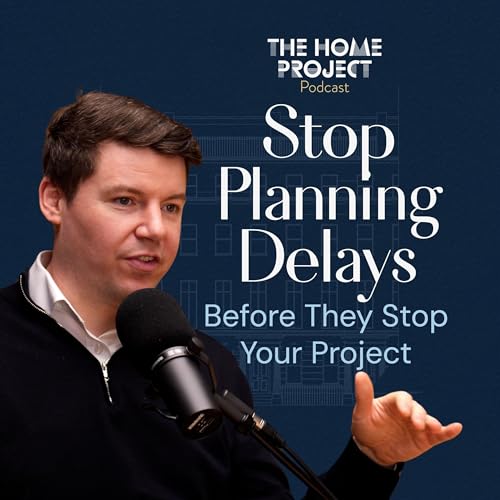
  • Planning Permission for Homes: Delays, Risks and How to Beat Them
    2026/04/23

    What if you could see every planning delay coming?

    The delays most homeowners fear are more predictable than they think.

    We sit down with Geoff Megarity, planning consultant at Bell Cornwell, to map out exactly where delays hide and what you can do to get ahead of them. From the validation checklist to ecology survey seasons, Geoff explains the preparation that separates a smooth five-month process from one that drags on for eighteen.

    We cover how to build a validation checklist that gets your application through the door, when pre-application meetings are worth the time, how to challenge planning conditions before they slow your build, and how a simple red, amber, green framework can help you assess risk at every stage.

    The right preparation means you go into construction with the right permission, the right conditions, and no costly surprises on the other side.

    “Death by survey is something that comes up quite often.” - Geoff Megarity

    You’ll hear about:

    • How the planning system creates delay
    • Why validation is the first real hurdle
    • Reports that are mandatory versus optional
    • Ecology surveys and seasonal timing risks
    • Biodiversity net gain and who it affects
    • How planning conditions add post-permission delay
    • Pre-commencement vs pre-occupation conditions
    • When pre-application meetings are worth it
    • How planning committees work and when to use them
    • Managing refusal risk and appeal strategy
    • Red, amber, green risk framework for homeowners
    • Banking a permission and amending later

    Connect with Geoff Megarity:

    Geoff Megarity at Bell Cornwell - https://www.bell-cornwell.co.uk/team/geoff-megarity/

    Bell Corwnell - https://www.bell-cornwell.co.uk/

    LinkedIn - https://www.linkedin.com/in/geoff-megarity-a075676a/

    Connect with us:

    Tima Patel - https://www.linkedin.com/in/tinapatel/

    Bart Kolosowski - https://www.linkedin.com/in/bartkolosowski/

    Produced by Between Tracks - https://www.betweentracks.com/

    続きを読む 一部表示
    1 時間 5 分