

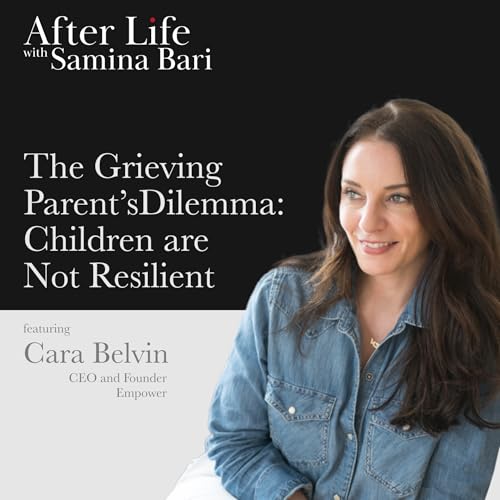
The Grieving Parent's Dilemma: Children are Not Resilient
カートのアイテムが多すぎます
カートに追加できませんでした。
ウィッシュリストに追加できませんでした。
ほしい物リストの削除に失敗しました。
ポッドキャストのフォローに失敗しました
ポッドキャストのフォロー解除に失敗しました

The Grieving Parent's Dilemma: Children are Not Resilient
-
ナレーター:
-
著者:
このコンテンツについて
In this episode of the After Life Podcast, Samina Bari sits down with Cara Belvin, founder and CEO of Empower, a nonprofit devoted to building community for children who've lost a parent. Cara opens up about her own experience of losing her mother at the age of nine, the "rules" she picked up about remaining silent, and how that isolation motivated her to help other children who have lost a parent. Together, Samina and Cara talk candidly about the myth about children's resilience, the weight placed on grieving families to "move on," and why empathy, support networks, and open conversation matter for real healing.
Cara explains how Empower's unique mentorship model helps young people feel less alone and gives the entire family permission to talk because the surviving parent doesn't have the bandwidth. The episode also highlights the ripple effects of grief through childhood, adolescence, and beyond - and how being surrounded by people who "get it" can be life-changing.
Key TakeawaysTrue healing is nurtured by empathy, mentorship, and connections - not by ignoring the loss or expecting kids to "be fine" after a set period of time.
Children of grief and trauma are not resilient, and adults who surround the bereaved family should forgo that thinking or expressing it as a platitude.
The weight of a parent's loss stays with children like a weight on their soul despite their outward appearance, and they feel different from others and isolated in their daily lives
Healing happens when grieving children see others who have lived through similar grief, especially peers who can share honest experiences and offer hope, or through community-based support and mentorship.
If the stories and insights from these episodes have touched you, I warmly invite you to continue the conversation with me at saminabari.com. There, you'll discover meaningful ways to share this work - whether by ordering copies for your office or community, gifting the book to someone in need, or inviting me to speak and ignite more of these essential conversations together.
On the site, you'll also find the latest updates about my book Don't Call Me Widow: How to Support Someone Who Has Lost Their Spouse.
Additionally, you can download a free resource I created, What to Do When You Don't Know What to Do.