

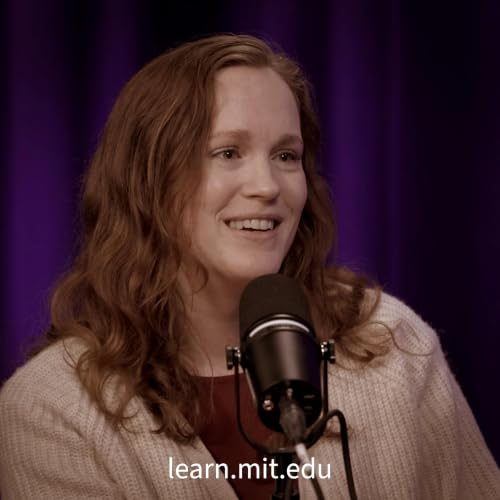
The Fundamentals of Understanding Cancer Genetics with Summer Morrill
カートのアイテムが多すぎます
カートに追加できませんでした。
ウィッシュリストに追加できませんでした。
ほしい物リストの削除に失敗しました。
ポッドキャストのフォローに失敗しました
ポッドキャストのフォロー解除に失敗しました

The Fundamentals of Understanding Cancer Genetics with Summer Morrill
-
ナレーター:
-
著者:
In this episode of the MIT Learn Beyond Biology podcast, Dr. Summer Morrill, a high school biology teacher with deep roots in cancer genetics from her PhD work at MIT, unpacks the complex topic of cancer. Summer shares how her personal family history shaped her interest in the field, why cancer is not one disease, and how fundamental biology research helps explain everything from DNA repair to tumor suppression in humans.
This conversation is both scientifically rich and deeply human. This episode represents the reality that cancer research is not only about cells and mutations, but also about families, mentorship, resilience, and the ongoing search for answers. Learn more about biology and genetics at learn.mit.edu.
Resources- 7.00x Introductory Biology course
- Video of this episode
Key Topics
- Why having the BRCA1 gene is usually a misunderstanding
- How inherited mutations can increase cancer risk
- Why cancer is not a single disease
- What the cell cycle is and how the process can go wrong
- The difference between oncogenes, tumor suppressors, and DNA repair genes
- How genetic testing and counseling can be empowering
- Why yeast is such a powerful model organism in cancer research
- What haploinsufficiency means and why it matters
- How curiosity, failure, and mentorship shape scientific discovery
- Why cancer research requires many different disciplines working together
Takeaways
Summer explains that cancer often develops through a combination of mutations, environmental exposure, and the body’s own normal processes of cell division and DNA repair. She also highlights why the idea of a simple cure is misleading: cancer involves many pathways, many tissues, and many biological checks and balances.A major theme of the conversation is balance. Too little activity in a gene can be harmful, but too much can also cause problems. Summer’s research on haploinsufficiency showed that the body’s systems are more delicate and interconnected than they first appear.The episode also emphasizes the value of curiosity and mentorship. From her professors to her advisor to her mentor Professor Angelika Amon, Summer’s path shows how the right people at the right time can shape a scientific career.