エピソード

  • 358 - Connected Waters - a Joint Conference in Winnipeg with Dr. Jérôme Marty of IAGLR & Dr. Kathryn Pieman of SCAS!
    2026/04/26

    On this weeks episode Brendan sits down with Dr. Jérôme Marty, Executive Director of the International Association of Great Lakes Research & Dr. Kathryn Peiman, Executive Director of the Society of Canadian Aquatic Sciences to discuss their upcoming joint conference in Winnipeg happening May 25-29th! The four day conference is being hosted by the International Institute of Sustainable Development - Experimental Lakes Area.

    The conference theme—Connected Waters: Bridging Communities & Ideas—reflects commitment to fostering dialogue across scientific, Indigenous, and local knowledge systems. It recognizes that healthy waters are sustained through relationships among diverse communities, disciplines, ecosystems, and ways of knowing, and it underscores the importance of collaboration in addressing aquatic challenges across Canada, the Great Lakes, and beyond.

    From discussions around why now is the time for the joint conference, to the exciting sessions and inclusion of groups from all over a number of fields, places, and people, we dive into some of the big reasons you should make your way out to Winnipeg next month.

    You can find more about the conference here, as well as registering: https://iaglr.org/iaglr-scas26/

    Get in touch with us!

    The Fisheries Podcast is on Facebook, X, Instagram, Threads, and Bluesky: @FisheriesPod

    Become a Patron of the show: https://www.patreon.com/FisheriesPodcast

    Buy podcast shirts, hoodies, stickers, and more: https://teespring.com/stores/the-fisheries-podcast-fan-shop

    Thanks as always to Andrew Gialanella for the fantastic intro/outro music.

    The Fisheries Podcast is a completely independent podcast, not affiliated with a larger organization or entity. Reference to any specific product or entity does not constitute an endorsement or recommendation by the podcast. The views expressed by guests are their own and their appearance on the program does not imply an endorsement of them or any entity they represent. Views and opinions expressed by the hosts are those of that individual and do not necessarily reflect the view of any entity with those individuals are affiliated in other capacities (such as employers).

    続きを読む 一部表示
    1 時間 7 分
  • 357 - Tiger and Blacknose Shark Age, Growth, and Maturity with Alena Anderson and Danielle McAree
    2026/04/18

    This week, Conrad had the pleasure of interviewing two of his coworkers within the Marine Fisheries Ecology Program at Mississippi State University — Danielle McAree and Alena Anderson — to discuss their journeys through fisheries science, their graduate research on shark life history, and the unique experiences that shaped their careers. Together, they explored how hands-on fieldwork, data analysis, and mentorship within the program have deepened their understanding of fisheries science.

    Takeaway message: Never say never.

    Contact them: Marine Fisheries Ecology Program website

    Email:

    - Danielle: dmm787@msstate.edu

    - Alena: Aqa5@msstate.edu

    #sharkbiology #acoustictelemetry #fisheriesscience #marinebiology

    “Get in touch with us!

    The Fisheries Podcast is on Facebook, X, Instagram, Threads, and Bluesky: @FisheriesPod

    Become a Patron of the show: https://www.patreon.com/FisheriesPodcast

    Buy podcast shirts, hoodies, stickers, and more: https://teespring.com/stores/the-fisheries-podcast-fan-shop

    Thanks as always to Andrew Gialanella for the fantastic intro/outro music.

    The Fisheries Podcast is a completely independent podcast, not affiliated with a larger organization or entity. Reference to any specific product or entity does not constitute an endorsement or recommendation by the podcast. The views expressed by guests are their own and their appearance on the program does not imply an endorsement of them or any entity they represent. Views and opinions expressed by the hosts are those of that individual and do not necessarily reflect the view of any entity with those individuals are affiliated in other capacities (such as employers).”

    続きを読む 一部表示
    1 時間 2 分
  • 356 - Abandoned, Lost, and Discarded Fishing Gear in Lake Victoria with Drake Ssempijja
    2026/04/12

    This week, Alanna chats with Fisheries Podcast guest Drake Ssempijja. Drake was born and raised in Uganda along Lake Victoria and is now a PhD student at the University of Massachusetts Dartmouth School for Marine Science and Technology. Drake shares all about his work on Abandoned, Lost, and Discarded Fishing Gear (ALDFG) in Lake Victoria, some of the most important regional fisheries, and discusses his dream plans for expanding his work around Africa.

    We hope you enjoy this episode!

    Main point: "Sustainability is a shared responsibility."

    Contact Drake by email at dssempijja@umassd.edu

    Get in touch with us!

    The Fisheries Podcast is on Facebook, X, Instagram, Threads, and Bluesky: @FisheriesPod

    Become a Patron of the show: https://www.patreon.com/FisheriesPodcast

    Buy podcast shirts, hoodies, stickers, and more: https://teespring.com/stores/the-fisheries-podcast-fan-shop

    Thanks as always to Andrew Gialanella for the fantastic intro/outro music.

    The Fisheries Podcast is a completely independent podcast, not affiliated with a larger organization or entity. Reference to any specific product or entity does not constitute an endorsement or recommendation by the podcast. The views expressed by guests are their own and their appearance on the program does not imply an endorsement of them or any entity they represent. Views and opinions expressed by the hosts are those of that individual and do not necessarily reflect the view of any entity with those individuals are affiliated in other capacities (such as employers).

    続きを読む 一部表示
    38 分
  • 355 - Freshwater mussels with SCDNR's Ericah Beason
    2026/04/05

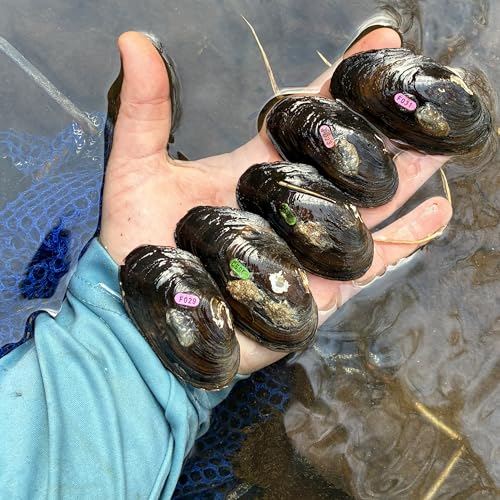
    This week, Preston visits with SCDNR's head malacologist, Ericah Beason. They with the basics of describing what freshwater mussels are and why they are important, before covering the diversity of mussels and the threats they face. Along the way, they cover the formation of SCDNR's freshwater mussels program and how it has evolved since its creation. We hope that you enjoy this episode!

    Main point: "The environment is not infinite!"

    Ericah's email address: BeasonE@dnr.sc.gov

    Get in touch with us!

    The Fisheries Podcast is on Facebook, Twitter, Instagram, Threads, and Bluesky: @FisheriesPod

    Become a Patron of the show: https://www.patreon.com/FisheriesPodcast

    Buy podcast shirts, hoodies, stickers, and more: https://teespring.com/stores/the-fisheries-podcast-fan-shop

    Thanks as always to Andrew Gialanella for the fantastic intro/outro music.

    The Fisheries Podcast is a completely independent podcast, not affiliated with a larger organization or entity. Reference to any specific product or entity does not constitute an endorsement or recommendation by the podcast. The views expressed by guests are their own and their appearance on the program does not imply an endorsement of them or any entity they represent. Views and opinions expressed by the hosts are those of that individual and do not necessarily reflect the view of any entity with those individuals are affiliated in other capacities (such as employers).

    続きを読む 一部表示
    44 分
  • 354 - Media's role in conservation conflicts: American lobster fisheries and North Atlantic right whales with Dr. Marcus Reamer
    2026/03/29

    This week, Elise (IG: @elisemobranchii) sits down with Dr. Marcus Reamer, a Lecturer at the University of Miami, to discuss his research on communication and media as an invisible and influential force in conservation. They focus on his exploration of the media portrayal of North Atlantic right whale conservation and conflicts between various stakeholder groups, namely, New England American lobster fishers. They also discuss how media is often overlooked as a tool for conservation, and how the language used to frame and shape our perceptions of complex conservation topics can either help or hinder efforts to create equitable solutions. His research asks us to take a step back from science and policy jargon, and instead explore the story being told around these complexities, and who is telling them, in order to better address conservation challenges.

    Main Point: Conservation IS political.

    Find Marcus on LinkedIn: https://www.linkedin.com/in/mreamer/

    Find Marcus' work here: https://www.marcusreamer.com/

    Get in touch with us! The Fisheries Podcast is on Facebook, Twitter, and Instagram: @FisheriesPod Become a Patron of the show: https://www.patreon.com/FisheriesPodcast Buy podcast shirts, hoodies, stickers, and more: https://teespring.com/stores/the-fisheries- podcast-fan-shop Thanks as always to Andrew Gialanella for the fantastic intro/outro music.

    The Fisheries Podcast is a completely independent podcast, not affiliated with a larger organization or entity. Reference to any specific product or entity does not constitute an endorsement or recommendation by the podcast. The views expressed by guests are their own and their appearance on the program does not imply an endorsement of them or any entity they represent. Views and opinions expressed by the hosts are those of that individual and do not necessarily reflect the view of any entity that those individuals are affiliated in other capacities (such as employers).

    続きを読む 一部表示
    1 時間 11 分
  • 353 - Finding and Protecting Ontario’s Freshwater Species at Risk with Jason Barnucz
    2026/03/22

    On this weeks episode Brendan is joined by Jason Barnucz, an Aquatic Science Biologist with Fisheries and Oceans Canada's Ontario Mussel team to talk about his 30+ years of field work in Ontario working on species at risk, including his work on the ground floor of the then new Species at Risk program in 2002! We also dive into Jason's new work with the mussel team, why he made the switch, a bit of his work with anglers in Ontario, and him and his sons recent forays into kayak fishing around Ontario.

    Check out his fishing photos and angling promotion work here: https://www.instagram.com/jason_barnucz/

    You can find the Canadian Mussel team's work here on Instagram: https://www.instagram.com/canadian_mussels/

    Get in touch with us!

    The Fisheries Podcast is on Facebook, X, Instagram, Threads, and Bluesky: @FisheriesPod

    Become a Patron of the show: https://www.patreon.com/FisheriesPodcast

    Buy podcast shirts, hoodies, stickers, and more: https://teespring.com/stores/the-fisheries-podcast-fan-shop

    Thanks as always to Andrew Gialanella for the fantastic intro/outro music.

    The Fisheries Podcast is a completely independent podcast, not affiliated with a larger organization or entity. Reference to any specific product or entity does not constitute an endorsement or recommendation by the podcast. The views expressed by guests are their own and their appearance on the program does not imply an endorsement of them or any entity they represent. Views and opinions expressed by the hosts are those of that individual and do not necessarily reflect the view of any entity with those individuals are affiliated in other capacities (such as employers).

    続きを読む 一部表示
    1 時間 3 分
  • The Hidden World Below: Life Beneath the Surface Through Research and Visual Storytelling with Graham Montague
    2026/03/15

    What happens beneath the surface of an aquatic system is a world most people never see—but today’s guest is bringing that hidden world to life through science and underwater storytelling.

    This week, Conrad had the pleasure of speaking with PhD candidate and underwater videographer Graham Montague from the University of Vermont in a fascinating conversation that explored both his research and creative work beneath the surface. The discussion dove into the intersection of science communication and underwater videography, highlighting how visual storytelling can help audiences connect more deeply with aquatic ecosystems and the life they support. He also shared insights into his current research as a PhD candidate at the University of Vermont, where he studies landlocked Atlantic salmon in Lake Champlain; the perspectives he has gained throughout his career; and the unique challenges and rewards of filming underwater. Blending passion, science, and artistry, this episode offers a compelling look at how creative media can inspire curiosity, understanding, and conservation of aquatic life.

    Takeaway: Follow and pursue what you're most passionate about in life.

    • Email: graham.montague@uvm.edu
    • Affiliation: PhD Candidate, University of Vermont
    • Instagram: @grammontague_

    “Get in touch with us!

    The Fisheries Podcast is on Facebook, X, Instagram, Threads, and Bluesky: @FisheriesPod

    Become a Patron of the show: https://www.patreon.com/FisheriesPodcast

    Buy podcast shirts, hoodies, stickers, and more: https://teespring.com/stores/the-fisheries-podcast-fan-shop

    Thanks as always to Andrew Gialanella for the fantastic intro/outro music.

    The Fisheries Podcast is a completely independent podcast, not affiliated with a larger organization or entity. Reference to any specific product or entity does not constitute an endorsement or recommendation by the podcast. The views expressed by guests are their own and their appearance on the program does not imply an endorsement of them or any entity they represent. Views and opinions expressed by the hosts are those of that individual and do not necessarily reflect the view of any entity with those individuals are affiliated in other capacities (such as employers).”

    続きを読む 一部表示
    1 時間 29 分
  • 351 - Kelp Forests, Bivalves, and Polyculture with Dr. Gretchen McCarthy
    2026/03/08

    On this episode of The Fisheries Podcast, Alanna hosts Dr. Gretchen McCarthy. The two discuss experiences in oyster farming, Gretchen's time as a Hollings Scholar and her bivalve research, as well as her more recent work into kelp forests, polyculture systems, and the importance of ecosystems for major bivalve resources in New Zealand. We hope you enjoy this episode!

    Main point: "People are a part of their biosphere."

    Find Gretchen on LinkedIn, ResearchGate, or Facebook.

    Get in touch with us!

    The Fisheries Podcast is on Facebook, X, Instagram, Threads, and Bluesky: @FisheriesPod

    Become a Patron of the show: https://www.patreon.com/FisheriesPodcast

    Buy podcast shirts, hoodies, stickers, and more: https://teespring.com/stores/the-fisheries-podcast-fan-shop

    Thanks as always to Andrew Gialanella for the fantastic intro/outro music.

    The Fisheries Podcast is a completely independent podcast, not affiliated with a larger organization or entity. Reference to any specific product or entity does not constitute an endorsement or recommendation by the podcast. The views expressed by guests are their own and their appearance on the program does not imply an endorsement of them or any entity they represent. Views and opinions expressed by the hosts are those of that individual and do not necessarily reflect the view of any entity with those individuals are affiliated in other capacities (such as employers).

    続きを読む 一部表示
    1 時間