エピソード

  • Stop Overthinking, Start Investing: A Guide for Young Canadians in their 20's and 30's
    2026/04/22

    In this episode, Lawrence Greenberg and Jackson Matthews break down how young Canadians in their 20's and 30's should approach investing and building a strong financial foundation.

    They walk through the biggest challenges beginners face, from information overload to the fear of making mistakes, and explain how to simplify the process. The conversation covers the different ways to start investing, whether through traditional banks, robo-advisors, or DIY platforms, and how to choose the right approach based on your level of involvement.

    They also explain how to prioritize accounts like the FHSA, TFSA, and RRSP, and why understanding their tax advantages can significantly impact long-term wealth. Beyond that, they highlight the importance of diversification, avoiding stock picking, and keeping fees low.

    Throughout the episode, the focus remains on building good habits early, staying disciplined, and letting time and compounding do the heavy lifting.

    Key points from the episode:
    • Why young investors struggle to get started (01:29)
    • Investment options: banks, robo-advisors, and DIY platforms (02:12)
    • How robo-advisors like Wealthsimple simplify investing (03:00)
    • DIY investing and the role of ETFs (04:00)
    • Introduction to the FHSA and how it works (06:28)
    • Why the FHSA is a powerful “hybrid” account (06:38)
    • Understanding the TFSA and its flexibility (08:39)
    • Long-term power of tax-free growth in a TFSA (10:02)
    • How RRSP contribution room works (11:16)
    • Tax benefits and income optimization with RRSPs (12:38)
    • Employer matching and why it’s free money (13:29)
    • When to use a non-registered account (16:05)
    • Why stock picking underperforms the market (18:15)
    • What the SPIVA report reveals about active management (19:22)
    • The power of starting early and compounding (21:46)
    • How fees impact long-term returns (24:04)
    • Final takeaway: build habits, stay disciplined, and think long term (25:59)

    Thanks for Listening!

    Be sure to subscribe on Apple, Google, Spotify, or wherever you get your podcasts. Feel free to drop us a line at lawrence@tma-invest.com or 514-695-0096 ext.112.

    Follow Tulett,Matthews & Associates on social media: LinkedIn, Facebook, and more!

    Follow The Empowered Investor on Facebook, LinkedIn, and Instagram.

    続きを読む 一部表示
    28 分
  • Nicolas Bérubé: 17 Lessons for Canadian Investors
    2026/04/09
    In this episode, Marcelo Taboada sits down with Nicolas Bérubé to discuss his latest book L’art de multiplier son argent : 17 leçons pour réussir en bourse (The Art of Multiplying Your Money: 17 Lessons for Success in the Stock Market). Together, they break down the key lessons every investor should understand to build long-term success in the stock market.Nicolas brings deep expertise in wealth management and financial planning, with a strong focus on helping families make thoughtful, long-term decisions. He is also the author of three books and a regular personal finance columnist for La Presse, where he shares practical insights with a broad audience. His work has been published in multiple languages (primarily French and English), reflecting his broad reach with readers interested in practical personal finance.Known for his disciplined approach and ability to simplify complex financial concepts, Nicolas has built a reputation for delivering clear, client-centered advice that aligns strategy with real-world goals.Overall, this episode is a reminder that successful investing is not about complexity, but about consistency and avoiding common mistakes.Key points:Introduction to Nicolas Bérubé and his book (00:40)Why he wrote L’art de multiplier son argent : 17 leçons pour réussir en bourse (05:56)The main lessons behind the book (05:30)Market timing and common investing myths (22:54)Why starting early makes a difference (23:49)The importance of diversification (04:00)ETFs and building a simple portfolio (04:00)Investor psychology and behavioral biases (04:00)Why beating the market is so difficult (12:14)The impact of fees on returns (36:13)Dividend investing explained (37:25)Risks of chasing popular sectors (47:58)Why “boring” companies often outperform (49:44)The role of bonds in a portfolio (43:31)Final takeaway: discipline and simplicity win long term (50:30)Mentioned in this episode:One Hundred Years in the U.S. Stock MarketsL’Investisseur Transforme podcastNicolas Berube weekly article in LaPresseBook: Les millionnaires ne sont pas ceux que vous croyez, Nicolas BérubéBook: De zéro à millionaire: investir en bourse sans souffrir, Nicolas BérubéBook: Millionaire Next Door, Thomas J. Stanley Ph.D., William D. Danko Ph.DBook: Zero to Millionaire. A simple, effective and stress-free way to invest in the stock market, Nicolas Bérubé Book: L'art de multiplier son argent: 17 leçons pour réussir en bourse, Nicolas BérubéBook: Die with Zero, Bill PerkinsThanks for Listening!Be sure to subscribe on Apple, Google, Spotify, or wherever you get your podcasts. Feel free to drop us a line at lawrence@tma-invest.com or 514-695-0096 ext.112.Follow Tulett,Matthews & Associates on social media: LinkedIn, Facebook, and more!Follow The Empowered Investor on Facebook, LinkedIn, and Instagram.
    続きを読む 一部表示
    1 時間 8 分
  • Staying the Course: Investing Through War & Uncertainty
    2026/03/24

    In this episode, Keith Matthews and Jackson Matthews take a step back to help investors make sense of market volatility during periods of geopolitical tension, focusing on the current situation in the Middle East. They walk through what has been happening in the markets so far in 2026, starting with a strong beginning to the year followed by a noticeable pullback as uncertainty increased.

    They explain how disruptions in oil supply are influencing inflation expectations and why this matters for interest rates, stock valuations, and the broader economy. By putting today’s events into historical context, they show that while every conflict feels unique in the moment, markets have consistently demonstrated resilience over time.

    The conversation also challenges the instinct to react or make sudden portfolio changes during uncertain periods. Through real data and long-term evidence, they highlight how trying to time the market often leads to weaker results, especially when investors miss key recovery days. Instead, the focus remains on maintaining discipline, staying invested, and following a clear long-term plan.

    Overall, this episode is a reminder that while short-term uncertainty is unavoidable, long-term success in investing comes from consistency, diversification, and the ability to stay grounded when markets become volatile.

    Key points:
    1. Introduction to the episode and Jackson Matthews’ role at the firm. (00:38)
    2. Overview of recent geopolitical conflicts and their impact on investors. (01:46)
    3. Market performance in early 2026: strong start followed by correction. (03:25)
    4. Peak-to-trough declines across major global indices. (05:00)
    5. Why markets are reacting: oil supply shocks and inflation fears. (06:27)
    6. The strategic importance of the Strait of Hormuz and global oil flow. (06:50)
    7. Inflation implications and potential central bank responses. (09:17)
    8. Risk of stagflation and economic slowdown scenarios. (10:27)
    9. Economist expectations: recession probabilities and inflation outlook. (11:00)
    10. Historical analysis of 19 military conflicts and market performance. (12:24)
    11. Average market returns and drawdowns following geopolitical events. (13:00)
    12. Why markets tend to recover despite uncertainty and conflict. (14:02)
    13. The myth of timing the market during crises. (15:59)
    14. Evidence against tactical asset allocation strategies. (17:13)
    15. The impact of missing the best days in the market. (20:32)
    16. Importance of staying invested during volatile periods. (22:11)
    17. Long-term investing discipline and portfolio strategy. (23:34)
    18. Final takeaway: control behavior, stay diversified, and think long-term. (24:08)

    Thanks for Listening!

    Be sure to subscribe on Apple, Google, Spotify, or wherever you get your podcasts. Feel free to drop us a line at lawrence@tma-invest.com or 514-695-0096 ext.112.

    Follow Tulett,Matthews & Associates on social media: LinkedIn, Facebook, and more!

    Follow The Empowered Investor on Facebook, LinkedIn, and Instagram.

    続きを読む 一部表示
    26 分
  • Tax Time Made Simple: Your 2025 Canadian Filing Guide
    2026/03/19

    In this episode of The Empowered Investor Podcast, Keith Matthews and Andrea LeRoyer break down how to approach tax season with clarity and structure. From key deadlines to recent tax changes, they walk through what actually matters when preparing your return.

    The discussion goes beyond basic compliance, highlighting how organization, awareness of credits, and proactive planning can materially impact your after-tax outcomes. They also cover practical frameworks, including what documents you’ll receive, what you need to track down, and how different life situations, from students to retirees, affect your tax strategy.

    This episode offers a structured approach to navigating tax season efficiently while avoiding missed opportunities and costly oversights, an essential listen for anyone serious about managing their financial life with discipline and foresight.

    Key Topics:

    ● April 30 = main filing & payment deadline. (00:02:56)

    ● Self-employed file later, but must pay by April 30. (00:03:08)

    ● Most tax slips arrive by late February. (00:04:25)

    ● Trust slips may delay filing into March/April. (00:04:43)

    ● First tax bracket reduced to 14%. (00:05:15)

    ● Some tax credits slightly reduced in value. (00:05:53)

    ● New/expanded benefits: grocery, disability. (00:06:35)

    ● Non-compliant short-term rentals lose deductions. (00:08:58)

    ● Digital news credit eliminated. (00:09:36)

    ● Underused housing tax removed. (00:09:55)

    ● Organize: income slips, assessments, installments. (00:11:14)

    ● Track manually: childcare, tuition, medical, donations. (00:15:12)

    ● Home office = prorated expense deductions. (00:18:20)

    ● Students should file to unlock credits & benefits. (00:20:47)

    ● First-time homebuyers eligible for tax credits. (00:22:32)

    ● Families gain access to child-related benefits. (00:23:48)

    ● Seniors benefit from multiple targeted credits. (00:25:28)

    ● Pension income splitting can reduce taxes. (00:32:20)

    ● Tax planning is year-round, not seasonal. (00:35:38)

    Thanks for Listening!

    Be sure to subscribe on Apple, Google, Spotify, or wherever you get your podcasts. Feel free to drop us a line at lawrence@tma-invest.com or 514-695-0096 ext.112.

    Follow Tulett,Matthews & Associates on social media: LinkedIn, Facebook, and more!

    Follow The Empowered Investor on Facebook, LinkedIn, and Instagram.

    続きを読む 一部表示
    37 分
  • Should I Buy Gold? Returns, Risks & Portfolio Strategy
    2026/02/19

    What’s behind the recent surge in gold prices and should you reconsider gold as part of your investment portfolio? Is gold truly a safe haven, or is it riskier than most people think? How does gold stack up against stocks, bonds, and real estate over the long term? These are the questions we answer in today’s episode.

    Hosts Keith Matthews and Marcelo Taboada break down gold’s true performance, risk profile, and role within a diversified portfolio. They compare gold to stocks, bonds, and real estate, drawing on decades of data to examine returns, volatility, and long-term outcomes. They explore why many investors already hold gold without realizing it and challenge common myths about golds ability to protect against inflation.

    This episode is ideal for investors feeling the FOMO around gold, anyone questioning if gold should have a “line item” in their portfolio, and those who want clarity on how gold fits with their broader financial goals. Tune in for clear, evidence-based answers on whether chasing headline gains in gold is a sound investment strategy.

    Key Topics:

    ● Welcome and episode setup: Gold’s current hype and listener pain points (00:01)

    ● Gold’s recent returns and the psychology driving investor FOMO (01:49)

    ● Geopolitics, government debt, and the “apocalypse narrative” (02:47)

    ● Price history: Gold’s massive surge in recent years (03:08)

    ● The physical and historical properties of gold - why it captured value for 6,000+ years (04:06)

    ● Modern demand drivers: Jewelry, technology, central bank reserves, investor sentiment (04:49)

    ● Gold as investment: Why isn’t it a productive asset? (06:07)

    ● Opportunity cost explained - what you give up when investing in gold (06:50)

    ● 30-year and 220-year returns: Gold vs. stocks, TSX, and Canadian home prices (07:57)

    ● Volatility myth busting: Is gold less risky than equities? (09:33)

    ● Gold and inflation: Does it reliably protect purchasing power? (10:54)

    ● Decade-by-decade: When gold outpaced inflation, and when it didn’t (12:37)

    ● Vivid history: Keith Matthews’s memories of the 1970s gold boom and bust (13:27)

    ● Recent performance: Gold vs. S&P 500 from 2018–2024 (15:28)

    ● Portfolio construction: The All-Weather and Permanent Portfolio models (16:39)

    ● John Bogle’s perspective: Gold is speculative, not productive (18:07)

    ● Gold exposure in the TSX and why Canadian investors may already own enough (19:14)

    ● TMA’s evidence-based philosophy: Diversification, discipline, and productive assets (21:36)

    ● Final takeaways on resisting hype, focusing on what you can control (22:27)

    Thanks for Listening!

    Be sure to subscribe on Apple, Google, Spotify, or wherever you get your podcasts. Feel free to drop us a line at lawrence@tma-invest.com or 514-695-0096 ext.112.

    Follow Tulett,Matthews & Associates on social media: LinkedIn, Facebook, and more!

    Follow The Empowered Investor on Facebook, LinkedIn, and Instagram.

    続きを読む 一部表示
    25 分
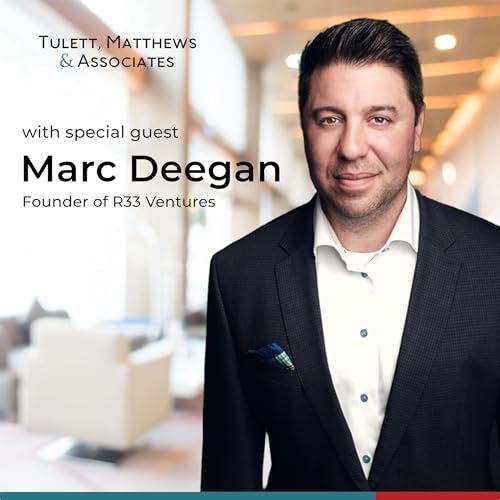
  • Entrepreneurship Through Acquisition with Expert Marc Deegan
    2026/01/29
    Entrepreneurship through Acquisition: Buying and Selling Canadian Small BusinessesIn episode, Keith Matthews welcomes Marc Deegan, founder of R33 Ventures and an expert in business valuations and M&A for small to medium-sized enterprises (SMEs). Together, they explore the rapidly growing model of entrepreneurship through acquisition, cover current trends in the Canadian SME marketplace, common challenges, and best practices.Expert Marc Deegan offers a clear, actionable conversation on the realities of buying and selling SMEs in Canada. Learn how to define the right buyer profile, discover what truly drives business valuations, and get the inside track on how sellers can prepare for a smooth and rewarding transition. You’ll walk away knowing what steps to take whether you’re seeking your next entrepreneurial journey or ready to unlock the full value of the business you’ve built.This episode is a must for business owners contemplating a sale, aspiring entrepreneurs considering acquisition, and professionals advising clients through these pivotal transitions. Avoid costly mistakes, get practical strategies for vetting buyers and sellers, and understand how to best protect your financial interests. Tune in for expert insights and feel confident moving forward in today’s dynamic M&A landscape.Key Topics:What is “entrepreneurship through acquisition” and why is it gaining traction? (00:04:06)Defining SMEs in Canada - revenue range and market overview (00:06:27)The coming “succession tsunami” and key stats from CFIB (00:06:00)The #1 obstacles to succession: finding buyers & agreeing on value (00:07:24)Who’s buying small businesses? Buyer profiles, backgrounds, and motivations (00:08:43)Where and how buyers find private companies for sale (00:10:16)The gender gap in entrepreneurship and industry trends (00:11:48)Balancing dual-income households and risk-taking in business ownership (00:12:44)Stages of the buying process: NDAs, financials, and due diligence (00:13:46)How business valuation works – multiples & EBITDA (00:17:04)Shifts in market valuations, impacts of tariffs, and timing of transactions (00:18:11)The time and effort required to buy a business in Canada (00:20:01)Profiles of sellers - why and when business owners exit (00:21:48)Tax planning and the capital gains exemption for sellers (00:23:35)The dangers of client concentration and business dependence (00:25:10)Realistic timeline for selling: preparation, transaction, and transition periods (00:29:27)Who are the buyers? Competitors, management, private equity, and family (00:31:00)How funding works: equity, bank loans, and seller financing (00:37:08)Building your professional deal team - advisors, accountants, bankers, and lawyers (00:39:10)Top advice for buyers: focus, persistence, and differentiating yourself (00:40:20)Top advice for sellers: know your numbers, set clear exit goals, and plan intentionally (00:42:01)Mentioned in this Episode:R33 Ventures Marc Deegan on LinkedInPodcast Human Capital: 5 Guiding Career Principles with Mark HalloranStanford Business Search Fund StudySuccession Tsunami: Preparing for a decade of small business transitions in CanadaThanks for Listening!Be sure to subscribe on Apple, Google, Spotify, or wherever you get your podcasts. Feel free to drop us a line at lawrence@tma-invest.com or 514-695-0096 ext.112.Follow Tulett,Matthews & Associates on social media: LinkedIn, Facebook, and more!Follow The Empowered Investor on Facebook, LinkedIn, and Instagram.
    続きを読む 一部表示
    44 分
  • 2025 Market Recap & 2026 Outlook
    2026/01/19
    Key Financial Trends of 2025

    In this episode, Keith Matthews and Lawrence Greenberg reflect on an extraordinary investment year and what it means for disciplined investors heading into 2026. They break down how tariff-driven volatility, sharp drawdowns, and rapid recoveries defined 2025, yet ultimately rewarded those who stayed invested and globally diversified.

    The conversation explores how Canada and international markets outperformed the U.S., how powerful market rotation reshaped returns, and why chasing forecasts or headlines would have been costly. Keith and Lawrence also address the growing debate around artificial intelligence, offering perspective drawn from past market cycles on how seasoned investors can benefit from innovation without speculation.

    This episode is a must-listen for investors who have built meaningful wealth and want clarity after a strong multi-year run. If you’re focused on protecting gains, managing expectations, and staying disciplined through the next market cycle, this discussion reinforces why sticking to a long-term plan remains the smartest move.

    Key topics:

    ● Setting the stage: why 2025 felt so uncomfortable despite strong returns (00:01:45)

    ● Tariffs, political uncertainty, and the sharp spring market sell-off (00:01:58)

    ● How markets rebounded rapidly, and why timing risk is so costly (00:03:55)

    ● The irony of 2025: regions targeted by U.S. tariffs delivered the strongest returns (00:03:14)

    ● Global asset class returns in Canadian dollar terms (00:04:24)

    ● Three years of exceptional equity performance and what that means for investors (00:05:00)

    ● The powerful rotation away from U.S. exceptionalism toward Canada and international markets (00:06:28)

    ● Why global diversification and factor exposure mattered more than predictions (00:07:22)

    ● Is AI a revolution or a bubble? Framing today’s debate with historical context (00:09:32)

    ● Parallels between AI enthusiasm and the dot-com era (00:10:48)

    ● Lessons from Cisco and Nortel: being right about technology vs. investment outcomes (00:12:55)

    ● How investors can benefit from AI without chasing individual winners (00:12:15)

    ● Why market forecasts consistently fail—and how bad predictions can hurt returns (00:15:48)

    ● Valuations, expected returns, and why future gains may be more muted (00:18:36)

    ● The “price of admission”: volatility, discipline, and long-term success (00:21:06)

    ● Final takeaways for 2026: stay invested, rebalance, and stick to your plan (00:20:46)

    Thanks for Listening!

    Be sure to subscribe on Apple, Google, Spotify, or wherever you get your podcasts. Feel free to drop us a line at lawrence@tma-invest.com or 514-695-0096 ext.112.

    Follow Tulett,Matthews & Associates on social media: LinkedIn, Facebook, and more!

    Follow The Empowered Investor on Facebook, LinkedIn, and Instagram.

    続きを読む 一部表示
    25 分
  • Human Capital - 5 Guiding Career Principles with Mark Halloran
    2025/12/18

    Why Human Capital Is Your Most Important Investment:

    In this episode, host Keith Matthews is joined by Mark Halloran, Co-Founder of Career Lion and expert in professional development, to explore how effective career management is key to optimizing your financial journey.

    Special guest Mark Halloran breaks down a proven five-part framework for career management that applies to every stage, from early beginnings to executive leadership. This framework highlights the importance of continuous learning, tendering your career, managing up to accelerate growth, building a powerful network, and practicing gratitude to boost workplace fulfillment.

    This episode is designed for employees, professionals and executives at every level who want to take control of their career trajectory, avoid common pitfalls, and maximize their career potential. Tune in for a roadmap to help you take charge of your next professional chapter and strengthen the most important investment you’ll ever make: your human capital.

    Key Topics:

    ● Introducing Mark Halloran President & Co-Founder of Career Lion (0:00)

    ● Introducing the five guiding principles of effective career management (6:50)

    1. Continual learning as the foundation for career confidence (7:25)

    ● How to identify and choose the right professional courses for your goals (9:40)

    ● Addressing deficiencies and strengths through targeted learning (11:26)

    ● Advice for early-stage professionals: get experience before pursuing more credentials (12:25)

    ● Pivoting careers and upskilling at later stages (14:15)

    ● How non-linear career paths often fuel greater long-term success (16:49)

    ● Avoiding the trap of “faking it till you make it”(11:26)

    2. Tendering your career - why and how to objectively review your strengths and gaps (18:13)

    ● The SWOT approach for personal career assessment (20:55)

    ● Overcoming the Dunning-Kruger effect: humility in self-evaluation (23:44)

    3. Managing up: how to proactively get feedback and earn opportunities (27:15)

    ● Giving and receiving actionable feedback, even when it stings (29:17)

    ● Continuous feedback and “stay interviews” vs. old-school annual reviews (33:00)

    4. Networking for every age: building and maintaining authentic connections (34:15)

    ● How younger professionals can start purposeful networking(35:28)

    ● Networking tips for mid-to-late-stage professionals: leveraging existing contacts (43:49)

    ● The huge percentage of jobs won through networking (40:42)

    ● Using LinkedIn strategically: personal brand, outreach, & algorithm hacks (41:20)

    5. Gratitude - why fulfilled, successful professionals cultivate thankfulness daily (50:01)

    ● Linking gratitude to resilience, growth, and workplace satisfaction (51:53)

    ● What Career Lion does and how professional coaching turbocharges results (55:43)

    ● Final takeaways: invest in yourself and manage your career like a business (1:01:59)

    Mentioned in this Episode:

    ● Career Lion

    Thanks for Listening!

    Be sure to subscribe on Apple, Google, Spotify, or wherever you get your podcasts. Feel free to drop us a line at lawrence@tma-invest.com or 514-695-0096 ext.112.

    Follow Tulett,Matthews & Associates on social media: LinkedIn, Facebook, and more!

    Follow The Empowered Investor on Facebook, LinkedIn, and Instagram.

    続きを読む 一部表示
    1 時間 4 分