エピソード

  • Written in My Dream Diary - "The Curse of Fenric"
    2026/07/15
    Guest: Shagg Matthews from the Fire & Water Podcast Network joins John and Jim to discuss the penultimate story of Classic Doctor Who. The Darkest Hour(s) Before the Dawn The hosts are unified in their assessment: this is the darkest, most adult, most dramatically mature story of the entire series. It's not dark in tone alone—it's dark in theme, dark in implications, dark in what it reveals about the Doctor's character. One joke exists in the entire episode; everything else operates in shades of genuine dread. The production team clearly knew they were operating on borrowed time and decided to swing for the fences: a World War II setting, a genuine first-evil antagonist, psychological manipulation, body horror, and questions about faith itself. A Writer and a Producer in a Battle Over Hemovores Ian Briggs returned to Doctor Who after nearly a full season away—Andrew Cartmel had to convince JNT to give him another chance. Once given that chance, JNT immediately began second-guessing and meddling. The hemovores were originally supposed to look different, more monstrous. JNT thought they looked "rather rude"—apparently resembling a sexual organ—and demanded they be toned down. The final design: vampiric-looking humanoids that started as two schoolgirls. It's a compromise that somehow works brilliantly despite the behind-the-scenes friction. A Location Shoot That Feels Real Rather than attempt the Blitz with pyrotechnics and sets, Nicholas Mallet (returning from Paradise Towers) persuaded JNT to film entirely on location. They shot in Dorset and Northumberland, capturing genuine seaside cliffs and windswept locations. The weather cooperated and didn't cooperate simultaneously—freak conditions meant one day brought snow, the next sunshine, then rain. Rather than reshoot, they worked it into the story. McCoy kept his own heavy coat between takes; the production said it looked good, so he wore it throughout. Sophie Aldred handpicked her costume and refused to cover it with an overcoat, keeping her arms visible at all times. A Story That Was Never Meant to Be an Ending (But Knows It Is) Only John Nathan Turner knew the show was ending. Everyone else—including Sylvester McCoy, who'd signed a contract for Season 27—was operating under the assumption the show would continue. McCoy was all set to return; Sophie Aldred hadn't even been offered one yet. The BBC officially called it a "hiatus" while quietly beginning a competitive tender process to find a new production company. But among all the cast and crew, only JNT was preparing this as a potential final chapter. The others were simply making the next story. The Story: A mysterious entity called Fenric—described as one of the first evils of the universe—has been imprisoned for 17 centuries. In 1943, a small English coastal town becomes the battleground. Russian soldiers are hunting for a scientist named Judson, who's secretly developing a computer to decode German ciphers. The Doctor arrives to find ancient Viking ruins, encoded runes that must never be translated, and mysterious creatures rising from the water. When the runes are translated, Fenric's influence begins to spread. The true revelation: Fenric has been manipulating events for centuries, including the entire relationship between the Doctor and Ace. Production Details: Production Code: 7M Aired: October 15 – November 14, 1989 Writer: Ian Briggs | Director: Nicholas Mallet Guest Stars: Nicholas Parsons (Reverend Wainwright), Dinsdale Landen (Commander Millington) Filming Location: Lulworth Cove in Dorset; North Umberland or possibly Whitby (accounts vary) Notable Details: First Doctor Who story set in WWII (War Games covered WWI) All-location filming —rain, snow, and sunlight all captured genuinely Sophie Aldred dove into water three times to get the shot; divers had to follow her on the final take McCoy wore his personal coat between takes; production kept it in final cut Ratings: 4.3M, 4M, 4M, 4.2M (held above 4 million throughout) Music: Mark Ayers Novelization: Ian Briggs (same author), includes epilogue set in 1887 Paris Key Discussion Points: Why this story works as mature television drama The manipulation thread: Fenric manipulating the Doctor and Ace; the Doctor manipulating Ace for a greater good The distraction scene and whether it lands (or whether it makes viewers uncomfortable) Ace's fear of water: genuinely from the story, or character development invented for the finale? The Doctor's faith expressed through his companions' names (from novelization) Why the Ancient One/Great Serpent feels unnecessary when Madison and Fenric were compelling enough The Doctor being "on patrol"—Batman and Robin dynamics with Ace Ace's first genuine character arc across multiple seasons The seduction vs. the seduction scene: why one works and the other doesn't How this story informs RTD's approach to companion arcs in New Who Season 27 plans: Ace was meant ...
    続きを読む 一部表示
    2 時間 9 分
  • Ambitious, Atmospheric, and Baffling - "Ghost Light"
    2026/07/08
    Guest: Felicity Kusinitz from the Flopcast joins John and Jim to discuss Season 26's most confusing story. A Script Too Big for Its Own Shoes Mark Platt submitted "Lungbarrow" to the show—a bold move for a writer with no professional credits beyond Doctor Who fan fiction. JNT immediately shut down his original concept (a full revelation of the Doctor's origins involving Gallifrey, Rassilon, and Omega) and asked him to rework it. Platt transplanted the thematic weight of that rejected story into a Victorian Gothic setting, creating Ghost Light. The result is a production that was heavily edited, with numerous explanatory scenes cut to fit three episodes. Even now, decades later, the story remains notoriously difficult to follow on first viewing—and according to many, even on subsequent viewings. Why This Story Rewards (and Frustrates) Repeat Viewing Felicity came in as a genuine enthusiast for this story, despite her general ambivalence toward the McCoy era. She's watched it multiple times and finds it improves with knowledge of what's coming. The New Adventures novels (particularly "Lungbarrow," which completed Andrew Cartmel's original Master Plan concept) have deepened her appreciation retroactively. Yet even she admits the first viewing is a puzzle box without instructions. Jim, meanwhile, found it nearly incomprehensible—he spent much of the episode laughing at the absurdity while also trying desperately to understand what was actually happening. Too Many Characters Syndrome Strikes Again The story suffers from the same overcrowding that plagued Battlefield. There's Josiah Samuel Smith, Control, Nimrod, the Reverend Matthews, the Constable, Mrs. Pritchard, Gwendolyn, the maids, Inspector McKenzie, and eventually Light itself. Each arrival adds another layer of confusion. Jerry Lange's earlier concerns about "too many characters" find their most vindicated expression here. Some characters could have been eliminated entirely, and others—particularly the Reverend and the Constable—feel like they exist only because they were written before the cuts. A Doctor Who's Getting Darker (And Meaner) A troubling thread emerges in this viewing: the Doctor is increasingly manipulative and even cruel with Ace. He brings her to a house without explanation, observes her distress as a kind of experiment, and generally treats her as a subject to be studied rather than a companion to be protected. This emotional manipulation—combined with McCoy's alien coldness rather than zany warmth—marks a shift in the character that will come to a head in the final story. Atmospheric But Muddy: The Audio Problem The story is visually and aurally striking—genuinely evoking Hammer Horror and the Hinchcliffe era with its Victorian setting and Gothic atmosphere. Yet the production suffers from audio mixing issues. The soundtrack is prominent enough to drown out dialogue, particularly Ace's lines, which are sometimes difficult to parse. This compounds the story's already confusing nature; listeners are struggling both to understand the plot and to hear what characters are saying. The Incomprehensible Becomes Character-Driven Once Light arrives—a being of pure energy obsessed with cataloguing life but appalled by its constant evolution—the story gains a genuinely interesting thematic core. Light's childlike wonder and petulant rage when confronted with change creates an intriguing antagonist, even if the costume (flowing cape, pale makeup, styled hair) reads more as "space fairy" than "cosmic entity." The Doctor defeats Light not through action but through argument—a Kirk-like tactic that works here because the concept itself is compelling enough to carry it. What Works, What Doesn't The setting works beautifully. The cast interactions (particularly Ace and Gwendolyn's constant wrestling matches) add levity. Sophie Aldred's increasing maturity as an actress and her character's evolution is noticeable. The costume design is excellent—though Ace keeping her boots on under the Victorian dress is a nice character touch. What doesn't work is the clarity; the rushed ending; the revelation that Control, Fenn Cooper, and Nimrod escape in the spaceship (leaving Ace's future burning of the house still unexplained); and the general sense that crucial scenes were left on the editing room floor. The Crown Jewel of Cartmel's Tenure? Cartmel considers Ghost Light the crown jewel of his script-editing era—a statement that says more about what went wrong in his tenure than it does about the quality of this particular story. It's bold, daring, and ambitious. It also fails to deliver on its promises due to time constraints and editorial decisions made by people who didn't care anymore. This is the final production of classic Doctor Who, even though it airs second in the season. The actual last scene filmed was the closing exchange between Ace and the Doctor—a conversation that feels almost tacked on but carries genuine weight: ...
    続きを読む 一部表示
    1 時間 54 分
  • The Brigadier's Back, Baby! - "Battlefield"
    2026/07/01
    Guest: Artist Jerry Lange joins John and Jim to discuss Season 26's explosive premiere. Six Years Later: A Familiar Face in Uniform The Doctor intercepts a distress call from Earth and arrives to find military forces mobilizing around a lake in rural England. But the soldiers he encounters aren't the ragtag UNIT troops from decades past—they answer to a new Brigadier, Winifred Bambara, sharp and decisive in ways that immediately challenge the Doctor's expectations. Before he can fully process this changing of the guard, a figure from his past arrives by helicopter. Nicholas Courtney returns as Brigadier Alistair Lethbridge Stewart, and the moment he steps onto screen represents the kind of callback that reminds longtime viewers why they fell in love with this show in the first place. The Return of a Beloved Character Done Right This is Courtney's first appearance since 1983—a full six years away. Yet the script wastes no time exploring what retirement has meant for the man who spent so many years at the Doctor's side. Unlike a simple cameo or a "let me check in and leave" scenario, the Brigadier finds himself back in harness, commanding troops, coordinating military responses, and rolling with alien invasions as if no time has passed at all. The character hasn't softened with age; if anything, he's evolved into someone who finally understands what he's really dealing with and accepts it without question. This is prime Brigadier material. Medieval Knights, Ancient Swords, and a Very Complicated Woman The story introduces knights in armor who've landed on Earth, along with ancient artifacts and a mysterious woman who speaks through a crystal ball—someone claiming to be Morgaine, reaching across dimensions to reclaim what's hers. The central mystery involves Excalibur, a comatose figure who might be King Arthur, and the question of whether the Doctor himself might be Merlin. How does one character bridge ancient legend and the Doctor's own timeline? And what does it mean when the Doctor suggests he might already be Merlin, but just doesn't know it yet? A Crowded Stage: When Too Many Characters Complicate the Story With Bambera, Ancelyn, Shou Yung, the helicopter pilot, the archaeologist Warmsley, and others, the screen fills quickly. Some find this ensemble approach refreshing; others feel it dilutes the focus that Morgaine and the central conflict deserve. The new Brigadier especially becomes a point of discussion—is she a necessary counterpoint to Alistair's established authority, or does her anger and youth undercut the gravitas the role traditionally carries? And then there's the question of whether every character served the Arthurian elements or whether some existed primarily because the production wanted to demonstrate diversity of casting. Jean Marsh as Morgaine: A Villain for the Ages Yet if there's one element that commands universal appreciation, it's Jean Marsh's performance as Morgaine. She commands every scene she inhabits, wielding hand gestures, vocal inflection, and costume to create a presence that feels genuinely menacing. This is her return to Doctor Who after playing Sarah Kingdom decades earlier, and she uses the opportunity to sketch out one of classic Who's most memorable antagonists. Comparisons to Helen Mirren's Morgaine in Excalibur are inevitable—and some viewers find Marsh's interpretation equally compelling, if not superior. The Mystery of Merlin and the Doctor's Unexplained Powers Part of what makes this story intriguing is its central enigma: Is the Doctor Merlin? The story suggests he might be, but offers no clear answer. Instead, it proposes something stranger—that the Doctor might become Merlin at some point in his past, or that he already was without knowing it yet. This plays directly into the Cartmell Master Plan's fascination with the Doctor's origins and timeline. Yet the story also introduces psychic powers the Doctor exercises—mind tricks that feel Force-like in execution but are never explained or integrated into established Time Lord abilities. Where do these abilities come from, and why does the Doctor never use them again? Bessie Makes an Unexpected Entrance In one of the story's most delightful moments, the Doctor's old car Bessie emerges to save the day. It's a callback that lands harder than the story initially suggests it might, proof that even in a tale of knights and swords and alternate dimensions, there's room for the kind of continuity nods that make longtime fans smile. A Production That Nearly Caused a Tragedy Behind the scenes, Sophie Aldred found herself in genuine danger during the water tank sequence. The glass chamber—not built to withstand pressure—began to crack and bulge as water filled it. Loose electrical wiring posed an immediate electrocution risk. It took McCoy's quick thinking and frantic shouting to get her out before disaster struck. It's the kind of production hazard that modern safety standards would never permit...
    続きを読む 一部表示
    1 時間 47 分
  • We Hardly Knew You: Colin Baker's 11-Story Legacy - Colin Baker Retrospective
    2026/06/24

    John and Jim bid farewell to the Sixth Doctor with surprising revelations about changed opinions, why fandom got it wrong, companion dynamics, and Colin's enduring legacy as ambassador for a show that screwed him over.

    John's Shocking Confession: After going into the Colin Baker era expecting disaster based on fan reputation, John emerges with a stunning announcement about where Colin now ranks in his Doctor hierarchy. Discussion covers what changed his mind and why the arrogance that defined Sixth Doctor was actually a feature, not a bug.

    The Great Reassessment: Where does Colin Baker hate really come from? The hosts dig into the Davison devotion factor, the "hurt/comfort" fiction phenomenon, visual pushback, and story selection bias. Parallels drawn to another controversial modern Doctor currently experiencing reassessment. The question: does Colin deserve a renaissance?

    Season Showdown: Jim and John compare Season 22's classic monster lineup against Trial of a Time Lord's experimental structure, with numerical ratings revealing surprising sympathies and contradictions. Twin Dilemma gets revisited with fresh perspective.

    Peri vs. Mel: Deep dive into why the Doctor/Peri dynamic never quite worked (flashback to guests on John's old public access show The Chronic Rift bashing their chemistry), why Mel clicked better with Sixth than she will with Seventh, and what might have been with that brief Tegan/Colin pairing.

    The BBC Institutional Problem: Doctor Who as "begrudging institution" Britain was done with by 1987, contemporary articles calling for the show to rest, and the uncomfortable parallel to where we are today.

    Saward vs. JNT: Who really sabotaged Colin's era? The case against Eric Saward for wanting the Doctor "off to the side," the case for JNT staying despite wanting to leave, and how Andrew Cartmel represents the moment fans took over the asylum. The Chris Chibnall irony explored.

    Colin the Ambassador: Why Colin immediately embraced fandom despite BBC treatment while Tom Baker grudgingly came around decades later. Discussion covers charity work, fan productions, regrets about the regeneration he refused, and the motivation difference between appreciation and adulation.

    McCoy Preview: John drops a gauntlet: three stories from the Seventh Doctor era will score 15/15 as among the best of the entire classic run. Setup for the Troughton-inspired "don't underestimate me" Doctor and predictions about acting range debates.

    Final Doctor Rankings Revealed: Jim and John count down their top six Doctors with Colin landing in surprising positions on both lists. The Tom Baker controversy unpacked - why both hosts rank him lower than conventional wisdom despite his institutional status.

    Coming Up Next:

    Patreon Exclusive (Monday): Comic "Prophets of Doom," more Doctor Who music, Memory TARDIS wheel spin, and reactions to recovered Dalek Master Plan episodes 1 & 3 (BBC YouTube Easter miracle).

    Main Feed (Monday - Schedule Change!): "Time and the Rani" - Sylvester McCoy's debut with Kate O'Mara as the Rani. Jim's first narration of the McCoy era.

    Hashtags:

    #DoctorWho #ColinBaker #SixthDoctor #Retrospective #11Stories #WeHardlyKnewYou #DoctorRankings #Season22 #Season23 #TrialOfATimeLord #ClassicWho #DoctorWhoPodcast #SylvesterMcCoyPreview #FandomReassessment

    続きを読む 一部表示
    56 分
  • The Greatest Snore in the Galaxy - The Greatest Show in the Galaxy
    2026/06/17
    The Story That Beats Coronation Street (But Divides the Hosts) Stephen Wyatt returns after Paradise Towers to deliver a circus-themed finale to Season 25. Expanded from three parts to four at John Nathan Turner's request, this story follows the Doctor and Ace arriving at the psychic circus on the planet Seganax—except Ace hates circuses, and the Doctor seems unusually fascinated by performance, danger, and magic. It wins over behind-the-sofa panelists and pulls the highest ratings of McCoy's entire run (beating Coronation Street for the first time), yet one host finds it compelling while the other considers it nearly unwatchable. What makes the difference? Production Under Impossible Circumstances The asbestos discovery that plagued Silver Nemesis forced this finale into a makeshift tent rigged in the parking lot. The budget is visibly exhausted by this point, yet the production team managed to secure Jeffrey Durham (The Great Soprendo) as the first magic consultant since 1977 to coach McCoy in juggling. The explosion sequence near McCoy was supposed to be blown air with added effects—until last-minute testing showed it looked unconvincing, so they switched to live pyrotechnics without telling the lead actor. He didn't blink on set because he believed there wouldn't be a retake. The Doctor's Behavior: A Fundamental Divide One host sees a character temporarily set aside his usual competence for story purposes. The other sees the Doctor acting like a completely different person—gullible, clumsy, silly, and uncharacteristically unable to read situations. The proactive crime-fighter from Remembrance and The Happiness Patrol has vanished, replaced by someone who falls into obvious traps and does pratfalls. McCoy's physical comedy training makes the juggling work, but does the writing serve the character he's been becoming over the last three stories? The Satire Cuts Both Ways Whiz Kid represents fandom—earnest, excited, devoted to the circus's history. His reward is a cruel, unnecessary death played as harsh comedy. What's the point of making fun of fans, especially when the message seems to be that fans should be punished for their devotion? Meanwhile, the real family in the audience—who turn out to be the Gods of Ragnarok—are abstract divine beings demanding entertainment. Who is the story really criticizing? A Pantheon Problem The Gods of Ragnarok are named after Norse mythology's apocalypse, yet they look almost Egyptian with their eye-based design. They get referenced later in New Who (specifically with the Fifteenth Doctor), which raises the question: did this story earn that future callback, or does the massive concept introduced in Part Four feel tacked on? What does naming them after Ragnarok actually accomplish? Character Choices Captain Cook is largely despised—a manipulative bore whose presence never makes sense. Mags is the victim of a rushed werewolf transformation that doesn't commit to either wolf or cat form. Kingpin is confusingly established as the former circus leader, but the revelation lands without impact. Bellboy's name suggests something, but what? The food cart lady exists to expose hippies. Meanwhile, the Chief Clown—sinister, physically controlled, genuinely threatening—stands out as the most interesting antagonist, but even he doesn't quite fit the larger story. Does a Four-Part Circus Need to Be This Long? The production feels stretched, relying on repetitive moments (running through quarries, hiding in tents, escaping robots) that feel interchangeable by Part Three. Could this have been told in three parts? Would removing redundant sequences have tightened the narrative? Does the extended runtime serve the story, or does it expose the thinness of the plot? Production Highlights: Music: First original song for Doctor Who since The Gunfighters (1966). Performed by Rico Ross, who played Private Frost in Aliens. Magic Consultant: Jeffrey Durham (The Great Soprendo)—first since Talons of Weng Chiang (1977) Guest Star: Jessica Martin (Mags) returns to the role in Big Finish and will later play Queen Elizabeth in Voyage of the Damned Ratings: 5.0–5.3–4.8–6.6 (the finale pulls the highest numbers of McCoy's entire run) Coming Up Next: Friday (Patreon): Doctor Who: The Ultimate Adventure (1989 stage production with John Pertwee—the clearest footage available on YouTube). Following Wednesday (Main Feed): Colin Baker retrospective (hiatus episode). Jim's Links: Big Top Tales Anthology - https://www.amazon.com/Big-Top-Tales-Nicholas-Ahlhelm/dp/1522700226 Pulp Fest Convention - http://www.pulpfest.com/ Hashtags: #DoctorWho #GreatestShowInTheGalaxy #Season25Finale #SylvesterMcCoy #SophieAldred #CircusStory #GodsOfRagnarok #StephenWyatt #ClassicWho #HostDisagreement #DoctorWhoPodcast
    続きを読む 一部表示
    1 時間 20 分
  • Season 25 Retrospective, Dalek Death Wheels, and the Announcement That Changes Everything - Patreon Exclusive #175
    2026/06/10

    [Special Release: This episode is being released simultaneously on the main feed and Patreon for immediacy.]

    BREAKING NEWS: The Future of Doctor Who Takes a Dramatic Turn

    Just hours before recording, the BBC made a major announcement that affects Doctor Who's direction for years to come. RTD and Bad Wolf are parting ways with the BBC. The Christmas special is canceled. New production arrangements are being sought. John and Jim process what this means for fandom, for the show's creative identity, and for the possibility of a true fresh start. One host sees this as inevitable reckoning; the other worries about what gets lost in transition. Both discuss how long the darkness might last—and whether that's actually a bad thing.

    Season 25: Taking Stock of Four Stories

    After racing through Remembrance of the Daleks, Silver Nemesis, Happiness Patrol, and The Greatest Show in the Galaxy, Jim and John pause to rank what they've just watched. Best episode? That's clear. Worst episode? They disagree—and don't let ratings alone settle it. Best villain, best companion, best guest star, best monster, funniest moment, best overall moment—each category sparks different reactions. What makes a story work, even when individual elements fail? When does spectacle overwhelm character? Why does one host adore a story the other found painful?

    Nemesis of the Daleks: The First Dalek Comic in Ages

    A four-part comic strip featuring the Doctor's oldest enemies—and a character that may or may not have survived. The art improves significantly from recent strips. The scope feels genuinely cinematic with the Dalek Death Wheel. But here's the question: did the ending rush a story that deserved more room to breathe? John appreciates the scale; Jim wishes the narrative had time to match it. Both wonder if this Dalek adversary will return.

    Music & Memory TARDIS

    "The Psychic Circus" by Christopher Guard (who played Bellboy) is a curiosity—an actual song written specifically about an episode, not the show itself. Peter Davison's final story, "The Caves of Androzani," offers stunning supporting characters and a presidency subplot that overshadows the main narrative. One host loves it unreservedly; the other would only revisit select scenes.

    What Doctor Who Needs Now

    With RTD out and the show facing a complete reset, Jim and John discuss what a new showrunner should do. Forget continuity complications? Embrace them? How long should the silence last? Should the next Doctor arrive on screen with no explanation, like Eccleston did? Can a complete reboot work? Should there even be a TARDIS anymore? These aren't answered so much as explored—and the conversation suggests the wilderness years ahead might be exactly what the franchise needs.

    Support the Podcast:

    Join us on Patreon for early access to episodes like this, exclusive comics, Memory TARDIS selections, and bonus content!

    The Doctor's Beard Podcast on Patreon

    As little as $3/month gets you:

    • Early access to all episodes

    • Exclusive Patreon-only content

    • Full comic strips we discuss

    • Bonus Memory TARDIS segments

    $5/month adds access to our special Gatwa and Tennant reviews from the Disney era.

    Coming Up Next:

    Friday (Patreon): Doctor Who: The Ultimate Adventure (1980s stage production from 1989, featuring 70-year-old John Pertwee).

    Following Wednesday (Main Feed): Colin Baker retrospective (previously recorded Patreon exclusive from our hiatus).

    Following Monday (Patreon): Music, Memory TARDIS, and comics "Stairway to Heaven" and "Hunger from the Ends of Time."

    Hashtags:

    #DoctorWho #PatreonExclusive #Episode175 #RTD #BadWolf #ChristmasSpecialCanceled #Season25Retrospective #NemesisOfTheDaleks #SylvesterMcCoy #PeterDavison #CavesOfAndrozani #FutureOfDoctorWho #ClassicWho #NewWho #DoctorWhoPodcast #BrokenNews

    続きを読む 一部表示
    1 時間 8 分
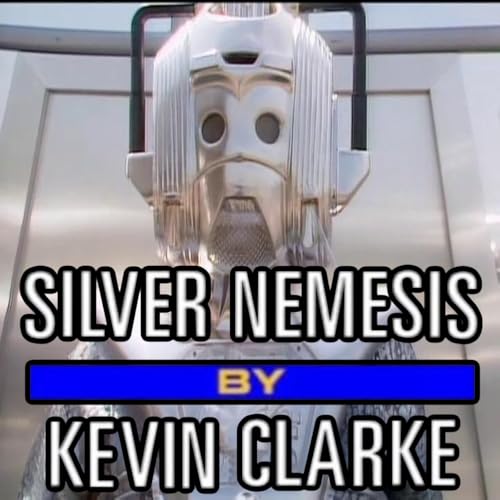
  • 25 Years, Three Factions, One Mysterious Object: The Anniversary That Might Not Be - "Silver Nemesis"
    2026/06/10
    It's the 25th anniversary of Doctor Who, and for the occasion the BBC has assembled Nazis, Cybermen, time-traveling aristocrats, and a mysterious statue made of something that shouldn't exist. Add a comet, multiple centuries, and the Doctor's increasingly cryptic hints about his own past, and you've got an episode that John and Jim can't quite agree on.

    Production Under Pressure

    John Nathan Turner wanted this as the season opener for maximum impact, but the Summer Olympics threw everything into chaos. More trouble: they found asbestos in the studio. No interior TARDIS scenes meant everything had to go on location—Windsor Castle (well, a substitute), 17th-century England, and actual museums. The budget request for a proper 25th-anniversary celebration? Denied by BBC One's controller, who wasn't even a fan of the show. Tensions on set ran high, mirroring Colin Baker's era.

    The Idea That Started It All

    Kevin Clark walked into pitch meetings with no idea what to pitch. Sat down with JNT and Andrew Cartmell, and when asked what he had, he said: "Doctor Who is God." (They asked him to leave God out of it.) His concept became a story about a cosmic object, living space metal, and something called Validium. The Cybermen? Added last-minute by JNT as a twist to make it the anniversary story.

    Guest Stars and Hidden Layers

    Fiona Walker returns nearly 25 years after "The Keys of Marinus." Leslie French, who once auditioned to play the First Doctor, appears as a mathematician. Anton Differing took the Nazi role mainly to catch Wimbledon on London television. A celebrated jazz musician leads the band and gets screen time. The behind-the-sofa consensus: this beats Happiness Patrol. The Cybermen get one final classic appearance before the costumes literally fall apart (they were taped together and spray-painted silver).

    Where the Story Divides

    One host sees excellent location work, great chemistry between the leads, well-choreographed action, and "good bonkers" energy. The other finds forced humor, a clumsy attempt to deepen the Doctor's mystery, misogynistic moments, and stereotypical American characters that undermine the tone. The final scene—with Ace asking a question and the Doctor refusing to answer—creates genuine friction neither host expected.

    An Anniversary That Isn't Quite One

    For a 25th-anniversary episode, it's surprisingly light on callbacks. The real tribute to Doctor Who's past is the Cybermen themselves—silver, returning, and defeated in ways that feel... almost accidental? Multiple plot threads intersect (the Nazis, the magical artifact, the time-jumping aristocrat, the alien invaders), and whether they mesh or clash depends entirely on your tolerance for chaotic storytelling.

    Coming Up Next:

    Monday (Patreon Early): Patreon Exclusive 174 with music, Memory TARDIS, and three-part comic "Invaders from Gantac" by Alan Grant.

    Following Wednesday (Main Feed): Season 25 finale with "The Greatest Show in the Galaxy" (four parts). John promises it's "right up his alley."

    Hashtags:

    #DoctorWho #SilverNemesis #25thAnniversary #SylvesterMcCoy #SophieAldred #Cybermen #ClassicWho #BehindTheSofa #ProductionTrouble #HostDisagreement #Validium #McCoyEra #TimeLord #Mystery #DoctorWhoPodcast

    続きを読む 一部表示
    1 時間 37 分
  • From Remembrance to Regression: Where Everything Falls Apart - "The Happiness Patrol"
    2026/06/03
    The whiplash is immediate and brutal. After the triumph of "Remembrance of the Daleks," this three-part story lands like a thud. Jim gives another harsh —an unprecedented score that suggests something fundamentally broken beneath the surface. Despite strong performances from McCoy and Aldred, the story struggles with disconnected thematic elements, confused production design, and a narrative that never quite coheres. The Setup That Doesn't Work Terra Alpha: an Earth colony where mandatory happiness enforced through surveillance and a cheerful Happiness Patrol keeps citizens compliant. The story also includes a candy-obsessed killer, underground dwellers (indigenous inhabitants driving plot devices), a visiting blues musician, and a complex political hierarchy. None of these elements integrate coherently. Jim's assessment: This is Paradise Towers revisited, but worse. Same drab corridors masquerading as streets, same societal oppression, same everything-we've-seen-before feeling, but without even Paradise Towers' redeeming visual moments. The Candyman Disaster Originally planned as a human villain—just a bored, pale killer. JNT and director Chris Clough wanted a robot instead. The result: an uncomfortable costume that restricted the actor's movement and visibility, made the character nonsensical, and looked rushed and disconnected from every other design element on set. The production nearly got sued by a candy company for the character's visual design. , Tonal Chaos The story can't decide what it wants to be. Satirical critique of authoritarian happiness? Straight thriller? Comedic romp? It tries all three and masters none. The mime-like makeup on the Happiness Patrol's faces goes unexplained. The slot machine execution method appears once, then switches to fondant surprise. These aren't deepening themes—they're random design choices. McCoy and Aldred Carry the Load Both hosts agree the leads transcend the material. McCoy's ad-libbed singing of "As Time Goes By" shows theatrical training and improvisational instinct. Aldred proves her action credentials and moral agency—the Doctor actively investigating rather than stumbling into danger. Yet even their chemistry can't save disconnected storytelling. John's specific note: the Doctor telling Ace "You're no good to me like this" when she's about to attack—character development that deserves better context. Production Quirks The TARDIS gets painted pink by the Happiness Patrol, requiring repainting back to blue. The sets feel claustrophobic despite supposedly being outside on streets. The behind-the-sofa guests (except McCoy, Aldred, and Sheila Hancock) admitted the story didn't work. Ratings dropped after Episode One (5.3M to 4.6M to bounce back to 5.3M). The Political Subtext Nobody Asked For Sheila Hancock (Helen A) read the script as Margaret Thatcher allegory and deliberately amplified her performance toward that direction. Andrew Cartmel apparently got nervous about the comparison; Hancock pushed harder into it. John appreciates the subtext; Jim dismisses it as irrelevant to the story itself. The political commentary doesn't enhance the narrative—it distracts from already-muddled plotting. What Could Have Worked Discussion of road-not-taken choices: What if they'd fully integrated Ace into the Happiness Patrol with brainwashing elements? What if the candy theme permeated every design choice instead of being isolated to the Candyman? What if this story had followed something other than the series' strongest episode? The Colin Baker Question Jim wonders aloud how Colin Baker might have handled this material—would his more theatrical approach have elevated the chaos or made it worse? Speculation on whether "Happiness Patrol" appears in any of the audio continuations (especially with alternate Doctors). Coming Up Next: Monday Patreon Exclusive 173: Music, Memory TARDIS, Doctor Who Unbound audio "Full Fathom Five," and comics—"Time and Tide" and "Follow That TARDIS!" Wednesday Main Feed (Friday Patreon Early): "Silver Nemesis" - the ACTUAL 25th Anniversary story (three parts). Jim handles narration. Will it recover from Happiness Patrol? Hashtags: #DoctorWho #TheHappinessPatrol #Season25 #SylvesterMcCoy #SophieAldred #McCoyEra #SheiliaHancock #Candyman #TerrAlpha #ParadiseTowersPart2 #ClassicWho #DoctorWhoPodcast #WorstMcCoyStory #FromRembranceToRegression
    続きを読む 一部表示
    1 時間 21 分