エピソード

  • The Funeral Is About To Begin In Phantasm
    2025/12/10

    Send us a text

    A cemetery tryst turns to murder, a mortician moves like a machine, and a silver sphere drills through the silence—Phantasm doesn’t explain itself so much as possess the room. We dive headfirst into Don Coscarelli’s cult classic to track how grief, sci‑fi textures, and handmade horror combined into one of the strangest and most enduring films of the late 70s. Angus Scrimm’s Tall Man commands the frame with a mechanical menace that suggests android, alien, or something far worse, and we follow his trail through marble corridors to a humming portal and a red-sky dimension that feels like a fever-dream Mars.

    Along the way, we unpack the film’s Dune fingerprints—the box of pain, fear as a focus tool, the tuning fork setup—and how sound design does heavy lifting as story. That tonal hum in the mausoleum isn’t just mood; it hints at resonance as control, drawing lines to Reggie’s guitar moment and the twin poles that slice open reality. We break down the iconic sphere attack, why its reflective surface makes the kill doubly cruel, and how practical effects and smart editing sell danger without digital help. From the hearse chase to the yellow ichor that proves the Tall Man isn’t entirely human, every set piece feels tactile, risky, and utterly memorable.

    And then there’s the ending—the “it was a dream” swerve that either deepens the film’s portrait of trauma or undercuts its stakes. We wrestle with both reads, weighing the idea that Mike’s mind reframed loss as cosmic war against the possibility that the Tall Man simply thrives where logic breaks. Either way, the mirror moment lands, and the myth stands: Phantasm endures because it’s less puzzle box and more bad dream you can’t shake. Cue up the episode for a spirited breakdown of lore, craft, and legacy, plus a few laughs we probably shouldn’t have had. If you dig smart horror talk with zero fluff, subscribe, share with a fellow cult cinema fan, and drop your take: does the ending make it richer—or wreck it?

    Support the show

    続きを読む 一部表示
    1 時間 9 分
  • Night Run Through Belfast In '71
    2025/12/03

    Send us a text

    Sirens, bin lids, and a single bad order turn a routine patrol into a citywide manhunt. We dive into ’71, the relentless Belfast thriller that threads survival action through the moral fog of The Troubles, and we do it with a clear map of the factions, motives, and betrayals that close in on a young British private. From the jittery arrival to the first shot fired in broad daylight, we break down how the film builds dread: kids hurling insults and piss, neighbors signaling danger, and a commander who confuses optics for safety.

    What follows is a masterclass in pursuit and character. We trace the chase through back alleys and burned-out flats, the split between the OIRA and the Provisionals, and the way power brokers coax chaos to serve their ends. A “safe” pub becomes a bomb site, and we linger on the haunting aftermath—the disorienting hush, the stunned motions, the instant recalculation of who can be trusted. Then the movie gets intimate: a father and daughter risk everything to stitch a stranger back together. Their dialogue cuts to the bone on class, command, and expendability, and our take unpacks why that scene defines the story more than any gunfight.

    As the net tightens—Divis Flats searches, a basement execution test, and a brutal reshuffling of who lives and who gets silenced—we talk about conscience under pressure and the cost of wearing any uniform. We also spotlight the craft choices that make ’71 feel both immediate and mythic: grainy 16mm days, icy digital nights, and a score that drives without drowning the quiet. By the end, illusions are gone, debts remain, and the question lingers: when sides blur, what does courage look like?

    If this episode hits you, follow the show, share it with a friend, and leave a review with your take on ’71’s most unforgettable moment.

    Support the show

    続きを読む 一部表示
    45 分
  • Sergeant Howie's Got A Problem With The Wicker Man
    2025/11/26

    Send us a text

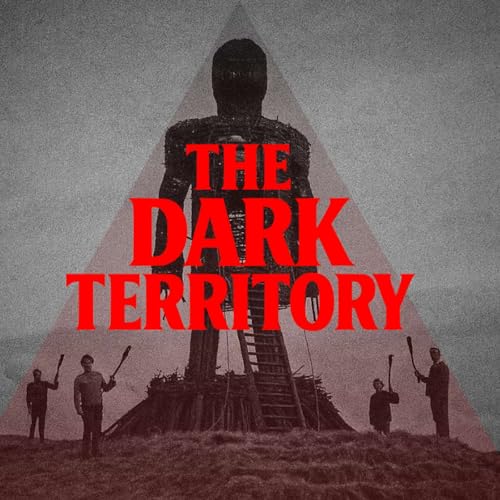
    A missing girl draws a by-the-book sergeant to a remote Scottish island where the smiles are warm, the songs are catchy, and every answer makes the ground shift under your feet. We dive deep into The Wicker Man’s meticulous design, tracing how a polite reception curdles into a communal performance that leaves no room for dissent. From the first dockside standoff to the final blaze on the cliff, each scene advances a worldview where ritual outranks reason and tradition wears a friendly face.

    We break down the elements that made this 1973 classic the blueprint for folk horror: the landscape as character, isolation as policy, and a pedagogy that turns children into keepers of the old ways. Sergeant Howie’s piety and restraint read as strength in his world, but on Summerisle they become criteria. Willow’s haunting song, the bawdy pub chorus, the maypole lesson, and the beetle-on-a-string anecdote aren’t color; they’re doctrine, patiently steering the outsider into place. Christopher Lee’s Lord Summerisle reframes agriculture as mythmaking, blending microclimate and mythology until community identity depends on a calendar that demands sacrifice when the harvest fails.

    We examine the investigation’s pivot points—the grave with a hare, the missing harvest photo, the May Day procession—and why the Fool’s costume seals Howie’s fate. The wicker colossus isn’t a twist; it’s the story’s logic made visible, a culmination of cheerful deceit and collective conviction. Along the way, we explore the film’s music, performances, lost cuts, and far-reaching influence on movies and metal alike. If you’re drawn to mysteries where culture is the culprit and the scariest monsters are smiling neighbors, this conversation will sharpen your appreciation for every detail The Wicker Man sets aflame.

    If you enjoyed this deep dive, follow the show, share with a friend, and leave a quick review—what moment from The Wicker Man still haunts you?

    Support the show

    続きを読む 一部表示
    48 分
  • Why Skinny Puppy Doesn't Bite
    2025/11/21

    Send us a text

    A band that made horror feel like truth instead of a costume deserves a deep dive, and Skinny Puppy earned theirs by turning noise, samples, and performance art into a living organism. We go back to the spark between cEvin Key and Nivek Ogre, tracing how tape culture, Throbbing Gristle’s factory ethos, and cut-up language fused into a sound that felt cold, cinematic, and strangely human. From Bites and Cleanse Fold and Manipulate to the guitar-forward punch of Rabies, we map the gateway albums, the misfires, and the revelations that convert casual listeners into lifers.

    What kept pulling us back wasn’t just the music, but the way it was delivered. Onstage, Ogre’s prosthetics, stilts, and brutal imagery made the shows feel more like installations—provocative, often confrontational, always intentional. We break down how sampling became a lead instrument, how Ogre sculpted voice into texture, and why Skinny Puppy’s lyrics read like transmissions you decode rather than sing along to. There’s room for side roads too: Download’s rhythmic mutations, Front Line Assembly’s cinematic sweep, and the unmistakable imprint Dwayne Goettel left on programming and tone.

    The story has jagged edges—addiction, The Process, creative rifts—but also a clear ethic: experiment without apology, and let the work carry the risk. We also revisit the infamous Guantanamo controversy, why the $666,000 claim mattered, and how the band’s activism sharpened their art. If you’ve ever argued over whether Assimilate, Tin Omen, or Deep Down Trauma Hounds defines them, you’re in the right place. Hit play, then tell us your Skinny Puppy gateway track, and subscribe to catch our upcoming dive into The Wicker Man. Your listens, reviews, and shares keep this dark machine humming.

    Support the show

    続きを読む 一部表示
    35 分
  • This Green Room Ain't Right
    2025/11/14

    Send us a text

    A touring punk band, a hostile crowd, and a door that should’ve stayed shut. We dig into Green Room’s unblinking tension and why the film works so well at the microscopic level: subculture codes, tiny choices with massive consequences, and the cold mechanics of a cover-up. From the first gas-siphoning scramble to that infamous mangled-wrist shot, the movie earns every scream with grounded, lived-in detail.

    We walk through the setup—Tad’s make-good gig that leads straight into a neo-Nazi bar—and how the movie uses signals like boots, braces, and red laces to telegraph danger without exposition. Patrick Stewart’s Darcy is chilling not because he rants, but because he doesn’t; he organizes. Gabe, the fixer, turns violence into paperwork, cash, and alibis. Meanwhile Amber’s brutal ingenuity and Pat’s reluctant evolution transform a trapped band into survivors who think in ammo counts and angles, not ideals. Even sound becomes a blade—feedback versus trained dogs—turning the venue’s gear into a toolkit for staying alive.

    Along the way we talk Pacific Northwest scenes, Dead Kennedys as a tactical opener, and the ethics of playing to hostile rooms. We also share a real story from Tacoma’s past that mirrors the film’s themes, laying bare how ideology curdles into logistics, and logistics into irreversible harm. Green Room isn’t just a thriller; it’s a study in how control is taken, kept, and finally broken by people who refuse to be props in someone else’s script.

    If gritty, tightly wound thrillers and deep-cut subculture analysis are your thing, press play. Then tell us your desert island band, your favorite anti-fascist track, and whether Darcy works for you as the big bad. Subscribe, leave a review, and share this with a friend who loves punk, horror, or both.

    Support the show

    続きを読む 一部表示
    53 分
  • The Fog Takes Revenge On The Weather Man
    2025/11/07

    Send us a text

    A campfire. A legend. A town that built its future on a crime it hoped the sea would keep. We dive into John Carpenter’s The Fog with a beam from the lighthouse, tracing how Antonio Bay’s centennial celebration collides with a sentient weather front and the ghosts it carries. From the opening yarn by a salty storyteller to the neon-glow mist stalking the harbor, we follow the breadcrumbs—red-lit trawlers, busted shop fronts, and an ominous journal hidden in a church wall—until the whole town feels like a seance.

    We unpack Carpenter’s signatures: a returning ensemble, sly nods to Lovecraft and pulp horror, and a minimal synth score that beats like surf. Stevie Wayne’s late-night broadcast becomes the episode’s spine; her voice maps the fog’s approach as phones fail and power grids blink out. Meanwhile, Nick and Elizabeth piece together the Seagrass ghost ship and a morgue surprise that makes the temperature drop in more ways than one. Father Malone’s confession reframes the weather as a debt collector, and that gold-forged cross turns into the heaviest prop in the film—a literal burden of stolen wealth lifted into the dark.

    What makes The Fog endure isn’t just the hooks and silhouettes but the way it asks whether a place can be haunted by what it celebrates. We debate A-tier vs B-tier Carpenter, why implied violence often hits harder than gore, and how geography—lighthouse to church, harbor to hills—tightens suspense. Then we ride the finale to its white-hot glow and razor-sharp stinger that completes the tally the town tried to ignore. If coastal horror, practical effects, and moral reckoning are your thing, you’ll feel the pull of this one.

    If you loved this breakdown, follow the show, rate us, and share with a friend who still checks the horizon at night. Drop your favorite Carpenter moment or your own ghost story in the comments—we might feature it in a future episode.

    Support the show

    続きを読む 一部表示
    52 分
  • Jake's Revenge In The Razorback
    2025/10/29

    Send us a text

    A grizzled hunter on his knees in a burning yard, a house ripped open like paper, and an outback that hums like a live wire—Razorback doesn’t just show a monster, it makes the landscape complicit. We kick off spooky season swapping first-scare stories (The Shining’s dread vs The Exorcist’s evil) and then zero in on why this cult Aussie horror film still hits: uncompromising atmosphere, muscular sound design, and images that lodge in your brain.

    We unpack Russell Mulcahy’s music-video precision and Dean Semler’s scorching cinematography, where lens flares, silhouettes, and low angles turn heat and dust into threat. The boar is unforgettable not because it’s constantly on screen, but because tusks explode through walls and a windmill rattles like a dying star. Practical effects do the heavy lifting; partial reveals and offscreen violence keep your imagination on a leash it can’t break. Ivan Davies’ score and the cannery’s metallic grind sharpen the suspense until the finale becomes a lesson in how to stage a monster kill with timing and geography.

    Under the pulp, there’s story. Jake Cullen isn’t comic relief; he’s Ahab in a battered ute, fueled by grief and proof-seeking. Beth’s investigation and Carl’s fish-out-of-water stumble through a town propped up by poaching, where the Baker brothers hide human cruelty behind a convenient beast. We challenge aggregator scores and paid-bot noise, arguing Razorback’s craft-forward approach earned its cult following on VHS shelves and HBO loops, not on tomato meters. If you care about horror that privileges mood, blocking, and sound over cheap shocks, this is a feast.

    Queue it up, then tell us: which first got under your skin—The Shining or The Exorcist—and where does Razorback rank in the creature-feature canon? Subscribe, share with a horror friend, and leave a review to help other genre fans find us.

    Support the show

    続きを読む 一部表示
    1 時間 36 分
  • Trick Or Treat
    2025/10/22

    Send us a text

    While we put the finishing touches on our big Halloween special coming next Wednesday, we wanted to share a little treat with you. This bonus episode features real horror fans answering one simple question: What’s your favorite scary movie? From cult classics to modern nightmares, their answers capture the spirit of the season.

    Support the show

    続きを読む 一部表示
    2 分