

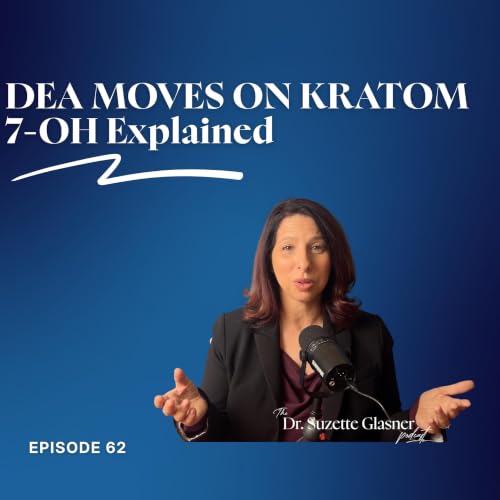
The DEA Just Moved to Schedule 7-OH — Here's What That Actually Means
カートのアイテムが多すぎます
カートに追加できませんでした。
ウィッシュリストに追加できませんでした。
ほしい物リストの削除に失敗しました。
ポッドキャストのフォローに失敗しました
ポッドキャストのフォロー解除に失敗しました

The DEA Just Moved to Schedule 7-OH — Here's What That Actually Means
-
ナレーター:
-
著者:
The DEA recently did something it tried and failed to do ten years ago: it moved to put a kratom-derived compound into Schedule I — the same category as heroin.
In 2016, the DEA tried to ban kratom outright and had to walk the action back within six weeks after a massive public backlash. This time is different, and the details matter — they reveal something real about how we regulate substances that live in a gray zone between supplement, medicine, and drug of abuse.
In this episode, Dr. Suzette Glasner — clinical psychologist and addiction scientist — breaks down what just happened with 7-hydroxymitragynine (7-OH), why regulators are treating it as an opioid, and what a decade of regulatory back-and-forth reveals about the limits of catching dangerous drugs before they cause harm.
Watch the full episode here:
Chapters:
0:00 Intro — Why This DEA Action Matters
1:19 Kratom vs. 7-OH — What’s Actually in These Products
3:59 The Pharmacology — Why 7-OH Acts Like a Potent Opioid
6:22 The 2016 DEA Failure and a Decade of Patchwork State Laws
10:27 How Drug Scheduling Actually Works (Schedule I Explained)
13:01 What the DEA’s New Notices of Intent Actually Do
14:24 Why the Kratom Industry Is Supporting This Action
14:51 The Caveat — Natural Leaf Kratom Isn’t Risk-Free Either
17:53 Recap and What to Watch For
📩 Questions or topic requests: AskDrGlasner@gmail.com
🧩 More from Dr. Glasner: https://drglasner.com
This is a public episode. If you would like to discuss this with other subscribers or get access to bonus episodes, visit drglasner.substack.com