• She Spent 16 Years Climbing the Ladder. Then She Pivoted. Dr. Tristin Brisbois
    2026/09/21

    What does it actually cost to walk away from something you spent eighteen years building?

    Dr. Tristin Brisbois has spent her whole career, in wildly different settings, chasing the same underlying question: what makes people well? It started with her PhD at the University of Alberta, a clinical trial giving cannabis to cancer patients to see if it could restore something chemotherapy had taken from them: the simple pleasure of tasting food. From there, she spent over a decade inside PepsiCo's Global R&D organization, climbing from scientist to Chief of Staff to director, optimizing that same pleasure at a global scale.

    Then, this April, just five months after winning a seat on Red Deer's city council on her first try, she left PepsiCo to focus on civil service.

    In this episode, we go back to the beginning and walk the whole arc:

    🔹 THE SCIENCE — What her cannabis-and-appetite research actually taught her about pleasure and quality of life
    🔹 THE CLIMB — PepsiCo Canada to New York, and the version of success she was chasing along the way
    🔹 THE LETTING GO — What it means to continue adapting to a career

    This isn't a policy interview, and it isn't a résumé. It's a conversation about ambition, appetite, and what's actually left once you stop chasing the next rung.

    ⏱️ What's Inside:
    00:00 – A hometown kid who climbed a global ladder
    — The PhD: cannabis, cancer, and the pleasure of eating again
    — The climb: PepsiCo Canada to New York
    — The five months of carrying both worlds
    — The week she chose to serve her community
    — What happiness looks like to her now

    If this conversation meant something to you, subscribe so you don't miss what's next.

    #TristinBrisbois #RedDeer #Happiness #CareerChange #Purpose

    Support the show

    続きを読む 一部表示
    1 時間
  • You're Running Two Races Every Day (And You Only Trained for One)
    2026/09/14

    Are you actually done when you walk through your front door, or does it just feel that way because you're exhausted?

    Justin Whitmel Earley finished a 10K Tough Mudder dead last among his peers, sixty seconds behind a twenty-two-year-old who collapsed into a chair the moment he crossed the line. But Earley didn't get to stop. His kids ran up. One of them said, "Now it's the kid race, Dad," and he picked his son up and ran the whole course again on his shoulders.

    In this episode, we unpack why that image says something uncomfortable about most driven men: we've trained our whole lives for one race: career, deadlines, deals, spreadsheets, and completely neglected the second one waiting at home. Somewhere around 6 p.m., we cross what feels like a finish line. But to our families, that front door was never the finish line. It's the starting gun.

    We talk about why "work-life balance" is the wrong framing from the start, because it treats work and family as competitors instead of what work was actually supposed to be: the tool you use to invest in the people you love.

    🔹 THE SIXTY SECONDS — A short driveway practice to transition from producer to servant before you walk inside
    🔹 THE FIRST FIVE MINUTES — Why picking up three things off the floor teaches your kids more than any lecture on leadership
    🔹 THE REFRAME — Why "I'm too exhausted" is often immaturity dressed up as fatigue, not the truth

    By the end, you'll have one small, concrete practice you can try tonight — before you even walk through your own door.

    ⏱️ What's Inside:
    00:00 – The Tough Mudder finish line
    — The two races every man is running
    — Why "balance" is the wrong goal
    — The 60-second driveway prayer
    — The first five minutes set the tone
    — This week's practice

    If this episode resonated with you, subscribe so you don't miss what's next.

    #Fatherhood #Marriage #Presence #Purpose #FaithAndFamily

    Support the show

    続きを読む 一部表示
    8 分
  • Our Filmmaker Breaks Down Every Step of Making Currency of Happiness - Behind the Scenes Dion Wiebe
    2026/09/07

    Ever wonder what actually happens before and after we hit record on this show?

    For this episode, I sat down with Dion Wiebe, the filmmaker behind The Currency of Happiness, to pull back the curtain on how this podcast really comes together. Dion isn't just running a camera. His whole approach starts with something he calls Storyfinding, a process of listening and understanding before a single frame is shot. That mindset shapes everything about how this show gets made, from the questions we ask in prep to the way an episode gets cut together at the end.

    We walk through both sides of the process: what it takes on the production side to plan, shoot, and edit an episode, and what it takes on my side as the host to prepare, show up, and have a real conversation instead of just reading questions off a page.

    🔹 STORYFINDING - Why Dion refuses to pick up a camera until he understands the story space and finds the right people to carry it
    🔹 THE PRODUCTION SIDE - What goes into planning, shooting, and editing an episode before you ever see it
    🔹 THE PREP SIDE - How I get ready to host a conversation that actually goes somewhere, instead of following a script
    🔹 WHY IT MATTERS - The difference between a podcast that just gets made and one that's built to mean something

    If you've ever been curious about what's happening off-camera, or you're thinking about starting something like this yourself, this one pulls back the whole process.

    ⏱️ What's Inside:
    00:00 - Why we wanted to show this side of the show
    - Storyfinding: listening before creating
    - The production side, start to finish
    - The prep side: how I get ready to host
    - What makes an episode actually work

    🔔 Subscribe for more conversations on purpose, meaning, and building a life worth living.

    Support the show

    続きを読む 一部表示
    25 分
  • Why Successful People Are Secretly Unhappy (3 Questions That Explain It)
    2026/08/31

    Are you happier now than you were ten years ago? Not richer. Not further along. Happier.

    Harvard professor Dr. Arthur Brooks has spent years studying that question, and his research reveals something uncomfortable: the people with the best jobs, the nicest homes, and the most real accomplishments are often privately struggling the most. Not because they lack success, but because they're missing the third "macronutrient" of happiness that success alone can never provide: meaning.

    In this episode, we break down Brooks' framework into three questions that can change how you see your own life:

    🔹 COHERENCE — Why did things happen the way they did in your life?
    🔹 PURPOSE — Why are you moving in the direction you're moving in?
    🔹 SIGNIFICANCE — Why does your life actually matter?

    We start with the story of Leo Tolstoy, a man with more wealth, fame, and legacy than almost anyone in history, who nearly ended his own life because none of it answered the one question underneath it all. Then we walk through what these three questions look like in real life: in your career, your marriage, your parenting, and the moments that felt pointless at the time but built something you can only see now, looking back.

    We'll also cover the four "idols" Brooks says people mistake for real meaning: money, power, pleasure, and fame. And why were none of them ever built to carry that weight?

    By the end, you'll have three questions to actually answer for yourself. Not in your head. Written down.

    ⏱️ What's Inside:
    00:00 – Are you happier than 10 years ago?
    — Coherence: The Tolstoy story
    — Purpose: Following the next rung vs. choosing your direction
    — Significance: Who has your life actually mattered to?
    — The four idols: money, power, pleasure, fame
    — This week's exercise

    If this episode meant something to you, subscribe so you don't miss what's next.

    Support the show

    続きを読む 一部表示
    19 分
  • Addiction Recovery in Canada: What Actually Happens Inside a Treatment Centre - Darryl Wilkie CEO
    2026/08/24

    What do you do the night you've decided this is either going to be the night you get help, or the night you don't wake up?

    Darryl Wilkie is the executive director of the Red Deer Dream Center, a residential addiction recovery facility built inside a former downtown nightclub, the same kind of building where many of his clients first tried the drugs that would go on to define years of their lives. With over 35 years of experience as a mental health and addictions therapist, Darryl has spent his career studying why some people get free from addiction and others don't, and he brings a perspective most professionals in his field can't: he's lived it himself, and he's currently walking through it as a father watching his own son fight the same disease.

    In this conversation, Darryl breaks down what actually drives addiction (it starts biologically, long before the first drink or drug), why "it's just a choice" is both true and dangerously incomplete, and why the average person goes through seven treatment programs before recovery finally sticks. Andrew shares the story of an addict who loaded a gun and set it on the table the night he decided to get help, what it was like to sit across from his own son during a relapse, and why he believes the addiction that nearly destroyed his life turned out to be the thing that taught him how to love himself.

    🔹 THE DISEASE — Why the predisposition exists before someone ever uses
    🔹 CHOICE — What "it's just a choice" gets right and where it falls apart
    🔹 THE BOTTOM — Why rock bottom looks different for every single person
    🔹 HIS STORY — Growing up unseen, hitting public exposure, and rebuilding from zero
    🔹 HIS SON — What it's like to apply everything you teach to your own child
    🔹 RECOVERY — Why it's a process, not an event, and why relapse isn't failure

    Connect with the Red Deer Dream Center:
    Website → rddc.ca
    Instagram → instagram.com/rd_dreamcentre
    Facebook → facebook.com/rddreamcentre

    ⏱️ What's Inside:
    00:00 - Inside the building that used to be a nightclub
    02:12 - What actually introduces addiction into someone's life
    06:55 - Can you find out you're predisposed before you ever use?
    08:17 - Why "it's just a choice" is dangerous half-truth
    13:18 - The client who loaded a gun and gave himself one night
    16:24 - Can other people show you where your bottom is?
    22:05 - How his own son's addiction changed his work
    36:54 - Darryl's story: growing up unseen and hitting rock bottom in public
    48:06 - The one message he'd leave his kids
    50:17 - What does happiness look like to you?
    51:01 - How to support the Red Deer Dream Center

    Money isn't the main currency of a good life. This podcast gives you the tools to build a life of meaning and fulfillment.

    Free Ultimate Goal Setting Framework → thecurrencyofhappiness.com

    Subscribe on YouTube → youtube.com/@thecurrencyofhappiness

    Instagram → instagram.com/thecurrencyofhappiness

    Listen on Spotify and Apple Podcasts → Search "The Currency of Happiness"

    If this episode hit home, share it with one person. Every share helps build what comes next.

    #AddictionRecovery #MentalHealth #Sobriety #RecoveryJourney #FaithBasedRecovery #RedDeer #AddictionTherapy #HopeAndHealing #TheCurrencyOfHappiness #RoadToRecovery

    Support the show

    続きを読む 一部表示
    56 分
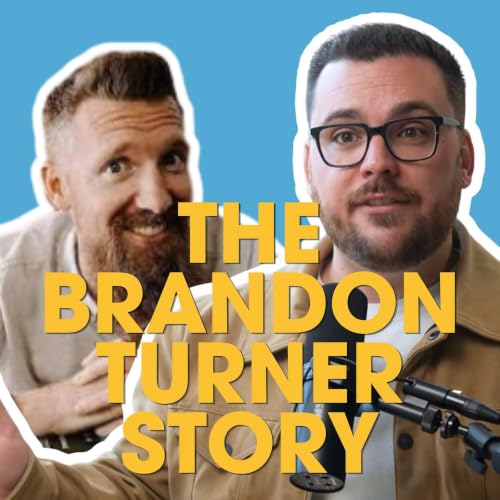
  • Brandon Turner's Story: How He Left BiggerPockets and Built Something Bigger
    2026/08/17

    What do you need to let go of to get to the next level of your life?

    There's a kid in Washington state lying in the dark, listening for the sound of the front door. Waiting for his dad to come home from work. His dad was a good man who worked hard and provided for his family. But the job owned him. The schedule owned him. And that kid made himself a quiet promise, the kind you make before you're old enough to know how hard it is to keep: I will be there for my kids. Whatever it takes.

    That promise became the engine behind everything Brandon Turner built next.

    He graduated with a history degree, got accepted to law school, and was on track for a life he could already see the shape of. Then a former high school bully sent him a Facebook message asking if he'd read Rich Dad Poor Dad. He hadn't. He read it anyway, and something cracked open. He called his parents to tell them he was quitting law school. His dad told him people lose money in real estate. He bought a duplex at 21 anyway, lived in the smaller half, and rented out the rest while working three jobs to make the math work.

    That duplex became a portfolio of thousands of units. A podcast that reached 100 million downloads. A firm managing close to a billion dollars in assets. And then, at the peak of it, he walked away.

    🔹 THE TEACHER - Why learning from someone before they're famous creates a different kind of trust, and how Brandon's voice showed up for me long before I ever met him
    🔹 THE QUESTION - The question his performance coach asked that changed everything: not what do you need to add, but what do you need to let go of
    🔹 THE LETTING GO - What it actually looked like to step away from the biggest thing he'd ever built, and why the identity attached to it had to go first
    🔹 THE MISSION - How Better Life became a wealth-building platform with one goal: donate a billion dollars to organizations fighting human trafficking, not through charity, but through capitalism

    This episode is my telling of Brandon's story, and what it opened up in me personally, including why this podcast films at the Child Advocacy Center and where our sponsorship revenue goes.

    Money isn't the main currency of a good life. This podcast gives you the tools to build a life of meaning and fulfillment.

    ⏱️ What's Inside:
    00:00 - The kid waiting in the dark for his dad
    - The Facebook message from a bully that changed his path
    - Buying a duplex at 21 with no money of his own
    - Building Bigger Pockets into the #1 real estate podcast on the planet
    - The question that made him walk away at the peak
    - Better Life and the billion-dollar goal
    - What do you need to let go of?

    Free Ultimate Goal Setting Framework → thecurrencyofhappiness.com

    Subscribe on YouTube → [The Currency of Happiness](https://www.youtube.com/channel/UCEfIZonPF7EJIJpyIuZinGQ)
    Instagram → instagram.com/thecurrencyofhappiness
    Listen on Spotify and Apple Podcasts → Search "The Currency of Happiness"

    If this episode hit home, share it with one person who needs to hear it.

    Support the show

    続きを読む 一部表示
    16 分
  • Small Business Marketing Strategy: Why Your Marketing Isn't Working and How to Fix It - Peter DeWit - Edge Marketing
    2026/08/10

    Most small business owners aren't bad at marketing. They're doing random acts of marketing, spending before strategizing, chasing trends, trying things without a plan, then wondering why none of it sticks. The problem almost never is the budget. It's that the strategy was never there to begin with.

    Peter DeWit is the owner of EDGE Marketing and Design, a strategist with 25 years of experience working almost exclusively with small and medium businesses, and a marketing instructor at Red Deer Polytechnic and Burman University. He built EDGE in 2008, during the global financial crisis, which tells you something about the kind of person he is. He now sits at the intersection of marketing strategy, digital execution, and AI adoption, and he has seen every version of what works and what quietly drains a business dry.

    In this episode, Andrew and Peter get into why most businesses skip strategy entirely and what it costs them, how to define your ideal client when the instinct is to say everyone, where businesses are losing customers they almost had, and why referrals are the cheapest form of marketing that most businesses still leave to chance.

    🔹 STRATEGY FIRST — Why jumping into tactics before identifying your ideal client wastes time, money, and effort
    🔹 THE CUSTOMER IS THE HERO — Why talking about your own business instead of your customer's problem is the fastest way to lose someone's attention
    🔹 RELATIONAL OVER TRANSACTIONAL — Why a simple follow-up system with past clients often beats chasing brand new leads

    We also cover what AI actually does for a small business right now, not in theory, and the hardest marketing truth Peter has had to tell a client after 25 years in the room.

    If you've ever felt like your marketing is busy but not working, this conversation is for you.

    ⏱️ What's Inside:
    00:00 – Why marketing and sales are more connected than most owners think
    — Random acts of marketing and how to avoid it
    — Strategy first: identifying your ideal client, your message, and your channel
    — Branding versus building the business
    — The power of personal brand over corporate brand
    — Follow-up systems and staying relational with past clients
    — Where AI actually helps in marketing today
    — The hardest truth Peter tells clients
    — What happiness means to Peter

    Connect with Peter → edgemarketing.ca | peterdewit.com

    Money isn't the main currency of a good life. This podcast gives you the tools to build a life of meaning and fulfillment.

    Free Ultimate Goal Setting Framework → thecurrencyofhappiness.com

    Subscribe on YouTube → /@thecurrencyofhappiness
    Instagram → instagram.com/thecurrencyofhappiness
    Connect with Peter → edgemarketing.ca | peterdewit.com
    Listen on Spotify and Apple Podcasts → Search "The Currency of Happiness"

    Support the show

    続きを読む 一部表示
    35 分
  • Walt Disney Lost Everything and Created Mickey Mouse: The Leadership Lesson Nobody Talks About
    2026/08/03

    What is the one thing you would not give up, even if it meant losing everything you have built?

    In February 1928, Walt Disney sat across a table in New York from Charles Mintz, expecting to negotiate a bigger budget. Instead, he learned Universal Pictures now owned Oswald the Lucky Rabbit, his hit character, and that Mintz had already signed away most of Disney's own animators behind his back. He had two options: take a pay cut and keep working on Oswald under someone else's control, or walk away with nothing.

    He walked away. On the train ride back to Los Angeles, with no plan and no guarantee of anything, he started sketching. That sketch became Mickey Mouse.

    Most people tell this as a resilience story: Disney lost something, then bounced back. It fits neatly on a motivational poster. It also isn't quite what happened. Disney didn't lose Oswald. He traded him, on purpose, fully aware of what it would cost. And that specific refusal is what made everything after it possible.

    🔹 THE FALL - Bankruptcy in Kansas City, a broken promise, and the meeting where Disney lost his only successful character
    🔹 THE LINE - Why he turned down a deal that most people would have taken, and what he refused to compromise
    🔹 THE BUILD - How that one refusal led to Steamboat Willie, Snow White, and Disneyland, each one built against experts who said it couldn't work

    This episode uses Disney's story to ask a harder question: what happens when something you have built is on the table and someone is asking you to choose? Most people don't find their line until they are already in the room and the pressure is on. By then it is too late to think clearly. Disney knew his line before he got there.

    ⏱️ What's Inside:
    00:00 - The meeting that cost Disney everything
    - Kansas City: the bankruptcy before the breakthrough
    - Oswald the Lucky Rabbit and the deal he refused
    - The train ride and the sketch that became Mickey Mouse
    - Steamboat Willie, Snow White, and Disneyland: built against the odds
    - What is the line you would not cross?

    If this episode resonated with you, subscribe so you don't miss what's next.

    #WaltDisney #MickeyMouse #Leadership #PersonalGrowth #Entrepreneurship #Resilience #CurrencyOfHappiness

    Support the show

    続きを読む 一部表示
    12 分