Pipeline Strategy: Balancing Science, Feasibility, and ROI in Clinical Development Decisions
What does it take to make confident, cross-functional pipeline decisions that drive approval speed and sustainable value for companies in today’s clinical research landscape?
Moderated by Emily Roberts-Thomson, Development Operations Leader
Featuring:
• Raj Patel, Chief Operating Officer, ReacX Pharmaceuticals
• Nikhil Dube, Lifecycle Management Strategy Lead, Biogen
• Mukhtar Ahmed, Director, Project and Portfolio Strategy, Greenstone Biosciences
Recorded live at COG Bay Area, this candid panel brings together executive decision-makers from biotech and pharma to break down how leaders navigate real-world portfolio strategy. The episode centers on operational and strategic considerations behind advancing programs through clinical development, highlighting the balance between scientific conviction, development feasibility, market opportunity, and the resource reality facing large and small organizations.
Across the discussion, guests confront the hard questions: How do companies form pipeline priorities when there’s no single formula and risk is high? How is cross-functional alignment reached amid competing perspectives from research, clinical, and business stakeholders? What happens when market forces or funding landscapes suddenly shift, and clinical priorities must adapt in real time?
The conversation offers practical takeaways for leadership teams, study managers, and anyone responsible for portfolio and governance in clinical operations. Listeners will hear direct examples and best practices in portfolio rationalization, aligning R&D and commercial goals, preparing for investor scrutiny, and maintaining flexibility as science, funding, and the therapeutic landscape evolve.
Timestamped Overview00:03:22 – The critical variables in pipeline decision-making: time to approval, cost, risk profile, and investor priorities in smaller companies.
00:04:45 – Defining the three pillars of commercial portfolio review: scientific rigor, development feasibility, and commercial opportunity.
00:06:14 – Smaller company perspectives: building agility with scientific depth, setting translational feasibility as a practical filter.
00:08:02 – Balancing scientific conviction and commercial realities: frameworks for vetting high-risk, high-potential targets and business discipline in early-stage programs.
00:10:12 – When to deprioritize mechanistically elegant targets that lack translational or commercial plausibility.
00:12:00 – How individual leadership mindsets shift from discovery focus to financial pragmatism with career progression.
00:13:28 – The real challenges of cross-functional alignment: gaining buy-in when teams or investors disagree on program value.
00:16:22 – The unpredictable journey: case example where ‘unexpected’ surviving candidates emerge as portfolio winners.
00:17:05 – The influence of investors and boards - how market timing and external conditions force rapid portfolio shifts.
00:19:03 – Best practices in large-company collaboration: integrating collective baselining and focused scenario-building across commercial and scientific domains.
00:21:38 – Running transparent, non-siloed portfolio processes in smaller biotech - connecting scientific and business data, KOL feedback, and investor imperatives to rapid cycle decisions.
Top 3 Takeaways- Successful portfolio prioritization demands a rigorous cross-functional lens -combining scientific rationale, operational feasibility, and realistic assessments of funding and market drivers.
- Transparent discussions and alignment between R&D, clinical, and commercial functions are critical...


 2026/02/2623 分
 28 分
28 分 28 分
28 分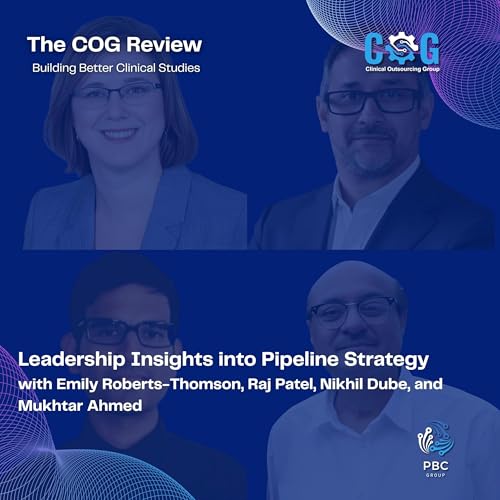 26 分
26 分 32 分
32 分 2026/01/0921 分
 2025/12/1632 分