エピソード

  • #18 EuroStack
    2026/04/03

    In this episode, Toby and Krisztian dive into EuroStack, an industry-led lobby initiative pushing for European digital sovereignty. Krisztian breaks down what EuroStack is, what it proposes, and why it matters now. They cover the scale of Europe's dependency on non-European tech (260 billion euros per year flowing out), what it actually means to be a "European" company, how public procurement could bootstrap a European tech ecosystem, and why trust in US hyperscalers has finally broken. They also explore the companion site euro-stach.com, a directory of 1620+ European alternatives across 64 categories.

    https://techleaguepodcast.com/

    LinkedIn: https://www.linkedin.com/company/techleague-podcast/

    Instagram: https://www.instagram.com/techleaguepodcast/

    Apple Podcasts: https://podcasts.apple.com/us/podcast/tech-league/id1852602975

    Spotify: https://open.spotify.com/show/1zx8UIe2EjawuVU3I31fdP

    Chapters

    0:00 Introduction

    1:30 What is EuroStack and why Krisztian is excited about it

    4:00 The scale of the problem: 260 billion euros/year leaving Europe

    7:00 Europe as a fragmented market vs the US and China

    10:00 The three pillars: Buy European, Sell European, Fund European

    13:00 How public procurement can generate demand and bootstrap growth

    17:00 The 1-to-10 ratio: every public euro attracting 10 private

    20:00 Risk of government focus pulling cloud providers away from innovation

    24:00 Startup acquisition culture: why European exits go to US companies

    28:00 Defining "European": jurisdiction, control, supply chain, no extra-EU restrictions

    33:00 AWS sovereign cloud: smoke and mirrors

    37:00 Timeline to 2030 and the gradual transition approach

    40:00 Geopolitical risk: Ukraine, Starlink, and the dependency reality

    44:00 European openness vs American/Chinese protectionism

    48:00 Why trust in US tech has finally broken

    52:00 Opportunities for European engineers and companies

    55:00 Wrap-up

    Technologies and Initiatives Mentioned
    EuroStack initiative: https://eurostack.eu/

    Solution directory: https://euro-stack.com

    Scaleway - https://www.scaleway.com

    OVH Cloud - https://www.ovhcloud.com

    続きを読む 一部表示
    50 分
  • #17 Testing in the AI era
    2026/03/27

    In this episode, Toby and Krisztian welcome their first proper guest: Alan Richardson, a 30-year software veteran and testing specialist known as Evil Tester. They dig into testing in the AI era: how to test AI-generated code, whether TDD still makes sense with AI, why self-healing tests are a red flag, and how AI is opening up security and adversarial testing. Alan makes the case for architecture-first development as the key to getting good test output from AI agents.

    https://techleaguepodcast.com/

    LinkedIn: https://www.linkedin.com/company/techleague-podcast/

    Instagram: https://www.instagram.com/techleaguepodcast/

    Apple Podcasts: https://podcasts.apple.com/us/podcast/tech-league/id1852602975

    Spotify: https://open.spotify.com/show/1zx8UIe2EjawuVU3I31fdP

    Chapters

    0:00 Introduction and guest intro: Alan Richardson (eviltester.com)

    2:00 Why testing matters more in the AI code generation era

    5:30 Architecture-first: good code leads to good tests

    10:00 Does TDD work with AI? Why it mostly doesn't

    14:30 Playwright and UI tests: the abstraction problem

    23:00 Information theory and what testing actually is

    27:00 Adversarial AI testing: using AI to exploit your own CVEs

    33:00 Security scanning tools vs penetration testing with AI

    38:30 Domain expertise still matters

    43:00 Generalist vs specialist in the AI era

    47:00 The junior developer pipeline problem

    51:00 Will AI homogenise software and design?

    54:00 Wrap-up

    Links:

    Evil Tester https://eviltester.com

    Playwright: https://playwright.dev/

    Agentic EQ: https://agentic-qe.dev/

    Vite: https://vite.dev/

    Claude : https://claude.com/

    Snyk: https://snyk.io/

    Aikido: https://www.aikido.dev

    Hacker One: https://www.hackerone.com/

    Wiz: https://www.wiz.io/


    続きを読む 一部表示
    1 時間 9 分
  • #16 Bunny CDN
    2026/03/20

    In this episode, Toby and Krisztian continue their EU cloud deep dive with a hands-on look at Bunny CDN (bunny.net). Toby used it to launch the new TechLeague podcast website on a static Astro site in under 10 minutes, with Terraform infrastructure, built-in DNS, automatic SSL, and GitHub Actions deployment. They cover the full product offering including CDN, object storage, video streaming with free transcoding, edge scripts, magic containers, and BunnyShield security. They also touch on Tangled.sh, a Helsinki-based distributed git platform built on the AT Protocol that recently raised 3 million euros.

    https://techleaguepodcast.com/

    LinkedIn: https://www.linkedin.com/company/techleague-podcast/

    Instagram: https://www.instagram.com/techleaguepodcast/

    Apple Podcasts: https://podcasts.apple.com/us/podcast/tech-league/id1852602975

    Spotify: https://open.spotify.com/show/1zx8UIe2EjawuVU3I31fdP

    Chapters

    0:00 Introduction

    1:21 Building the TechLeague website with Astro and Bunny CDN

    2:57 Built-in DNS and automatic SSL

    4:46 Deploying static files: FTP now, S3 compatibility coming

    5:28 Sign-up experience and free credits

    6:00 Standard vs Volume network tiers

    7:00 Company background: Slovenian, EU-based, 120+ PoPs globally

    8:28 Full product overview: storage, stream, DNS, edge, containers

    10:18 Video streaming with free transcoding

    11:00 Pricing: $0.01/GB storage, $0.01/GB egress

    12:27 Limitations: not a full cloud provider

    14:30 Magic containers: serverless with anycast IP

    17:00 BunnyShield: WAF, DDoS protection, rate limiting

    18:49 BunnyOptimizer: on-the-fly image resizing via URL params

    19:46 SLA and EU sovereignty

    22:00 Can it replace CloudFront?

    23:00 getdeploying.com for comparing CDN providers

    24:00 Could we host podcast videos on Bunny?

    26:50 Reflection: EU cloud is better than we thought

    28:05 Tangled.sh: a distributed EU git platform on the AT Protocol

    31:14 Wrap-up

    Technologies Mentioned

    Bunny CDN - https://bunny.net?ref=v8cfwfmh3r

    Astro - https://astro.build

    Terraform - https://www.terraform.io

    Tangled.sh - https://tangled.sh

    getdeploying.com - https://getdeploying.com

    Scaleway - https://www.scaleway.com

    AT Protocol - https://atproto.com

    続きを読む 一部表示
    35 分
  • #15 Agentic Engineering
    2026/03/13

    In this episode, Toby and Krisztian share their hands-on experiment building a real group management app using Claude Code and agentic engineering. Toby spent roughly a month's worth of hours prompting Claude to build a cross-platform mobile and web app with Expo, a Node/Express API, Postgres on Scaleway, Hanko authentication and Terraform infrastructure — all without looking at the code. They discuss what worked surprisingly well, what fell apart, the token costs, how agentic engineering compares to managing juniors, and what they would do differently next time.

    https://techleaguepodcast.com/

    LinkedIn: https://www.linkedin.com/company/techleague-podcast/

    Instagram: https://www.instagram.com/techleaguepodcast/

    Apple Podcasts: https://podcasts.apple.com/us/podcast/tech-league/id1852602975

    Spotify: https://open.spotify.com/show/1zx8UIe2EjawuVU3I31fdP

    Chapters

    0:00 Introduction: the experiment

    1:15 Why Expo for cross-platform mobile and web

    2:54 The architect document approach

    5:50 How the initial prompt and brainstorming worked

    7:45 Not looking at the code

    9:05 Context7: giving Claude access to latest API docs

    10:35 First pass results

    12:46 API and database quality: better than expected

    14:40 UI issues: the weak spot

    17:20 The bug list testing session

    24:23 How sub-agents and parallel work played out

    26:07 The Claude usage limit dark pattern

    28:15 What it cost: 247 euros for roughly 100 hours of work

    31:30 Code quality and lessons from the spec

    38:48 The testing problem: agents writing tests for their own code

    45:20 The 80/20 rule: great at the fun stuff, weak on the boring

    50:30 SaaS disruption: custom software at commodity prices

    57:25 How to build LLM memory and learning loops

    1:00:25 Summary and what we would do differently

    Technologies Mentioned

    Claude Code - https://claude.ai/code

    Expo - https://expo.dev

    Scaleway - https://www.scaleway.com

    Hanko - https://hanko.io

    Terraform - https://www.terraform.io

    Playwright - https://playwright.dev

    Context7 - https://context7.com

    Node.js - https://nodejs.org

    PostgreSQL - https://www.postgresql.org

    続きを読む 一部表示
    1 時間 2 分
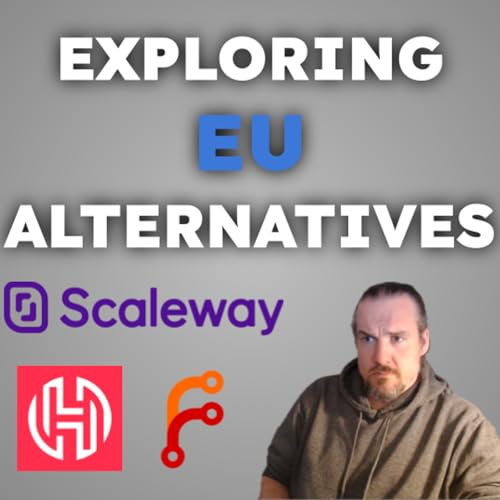
  • #14 EU Cloud Alternatives - Scaleway
    2026/02/27

    In this episode, Toby and Krisztian kick off an ongoing series exploring the EU cloud and software stack. Following a previous episode on EU digital sovereignty, they have set themselves a challenge: build their side projects entirely on EU-based services. This episode covers hands-on experience with Forgejo for source code management, Scaleway as a cloud provider, and Hanko for authentication. They share honest feedback on what works, what doesn't, and where the gaps are compared to the big American hyperscalers.

    https://techleaguepodcast.com/

    LinkedIn: https://www.linkedin.com/company/techleague-podcast/

    Instagram: https://www.instagram.com/techleaguepodcast/

    Apple Podcasts: https://podcasts.apple.com/us/podcast/tech-league/id1852602975

    Spotify: https://open.spotify.com/show/1zx8UIe2EjawuVU3I31fdP

    Chapters

    0:00 Introduction and the EU sovereignty challenge

    1:48 Finding EU alternatives: european-alternatives.eu

    3:47 Looking for a GitHub replacement

    5:50 Forgejo: the open-source Gitea fork

    8:27 What works in Forgejo and what doesn't

    10:46 Hosting Forgejo on Scaleway

    13:48 The gap between self-hosting and a managed service

    15:18 Scaleway overview: regions, services and Terraform support

    20:35 Scaleway serverless functions and containers

    25:02 Service-to-service authentication

    28:34 Deploying Forgejo, databases and runners on Scaleway

    36:04 Logging, metrics and Cockpit observability

    40:27 Scaleway regions: Amsterdam, Paris, Warsaw

    42:25 IAM limitations and enterprise considerations

    44:14 Hanko: EU-native user authentication

    48:32 Comparing EU stack total cost vs AWS plus Datadog

    50:05 What's next: OVH, Hetzner, Infomaniak

    Technologies Mentioned

    - EU alternatives: https://european-alternatives.eu

    - Codeberg: https://codeberg.org

    - Forgejo: https://forgejo.org

    - Scaleway: https://www.scaleway.com/en/

    - OVHcloud: https://www.ovhcloud.com/en/

    - UpCloud: https://upcloud.com

    - Hetzner: https://www.hetzner.com

    - Elastx: https://elastx.se/en

    - Hanko: https://www.hanko.io

    続きを読む 一部表示
    54 分
  • #13 OpenClaw
    2026/02/20

    In this episode, Toby is joined by Xavier (Zavi) for a relaxed conversation about OpenClaw, an open-source project that lets you build a personalised, memory-aware AI assistant running on your own hardware. They share hands-on experiences setting it up with Telegram, Claude and local models, and discuss what makes it feel different from a standard chat interface: persistent memory in markdown files, heartbeat schedules, proactive check-ins, and a soul file that shapes personality over time. The conversation also covers security, prompt injection risks, the skill ecosystem, local model options, and the cultural questions around long-running AI companions.

    https://techleaguepodcast.com/

    LinkedIn: https://www.linkedin.com/company/techleague-podcast/

    Instagram: https://www.instagram.com/techleaguepodcast/

    Apple Podcasts: https://podcasts.apple.com/us/podcast/tech-league/id1852602975

    Spotify: https://open.spotify.com/show/1zx8UIe2EjawuVU3I31fdP

    Chapters

    0:00 Introduction

    0:33 What is OpenClaw?

    1:40 Why does it feel different from a standard AI chat?

    3:51 Setting it up: first impressions

    4:45 Practical use cases: standups, workshop manuals, tractor parts

    7:04 How the heartbeat and memory systems work

    9:15 Cron jobs, proactive tasks and the soul file

    12:06 The internals: TypeScript, service daemon, CLI and web UI

    14:23 Security model: token auth, Tailscale, least-privilege access

    17:42 Prompt injection risks

    21:30 The skill ecosystem and supply chain risks

    28:25 Local model support and failover between providers

    32:55 Running local models: gaming laptops, Apple Silicon, VRAM

    38:35 Different bot instances developing different personalities

    41:45 Long-running AI companions and what they mean for society

    44:55 Manipulation risk and the corporate AI companion future

    48:15 Practical advice: what to give it access to, and what not to

    Technologies Mentioned

    OpenClaw - https://openclaw.dev

    Claude (Anthropic) - https://www.anthropic.com

    Telegram - https://telegram.org

    Ollama - https://ollama.ai

    Tailscale - https://tailscale.com

    続きを読む 一部表示
    53 分