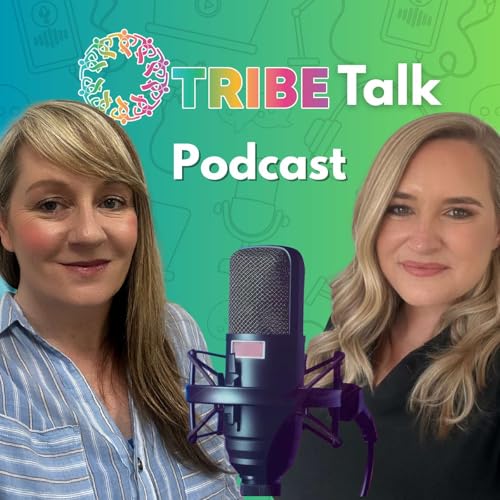
『TRIBE Talk』のカバーアート

TRIBE Talk

TRIBE Talk

著者: Laura Neal & Rachel Evans
無料で聴く

Welcome to TRIBE Talk, the podcast where we talk trauma-informed care. Hosted by Laura Neal and Rachel Evans, from The Behaviour Therapy Clinic, the creators of the TRIBE model of Trauma Informed Care. Each episode explores real stories, practical strategies, and the science behind supporting children, families, and carers through adversity.


We dive into the challenges of parenting and caring for children impacted by trauma, share insights from behavioural science and therapy, and offer practical tools you can use in everyday life. Whether you’re a foster carer, adoptive parent, social worker, educator, or therapist, TRIBE Talk is here to help you turn trauma theory into trauma-informed practice.


Join us for compassionate conversations, expert advice, and a dose of inspiration—because every child deserves care that heals.

© 2026 TRIBE Talk
人間関係 子育て
エピソード
  • What To Do When Your Child's Behaviours Are Escalating | #TRIBE Talk - Ep. 33
    2026/05/26

    Send us Fan Mail

    In this episode of TRIBE Talk, we explore what to do when a child’s behaviour feels like it is escalating—when emotions are becoming bigger, conflict is increasing, and strategies that once worked no longer seem effective. For many parents and carers, these moments can feel overwhelming, exhausting, and difficult to make sense of.

    Using a trauma-informed and behavioural lens, we unpack what may sit underneath escalating behaviours and why children often communicate distress through actions rather than words. This episode focuses on practical, compassionate responses that help reduce escalation, strengthen regulation, and rebuild connection—supporting adults to move away from reactive cycles and towards calmer, more effective support.

    Check Out TRIBE Trauma Informed Care Here: https://www.tribecare.org/

    Episode Highlights:

    • Why behaviours may escalate over time
    • Understanding the difference between “won’t” and “can’t”
    • How stress, overwhelm, and unmet needs show up behaviourally
    • Common adult responses that accidentally increase escalation
    • Practical de-escalation and co-regulation strategies
    • Why connection and predictability matter during difficult moments
    • Knowing when additional support may be needed
    続きを読む 一部表示
    28 分
  • 5 Things Foster Carers Wish Professionals Knew About Trauma-Informed Care | #TRIBE Talk - Ep. 32
    2026/05/11

    Send us Fan Mail

    In this episode of TRIBE Talk, we bring the voice of foster carers to the forefront highlighting what they wish professionals truly understood about trauma-informed care. Foster carers are on the front line of supporting children with complex trauma, yet their insights are often underrepresented in decision-making, planning, and intervention design.

    This episode explores five key messages that can transform how professionals work alongside carers—moving from fragmented, inconsistent approaches to more aligned, relational, and effective support. Grounded in real-world experience and trauma-informed principles, this conversation focuses on improving collaboration, strengthening understanding, and ultimately achieving better outcomes for children.

    Check out the TRIBE Trauma Informed Care training at: https://www.tribecare.org/

    Episode Highlights:

    • Why consistency between home and professional input is critical
    • The importance of listening to and valuing carers’ lived experience
    • How misalignment between professionals and carers impacts children
    • Supporting carers, not just the child
    • Building stronger, more collaborative relationships between carers and professionals
    続きを読む 一部表示
    22 分
  • Why Endings Are So Hard for Care-Experienced Children | | #TRIBE Talk - Ep. 31
    2026/05/04

    Send us Fan Mail

    In this episode of TRIBE Talk, we explore why endings, big or small, can feel particularly difficult for care-experienced children. Whether it’s the end of a visit, a school day, a relationship, or a placement, these moments can trigger intense emotional responses that may seem disproportionate to what’s happening in the present.

    Through a trauma-informed lens, we unpack how past experiences of loss, separation, and unpredictability shape children’s responses to endings. We discuss how these experiences can impact trust, emotional regulation, and expectations of relationships, and why endings may be experienced as unsafe rather than simply transitional.

    This episode offers practical, compassionate guidance for parents, carers, and professionals—helping you understand what sits beneath these reactions and how to support children through endings in a way that builds safety, predictability, and emotional resilience over time.

    Episode Highlights:

    • Why endings can feel overwhelming for care-experienced children
    • The impact of loss, separation, and disrupted attachments
    • How past experiences shape present reactions to endings
    • Why even small transitions can trigger big emotions
    • The role of predictability and preparation
    • Practical ways to support children before, during, and after endings
    • Building trust and emotional safety around transitions
    続きを読む 一部表示
    23 分
adbl_web_anon_alc_button_suppression_c
まだレビューはありません