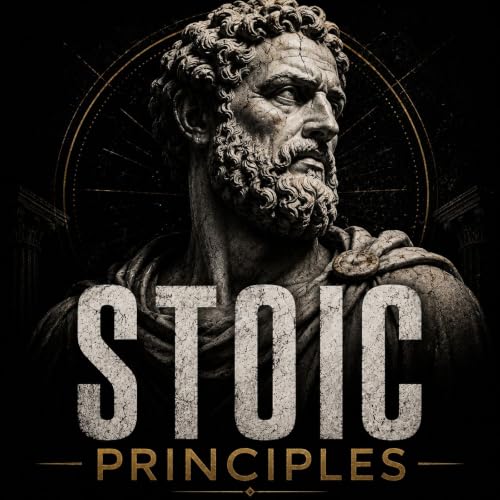
『Stoic Principles』のカバーアート

Stoic Principles

Stoic Principles

著者: OBOMEDIA ENTERTAINMENT
無料で聴く

Unlock ancient wisdom for modern challenges. Stoic Principles is your daily guide to cultivating inner peace, resilience, and practical virtue in a chaotic world.

Every day, we delve into the core tenets of Stoicism, exploring timeless teachings from figures like Seneca, Marcus Aurelius, and Epictetus. Discover actionable strategies to manage emotions, overcome adversity, and live a more purposeful life, all through the lens of this profound philosophy. This podcast offers clear, concise insights designed to integrate seamlessly into your busy schedule.

New episodes arrive seven days a week, every Monday through Sunday, promptly at 8:00 AM. Each short, impactful session provides a focused reflection or a practical exercise to start your day with intention and clarity. It's the perfect way to build a consistent practice of self-improvement and philosophical reflection.

This show is for anyone seeking mental fortitude, ethical guidance, and a framework for a tranquil existence. If you're looking to develop a stoic mindset and apply these powerful principles to your daily life, you've found your essential resource.

Subscribe now to begin your journey towards a more resilient and meaningful life.Copyright OBOMEDIA ENTERTAINMENT
個人的成功 自己啓発
エピソード
  • How to Love Your Worst Moments: Stoic Rules for Resilience
    2026/07/15
    Stop Chasing Approval: Reclaim Self-Worth the Stoic Way

    Anger in traffic, a failed business, the death of a child - stoicism promises not calm surroundings but a way to move through any world without losing yourself. Marcus Aurelius kept a private journal called the Meditations and Epictetus taught that what disturbs us is not events but our judgments about them; can learning Amor Fati and the dichotomy of control change how you meet suffering?

    In this episode, we present ten core Stoic lessons and their plain-language applications to everyday problems like grief, failure, and the replay loop of regret, asking whether you can say yes to your life as it is and use pain as raw material for growth.

    Person: Marcus Aurelius
    Work: Meditations
    Person: Epictetus
    Concept: Amor Fati
    Concept: Dichotomy of control

    - Marcus Aurelius commanded armies, governed an empire, and faced plague, betrayal, and the deaths of children while writing a private journal.
    - The Stoics described living according to nature, reason, and virtue as their practice.
    - Amor Fati is Latin for "love of fate" and asks if you could affirm living your exact life again.
    - Epictetus, a former enslaved man, taught that what disturbs us are our judgments about events rather than the events themselves.
    - Elena, age thirty-seven, experienced a business failure that unfolded over about ninety days and later spent weeks replaying decisions.

    To listen to this podcast ad-free and access premium episodes, try our subscription with a 30-day free trial at obomedia.com.

    © 2026 OBOMEDIA. All rights reserved.
    This episode and its content (audio, text, and related materials) are the exclusive property of OBOMEDIA and are protected by applicable copyright laws. Reproduction, distribution, editing, or commercial use, in whole or in part, without prior written permission from OBOMEDIA is prohibited. For permissions, licensing, and business inquiries: business@obomedia.com.
    続きを読む 一部表示
    24 分
  • Stop Chasing Approval: Reclaim Self-Worth the Stoic Way
    2026/07/14
    Keep These 7 Stoic Secrets Private - Silence That Wins Life

    There is a chest-tight exhaustion that comes from giving and watching it disappear into silence; Stoics taught that your value lives inside you, not in another person's response. What if the first change needed is not how you present yourself, but how you understand your own worth?

    In this episode, we trace the Stoic pattern for reclaiming inner value and outline nine sequential steps that rebuild the mind's ground, asking how you can care deeply without depending on outcomes. What practical shift stops you from borrowing your identity from the room?

    Person: Epictetus
    Person: Marcus Aurelius
    Person: Seneca
    Topic: Stoic nine-step practice for internal valuation
    Event: repeated giving met with inconsistent return

    - The episode identifies a specific emotional signal: a persistent tightness in the chest after giving without reciprocal response.
    - Marcus Aurelius is quoted advising that you have power over your mind, not over outside events, as the origin of strength.
    - Epictetus is cited warning to be careful whom you associate with because habits are imitated between people.
    - The host describes a common behavioral pattern: someone remembers birthdays, checks in first, and initiates contact for weeks or months without consistent reciprocation.
    - The episode presents a sequence of nine steps (not tricks) that build on one another to shift from external validation to internal valuation.

    To listen to this podcast ad-free and access premium episodes, try our subscription with a 30-day free trial at obomedia.com.

    © 2026 OBOMEDIA. All rights reserved.
    This episode and its content (audio, text, and related materials) are the exclusive property of OBOMEDIA and are protected by applicable copyright laws. Reproduction, distribution, editing, or commercial use, in whole or in part, without prior written permission from OBOMEDIA is prohibited. For permissions, licensing, and business inquiries: business@obomedia.com.
    続きを読む 一部表示
    25 分
  • Keep These 7 Stoic Secrets Private - Silence That Wins Life
    2026/07/13
    Win By Staying Yourself: Stoic Habits That End the Inner Revenge

    Quieting your words can change your inner life and your outcomes: Marcus Aurelius wrote “Don't be overheard complaining - not even to yourself” in a private notebook 2,300 years after Zeno's silence lesson. Which seven areas of speech are costing you progress, and why does announcing success sometimes replace it?

    In this episode, we follow stories from Zeno and Marcus Aurelius and lay out the seven Stoic areas where speaking too much measurably harms you. We explain the difference between accountability and announcement, how internal self-talk functions as action, and why silence can be a discipline that preserves momentum and wellbeing.

    Person: Zeno of Citium
    Person: Marcus Aurelius
    Work: Meditations
    Time span: roughly 2,300 years since Zeno's anecdote
    Concept: seven Stoic areas where speech causes harm

    - Zeno responded to a man talking too much by pointing first to his ears and then to his mouth.
    - Marcus Aurelius wrote the rule “Don't be overheard complaining - not even to yourself” in his private Meditations.
    - The transcript says Zeno's anecdote occurred roughly two thousand three hundred years ago.
    - The episode identifies seven specific areas of life where speaking too soon or too much causes direct damage.
    - The transcript contrasts accountability (one trusted person checking in) with announcement (broadcasting progress and receiving admiration).

    To listen to this podcast ad-free and access premium episodes, try our subscription with a 30-day free trial at obomedia.com.

    © 2026 OBOMEDIA. All rights reserved.
    This episode and its content (audio, text, and related materials) are the exclusive property of OBOMEDIA and are protected by applicable copyright laws. Reproduction, distribution, editing, or commercial use, in whole or in part, without prior written permission from OBOMEDIA is prohibited. For permissions, licensing, and business inquiries: business@obomedia.com.
    続きを読む 一部表示
    26 分
adbl_web_anon_alc_button_suppression_t1
まだレビューはありません