エピソード

  • The Student Intifada Is Alive and Well, and on Both Coasts: Talking with Members of Students for Justice in Palestine
    2025/12/11

    Intimidation, repression, and punishment with regard to activism for Palestine has only increased over the past year. Today I speak with three campus organizers from Students for Justice in Palestine who remain determined and committed, even in the face of their university’s complicity with genocide. They come from both coasts of the United States—from the City University of New York and from San Jose State University. They explain what is happening on their campuses, and the ways in which they have created new tactics and actions in order to continue their work.

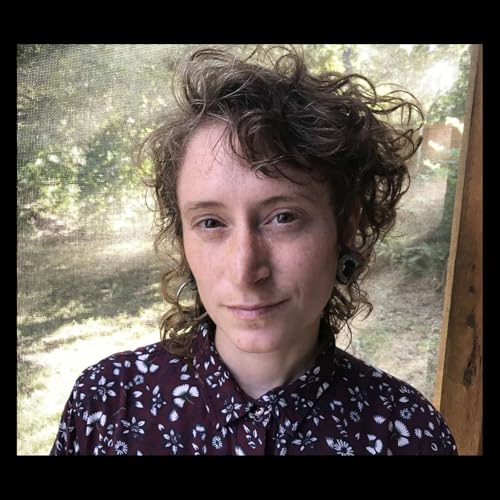
    Haddy Barghouti is the secretary of Students for Justice in Palestine at San José State University. He is a senior majoring in journalism.

    Lucien Baskin is a doctoral student in Urban Education at the Grad Center researching abolition, social movements, and the university. Their dissertation focuses on histories of solidarity and organizing at CUNY. Lucien’s writing has been published in outlets such as Truthout, Society & Space, The Abusable Past, and Mondoweiss. Currently, they serve as co-chair of the American Studies Association Critical Prison Studies Caucus, are an inaugural Freedom and Justice Institute fellow at Scholars for Social Justice, and work as a media and publicity fellow at Conversations in Black Freedom Studies at the Schomburg Center. They organize with Graduate Center for Palestine and are a (strike-ready!) rank-and-file member of the PSC.

    Sarah Southey is a third year student at CUNY School of Law and a member of CUNY Law Students for Justice in Palestine and CUNY4Palestine. In 2024, Sarah and other C4P members submitted a freedom of information act request for CUNY's investments as part of a campaign to demand that CUNY divest from companies aiding and profiting off of israeli settler colonialism and genocide. CUNY illegally denied that request. C4P challenged the denial in court and won disclosure in Southey v CUNY. CUNY is now appealing that decision in a shameful attempt to continue to evade their legal and moral obligation to disclose and divest.

    続きを読む 一部表示
    32 分
  • Erin McElroy: Hacking in “Postsocialist” Times—Unbecoming Silicon ValleyEpisode
    2025/12/08

    Today I am delighted to welcome activist and scholar Erin McElroy to the podcast. She is the author of a remarkable book, Silicon Valley Imperialism: Techno Fantasies in Postsocialist Times. At the center of this rich and provocative study is the Romanian city of Cluj, which has been dubbed the “Silicon Valley of Eastern Europe.” McElroy untangles this notion by going back to the socialist period, whose technological advances made Romania a particularly attractive site for foreign tech investment after the fall of Communism. Erin explains how the arrival of what were called “digital nomads” into Cluj was first made possible by the brutal eviction of its Roma population. As enticing as it is to map these evictions to similar displacements of racial minorities and the poor in the San Francisco Bay Area, Erin explores the fissures and disconnects between the two cases, as well as their eerie convergences. We end by, as McElroy writes, “reflecting on what bringing abolitionist and ant- imperial geographies together in post-socialist contexts can do. Just as global capital connections mapped the Siliconizing moment, other connections scaffold the very possibilities of unbecoming Silicon Valley.”

    Erin McElroy is an Associate Professor in the Department of Geography at the University of Washington, where their work focuses upon intersections of gentrification, technology, empire, fascism, and racial capitalism, alongside housing justice organizing and transnational solidarities. McElroy is author of Silicon Valley Imperialism: Techno Fantasies and Frictions in Postsocialist Times (Duke University Press, 2024) and coeditor of Counterpoints: A San Francisco Bay Area Atlas of Displacement and Resistance (PM Press, 2021). Additionally, McElroy is cofounder of the Anti-Eviction Mapping Project—a data visualization, counter-cartography, and digital media collective that produces tools, maps, reports, murals, zines, oral histories, and more to further the work of housing justice. At UW, McElroy runs Landlord Tech Watch and the Anti-Eviction Lab which produce collaborative research and collective knowledge focused on intersections of property, surveillance, technocapitalism, and technolibertarianism.


    続きを読む 一部表示
    46 分
  • Iranian Women Leading Fight for Freedom: A Conversation with Nilo Tabrizy
    2025/12/04
    Today I am honored to speak with Nilo Tabrizy, co-author of a remarkable and powerful book, For the Sun After Long Nights: The Story of Iran's Women-Led Uprising. This interview complements another episode I did with her collaborator, Fatemeh Jamalpour. Ms Tabrizy tells us about her work in Visual Forensics, which she used to complement Ms Jamalpour’s reporting on the ground. The two pieces together form a vivid account of the uprising, and the repression that preceded and followed it. Nilo draws on other examples of Open Source reporting during the #BlackLivesMatter protests and in Palestine. Like her collaborator, Nilo Tabrizy also explains the ways this reporting was for her deeply personal.

    Nilo Tabrizy is an investigative reporter at The Washington Post. She works for the Visual Forensics team, where she covers Iran using open-source methods. Previously, she was a video journalist at the New York Times, covering Iran, race and policing, abortion access, and more. She is an Emmy nominee and the 2022 winner of the Front Page Award for Online Investigative Reporting. Nilo received her MS in Journalism from Columbia University and her BA in Political Science and French from the University of British Columbia.


    続きを読む 一部表示
    40 分
  • For the Sun After Long Nights: Iranian Women Leading Fight for Freedom
    2025/12/01

    Today I am deeply honored to speak with journalist Fatemeh Jamalpour about her book, For the Sun After Long Nights, which she wrote with fellow journalist Nilo Tabrizy. In September 2022, the world learned of the murder of a young Kurdish woman in Iran, Mahsa Jina Amini. Her death, while a captive of the Iranian state, sparked the Woman, Life, Freedom protests. Fatemeh and Nilo’s book frames those protests in the deep tradition of Iranian women leading political movements for rights and freedom, that date back at least a century. They also provide incredibly detailed and moving accounts of the everyday lives of people in Iran who are part of a collective movement under the most oppressive and violent conditions imaginable. Fatemeh talks about the significance of the many ethnic minorities in Iran, the unique role of Gen Z in the protests, and the many ways that women’s bodies have become a powerful weapon on the fight for collective freedom, in places as diverse as prisons and illegal music concerts. Clearing up myths and lies about Iran and the resistance, this is an especially important episode of Speaking Out of Place.

    Fatemeh Jamalpour is a feminist journalist banned from working in Iran by the Ministry of Intelligence. Jamalpour has worked as a freelance reporter for outlets such as The Sunday Times, The Paris Review and the Los Angeles Times, and has also held positions at BBC World News in London and Shargh newspaper in Tehran. She has two master's degrees in journalism and communication from Northwestern University and Allameh Tabatabaei University in Tehran and was a 2024-25 Knight-Wallace Fellow at the University of Michigan.

    続きを読む 一部表示
    38 分
  • Materializing the Cloud—Breaking Tech’s Spell Over Us with Tamara Kneese and Xiaowei Wang
    2025/11/28

    Today I am both excited and frightened to talk with Tamara Kneese and Xiaowei Wang, two individuals whose research, writing, and activism has for years insisted on the materiality of the technologies that have brought us things like artificial intelligence, the Cloud, data centers, and digital agriculture. They explain why and how these technologies clothe themselves in ethereal garb and notions of a frictionless, beneficent capitalism while diverting attention from the vast natural and human resources they plunder to make a profit, and colonize more and more land, water, and minerals. We move from corrective histories and analyses to case histories that show how these technologies materialize in settler colonial practices, and end decisively on stories of how people are fighting back, and creating alternate software, hardware, and cultural and social practices that offer a window onto a much less violent and dismal world than the one technofascism wants us to be hypnotized by. Here, we set to break that spell.

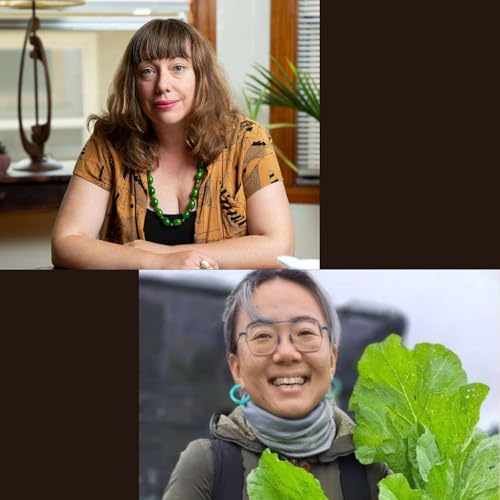
    Tamara Kneese directs Data & Society Research Institute's Climate, Justice, and Technology program and previously led the Algorithmic Impact Methods Lab. Before joining D&S, she was director of developer engagement on the Green Software team at Intel and assistant professor of Media Studies and director of Gender and Sexualities Studies at the University of San Francisco. She is the author of Death Glitch: How Techno-Solutionism Fails Us in This Life and Beyond (Yale University Press, 2023), co-author of Notes Toward a Digital Workers' Inquiry (Common Notions Press, 2025), and the co-editor of The New Death: Mortality and Death Care in the Twenty-First Century (School for Advanced Research/University of New Mexico Press, 2022). Her work has been published in academic journals including Social Text, Social Media + Society, and the International Journal of Communication and in popular outlets such as Wired, The Verge, and The Baffler. Her research has been supported by the Internet Society Foundation, National Science Foundation, Social Sciences and Humanities Research Council, the Mellon Foundation, and the American Council of Learned Societies.

    Xiaowei R. Wang is an artist, writer, organizer and coder. They are the author of the book Blockchain Chicken Farm: And Other Stories of Tech In China's Countryside, a 2023 National Book Foundation Science and Literature Award winner. Their multidisciplinary work over the past 15 years sits at the intersection of tech, digital media, art, and environmental justice. Currently, they are a Mancosh Fellow at Northwestern University and one of the stewards of Collective Action School (formerly known as Logic School), an organizing community for tech workers. In 2024 they were a Eyebeam Democracy Machine Fellow, which supported their work with forms of soft data storage and transmission using textiles.

    続きを読む 一部表示
    54 分
  • Omar Zahzah: Terms of Servitude: Zionism, Silicon Valley, and Digital/Settler Colonialism in the Palestinian Liberation Struggle
    2025/11/24

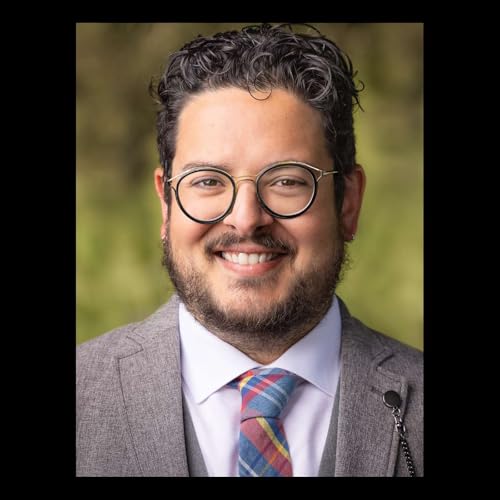
    Today I talk with Omar Zahzah about his new book, Terms of Servitude: Zionism, Silicon Valley, and Digital/Settler Colonialism in the Palestinian Liberation Struggle. This is an immensely informative study, which details the convergence of Zionism, Silicon Valley Big Tech, and the US political and governmental elites in what Zahzah calls the hegemonic form of Zionism. He shows how capitalist profit motives and Zionist settler colonialism and ethnic cleansing go hand in hand with attempts to censor, silence, and erase Palestinian voices and the voices of those who act in solidarity with Palestine. Nevertheless, and crucially, Omar fills his book with accounts of how Palestinians have found ways to appropriate, repurpose, and deploy technology in ingenious, creative, and subversive ways that keep the movement alive and growing globally.

    Omar Zahzah is a poet, writer, independent journalist, and Assistant Professor of Arab and Muslim Ethnicities and Diasporas (AMED) Studies at San Francisco State University.

    続きを読む 一部表示
    43 分
  • Omar Zahzah: Terms of Servitude: Zionism, Silicon Valley, and Digital/Settler Colonialism in the Palestinian Liberation Struggle
    2025/11/24

    Today I talk with Omar Zahzah about his new book, Terms of Servitude: Zionism, Silicon Valley, and Digital/Settler Colonialism in the Palestinian Liberation Struggle. This is an immensely informative study, which details the convergence of Zionism, Silicon Valley Big Tech, and the US political and governmental elites in what Zahzah calls the hegemonic form of Zionism. He shows how capitalist profit motives and Zionist settler colonialism and ethnic cleansing go hand in hand with attempts to censor, silence, and erase Palestinian voices and the voices of those who act in solidarity with Palestine. Nevertheless, and crucially, Omar fills his book with accounts of how Palestinians have found ways to appropriate, repurpose, and deploy technology in ingenious, creative, and subversive ways that keep the movement alive and growing globally.

    Omar Zahzah is a poet, writer, independent journalist, and Assistant Professor of Arab and Muslim Ethnicities and Diasporas (AMED) Studies at San Francisco State University.

    続きを読む 一部表示
    43 分
  • “Much Much Worse than McCarthyism, But with a Big Positive Difference”: A Conversation with Legendary Historian Ellen Schrecker
    2025/11/20

    Today I have the immense honor and privilege to speak with Ellen Schrecker, who has been referred to as “the dean of the anti-anti-Communist historians.” Well known for her classic studies of McCarthyism, today Schrecker explains how much worse Trump’s regime is than what we saw in the 1950s and 60s. A fierce defender of democracy, Ellen explains the central role education plays in creating a public culture and in maintaining democracy. Our conversation takes many paths, including an indictment of Capitalism, of the dominance of economistic thinking and values, of the ways university leaders are bending a knee to Trump. We talk about the value of the humanities, the importance of autonomous forms of education and mutual support such as we saw in the pro-Palestinian encampments, and one of the most remarkable differences between the days of McCarthyism—the phenomenon of mass protests like #NoKingsDay. I know you will treasure this conversation as much as I do.

    Ellen Schrecker is an American historian known for her research on McCarthyism, political repression, and American higher education. Among her books are The Right to Learn: Resisting the Right-Wing War on Academic Freedom (2024) edited with Valerie C. Johnson and Jennifer Ruth, (2024) winner 2025 Frederick Ness Book Award. American Association of Colleges and Universities; The Lost Promise: American Universities in the 1960s (2021); Many Are the Crimes: McCarthyism in America (1998); and No Ivory Tower: McCarthyism and the Universities (1986). A retired history professor from Yeshiva University, she is active in the American Association of University Professors and now serves on its Committee A on Academic Freedom and Tenure.

    続きを読む 一部表示
    48 分