『Shoga Speaks』のカバーアート

Shoga Speaks

Shoga Speaks

著者: Robert Philipson
無料で聴く

今ならプレミアムプランが3カ月 月額99円

2026年5月12日まで。4か月目以降は月額1,500円で自動更新します。

概要

Join Filmmaker Dr. Robert Philipson as he explores the intersection of Black and Queer identities, Black-Jewish interrelations, and Music.

© 2026 Shoga Speaks
アート
エピソード
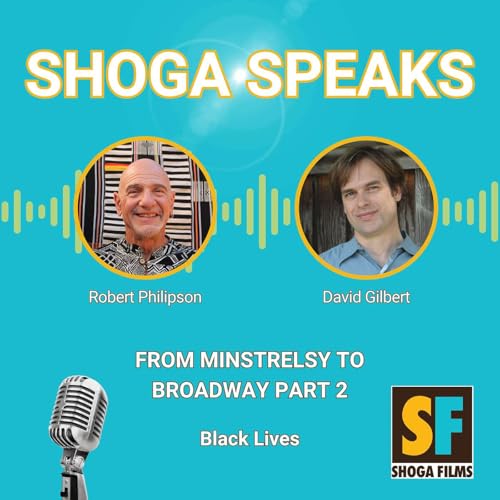
  • From Minstrelsy to Broadway, Part Two
    2026/02/24

    At the turn of the 20th century, African American artists faced a fundamental question: how could they prove their citizenship and claim their place in American culture? Historian and musician David Gilbert traces how the first generation of African American performers to crack Broadway effected this transformation.

    Ernest Hogan named himself “the unbleached American.” Bert Williams and George Walker, marketed themselves as "the two real coons." Bob Cole and the Johnson Brothers transcended the coon genre entirely by writing sophisticated pop songs for white Broadway stars and crafting songs about Black romance that weren't sung for laughs.

    Yet Gilbert confronts an uncomfortable truth: this topic is embarrassing, and most Americans would prefer to forget this era entirely. These artists walked an impossible line, and understanding their journey means confronting not just the ugliness of Jim Crow America but the echoes that still reverberate today.

    Music

    “Darktown is Out Tonight” - Will Marrion Cook
    “Overture to ‘In Dahomey’” - Will Marrion Cook
    “Under the Bamboo Tree” - Robert Cole and J. Rosamund Johnson
    “You've Been A Good Old Wagon” - Ben Harney, Len Spencer
    “You’ve Been A Good Old Wagon” - Ben Harney, Bessie Smith

    Website: www.shogafilms.com;
    Instagram: shogafilms;
    Facebook: facebook.com/shogafilms;
    Twitter: twitter.com/shogafilms

    続きを読む 一部表示
    33 分
  • From Minstrelsy to Broadway, Part One
    2026/02/17

    In 1896, Ernest Hogan's "All Coons Look Alike to Me" became the first song to sell a million copies in America, making him a star and setting off the "coon song craze"—an era in which African American performers and composers achieved unprecedented professional success while trafficking in the very stereotypes designed to undermine their citizenship. David Gilbert, a historian and musician, traces how coon songs emerged at the intersection of ragtime's rhythmic innovations and post-Reconstruction racial anxieties.

    At its core, this is a story about the impossible bargains that Black artists had to make in an era of virulent racism—some of them achieving wealth, respect, and cultural influence by mastering the very forms designed to humiliate them, and finding within those constraints the seeds of a creative revolution that would eventually transform Broadway and American popular culture.

    Music

    “All Coons Look Alike To Me” – Kylan / ragtimerev
    “Bully of the Town” – Holy Modal Rounders
    “La Pas La Ma” – Kylan / ragtimerev
    “On Emancipation Day” – William Brown
    “Save Your Money ‘cause the Winter Am Coming On” – Clarice Vance

    Website: www.shogafilms.com;
    Instagram: shogafilms;
    Facebook: facebook.com/shogafilms;
    Twitter: twitter.com/shogafilms

    続きを読む 一部表示
    24 分
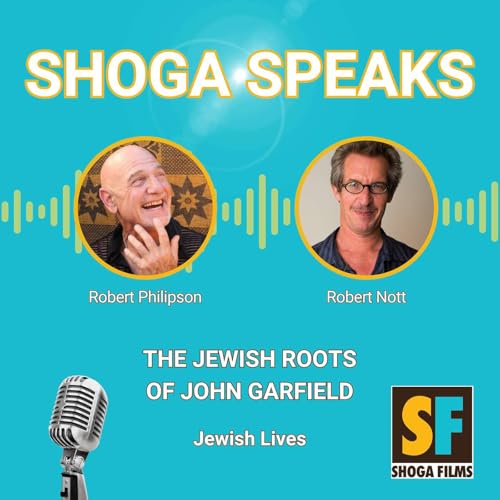
  • The Jewish Roots of John Garfield
    2025/05/15

    This episode explores the life and legacy of actor John Garfield (born Julius Garfinkel), focusing on how his Jewish roots shaped his identity, artistic choices, and political stance. Journalist Robert Nott, author of He Ran All the Way: The Life of John Garfield, recounts Garfield’s upbringing on New York’s Lower East Side, among Jewish immigrant poverty, and strict religious expectations. Rejecting his Orthodox father’s path, Garfield turned to acting, eventually joining the leftist Group Theater—a hub of Jewish-American creativity and political activism.

    Garfield’s performances in the play Golden Boy and the movies Body and Soul, and Gentleman’s Agreement reflect recurring themes: the immigrant struggle, the lure of the American Dream, and resistance to systemic injustice. Body and Soul—produced independently—blended his real-life experiences with a fictional reworking of the biography of the famous Jewish boxer Barney Ross. Despite facing the Hollywood blacklist and pressure from HUAC during the Red Scare, Garfield refused to name names, an act of integrity that prematurely ended his acting career and possibly his life (he died at the age of 39) but one that was rooted in his cultural and moral upbringing.

    Garfield, though not religiously observant, remained culturally Jewish, embodying a complex, deeply American Jewish identity in both life and art.

    Host Info
    Hosted by Dr. Robert Philipson
    Robert is a former professor of African-American studies with a passion for jazz and art. A published author and Harlem Renaissance historian, he has produced multiple films about the intersectionality of race, music, and sexuality.


    Guest Info
    Robert Nott, Author, “He Ran All the Way: The Life of John Garfield (2003)”
    Robert Nott is an arts and entertainment writer for The Santa Fe New Mexican

    Resources

    Books
    Nott, Robert. He Ran All the Way: The Life of John Garfield.

    Plays and Movies

    Odets, Clifford. Waiting for Lefty

    Odets, Clifford. Awake and Sing

    Odets, Clifford. Golden Boy.

    20th Century Fox, Gentleman’s Agreement (1947)

    Hollywood Backstories: Gentlemen’s Agreement

    Music

    “Body and Soul” - Sarah Vaughan

    “Happy Days are Here Again” - Barbra Streisand

    Connect With Us:
    Website: shogafilms.org
    Instagram: @shogafilms
    Facebook: facebook.com/shogafilms
    Twitter: twitter.com/shogafilms
    Sign up for our newsletter at shogafilms.org

    Website: www.shogafilms.com;
    Instagram: shogafilms;
    Facebook: facebook.com/shogafilms;
    Twitter: twitter.com/shogafilms

    続きを読む 一部表示
    26 分
まだレビューはありません