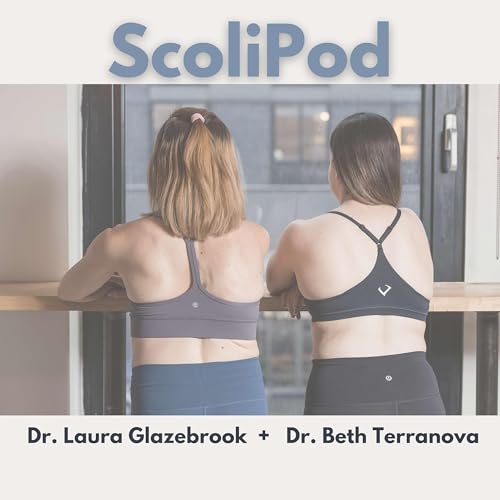
『ScoliPod』のカバーアート

ScoliPod

ScoliPod

著者: Beth & Laura
無料で聴く

このコンテンツについて

Welcome to Scolipod, the show that’s rewriting the rules about living with a curved spine! Hosted by Dr. Laura Glazebrook and Beth Terranova —two physical therapists, scoliosis superheroes, and movement enthusiasts—this podcast brings you research-backed solutions, expert insights, and real-life stories that prove one thing: you are more than your scoliosis diagnosis.

© 2025 ScoliPod
政治・政府 衛生・健康的な生活
エピソード
  • 6: Kinesiophobia: Breaking the Fear of Movement With Scoliosis
    2025/12/10

    In today's episode, Dr. Laura and Dr. Beth dive into a topic that affects many people living with scoliosis—kinesiophobia, or the excessive fear of movement. This fear often stems from past pain, well-intentioned but inaccurate advice, or long-held beliefs about what people with scoliosis “should” or “shouldn’t” do.

    Laura and Beth unpack how kinesiophobia develops, why it’s especially common among adults with scoliosis, and how misinformation or overly cautious guidance can unintentionally shrink someone’s world over time. They discuss how avoiding movement can lead to deconditioning, increased sensitivity, and a frustrating cycle that reinforces fear and pain.

    They share practical strategies for breaking out of that cycle, including:

    • Mindset shifts to retrain the brain’s overprotective patterns
    • Graded exposure—starting with gentle, supported movements and gradually building confidence
    • Functional activity-based approaches like walking more, taking the stairs, or increasing daily movement
    • Community and professional support, including group fitness, scoliosis-informed physical therapy, and even mental health counseling
    • Compassion, patience, and realistic timelines, recognizing that unlearning long-held fears takes steady, consistent effort

    They also highlight the importance of staying active for long-term health and why strength training and movement are not just safe for people with scoliosis—they’re beneficial.

    Before signing off, Beth and Laura give listeners a fun piece of “homework”: create your own scoliosis mantra to help interrupt negative self-talk and remind yourself that your spine—and you—are strong, capable, and resilient.


    Tips to set yourself up for success:

    • If possible, work with a scoliosis-trained professional — but even small steps toward strength can make a big difference. Remember you can work with each of us virtually as well!
      • Work with Dr. Laura
      • Work with Dr. Beth

    Finally, don't forget to subscribe to ScoliPod on your favorite pod catcher so you never miss an episode!

    • Listen on Apple Podcasts
    • Listen on Spotify

    Support the show

    続きを読む 一部表示
    18 分
  • 5. Stretching vs. Strengthening for Scoliosis
    2025/11/26

    Many people with scoliosis feel constant stiffness and assume they need more stretching. But as Dr. Laura and Dr. Beth explain, tightness doesn’t always mean short muscles — sometimes it’s a sign of fatigue, overwork, or instability. While stretching can offer temporary relief, it often doesn’t address the underlying cause of muscle tension.

    Together they discuss why stabilization and strength training tend to be more effective and often lead to longer-term relief and improved posture — especially when done with scoliosis-specific principles & techniques. They describe how building up deep stabilizers and strengthening underactive muscles (often on the concave side of a curve) can reduce tightness naturally over time.

    What you should know:

    • Stretching feels good—but may not solve the problem. Muscles that feel tight may actually be overworked or protecting unstable joints.
    • Stability first. Learning to find and maintain a more neutral spine position is the foundation for building strength safely.
    • Strength reduces tightness. When muscles are strong enough to support the spine, the nervous system can relax, easing that “constant tension” feeling.
    • Personalization matters. Every scoliosis curve is unique; there’s no one-size-fits-all “right” muscle to strengthen.
    • Progress at your pace. Start small, focus on consistency, and remember — movement is medicine.

    Pro Tips from Dr. Laura & Dr. Beth:

    • Take photos or videos of your posture to better understand your body’s alignment.
    • Pair your stretches with active elongation or dynamic warm-ups rather than static holds.
    • If possible, work with a scoliosis-trained professional — but even small steps toward strength can make a big difference. Remember you can work with each of us virtually as well!
      • Work with Dr. Laura
      • Work with Dr. Beth
    • Don’t fear strength training! With the right form and awareness, it’s one of the most beneficial tools for scoliosis management.

    📚 Resources Mentioned

    • Strength and Spine's Stretching with Scoliosis Course
    • The Curves In Motion Masterclass: Mastering Exercise With Scoliosis & Spinal Fusion by Dr. Laura

    Bottom line: If you’ve been relying on stretching alone, we hope this episode encourages you to add stabilization and strength training to your routine. Your future body will thank you for it!


    Finally, don't forget to subscribe to ScoliPod on your favorite pod catcher so you never miss an episode!

    • Listen on Apple Podcasts
    • Listen on Spotify

    Support the show

    続きを読む 一部表示
    26 分
  • 4. Live from the SOSORT Conference in Dubrovnik Croatia (Recorded April 2025)
    2025/11/12

    Live from Dubrovnik — Summarizing the Latest Research in Scoliosis Care

    Click here to watch this episode on YouTube with the beautiful backdrop of Dubrovnik!

    In this special episode of ScoliPod, Dr. Beth and Dr. Laura check in from Dubrovnik, Croatia after spending four days immersed in the latest scoliosis research and clinical insights at the 2025 SOSORT Conference.

    They break down their biggest takeaways from each day, covering everything from new approaches to adult scoliosis to the evolving understanding of exercise, bracing, and screening.

    The main topics covered include:

    • Adult Scoliosis Research: Updated insights into the three main types of adult scoliosis (de novo, adolescent-onset, and secondary), plus new data showing exercise can improve quality of life and even reduce curves modestly.
    • Adult Bracing Advances: Exploration of soft and rigid brace designs for adults — a growing area of study focused on pain reduction and posture improvement.
    • Scoliosis-Specific Exercise (PSSE): A practical session comparing different schools of scoliosis-specific physical therapy and the importance of self-correction and stabilization training.
    • General vs. Specific Exercise: Research showing that while scoliosis-specific exercise best improves Cobb angles, general fitness still plays a major role in enhancing quality of life for teens.
    • Surgery and Quality of Life: New findings suggesting that individuals with curves up to 60° can still have excellent quality of life — potentially reshaping when surgery is considered.
    • Emerging Technology: Advances in telehealth assessments, 3D-printed braces, and low-radiation imaging techniques.
    • Hypermobility and Scoliosis: How flexibility can actually improve exercise and bracing outcomes when paired with proper stabilization work.
    • Global Collaboration: The importance of unified screening standards and multidisciplinary teamwork across PTs, orthotists, and surgeons worldwide.

    Overall Impression:

    Dr. Laura and Dr. Beth enjoyed the conference programming, as always, leaving feeling energized by the progress in conservative scoliosis care and the growing collaboration across professionals from doctors to therapists to orthotists (the professionals who make scoliosis braces). If you are a professional working with scoliosis, they recommend exploring SOSORT membership to stay engaged in the evolving research shaping scoliosis treatment today, as well as make amazing connections with like-minded individuals from around the world.

    Resources Mentioned:

    • SOSORT (The Society on Scoliosis Orthopaedic and Rehabilitation Treatment)
    • Strength & Spine Group Programs — accountability & support for scoliosis-specific exercise.

    More Resources:

    • Follow us on Instagram:
      • @laura.g.dpt
      • @strengthandspine
    • Learn more about our services:
      • https://www.drlauraglazebrook.com/
      • https://www.strengthandspine.com/
    • Related blogs by Dr. Laura:
      • Learn More About Scoliosis & Scoliosis Exercise
      • Highlights from SOSORT 2024 in Boston

    Listen in to hear how the latest global research is shaping the future of scoliosi

    Support the show

    続きを読む 一部表示
    15 分
まだレビューはありません