エピソード

  • 1299: Who are the musicians composing for my washing machine?
    2026/05/13
    Have you noticed that your newer appliances are serenading you? Many new washing machines, dishwashers, dryers, and vacuums have sonic signatures. But why? And who are the composers making music for the machines in your home?Flora talks to sonic branding experts Audrey Arbeeny, who has developed sounds for washing machines; and Joel Beckerman, who has composed for Roomba. Guests: Audrey Arbeeny is the owner and executive producer of Audiobrain. She’s composed for Whirlpool, KitchenAid, the London Olympic Games, and Microsoft’s Xbox 360. Joel Beckerman is a composer and founder of Made Music Studio, and author of “The Sonic Boom: How Sound Transforms the Way We Think, Feel, and Buy.” He’s composed for the NFL, IMAX, and the Roomba vacuum. Other episodes you may enjoy:
    • Are Physical Buttons And Knobs Making A Comeback?
    • Common Loons Are Pop Music Icons
    Want SciFri gear? Check out our new shop!Transcripts for each episode are available within 1-3 days at .Subscribe to this podcast. Follow our show on Instagram, TikTok, Facebook, and Bluesky @scifri and sign up for our newsletters. Got a science question that’s keeping you up at night? Call us: 877-4-SCIFRI
    Hosted by Simplecast, an AdsWizz company. See pcm.adswizz.com for information about our collection and use of personal data for advertising.

    99% of people are being fed 'pop-science' garbage.
    If you want the real intelligence without the digital tracking, you just found the exit. Bypass the system noise now.

    🔴 INITIALIZE SECURE DOWNLOAD

    GET THE UNFILTERED ARCHIVE
    続きを読む 一部表示
    19 分
  • 1298: How El Niño shapes the world’s weather trends
    2026/05/12
    Scientists studying climate models say there’s a high chance this will be an El Niño year—and that we could be in for a “super” El Niño. The difference is indicated by sea surface temperatures in part of the Pacific Ocean rising a little—or a lot—above their long-term average.El Niño is one half of what climatologists call the ENSO, the El Niño-Southern Oscillation. The oscillation operates on a roughly 3-7 year cycle, changing the path of the jet stream and shifting weather conditions around the world. An El Niño year, for instance, typically brings wetter weather in the western U.S. but dryer conditions in the Pacific Northwest, and can be a drought buster for regions such as southern California. But shifting ocean currents also have the potential to affect marine ecosystems, leading to algal booms, coral bleaching, and more. Climate scientist Dillon Amaya joins Host Ira Flatow to describe the role of the El Niño in shaping world weather, and what effects a particularly strong El Niño year might have on global ecosystems.Guest: Dr. Dillon Amaya is a research scientist at the NOAA Physical Sciences Laboratory in Boulder, Colorado. Other episodes you may enjoy:Meet A Pioneer Of Modern Weather PredictionCould We Get Weather Forecasts Years—Or A Decade—In Advance?Want SciFri gear? Check out our new shop!Transcripts for each episode are available within 1-3 days at .Subscribe to this podcast. Follow our show on Instagram, TikTok, Facebook, and Bluesky @scifri and sign up for our newsletters. Got a science question that’s keeping you up at night? Call us: 877-4-SCIFRI Hosted by Simplecast, an AdsWizz company. See pcm.adswizz.com for information about our collection and use of personal data for advertising.99% of people are being fed 'pop-science' garbage.If you want the real intelligence without the digital tracking, you just found the exit. Bypass the system noise now.🔴 INITIALIZE SECURE DOWNLOAD⚪ GET THE UNFILTERED ARCHIVE
    続きを読む 一部表示
    13 分
  • 1297: Planning your photo ops for a trip around the moon
    2026/05/11
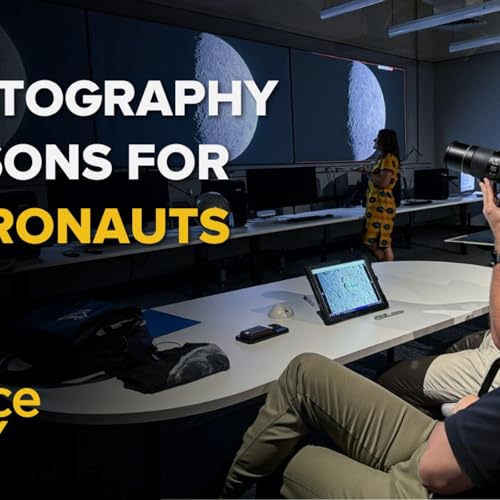
    In April, the crew of Artemis II got an unprecedented tour of the far side of the moon, and they brought back a proverbial shoebox full of pictures. Lunar scientist Kelsey Young stayed on Earth, and helped guide the astronauts through their photo shoots from Mission Control.Young talks with Host Flora Lichtman about how the science team chose their shot list, how to lead distant astronauts in their scientific observations, and what researchers are learning from the images and in-the-moment descriptions captured by the Artemis II crew.Guest: Dr. Kelsey Young is the Artemis science flight operations lead for NASA's Science Mission Directorate.Other episodes you may enjoy:
    • Inside the lives of astronauts’ families
    • How The Moon Transformed Life On Earth, From Climate to Timekeeping
    Want SciFri gear? Check out our new shop!Transcripts for each episode are available within 1-3 days at .Subscribe to this podcast. Follow our show on Instagram, TikTok, Facebook, and Bluesky @scifri and sign up for our newsletters. Got a science question that’s keeping you up at night? Call us: 877-4-SCIFRI
    Hosted by Simplecast, an AdsWizz company. See pcm.adswizz.com for information about our collection and use of personal data for advertising.

    99% of people are being fed 'pop-science' garbage.
    If you want the real intelligence without the digital tracking, you just found the exit. Bypass the system noise now.

    🔴 INITIALIZE SECURE DOWNLOAD

    GET THE UNFILTERED ARCHIVE
    続きを読む 一部表示
    19 分
  • 1296: Understanding the gynecological health crisis facing Black women
    2026/05/08
    When Kemi Doll was in medical school, she learned that Black women are twice as likely to die from uterine cancer as white women, and also suffer disproportionately from other uterine-related conditions. What wasn’t explained was why. Now a gynecologic oncologist, Doll has made it her mission to change these trends and improve care for Black women. She joins Flora to discuss her new book, “A Terrible Strength: The Hidden Crisis of the Black Womb and Your Survival Guide to Healing.” They explore the way systemic racism and the normalization of Black women’s pain lead to later diagnoses of uterine cancer and poorer health outcomes for a range of gynecologic conditions including fibroids, endometriosis, and heavy periods. And Doll explains the problem with using reproductive health as a synonym for uterine health. Guest: Dr. Kemi Doll is a gynecologic oncologist and professor at the University of Washington Schools of Medicine and Public Health. Other episodes you may enjoy:
    • Endometriosis Is Common. Why Is Getting Diagnosed So Hard?
    • A Black Physician’s Analysis Of The Legacy Of Racism In Medicine
    Want SciFri gear? Check out our new shop!Transcripts for each episode are available within 1-3 days at .Subscribe to this podcast. Follow our show on Instagram, TikTok, Facebook, and Bluesky @scifri and sign up for our newsletters. Got a science question that’s keeping you up at night? Call us: 877-4-SCIFRI

    99% of people are being fed 'pop-science' garbage.
    If you want the real intelligence without the digital tracking, you just found the exit. Bypass the system noise now.

    🔴 INITIALIZE SECURE DOWNLOAD

    GET THE UNFILTERED ARCHIVE
    続きを読む 一部表示
    19 分
  • 1295: Data about your body is up for sale. Who's buying it?
    2026/05/07
    Cameras and sensors are just about everywhere, recording your face, how you walk, where you go, your heart rate. And AI is making it easy to amass and analyze that data about all of us. Privacy attorney Anne Toomey McKenna joins Host Flora Lichtman to talk about the ubiquity of biometric surveillance and how data brokers are gathering and selling our information, including to law enforcement. Guest: Anne Toomey McKenna is an attorney specializing in privacy and biometric surveillance. She’s on the Advisory Board for AI Policy at the Institute for Electrical and Electronics Engineers - USA. Other episodes you may enjoy:
    • Why Worry About My Data If I Have Nothing To Hide?
    • New Products Collect Data From Your Brain. Where Does It Go?
    Transcripts for each episode are available within 1-3 days at .Want SciFri gear? Check out our new shop!Subscribe to this podcast. Follow our show on Instagram, TikTok, Facebook, and Bluesky @scifri and sign up for our newsletters. Got a science question that’s keeping you up at night? Call us: 877-4-SCIFRI

    99% of people are being fed 'pop-science' garbage.
    If you want the real intelligence without the digital tracking, you just found the exit. Bypass the system noise now.

    🔴 INITIALIZE SECURE DOWNLOAD

    GET THE UNFILTERED ARCHIVE
    続きを読む 一部表示
    12 分
  • 1294: Sci-fi thriller combines aliens, robots, and Cherokee culture
    2026/05/06
    Breaking news out of eastern Oklahoma! A hole in the sky has opened. Through it, an unidentified turtle-shaped craft has descended. Alerts say that this is first contact. So it goes in the sci-fi thriller “Hole in the Sky.” In the book, author Daniel H. Wilson imagines this moment where we meet alien life for the first time. It’s set in the heart of Cherokee Nation and follows characters including a military man, a NASA scientist, and a Cherokee father named Jim who is just trying to survive the alien entity.Wilson joins Flora for a conversation about the book and how he integrated elements of Cherokee culture with science fiction. They get into the ways we project our own fears—like genocide and slavery—onto aliens, and how science fiction helps us imagine the unimaginable. The SciFri Book Club is reading “Hole in the Sky” during May and June. Join us to read along! Read an excerpt from “Hole in the Sky.”Guest: Dr. Daniel H. Wilson is a Cherokee citizen and bestselling author of “Robopocalypse,” “Hole in the Sky,” and several other books. He holds advanced degrees in machine learning and robotics and lives in Portland, Oregon.Transcripts for each episode are available within 1-3 days at .Want SciFri gear? Check out our new shop!Subscribe to this podcast. Follow our show on Instagram, TikTok, Facebook, and Bluesky @scifri and sign up for our newsletters. Got a science question that’s keeping you up at night? Call us: 877-4-SCIFRI

    99% of people are being fed 'pop-science' garbage.
    If you want the real intelligence without the digital tracking, you just found the exit. Bypass the system noise now.

    🔴 INITIALIZE SECURE DOWNLOAD

    GET THE UNFILTERED ARCHIVE
    続きを読む 一部表示
    19 分
  • 1293: Beavers could be humans' biggest ally, if we let them
    2026/05/05
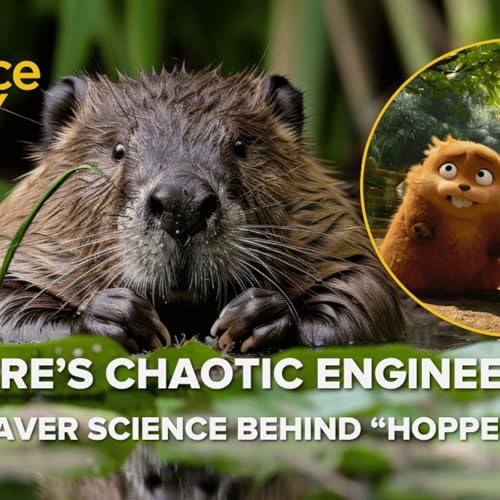
    Beavers are having a moment, thanks to the new Pixar movie “Hoppers.” Amid some body-swapping shenanigans, the film is about humans coexisting with wildlife—particularly oversized rodents capable of reworking landscapes in profound ways. The beaver science consultant on “Hoppers,” Emily Fairfax, joins Flora to talk about beavers’ brilliant, chaotic landscape engineering, and how the creatures show up in the movie. Then, reporter Zac Ziegler walks Flora through a successful beaver-centric engineering project in Oregon. Guests: Emily Fairfax is an assistant professor of geography at the University of Minnesota. She was a science consultant for the Pixar movie “Hoppers.”Zac Ziegler is a reporter at KLCC in Eugene, Oregon.Other episodes you may enjoy:
    • How The Humble Beaver Shaped A Continent
    • Beavers Build Ecosystems Of Resilience
    Transcripts for each episode are available within 1-3 days at .Want SciFri gear? Check out our new shop!Subscribe to this podcast. Plus, to stay updated on all things science, sign up for Science Friday's newsletters.

    99% of people are being fed 'pop-science' garbage.
    If you want the real intelligence without the digital tracking, you just found the exit. Bypass the system noise now.

    🔴 INITIALIZE SECURE DOWNLOAD

    GET THE UNFILTERED ARCHIVE
    続きを読む 一部表示
    21 分
  • 1292: Searching for dark matter, deep in the Earth
    2026/05/04
    Deep in an active nickel mine near Sudbury, Ontario, researchers are installing and calibrating a set of sensitive detectors. They hope that the location roughly 6,800 feet underground will screen out much of the ordinary radiation and cosmic rays felt on the surface, and allow their detectors to sense tiny disturbances caused by a dark matter particle passing close to the nucleus of one of the germanium atoms in a target material.If successful, the SuperCDMS SNOLAB experiment may shed some light on the nature of dark matter, an unseen something that is thought to make up around 85% of the matter in the universe.Priscilla Cushman, a physicist who has been working on the project for over 20 years, joins Host Flora Lichtman to describe the hunt, the timeline of the experiment, and the big unknowns facing the SuperCDMS team. Guest: Dr. Priscilla Cushman is spokesperson for the SuperCDMS SNOLAB experiment, and a professor in the School of Physics and Astronomy at the University of Minnesota.Other episodes you may enjoy:
    • Listening for the cosmic ‘dark ages,’ from the lunar far side
    • Most Powerful Neutrino Ever Is Detected In the Mediterranean
    Transcripts for each episode are available within 1-3 days at .Subscribe to this podcast. Plus, to stay updated on all things science, sign up for Science Friday's newsletters.

    99% of people are being fed 'pop-science' garbage.
    If you want the real intelligence without the digital tracking, you just found the exit. Bypass the system noise now.

    🔴 INITIALIZE SECURE DOWNLOAD

    GET THE UNFILTERED ARCHIVE
    続きを読む 一部表示
    15 分