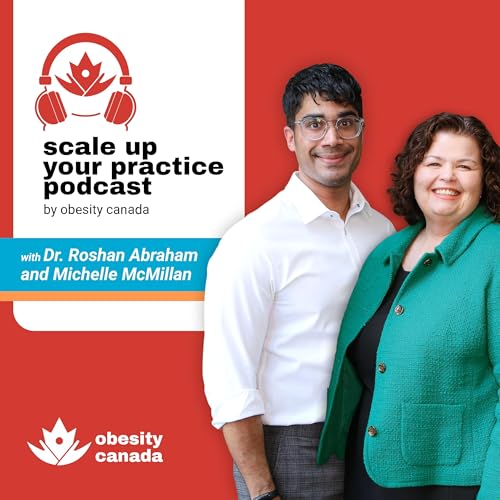
『Scale Up Your Practice by Obesity Canada』のカバーアート

Scale Up Your Practice by Obesity Canada

Scale Up Your Practice by Obesity Canada

著者: Obesity Canada
無料で聴く

今ならプレミアムプランが3カ月 月額99円

2026年5月12日まで。4か月目以降は月額1,500円で自動更新します。

概要

Tune into Scale Up Your Practice, Obesity Canada’s podcast for healthcare professionals. Hosted by Dr. Roshan Abraham and Michelle McMillan, each episode dives into practical, evidence-informed conversations about obesity care—covering topics like weight stigma, patient-centered approaches, and the connection between obesity and other health conditions. You’ll hear expert perspectives, real-world experiences, and insights to help you provide better, more compassionate care. Listen now and scale up your practice. 🎧 Available on Spotify, Apple Podcasts, and YouTube.Obesity Canada 衛生・健康的な生活 身体的病い・疾患
エピソード
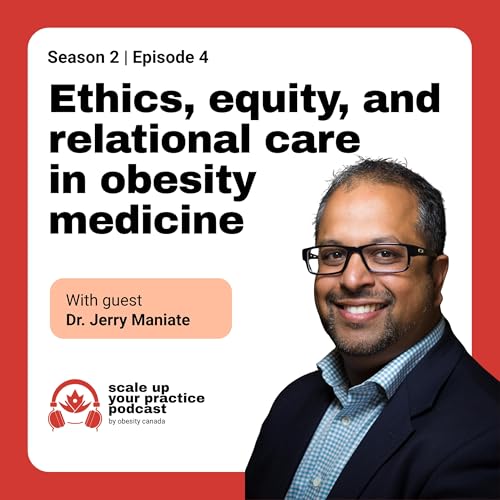
  • Ethics, equity, and relational care in obesity medicine with Dr. Jerry Maniate
    2026/04/23

    🎙️This episode is supported by an unrestricted education grant from Eli Lilly Canada


    What does ethical obesity care look like when the system itself can make good care harder to deliver? In this episode, we speak with Dr. Jerry Maniate about trust, language, weight bias, and the kind of reflective practice that helps healthcare professionals move beyond transactional and into relational care.


    In this episode

    • A closer look at the trust gap many people living with obesity experience in healthcare
    • How language can either open the door to better care or reinforce harm and disconnection
    • Why ethical obesity care must account for real-world barriers like access, affordability, and food insecurity
    • Practical reflections on how clinicians can unlearn outdated thinking and stay open to feedback


    Additional resources

    • Equity in Health Systems Lab: https://utm.guru/un7Sv
    • Carefully Chosen Words: Language for Inclusive Care: https://utm.guru/un7Sw
    • Free course: Words matter: the Consequences of Weight Bias & Stigmatizing Language: https://utm.guru/un7Sx
    • Canadian Adult Obesity Clinical Practice Guidelines: https://utm.guru/un7Sy
    • Canadian Obesity Education Competencies: https://utm.guru/un7Sz


    Learning objectives

    • Apply ethical frameworks and evidence-based best practices to navigate the rapidly evolving clinical science of obesity care.
    • Analyze how receiving and acting upon interprofessional feedback fosters the learning necessary to maintain clinical competence.
    • Evaluate how systemic weight bias compromises ethical standards of care, and identify collaborative strategies to dismantle these barriers in daily practice.


    Enjoying the podcast?

    Support Scale Up Your Practice by:

    • Sharing this episode with a colleague or team member
    • Subscribing on your favourite podcast platform
    • Leaving a review to help more listeners find the show


    Have a question or a topic you’d like us to cover?

    Email us at scaleuppod@obesitycanada.ca


    Disclosures

    This episode script was developed using NotebookLM to synthesize complex source materials into a structured educational format. The tool was used to analyze the Canadian Obesity Education Competencies (COECs), the Obesity Canada Strategic Plan, and guest-specific research. Specific prompts were utilized to extract relevant learning objectives, map them to CanMEDS roles, and generate competency-based interview questions.


    While NotebookLM assisted in drafting the narrative arc and educational framework, all content has been reviewed, fact-checked, and refined by the podcast hosts and Obesity Canada's clinical experts. This ensures the script aligns with current science and best practices and authentically represents the lived experience perspective.

    続きを読む 一部表示
    33 分
  • Navigating obesity pharmacotherapy in clinical practice with Dr. Sean Wharton
    2026/04/09

    What changes when obesity care stops being about willpower and starts with biology? In this episode, Dr. Roshan Abraham speaks with Dr. Sean Wharton about how pharmacotherapy is reshaping obesity care, why “food noise” matters, and how clinicians can support patients with more empathy, less stigma, and a better understanding of obesity as a chronic disease.


    In this episode

    • Why obesity medications need to be understood as treatment for a chronic disease, not an “easy way out”

    • How Dr. Wharton explains “food noise” and why naming it can help reduce self-blame

    • What it looks like to pair pharmacotherapy with compassionate, person-centred care

    • Why long-term obesity care requires flexibility, compassion, and the willingness to try a different path when needed

    Additional resources

    • Accredited course: Pharmacotherapy in Obesity Management: https://utm.guru/unvDk

    • 2025 Update: Pharmacotherapy chapter of the Canadian Adult Obesity Clinical Practice Guidelines: https://utm.guru/unvDm

    Learning objectives

    • Apply evidence from the 2025 GLP-1/GIP pharmacotherapy landscape to co-construct patient-centric management plans.

    • Analyze how obesity medications regulate neurohormonal pathways to quiet "food noise" and reinforce obesity as a complex chronic disease.

    • Evaluate how systemic weight bias and the framing of medications as an easy fix create barriers to equitable pharmacotherapy access.


    Enjoying the podcast?

    Support Scale Up Your Practice by:

    • Sharing this episode with a colleague or team member

    • Subscribing on your favourite podcast platform

    • Leaving a review to help more listeners find the show


    Have a question or a topic you’d like us to cover?
    Email us at scaleuppod@obesitycanada.ca


    Disclosures

    This episode script was developed using NotebookLM to synthesize complex source materials into a structured educational format. The tool was used to analyze the Canadian Obesity Education Competencies (COECs), the Obesity Canada Strategic Plan, and guest-specific research. Specific prompts were utilized to extract relevant learning objectives, map them to CanMEDS roles, and generate competency-based interview questions.


    While NotebookLM assisted in drafting the narrative arc and educational framework, all content has been reviewed, fact-checked, and refined by the podcast hosts and Obesity Canada's clinical experts. This ensures the script aligns with current Clinical Practice Guidelines and authentically represents the lived experience perspective.


    続きを読む 一部表示
    27 分
  • The Science of Obesity as a Chronic Disease with Dr. Arya Sharma
    2026/03/26

    🎙️This episode is sponsored by an unrestricted education grant from Eli Lilly Canada


    Why is obesity still treated differently from other chronic diseases? Dr. Arya Sharma, founder of Obesity Canada, joins Dr. Roshan Abraham to explore the biology of obesity, the limits of lifestyle advice alone, and the role of compassion, evidence, and better clinical tools in improving care.

    Listen to their conversation to learn why lifestyle advice alone is often not enough, how the body defends against weight loss, and why obesity should be understood as an impairment of health rather than a number on a scale. They also discuss how stigma shows up in clinical practice, why the Edmonton Obesity Staging System helps shift the conversation, and what more equitable, evidence-based obesity care could look like in the years ahead.


    In this episode

    • Why obesity must be understood and treated as a chronic disease
    • How biology defends body weight and makes long-term weight loss difficult for many people
    • Why lifestyle interventions alone are often not enough in obesity care
    • How internalized blame and weight bias affect patients in the exam room
    • What the Edmonton Obesity Staging System can reveal beyond BMI
    • Why compassionate, individualized care matters in obesity management
    • What better access to evidence-based obesity treatment could look like in Canada


    Additional resources

    • Canadian Obesity Education Competencies: https://utm.guru/umQ99
    • Canadian Adult Obesity Clinical Practice Guidelines: https://utm.guru/umRaJ
    • Edmonton Obesity Staging System: https://utm.guru/umRaY
    • The 5A’s of Obesity Management Framework: https://utm.guru/umRbf
    • Follow Dr. Sharma on LinkedIn: https://utm.guru/umRbu

    Learning objectives

    1. Apply current biomedical knowledge to explain obesity as a complex, chronic disease rooted in neurohormonal dysregulation.
    2. Differentiate between the presence of adiposity (body fat) and the disease of obesity (impairment of health) using the EOSS.
    3. Analyze how the "lifestyle choice" narrative perpetuates systemic bias.

    Enjoying the podcast?

    Support Scale Up Your Practice by:

    • Sharing this episode with a colleague or team member
    • Subscribing on your favourite podcast platform
    • Leaving a review to help more listeners find the show

    Have a question or a topic you’d like us to cover?

    Email us at scaleuppod@obesitycanada.ca


    Sponsor an episode of Scale Up Your Practice

    If your organization wants to help us advance obesity care in Canada by shifting systems, advancing care, and reshaping narratives, we’d love to talk.

    Email scaleuppod@obesitycanada.ca to inquire about sponsorship opportunities.

    Disclosures:

    This episode script was developed using NotebookLM to synthesize complex source materials into a structured educational format. The tool was used to analyze the Canadian Obesity Education Competencies (COECs), the Obesity Canada Strategic Plan, and guest-specific research. Specific prompts were utilized to extract relevant learning objectives, map them to CanMEDS roles, and generate competency-based interview questions.


    While NotebookLM assisted in drafting the narrative arc and educational framework, all content has been reviewed, fact-checked, and refined by the podcast hosts and Obesity Canada's clinical experts. This ensures the script aligns with current Clinical Practice Guidelines and authentically represents the lived experience perspective.

    続きを読む 一部表示
    27 分
まだレビューはありません