エピソード

  • 3-15-26: 4th Sunday of Lent Homily
    2026/03/15
    March 15, 2026: 4th Sunday of Lent Homily The Louvre museum in Paris is one of the most popular museums in the world and also one of the largest. Hidden down one of its endless hallways is a small room where a dark stone is on simple display. The stone is shaped a bit like a tombstone and it's about four feet high and three feet across. It’s called the Moabite Stone and has a deep connection to today's first reading. It was discovered in 1868 by a German missionary in the area east of the Dead Sea in modern- day Jordan. The stone dates from about 840 BC, meaning its ancient letters were chiseled into the basalt stone just 130 years or so after David died. Along with just a few other pieces of archeological evidence, the Moabite stone establishes a solid historical foundation upon which the biblical story of David firmly rests. This rock-like evidence provides a powerful counter argument to any argument that the Old Testament is a mere collection of fables. The Moabite Stone is of great interest for a number of reasons: It contains some of the earliest non-biblical references to the Kingdom of Israel; it specifically mentions the Jewish god “Yahweh” and that images of him were stolen by the Moabites; and it also references the House of David, which was established with his modest anointing in today's first reading at Mass. When does this anointing of David occur? Probably around the year 1,000 BC. We need a little bit of history to set the context. After returning from their long exile in Egypt the Jewish people slowly populated the land of Canaan, more or less the western part of the modern Middle East. They were for a few centuries governed by judges., These judges, or local leaders, were non dynastic, that is, their power and authority did not pass on to their heirs. Their authority was probably over just one or two tribes and often temporary. After perhaps 300 - 400 years of being ruled by judges, the Jews asked asked God to be ruled by a king since so many of the neighboring tribes had kings. So Saul is anointed by Samuel as the first king of Israel. The era of the judges comes to a close, and the Jews, at least the two southern tribes of Judah and Benjamin, will be ruled by kings 586. At that point, the start of the Babylonian exile, the last king with the blood of David in his veins, named Zedekiah, is killed after being taken into exile. This is when the house of David ends. David serves for approximately 40 years as king, and dies around the year 970 BC. He is followed by his son Solomon. This chain of Saul-David-Solomon is the well-known but short-lived United Monarchy of the Jews which will fracture in the time of Solomon's sons. Why does the history of the Jewish people matter? Because the church matters. The Catholic church, in its theology, worship, sacraments, and structure, grows out of that ancient chosen people. If the church is the tree, then the Jews are the roots. We fulfill, and are fulfilling, the promises God made to the Jews without canceling that promise. God's new and eternal Covenant, as we say at the consecration at Mass, brings to greater fruition and universality the Old Covenant God made with the Patriarchs. Theology is not a ship in a bottle or a precious diamond resting under a glass canopy. Theology happens in history for a real religion. Real people. Real dates. Real places. Real events. No castles in the clouds for us. No cosmic dreamcatchers or “the force be with you.” We are rooted in historical truth. Notice in the reading how David is not the first choice of Samuel. His choice is Eliab, the oldest of Jesse’s sons. He is tall and of a fine appearance, while David is the youngest, not present, and busy working the herd. In other words, a good appearance does not always translate into competence or leadership abilities. We often universalize, instinctively, physical and personal gifts, thinking that they indicate skilled competence or somehow translate into other areas of life. But there is no intrinsic relationship between competence and charm or personal attractiveness or athletic skill. The Bible reiterates this lesson. The best leader might be the physically least impressive person. And why do the Jews want a king in the first place? Partly out of jealousy and partly out of a natural human instinct. They want a king because every group wants a good leader. The ship needs a captain, the platoon a lieutenant, the team a coach. Groups thrive under good leaders and do things they would never be able to do when governed by committe. And if that leader is chosen and anointed by God, all the better. The anointing of Saul and then David, in fact, become the model for the anointing which is part of the coronation ritual for all kings, even down to today in the western world. Kings in the middle ages were even thought to have the gift of healing ...
    続きを読む 一部表示
    9 分
  • 3-15-26 4th Sunday of Lent Readings & Homily
    2026/03/15
    4th Sunday of Lent 3-15-26 ReadingsA Reading from the 1st Book of SamuelThe LORD said to Samuel: “Fill your horn with oil, and be on your way. I am sending you to Jesse of Bethlehem, for I have chosen my king from among his sons.”As Jesse and his sons came to the sacrifice, Samuel looked at Eliab and thought, “Surely the LORD’s anointed is here before him.”But the LORD said to Samuel: “Do not judge from his appearance or from his lofty stature, because I have rejected him. Not as man sees does God see, because man sees the appearance but the LORD looks into the heart.” In the same way Jesse presented seven sons before Samuel, but Samuel said to Jesse, “The LORD has not chosen any one of these.” Then Samuel asked Jesse, “Are these all the sons you have?” Jesse replied, “There is still the youngest, who is tending the sheep.” Samuel said to Jesse, “Send for him; we will not begin the sacrificial banquet until he arrives here.” Jesse sent and had the young man brought to them. He was ruddy, a youth handsome to behold and making a splendid appearance. The LORD said, “There—anoint him, for this is the one!” Then Samuel, with the horn of oil in hand, anointed David in the presence of his brothers; and from that day on, the spirit of the LORD rushed upon David.The Word of the LordResponsorial PsalmThe Lord is my shepherd; there is nothing I shall want.The LORD is my shepherd; I shall not want.In verdant pastures he gives me repose;beside restful waters he leads me;he refreshes my soul.R. The Lord is my shepherd; there is nothing I shall want.He guides me in right pathsfor his name’s sake.Even though I walk in the dark valleyI fear no evil; for you are at my sideWith your rod and your staffthat give me courage.R. The Lord is my shepherd; there is nothing I shall want.You spread the table before me in the sight of my foes; you anoint my head with oil; my cup overflows.R. The Lord is my shepherd; there is nothing I shall want.Only goodness and kindness follow meall the days of my life;and I shall dwell in the house of the LORDfor years to come.R. The Lord is my shepherd; there is nothing I shall want. A Reading from the letter of St. Paul to the Ephesians Brothers and sisters: You were once darkness, but now you are light in the Lord. Live as children of light, for light produces every kind of goodness and righteousness and truth. Try to learn what is pleasing to the Lord. Take no part in the fruitless works of darkness; rather expose them, for it is shameful even to mention the things done by them in secret; but everything exposed by the light becomes visible, for everything that becomes visible is light. Therefore, it says: “Awake, O sleeper,and arise from the dead, and Christ will give you light.”The Word of the LordA Reading from the Holy Gospel accoring to JohnAs Jesus passed by he saw a man blind from birth. His disciples asked him, “Rabbi, who sinned, this man or his parents, that he was born blind?” Jesus answered, “Neither he nor his parents sinned; it is so that the works of God might be made visible through him. We have to do the works of the one who sent me while it is day. Night is coming when no one can work. While I am in the world, I am the light of the world.” When he had said this, he spat on the ground and made clay with the saliva, and smeared the clay on his eyes, and said to him, Go wash in the Pool of Siloam” —which means Sent—. So he went and washed, and came back able to see.His neighbors and those who had seen him earlier as a beggar said, “Isn’t this the one who used to sit and beg?” Some said, “It is, :but others said, “No, he just looks like him.” He said, “I am.” So they said to him, “How were your eyes opened?” He replied,“The man called Jesus made clay and anointed my eyes and told me, ‘Go to Siloam and wash.’So I went there and washed and was able to see.” And they said to him, “Where is he?”He said, “I don’t know.”They brought the one who was once blind to the Pharisees. Now Jesus had made clay and opened his eyes on a sabbath. So then the Pharisees also asked him how he was able to see. He said to them, “He put clay on my eyes, and I washed, and now I can see.”So some of the Pharisees said, “This man is not from God, because he does not keep the sabbath.”But others said, “How can a sinful man do such signs?” And there was a division among them.So they said to the blind man again, “What do you have to say about him, since he opened your eyes?” He said, “He is a prophet.”Now the Jews did not believe that he had been blind and gained his sight until they summoned the parents of the one who had gained his sight. They asked them,“Is this your son, who you say was born blind? How does he now see?” His parents answered and said, “We know that this is our son and that he was born blind. We do not know ...
    続きを読む 一部表示
    18 分
  • 3-12-26: Thurs of 3rd Week of Lent Homily
    2026/03/12
    March 12, 2026 Thursday of the 3rd week of Lent 

    Helen Keller said that blindness cuts you off from things but deafness cut you off from people. How true it is that hearing loss, especially severe hearing loss, leads to withdrawal, isolation, depression, and reduced independence.

    A world without sound is a much more flat, one-dimensional world. Although sound is invisible, we all live in a sound world as much as a visual world. In the same way that our eyes take in the landscapes all around us, our ears take in the soundscapes that surround us as well.

    To be cut off from this engrossing sound scape, from the voices and bird song and music that populates our world is to be reduced. We have a sound mind that yearns for the dense reality offered through all the gifts of the senses, especially hearing.

    It is a relatively short step to go from “I can't hear” to “I'm all alone.”

    A close cousin to not being able to hear is choosing not to listen. What is the point of the faculty of hearing, after all, if it’s used only to listen to your own voice and none other?

    In the first reading at Mass today the prophet Jeremiah speaks for his boss, God, and says “Thus says the Lord, listen to my voice then I will be your God and you shall be my people.”

    Jeremiah then complains to the Lord about his fellow Jews: “When you speak these words to them, they will not listen to you either. When you call to them they will not answer you.”

    Finally, he gives the Lord some advice: “Say to them, This is the nation that does not listen to the voice of the Lord its God or take correction.”

    And in the Psalms we hear this: “And if today, you hear his voice, harden not your hearts.”
    How important it is to listen to God, to the church, to others in order to give meaning to our lives. Otherwise, we become a personal echo chamber, isolated and never growing or improving.

    How do we listen to God? Is He the call of the loon on the morning lake? The huge waves crashing on the rocky shore? The crackling fire? The wind threading through the trees? Nature has its soundtrack. But God is more than his creation in the same way that we are more than our bodies.

    We listen to God by listening to his church. The church and God are not strictly synonymous but to restrict God’s voice to nature’s symphony is to disembody him and to leave His will open to any and all interpretations.

    There's a wonderful scene in the 1980s movie The Mission. An indigenous chief from a rain forest tribe is arguing with a church cardinal. He asks the Cardinal: “Do you speak for God?” The Cardinal responds, pensively, “I personally do not speak for God, but I do speak for the church, which is his instrument on earth.”

    The church indeed is the instrument of God on earth. And this instrument, both beautiful and flawed, has a mind and has a voice, and has plenty to say.

    She speaks at mass. She speaks in the readings and in her liturgical prayers. The church speaks in her sacred music and in her homilies. We listen to the voice of God when we listen to the church. Even her liturgical body language is meaningful for those who can’t hear or who don’t speak the local language of the Mass.

    Most people who suffer from hearing loss wait about 10 years to do anything about it. It’s often too late - relationships have dried up, work ends, family members become distant. If we isolate ourselves from the voice of God in the church, we too will be cut off from the beneficial spiritual and moral formation the Church offers to all of her faithful.

    Solitary confinement is a punishment in prison partly because of the silence which reigns over the prisoners in their cells. Not everyone is good company for themselves.

    Many people are in a form of modern solitary confinement. Cut off, dwelling in a cell where the ancient voice of God does not reach.

    Jeremiah commands his fellow Jews to listen, not just to hear, the voice of God. Listening to the multi-track voice of the Church enriches our sound scape, contextualizes our existence, and gives more meaning to our life.

    Heaven will be beautiful for many reasons, and partly because of the hum and whistle of a great cloud of witnesses offering God sound worship and sound praise of the Father, Son and Holy Spirit. Hell may be very quiet, or perhaps a mere echo chamber of narcissists glorying in the voice they love the best – their own.
    続きを読む 一部表示
    6 分
  • 3-8-26: 3rd Sunday of Lent Readings & Homily
    19 分
  • 3-8-26: 3rd Sunday of Lent Homily
    2026/03/08
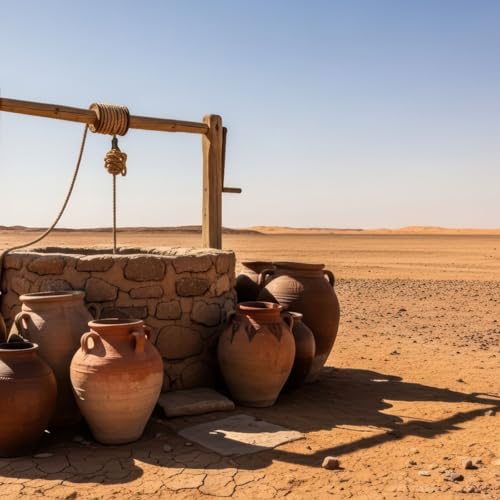
    3rd Sunday of Lent 3-8-2026Taking place at a well...taking time at a well... In the early 300s a Church bishop in Palestine name Eusebius ran a book production factory and library in a city on the mediterranean coast called Caesarea. Eusebius of Caesarea built on the innovative legacy of two scholars – Origen and Pamphilus – who, basically, invented the book. The predecessor to the book, the scroll, was cumbersome, old-technology, and ripe for creative destruction. The book was to the scroll what a digital spreadsheet is to a paper ledger. A book, or codex, was a technological innovation which presented information in a much more efficient and searchable manner than a scroll could. Of the many books published by Eusebius was one called the Onomasticon. It sounds a bit like a mouth disease or the name of a dinosaur but it’s just a long Greek word meaning “book of names.” The Onomastican is a book- length list of many of the places named in the bible, alongside a list of what those places were called at the time Eusebius wrote. Today’s gospel from St. John begins with a place-name which is referenced in the Onomasticon: “Jesus came to a town of Samaria called Sychar, near the plot of land that Jacob had given to his son Joseph.” If Sychar were large or well-known, there would’ve been no need to tell the reader that it was a town or that it was in Samaria. Sychar was small and off the radar, so John has to tell us where it is. Sychar is not otherwise mentioned in Holy Scripture. Before probing the theological and spiritual depth of this multi-layered gospel, it’s worth pausing over what this opening line is telling us. The town of Sychar is mentioned because it’s close to a reliable water source – the well of Jacob. Important things happen near wells in the Bible and elsewhere. Moses meets his wife near a well. Isaac’s wife Rebekah is found at a well. Towns and castles and forts are built over wells. No water, no life. The memorable opening scenes of the movie Lawrence of Arabia revolve around a well in a stark desert landscape. A man is murdered for drinking from the wrong well. When asked why he shot the man, the gunman replies “He was nothing – the well is everything.” A well doesn’t move, any more than a mountain moves. A well is a local landmark, and you can pull water from Jacob’s well today. It's still there, in the exact same spot as it was two thousand years ago. The town of Sychar was absorbed into the Roman city of Neapolis, which became modern Nablus. And you can visit modern Nablus in the West Bank, at some risk, and visit the large Orthodox church in which the well is found. A church has been built over the well since the 4th century, as attested to by St. Jerome. The meeting of Jesus with the Samaritan woman at the well embeds Scripture in history. No New Testament events occur “once upon a time” or “in fairytale land.” Even parables, which are stories and not necessarily historically true, were told by actual people at actual times in actual places. So the recounting of a parable is always a historical event even if the parable itself is not. Today’s gospel “takes place” in Sychar. What an interesting phrase that is! What does it mean to “take place.” It can mean something metaphorical when we say that someone “took second place or third place” in a race, but here it means something much more tangible. Where does Star Wars take place – In a galaxy far far away. That is, Star Wars doesn’t actually take place. It takes celluloid, it takes film. Where does Rome & Juliet take place – it’s set in Verona, Italy, but it takes place at your local theater. Today’s gospel “takes place” in Sychar in the sense that it grabs reality, in the sense that it also “takes time” in Sychar too. This conversation happened in time and in space and in reality. Our faith is sticky, isn’t it? It’s easily remembered because all real memories are inseparable from places. How strange it would be to say that you loved your grandma’s cooking but had no idea where you ate it. You remember where you ate those meals in the same instance in which you remember the meals themselves. A memory, a real memory, and its location are inseparable. This is another way of saying that we naturally link historical truth with time and place. To verify an event, we ask where and when. Isn’t that perhaps the deeper reason why we place a town-name after Jesus’ given name. He is Jesus of Nazareth, not Jesus of the 4th realm or of the heavenly spheres. He is from somewhere because he is real. Uncle Sam is not from anywhere because he doesn’t actually exist. And we have Teresa of Avila and Francis of Assisi and Anthony of Padua. Where is Thor from, really? Where are Spok or Captain Kirk from, really? So... today, we are eavesdroppers on a conversation, at a well, in the town of Sychar around 32 A.D...
    続きを読む 一部表示
    11 分
  • 3-1-26: 2nd Sunday of Lent Readings + Homily
    2026/03/01
    A Reading from the Book of Gensis


    The LORD said to Abram: “Go forth from the land of your kinsfolk and from your father’s house to a land that I will show you.“I will make of you a great nation, and I will bless you; I will make your name great, so that you will be a blessing. I will bless those who bless you and curse those who curse you. All the communities of the earth shall find blessing in you.”Abram went as the LORD directed him.


    The Word of the Lord

    Responsorial Psalm

    Lord, let your mercy be on us, as we place our trust in you.

    Upright is the word of the LORD,
    and all his works are trustworthy.
    He loves justice and right;
    of the kindness of the LORD the earth is full.


    R. Lord, let your mercy be on us, as we place our trust in you.

    See, the eyes of the LORD are upon those who fear him,
    upon those who hope for his kindness,
    To deliver them from death
    and preserve them in spite of famine.

    R. Lord, let your mercy be on us, as we place our trust in you.

    Our soul waits for the LORD,
    who is our help and our shield.
    May your kindness, O LORD, be upon us
    who have put our hope in you.

    R. Lord, let your mercy be on us, as we place our trust in you.


    A reading from the 2nd letter off St. Paul to Timothy

    Beloved: Bear your share of hardship for the gospel with the strength that comes from God.He saved us and called us to a holy life, not according to our works but according to his own design
    and the grace bestowed on us in Christ Jesus before time began, but now made manifest
    through the appearance of our savior Christ Jesus, who destroyed death and brought life and immortality to light through the gospel.


    The Word of the Lord


    A reading from the Holy Gospel according to Matthew

    Jesus took Peter, James, and John his brother, and led them up a high mountain by themselves.
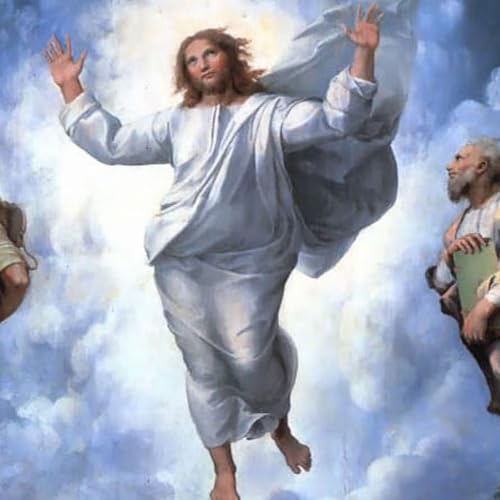
    And he was transfigured before them; his face shone like the sun and his clothes became white as light. And behold, Moses and Elijah appeared to them, conversing with him. Then Peter said to Jesus in reply, “Lord, it is good that we are here. If you wish, I w ill make three tents here,
    one for you, one for Moses, and one for Elijah.” While he was still speaking, behold,
    a bright cloud cast a shadow over them, then from the cloud came a voice that said, “This is my beloved Son, with whom I am well pleased; listen to him.”

    When the disciples heard this, they fell prostrate and were very much afraid. But Jesus came and touched them, saying, “Rise, and do not be afraid.” And when the disciples raised their eyes,
    they saw no one else but Jesus alone.As they were coming down from the mountain,
    Jesus charged them, “Do not tell the vision to anyone until the Son of Man has been raised from the dead.”

    The Gospel of the Lord


    続きを読む 一部表示
    12 分
  • 3-1-26: 2nd Sunday of Lent Homily
    2026/03/01
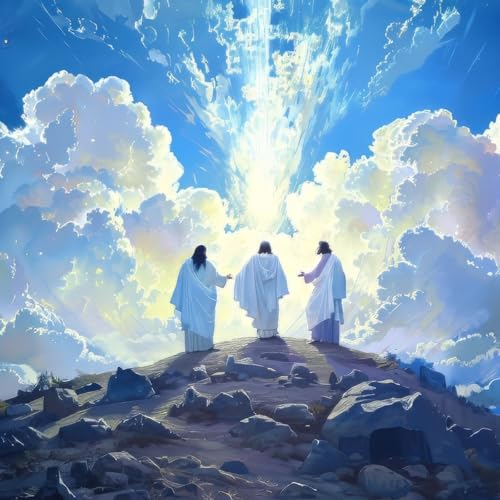
    Second Sunday of Lent – 3-1-2026 Year A – The Transfiguration The Cloud of Knowing The oldest surviving depiction of Christ’s crucifixion is in Rome. It dates from the 430s and is carved into the wooden doors of the church of Santa Sabina on Rome's Aventine Hill. The carving is not particularly expressive of Christ’s suffering. He is alive and rather dignified. He is between two thieves, and his arms are extended in the traditional pose of the crucifixion. It’s a bit surprising but showing Christ crucified was uncommon in the first few centuries of the Church. Crucifixes, and even paintings and icons of the crucifixion, did not proliferate until the 6th through the 9th centuries, and even then, very slowly. It wasn’t until the dawning of the high Middle Ages, around 1000 AD, that the suffering, bloodied, forlorn Christ on the cross became common in churches throughout the known world. Before he was shown pinned to the cross, Christ was more commonly shown as the Good Shepherd, young and sometimes beardless, or at the table of the Last Supper flanked by his apostles. He was very often shown in the orans, or praying, position. Sometimes he was shown in a Roman toga holding a book or a scroll, resembling a philosopher. Or he was shown as he appears in today’s gospel – Transfigured on a high mountain. It makes sense, culturally and sociologically, that early Christians were reluctant to depict their founder struggling, pained and dead. Crucifixion was an act of capital punishment. And in a world of barbaric cruelty towards prisoners and criminals, showing your leader on a common instrument of torture would probably have been counter-productive. Imagine displaying a painting in your home of a man dying in an electric chair, or wearing a gold medal showing a man with a noose around his neck, hanging from a branch. We have become habituated to the crucifix, but for early Christians it may have been too raw and too confusing to bend their knee or bow their head toward a bloody man stuck to a wooden beam. Not showing Christ on the cross also made sense theologically for early Christianity. A crucifix is easily understood by us today because we have a wealth of teaching and solid traditions to help us interpret it – the God-man dies for our sins and then opens for us the doors to paradise through his bodily resurrection. Christ’s immolation was a multi-layered theological event. It took many centuries for the Church’s best minds to cogently plumb the depths of Christ’s great act of redemptive suffering in its full biblical, historical, liturgical, and philosophical richness. Christ’s miracles, His resurrection, His preaching, and His transfiguration, as opposed to his crucifixion, require less theology to grasp. These events explain themselves. They don’t require knowledge of the Old Testament to make sense. And so the most common artistic motifs of the first millenium show Christ praying, performing miracles, being transfigured, teaching, or rising from his tomb. Centuries were to pass before Christ’s self-offering on the cross could be fully understood by the common mind and fully displayed in common art. Roughly speaking, very roughly, the second millennium church gathered around Christ’s death on Calvary in Jerusalem, while the first millennium church gathered around his crib in Bethlehem. Christ’s humble self-gift in the incarnation led, over centuries, to a deeper comprehension of his self-gift on the cross. The spiritual refreshment pulled from the well of the incarnation is based on humility, a humility witnessed by Peter, James, and John in today’s gospel Christ shows this select core of three apostles his radiant glory – and the apostles are dumbfounded. They have not met this man before. What happened to the carpenter’s son from little Nazareth? The Church fathers consistently commented that the real miracle of the transfiguration was not this one moment in which Christ revealed his divinity but that he consistently suppressed his divinity throughout his life. His ordinariness, the mundane, day in and day out humdrumness of his life was the real miracle to behold. Christ could have been surrounded by today’s super-halo as He planed a board in his workshop. But he wasn’t. He could have walked around in the midst of a cloud of witnesses such as Moses and Elijah. But he didn’t. The voice of His father could have thundered in appreciation at every holy act he performed. But it didn’t. Christ wore a common tunic. He slept on the ground. He ate fish baked over a campfire. He walked long miles on dusty trails. And few discerned his divine nature until his resurrection and ascension. Christ’s first and most significant transfiguration was becoming a baby. His sustained suppression of his divinity was what made him unique. Like superman ripping open his shirt to reveal ...
    続きを読む 一部表示
    9 分