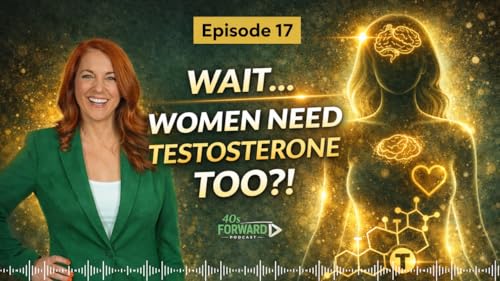
『S1E17 Wait… Women Need Testosterone Too?!』のカバーアート

S1E17 Wait… Women Need Testosterone Too?!

S1E17 Wait… Women Need Testosterone Too?!

無料で聴く

ポッドキャストの詳細を見る

今ならプレミアムプランが3カ月 月額99円

2026年5月12日まで。4か月目以降は月額1,500円で自動更新します。

概要

In this episode of 40s Forward, Dr. Betsy Greenleaf breaks down one of the most misunderstood—and overlooked—hormones in women's health after 40: testosterone. If you've been feeling flat, unmotivated, disconnected, or like your drive—physically, mentally, or emotionally—has faded, you're not alone. And it may not be "just aging" or menopause. It may be hormonal. This conversation challenges outdated narratives and reframes testosterone as a critical hormone for women's vitality, confidence, and overall well-being. What You'll Learn in This Episode • Why testosterone is not just a "male hormone" • The role testosterone plays in libido, energy, mood, and cognition • How declining testosterone impacts confidence, motivation, and performance • Why symptoms matter just as much as lab values • The connection between stress, inflammation, and hormone depletion • Why hormone therapy is not a quick fix—and what needs to come first Testosterone in Women: What It Really Does Women produce testosterone in the ovaries, adrenal glands, and peripheral tissues—and it affects far more than sex drive. Testosterone supports: • Libido and sexual function • Muscle mass and body composition • Bone density • Cognitive function and mental clarity • Mood, confidence, and motivation • Nitric oxide production and orgasm quality When levels decline, women often experience not just low libido—but loss of drive, ambition, assertiveness, and vitality. What Happens After 40 Testosterone begins declining in the 30s and can drop significantly by the 40s and 50s. This decline is often compounded by: • Chronic stress and cortisol dysregulation • Poor sleep • Insulin resistance • Inflammation • Hormonal birth control history • Gut health imbalances • Surgical menopause One key principle: Stress and sex hormones cannot thrive at the same time. When the body is in survival mode, hormone production takes a back seat. Signs You May Have Low Testosterone You may be experiencing low testosterone if you notice: • Decreased libido or lack of sexual thoughts • Low motivation or drive • Difficulty building muscle despite working out • Brain fog or reduced focus • Feeling "flat" or disconnected • Reduced confidence or assertiveness • Weaker orgasms or reduced sexual satisfaction This isn't vanity—it's physiology. Why "Normal" Labs Can Be Misleading Many women are told their labs are "normal"—but normal does not mean optimal. Key considerations: • Labs are a snapshot in time • Reference ranges are based on population averages • Individual needs vary significantly Comprehensive evaluation may include: • Total vs. free testosterone • Sex hormone binding globulin (SHBG) • Estrogen balance • Thyroid function • Cortisol levels A personalized, whole-body approach is essential. Testosterone Therapy: The Reality Currently, there are no FDA-approved testosterone products specifically for women in the U.S., making treatment off-label. Options may include compounded formulations—but they require: • Proper dosing • Ongoing monitoring • An experienced provider Potential side effects can include: • Acne or hair growth • Hair thinning • Mood changes • Lipid shifts • Changes in blood counts This is not a "set it and forget it" therapy—it requires precision and partnership. Hormones Are a Tool—Not the Whole Solution One of the biggest takeaways: Hormones are not the starting point—they are part of the strategy. Before or alongside therapy, it's critical to address: • Stress and cortisol balance • Sleep quality • Nutrition and inflammation • Exercise habits • Gut health Without this foundation, hormone therapy may not work effectively. Natural Ways to Support Testosterone For those not ready for hormone therapy, lifestyle changes can help: • Prioritize quality sleep • Reduce stress and inflammation • Strength train (without overtraining) • Optimize protein intake • Ensure adequate zinc (foods like oysters, seeds, nuts, salmon) • Avoid excessive exercise that raises cortisol Key Takeaway If your drive, confidence, and vitality have changed, it may not be burnout, your relationship, or your mindset. It may be your physiology. After 40 is not a decline—it's a recalibration. And you have options. --- If this episode resonated, share it with a woman who needs to hear it. Follow 40s Forward for more conversations on hormones, health, confidence, and thriving in midlife. Because we're not aging quietly—we're evolving.
まだレビューはありません