エピソード

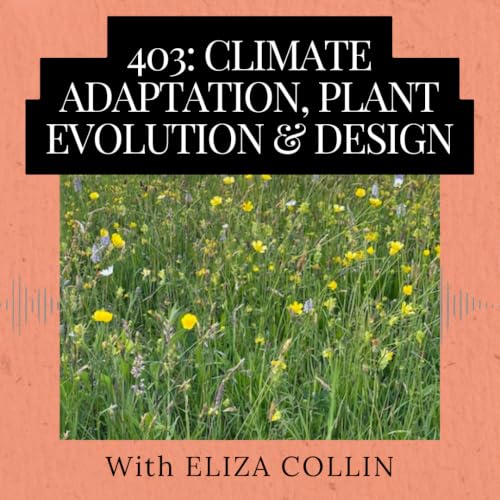
  • Episode 403: Climate Adaptation, Plant Evolution & Design
    2026/09/21
    In this episode of Roots and All, I chat with designer, researcher, and filmmaker Eliza about the intersection of design, ecology, and the fast-paced realities of plant evolution. Coming straight from her extensive research fields—including tracking wildflowers in the Rocky Mountains with Dr. Diane Campbell and exploring alpine meadow systems in Italy—Eliza shares how climate change is reshaping landscapes, why plants are shifting behaviours, and how gardeners can embrace a more observational, resilient approach. Benny's Insect of the Week: The European Firebug What You'll Learn: How extreme weather, drought, and low snowpacks are accelerating plant evolution and altering seasonal lifecycles in the Rocky Mountains.What assisted migration, natural hybridisation, and resilient "Hybridising Scentscapes" mean for future planting schemes and garden biodiversity.How traditional practices, like alpine cattle transhumance festivals, can inspire creative seed dispersal solutions.Practical takeaways for gardeners and designers looking to relinquish rigid control and embrace natural resilience. Understanding the Future Through Design and Research Eliza explains her unique multidisciplinary practice, which blends design research, ecology, and filmmaking to simulate and speculate on future environments. Moving beyond traditional interior or product design, her work explores how humans can collaborate with scientists and natural ecosystems to address climate pressures. Climate Realities in the Rocky Mountains and the Alps Reflecting on her recent field observations in Colorado—where she spends every summer at a field station working alongside scientists—Eliza highlights how extreme drought, a lack of reliable afternoon rain showers, low snowpacks, and early melting have severe domino effects on plant health, pollinator survival, and local marmot populations. She also dives into her work in the Italian Alps, examining ancient meadow systems and how nomadic animal migration (transhumance) plays a crucial role in species distribution. Resilient Gardens and Hybridising Scentscapes Eliza discusses her ongoing collaboration with artist/farmers Atteraterra (ATT) on Hybridising Scentscapes—gardens designed specifically for resilience and evolution. Featuring installations such as the one at the Design Museum, this long-term research explores how planting varieties in close proximity allows nature and pollinators to drive evolutionary adaptations against higher temperatures and water scarcity. Practical Principles for Gardeners and Designers When translating high-level scientific research into everyday horticulture, Eliza suggests stepping back from rigid maintenance practices. Gardeners and designers can benefit greatly from: Embracing natural surprises: Allowing unexpected plant hybrids or "weeds" to persist rather than immediately pulling them out, as they may hold vital climate resilience traits.Loosening control: Moving away from overly sterile aesthetic expectations toward a more dynamic, biodiverse, and observational approach to garden maintenance. Links & Resources TUFF Group: Eliza's new group focusing on the aftermath of historical weather events and major disturbances, featuring a monthly book club exploring historical events from each month and their lasting impacts.Design Museum & Future Observatory: Eliza has an upcoming show opening at the Design Museum with Future Observatory in November, displaying new work on how migratory species can assist struggling plants facing extreme weather. You can read more via the Future Observatory website.Featured Book: On the Necessity of Gardening: An ABC of Art, Botany and Cultivation Please support the podcast on Patreon And follow Roots and All: On Instagram @rootsandallpod On Facebook @rootsandalluk On LinkedIn @rootsandall If you enjoyed this week's episode with Eliza, you might also enjoy these episodes from the archives: Episode 181: Gardening in a Changing World This episode explores the overarching perspective of the climate crisis, looking at how ecological shifts and evolution will change the way we manage our green spaces. It serves as a great companion piece to Eliza's insights on climate adaptation. Episode 137: Water-wise Gardening with Janet Manning Janet Manning looks deep into drought-tolerant plants and practical water management strategies for gardens facing increasing temperature and weather pressures.
    続きを読む 一部表示
    27 分
  • Episode 402: The Art of Cottage Gardening
    2026/09/14

    In this episode, gardening expert and The English Garden editor Clare Foggett joins us to explore what truly defines a cottage garden. We discuss why these spaces are defined by generous planting rather than rigid design, the magic of self-seeding plants, and how this traditional style fits into modern, sustainable, and biodiverse gardening.

    Includes:

    • Planted, Not Designed: Discover how cottage gardens evolve naturally through a passion for plants rather than a master plan.

    • The Power of Self-Seeders: Learn why plants like foxgloves and valerian are essential for a relaxed, charming aesthetic.

    • Modern Sustainability: Find out why this high-flower, low-lawn approach is the ultimate eco-friendly choice for contemporary gardeners.

    Benny's Insect of the Week: Ivy Bee

    Links

    Beauty & Abundance: British Cottage Gardens by Clare Foggett

    Nestboxes Talk - with Ian Rumley-Dawson

    Please support the podcast on Patreon

    And follow Roots and All:

    On Instagram @rootsandallpod

    On Facebook @rootsandalluk

    On LinkedIn @rootsandall

    If you enjoyed this week's episode with Clare, you might also enjoy these episodes from the archives:

    Episode 168: Cottage Gardens with Andrew Sankey

    Andrew Sankey has spent decades researching English cottage gardens, and this episode explores what defines the style, both historically and today, including the plants, planting techniques, edibles and wildlife-friendly qualities that make cottage gardens so distinctive. It's a particularly useful companion to Claire's exploration of how the cottage garden has evolved and why it remains so relevant to the way we garden today.

    Episode 244: The Biodiversity Gardener with Paul Sterry

    Paul Sterry explores how gardens can contribute to biodiversity, from the plants we grow and the way we manage them to the habitats we create for insects and other wildlife. Like Claire's conversation, it considers how a more relaxed, abundant approach to gardening can benefit nature as well as creating a beautiful garden.

    続きを読む 一部表示
    30 分
  • Episode 401: Seeing Plants Differently
    2026/09/07

    We tend to think of plants as static things: rooted to the spot, quietly getting on with being plants. But what if, beneath our feet, there's a much more dynamic world of movement, adaptation and decision-making going on? In this episode I'm talking to plant ecologist and artist Curtis Lubbe about roots, bulbs and rhizomes, plant 'animacy' and why changing the way we think and talk about plants might change the way we treat them too.

    Benny's Insect of the Week: Fig-Leaf Skeltoniser

    Links

    Curtis Lubbe Blog

    Journal of Ecology profile: Curtis Lubbe

    Please support the podcast on Patreon

    And follow Roots and All:

    On Instagram @rootsandallpod

    On Facebook @rootsandalluk

    On LinkedIn @rootsandall

    If you enjoyed this week's episode with Curtis, you might also enjoy these episodes from the archives:

    Episode 109: The Botanical Mind with Gina Buenfeld

    This episode explores the relationship between art and the natural world, including ideas around plant intelligence, symbolism and the ways plants have been understood across different cultures. It's a particularly good companion to Curtis's thoughts on plant perception and the role of art in helping us see plants differently.

    Episode 245: The Language of Trees

    Artist and activist Katie Holten explores our relationship with trees through art, language, literature and ecology. Like Curtis's work, it asks us to rethink how we perceive plants and to find new ways of communicating their importance and complexity.

    続きを読む 一部表示
    39 分
  • Episode 400: Growing a Living Pharmacy
    2026/08/31

    What if your garden could double as a living pharmacy? In this episode, I'm talking to gardener, chef and herbalism practitioner Vanessa Minton about growing medicinal herbs, using them in everyday life, and understanding both the benefits and limitations of herbal remedies.

    Benny's Insect of the Week: Toadflax Brocade Moth

    Links

    From The Garden – Linktree

    How to Grow Medicinal Herbs: An Illustrated Beginner's Guide to Growing, Harvesting, and Making Herbal Remedies at Home - Vanessa Minton

    Please support the podcast on Patreon

    As featured in the Feedspot Top 100 Horticulture Podcasts

    And follow Roots and All:

    On Instagram @rootsandallpod

    On Facebook @rootsandalluk

    On LinkedIn @rootsandall

    If you enjoyed this week's episode with Vanessa, you might also enjoy these episodes from the archives:

    Episode 270: Herbology

    This episode explores the long history of using plants to make remedies and therapeutic preparations, and the growing interest in reconnecting with traditional herbal knowledge. It's a natural companion to Vanessa's discussion of medicinal herbs and the garden as a source of plant medicine.

    Episode 96: Sensory Herbalism with Karen Lawton

    Karen Lawton talks about developing a deeper connection with medicinal plants through observation, sensory awareness and herbal practice. It's a lovely companion to Vanessa's discussion of bringing herbs into everyday life and getting to know the plants we grow.

    続きを読む 一部表示
    33 分
  • Episode 399: Nature Restoration
    2026/08/24

    Can we save nature by putting a quantifiable value on it? Tim Christophersen is a forester, former UN environmentalist and a leading voice in the global ecosystem restoration movement, championing regenerative agriculture and nature-based solutions. With the UK sweltering through multiple heatwaves, we discuss whether investment can really deliver the restoration we need — and what happens when living ecosystems become part of the financial system.

    Benny's Insect of the Week: Toadflax Brocade Moth

    About Tim Christopherson

    Tim Christophersen joined Salesforce as VP, Climate Action in May 2022. Within the global Impact Team, he leads the work on climate and nature action and investments. Tim is based in Denmark. He is the author of 'Generation Restoration', a book about restoring nature at planetary scale. Before joining Salesforce, Tim was Head of the 'Nature for Climate' Branch at the United Nations Environment Programme (UNEP), and led a growing global movement backed by all UN Member States and over 300 partner organizations to 'prevent, halt and reverse the degradation of ecosystems worldwide': the UN Decade on Ecosystem Restoration 2021-2030.

    He holds a degree in Forestry and Forest Conservation Engineering from Dresden University of Technology. He previously worked for the Secretariat of the Convention on Biological Diversity (CBD), where he led the portfolio on the conservation and sustainable use of forest biodiversity. From 2017-2019, he was elected Chair of the Global Partnership on Forest and Landscape Restoration. From 2002-2007 he was Regional Programme Coordinator for Europe, the Caucasus and the Commonwealth of Independent States at the International Union for the Conservation of Nature (IUCN). He also worked for the Danish Ministry of the Environment, and for the European Commission.

    Links

    Generation Restoration: How to Fix Our Relationship Crisis with Mother Nature by Tim Christopherson

    Tim Christophersen on how to rebuild humanity's ties to nature

    Other restoration projects of interest: Restor.eco decadeonrestoration.org

    Tim's LinkedIn profile

    Please support the podcast on Patreon

    As featured in the Feedspot Top 100 Horticulture Podcasts

    And follow Roots and All:

    On Instagram @rootsandallpod

    On Facebook @rootsandalluk

    On LinkedIn @rootsandall

    If you enjoyed this week's episode with Tim, you might also enjoy these episodes from the archives:

    Episode 318: Care Not Capital

    John Little challenges the idea that investing in green spaces is primarily about capital, arguing instead for investment in the people who care for them. It makes an interesting companion to Tim's discussion of the role money and investment can play in restoring nature.

    Episode 58: A New Garden Ethic with Benjamin Vogt

    Benjamin Vogt argues for a different relationship with nature, one in which we see ourselves as part of the wider ecological community rather than separate from it. It's a useful counterpoint to Tim's much bigger-picture discussion about how we value and restore the natural world.

    続きを読む 一部表示
    34 分
  • Episode 398: Rewilding Childhood
    2026/08/17

    Blending storytelling with facts can encourage children to see the wildlife on their doorstep in a completely different way. In this episode, I'm talking to children's author and wildlife expert Sonia Copeland Bloom about storytelling, wildlife and getting children curious about the natural world.

    Benny's Insect of the Week: Rock Rose Prickly Leaf Beetle

    Links

    Amazing Tales & Truths about Garden Minibeasts by Sonia Copeland Bloom, with illustrations by Nick Page

    First edition ISBN 978-917673-54-9.

    Available on Amazon, to order from all good bookshops, including Amazon Kindle and on www.amentsoc.com along with Sonia's six smaller books.

    For more info visit www.bugglebury.com and www.amentsoc.com

    Please support the podcast on Patreon

    And follow Roots and All:

    On Instagram @rootsandallpod

    On Facebook @rootsandalluk

    On LinkedIn @rootsandall

    If you enjoyed this week's episode with Sonia, you might also enjoy these episodes from the archives:

    Episode 76: School Gardening with the MiniHorts

    A look at the benefits of getting children gardening and connecting with nature from an early age. It's a great companion to Sonia's work bringing wildlife and the natural world to life for young readers.

    Episode 343: Lines Across the Wild

    Writer and naturalist Julian Hoffman explores threatened landscapes, wildlife and our deep connections to the natural world. It complements Sonia's passion for encouraging curiosity about the creatures and wild places around us.

    続きを読む 一部表示
    28 分
  • Episode 397: Britain's Gardening Questions
    2026/08/10

    Have you ever wondered who answers all those gardening questions that stump the rest of us? This week I'm chatting to Leigh Hunt, Principal Horticultural Advisor at the RHS, about what really goes on behind the scenes of the Society's advice service, the questions gardeners ask most often, and what those thousands of enquiries reveal about the way we're gardening in a changing climate.

    Benny's Insect of the Week: Mexican Grass-Carrying Wasp

    Links

    RHS Gardening Advice

    Please support the podcast on Patreon

    And follow Roots and All:

    On Instagram @rootsandallpod

    On Facebook @rootsandalluk

    On LinkedIn @rootsandall

    If you enjoyed this week's episode with Leigh, you might also enjoy these episodes from the archives:

    Episode 210: Gardening in a Changing World

    Darryl Moore discusses how gardeners can respond to the climate crisis by rethinking the way we design and manage our gardens. His ideas about working with plants, rather than against them, make this an excellent companion to Leigh's observations on the changing questions the RHS is receiving as gardeners adapt to new weather patterns and growing conditions.

    Episode 321: Weathering It All

    Sarah talks to writer and naturalist Matt Gaw about our relationship with weather, exploring how storms, drought and seasonal change shape both landscapes and our experience of nature. It complements Leigh's insights into how increasingly unpredictable weather is influencing the advice sought by gardeners across the UK.

    続きを読む 一部表示
    31 分
  • Episode 396: Fermenting the Seasons
    2026/08/03

    Could the secret to better health be sitting in a simple jar on your kitchen counter? Today I'm joined by food writer and fermentation expert Rachel de Thample to explore how fermentation can rewild the gut microbiome, preserve the seasons, and prove that making your own fermented foods is much easier than most of us think.

    Benny's Insect of the Week: The Bee Wolf

    Links

    The Fermentation Year: Everyday techniques and recipes to rewild your microbiome by Rachel de Thample

    Rachel on Instagram - @dethample

    Please support the podcast on Patreon

    And follow Roots and All:

    On Instagram @rootsandallpod

    On Facebook @rootsandalluk

    On LinkedIn @rootsandall

    If you enjoyed this week's episode with Rachel, you might also enjoy these episodes from the archives:

    Episode 371: Wild Edibles

    Wendy Russell and Freda Farquharson explore the potential of wild edible plants, from citizen science and biodiversity to health and climate-friendly farming. Their conversation about making better use of overlooked plants is a great companion to Rachel's discussion of fermentation, seasonal eating and increasing the diversity of the foods we eat.

    Episode 306: The Soil Habitat

    Sarah talks to geologist and soil food web specialist Eddie Bailey about the living world beneath our feet, why healthy soils are essential for healthy plants, and how soil health ultimately affects our own wellbeing. It pairs perfectly with Rachel's explanation of the links between soil microbes, fermentation and the gut microbiome.

    続きを読む 一部表示
    33 分