


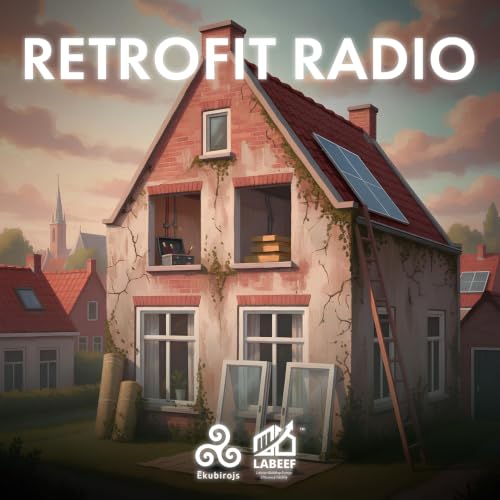
Retrofit Radio
カートのアイテムが多すぎます
カートに追加できませんでした。
ウィッシュリストに追加できませんでした。
ほしい物リストの削除に失敗しました。
ポッドキャストのフォローに失敗しました
ポッドキャストのフォロー解除に失敗しました

Retrofit Radio
-
ナレーター:
Season 1 of Retrofit Radio with Ekubirojs is a six-episode deep dive into one of Europe's most overlooked crises: energy poverty, and why — despite decades of funding, policies, and good intentions — almost nothing is fixing it. Nicholas opens by introducing the staggering scale of the problem — 34 million Europeans who can't afford to heat their homes — before revealing that the real number is almost certainly far higher, because most people suffering from energy poverty are too ashamed to admit it. From there, the series peels back layer after layer of why the problem persists: the data is messier than anyone admits, the split incentive between landlords and tenants creates a structural deadlock, retrofits routinely fail to deliver their promised savings, and the communities that need help most are also the ones who trust institutions the least.
But the season isn't a dirge — it builds toward something. Every episode chips away at the "why nothing works" question until the finale lands on a genuinely different answer: the RENEW-IT project, running right now in France, Germany, and Spain, where energy-poor residents are trained to retrofit their own buildings alongside professionals. It cuts costs by 15%, creates real career pathways out of poverty, and — perhaps most importantly — replaces shame with something that actually looks like agency. The season's core argument is simple and quietly radical: we've spent decades designing solutions for people in energy poverty, and the one thing we've never really tried is designing them with those people, and by those people.
LABEEF-
 2026/07/1313 分
カートのアイテムが多すぎます
ご購入は五十タイトルがカートに入っている場合のみです。カートに追加できませんでした。
しばらく経ってから再度お試しください。ウィッシュリストに追加できませんでした。
しばらく経ってから再度お試しください。ほしい物リストの削除に失敗しました。
しばらく経ってから再度お試しください。ポッドキャストのフォローに失敗しました
ポッドキャストのフォロー解除に失敗しました
-
2026/07/0619 分
カートのアイテムが多すぎます
ご購入は五十タイトルがカートに入っている場合のみです。カートに追加できませんでした。
しばらく経ってから再度お試しください。ウィッシュリストに追加できませんでした。
しばらく経ってから再度お試しください。ほしい物リストの削除に失敗しました。
しばらく経ってから再度お試しください。ポッドキャストのフォローに失敗しました
ポッドキャストのフォロー解除に失敗しました