エピソード

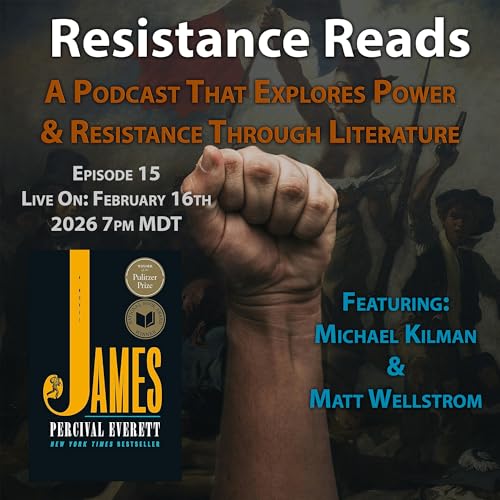
  • Resistance Reads Podcast: Episode 15: James by Percival Everett
    2026/02/18

    In this episode of Resistance Reads, Michael Kilman and Matt Wellström discuss Percival Everett’s novel James, a powerful retelling of Adventures of Huckleberry Finn from Jim’s perspective. We explore how Everett reimagines one of the most influential works in American literature while confronting the realities of slavery, race, and freedom.

    We compare Everett’s novel with the original text, examining character development, historical context, and the journey down the Mississippi River. The conversation focuses on the creation of race, structural violence, and the systems of power that shaped the experience of slavery. We also discuss the psychological dimensions of oppression, including code switching, hierarchy, and survival.

    This episode connects literary analysis with anthropology, history, and political theory. We break down how the construction of race during the colonial period shaped American society, including key moments like Bacon’s Rebellion. We also explore the influence of the Civil War, minstrel culture, and the broader legacy of these systems in contemporary discussions of justice and humanity.

    If you are interested in literature, history, anthropology, and resistance, this conversation will deepen your understanding of both James and the enduring impact of Mark Twain’s work.

    Subscribe for more discussions on power, resistance, and the anthropology of literature.

    続きを読む 一部表示
    1 時間 28 分
  • Resistance Reads Podcast Episode 14: We by Yevgeny Zamyatin
    2026/01/28

    This episode dives into We by Yevgeny Zamyatin, a pioneering dystopian novel that helped define the genre. We examine the author’s life, the political context of the book, and the inner conflict of D-503 as he grapples with individuality, love, and rebellion inside a tightly controlled society.

    Our discussion covers themes of authoritarianism, emotional suppression, regulated relationships, and the illusion of happiness without struggle. We also critique the novel’s writing style and narrative choices, asking how frustration, self-indulgence, and discomfort shape the reader’s understanding of power and control.

    The conversation expands into contemporary concerns, including cognitive dissonance, apathy, nihilism, state violence, fascism, masculinity, economic pressure, and family planning. By unpacking We, we explore how literature helps us confront political justifications for cruelty and better understand the social realities we are living through today.

    続きを読む 一部表示
    1 時間 21 分
  • Resistance Reads Podcast Episode 13: The Buffalo Hunter Hunter
    2026/01/07

    In this episode, we dive deep into Buffalo Hunter Hunter by Stephen Graham Jones, unpacking its powerful exploration of colonialism, genocide, Indigenous history, and reimagined vampire lore. Through a close reading of the novel, we examine how horror becomes a vehicle for confronting historical injustice and moral accountability.

    We discuss Stephen Graham Jones’ background as a Blackfeet author, the haunting moral evolution of Goodstab, and how characters like The Cat Man embody the violence and consequences of white colonialism. The novel’s unique take on vampire mythology serves as both transformation and indictment, reflecting the enduring impact of oppression on identity, memory, and culture.

    Our conversation expands beyond the book to address broader themes including the colonization of America, the influence of Indigenous governance on American democracy, and the lasting harm of policies like the Dawes Act. We explore how capitalism functions as a modern extension of colonialism, the cultural costs of technological dominance, and why libraries and local journalism remain essential to informed, resilient communities.

    This episode highlights how horror forces readers to confront uncomfortable truths about history, race, power, and accountability, making Buffalo Hunter Hunter both a cathartic and deeply unsettling reflection of the past and present.

    続きを読む 一部表示
    1 時間 30 分
  • Resistance Reads Podcast: Episode 12 Heavenly Tyrant
    2025/12/17

    In this episode of Resistance Reads, we dive deep into Heavenly Tyrant, the highly anticipated sequel to Iron Widow by Xiran Jay Zhao. This is not just a book review. It is a critical conversation about power, resistance, feminism, and the political structures that shape both dystopian fiction and the real world.

    We explore the novel’s political themes, pacing, and character dynamics, with particular attention to women-led resistance movements, the costs of revolution, and the myth of the benevolent dictator. Along the way, we connect Heavenly Tyrant to broader conversations in anthropology, intersectional feminism, and cultural critique, questioning popular narratives around power, violence, and social control.

    This episode also tackles:

    • Colonial feminism and Western intervention narratives

    • Misconceptions in popular anthropology, including critiques of Jared Diamond and Steven Pinker

    • Police, state violence, and the role of force in maintaining social order

    • How contemporary science fiction and fantasy reflect real-world political anxieties

    • Character consistency and ideological tension in modern speculative fiction

    If you are interested in political science fiction, feminist literature, dystopian novels, cultural criticism, or leftist media analysis, this conversation goes beyond surface-level fandom and asks harder questions about what resistance really looks like and who pays the price.

    続きを読む 一部表示
    1 時間 25 分
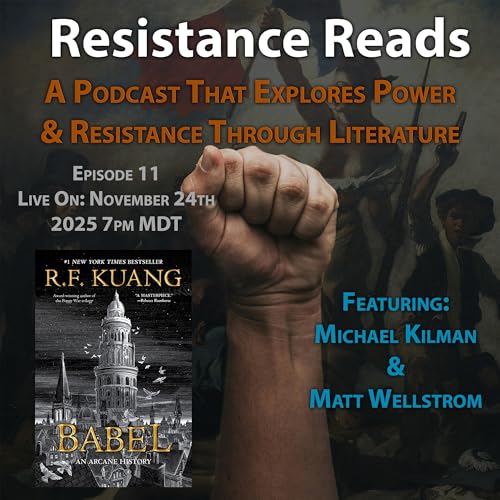
  • Resistance Reads Podcast Episode 11: Babel by R.F. Kuang
    2025/11/26

    In Episode 11 we discuss the powerful themes in R.F. Kuang’s Babel and share our critique of Guillermo del Toro’s adaptation of Frankenstein. We explore Babel’s unique magic system rooted in language and translation, the complex relationships between its characters, and the book’s sharp examination of colonialism, resistance, and identity.

    We also reflect on the novel’s portrayal of betrayal, moral dilemmas, and the costs of fighting oppressive systems—considering how privilege, dignity, and collective action shape the story’s impact. Finally, we talk about why Babel resonates so strongly with modern readers and why it has the potential to be remembered as a contemporary classic.

    続きを読む 一部表示
    1 時間 50 分
  • Resistance Reads Episode 10: Frankenstein by Mary Shelly (1818 edition)
    2025/10/29

    In their 10th epsiodes, Michael and Matt take a fresh look at Mary Shelley’s Frankenstein (the 1818 edition) and why this classic story still matters today. They explore the novel’s powerful themes of creation, ambition, and isolation while connecting them to modern life, the industrial revolution, AI, the Tech industry, and capitalism. They also compare the 1818 edition to the 1831 edition and how Mary Shelly's life experiences changed some of the themes of freewill and destiny in the later version.

    続きを読む 一部表示
    1 時間 50 分
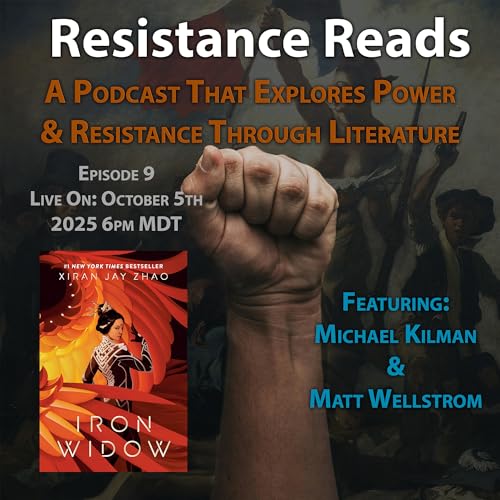
  • Episode 9 Iron Widow by Xiran Jay Zhao
    2025/10/07

    In Episode 9 we looked at power and resistance in the 2021 novel Iron Widow by Xiran Jay Zhao. The novel is a mecha reimagining of the rise of China’s first and only female Emperor Wu Zetian set in the nation of Huaxia, a futuristic reinterpretation of Medieval China. In this episode we looked at patriarchal systems and how the main character, Wu Zetian, smashes them with a giant Mecha vermillion bird.

    続きを読む 一部表示
    1 時間 22 分
  • Episode 8 Black Empire by George S Schuyler
    2025/09/17

    In Episode 8 we cover the early Afrofuturist novel Black Empire. The plot is essentially, what would it be like to have Marvel's Killmonger/A James Bond Supervillain as your boss. The book is a collection of two major serials stories from the 1930s compiled in the 1990s into novel format. It follows newspaper man Carl Slater, who, is kidnapped by Dr. Belsidus in the very first chapter after witnessing a murder. Dr. Belsidus then enlists him in his plot for the destruction of white empires like Italy, Brittan, and France, and the conquest of Africa to build a Black Empire.

    続きを読む 一部表示
    1 時間 16 分