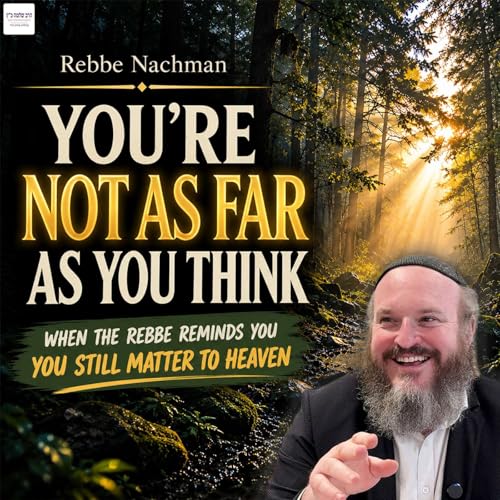
• 12. Rebbe Nachman's Secret to Unshakable Faith
    2026/06/25

    In this final class of the year exploring the teachings of Rebbe Nachman of Breslov, Rav Shlomo Katz and the women of Shirat David tackle the ultimate goal: achieving true shalvat hanefesh (serenity) by anchoring our lives in Emet (Truth) and Emunah (Faith).

    Rav Shlomo explores a profound paradox: true faith only begins where the human intellect ends. If we demand logical proofs for every challenge Hashem sends us, we limit our connection to the Divine.

    Drawing on Rebbe Nachman and the Nesivos Shalom, this episode breaks down the three levels of faith—from the mind, to the heart, and finally to the limbs—and challenges us to stop asking God "Why" (Lama) and start asking "For What" (Lema).

    ----------
    For more Shuirim and Music from Rav Shlomo Katz, visit: https://ravshlomokatz.com
    Join Rav Shlomo Katz's WhatsApp Community: https://chat.whatsapp.com/KHKOhhPaeHx5Kb74WL9L9a?mode=ems_copy_t

    CHAPTERS
    00:00 Opening Thanks and Sponsor Acknowledgments
    01:02 Purpose of Today's Lesson: Rebbe Nachman's Tachlis
    02:06 Core Themes: Hitbodedut and Azamra
    03:19 Anatomy of the Soul and Physiological Insight
    04:56 World as Olam Deshika vs. Olam HaEmet
    06:53 Holding Fast to Unshakable Truth
    08:51 Truth as the Prerequisite for Genuine Faith
    22:56 Bitul, Truth, and Eternal Emet
    25:10 Lechatchila: A Humble Quest for Understanding
    26:14 The Uncrackable Divine Code
    32:12 Strong Faith Leads to Intellectual Insight
    36:44 From "Why?" to "For What?"
    40:10 Dveikut, Emunah, and the Rise of Sechel
    45:35 The Limits of Understanding and the Gift of Faith

    続きを読む 一部表示
    1 時間
  • 11. Why You Feel Better When You Stop Judging People
    2026/06/11

    One of the greatest obstacles to inner peace isn't what happens inside of us.

    It's what we think about everyone else.

    In this week's shiur, Rav Shlomo Katz and the women of Shirat David explore a foundational teaching that sits at the heart of Rebbe Nachman's path to tranquility: learning how to see people differently.

    Beginning with the Gemara's command to judge others favorably, Rav Shlomo uncovers a profound teaching from Rav Samson Raphael Hirsch that completely reframes what justice actually means. Is judging favorably simply being nice? Is it ignoring reality? Or is it possible that true justice requires seeing a much bigger picture than what our eyes can grasp?

    Through stories, practical examples, and an introduction to Rebbe Nachman's teaching of Azamra, this shiur reveals why our assumptions about other people are often built on incomplete information, and why learning to see the good in others may be one of the most powerful paths to peace within ourselves.

    Because at the end of the day, it really does feel better when we like people.

    ----------
    For more Shuirim and Music from Rav Shlomo Katz, visit: https://ravshlomokatz.com

    Join Rav Shlomo Katz's WhatsApp Community: https://chat.whatsapp.com/KHKOhhPaeHx5Kb74WL9L9a?mode=ems_copy_t

    CHAPTERS
    00:00 Special Shiur Introduction and Excitement
    02:36 Gemara Quote on Judging Friends
    03:36 Question: Is Favorable Judgment True Justice?
    04:59 Halachic Dilemma: Judging Favorably vs Reality
    07:09 Sefer Chasidim on Not Judging Unfavorably
    08:50 Do We Really Know Friends' Spiritual Levels?
    11:01 Upcoming Part Two and Preview of Hirsch
    14:33 Justice Defined as Truth of Truths
    17:21 Conclusion: Objective Justice and Inner Peace
    20:27 Jacob and Isaac Blessing Parable
    24:12 When Blessings Weaken and Life Falls Apart
    26:36 Rav Hirsch on Seeing Beneath the Surface
    31:07 Removing Narrow Lenses to See True Reality
    39:15 Rebbe Nachman’s Azamra: Finding Good in Everyone
    41:37 The Challenge of Objective Judgment in Practice
    48:03 Loving From Distance: Boundaries and Favorable Judgment

    続きを読む 一部表示
    49 分
  • 10. Rebbe Nachman's Surprising Definition of Peace
    2026/06/04

    What is peace?


    Most people think shalom means agreement. Rebbe Nachman teaches something far more challenging—and far more transformative.


    Rav Shlomo Katz and the women of Shirat David explore Rebbe Nachman's surprising definition of peace: not the absence of disagreement, but the ability to seek truth together with those who see the world differently than we do.

    Drawing from current events, personal stories, and foundational teachings from Likutey Moharan, this conversation examines why machloket distances us not only from one another, but from Hashem Himself.

    Along the way, Rav Shlomo explores inner conflict, serenity of the soul, the dangers of ideological certainty, and why true shalom can only emerge when we stop fearing opposing perspectives.

    ----------

    For more Shuirim and Music from Rav Shlomo Katz, visit: https://ravshlomokatz.com
    Join Rav Shlomo Katz's WhatsApp Community: https://chat.whatsapp.com/KHKOhhPaeHx5Kb74WL9L9a?mode=ems_copy_t

    CHAPTERS
    00:00 Opening Dedication and Announcements
    01:34 Defining Inner Peace vs External Conflict
    03:41 Personal Anecdote: New Shoes and Shtender
    08:06 Rebbe Nachman's Definition of Shalom
    09:52 Pursuing Truth (Emet) Over Vanity
    11:21 Money, Vanity, and Spiritual Decisiveness
    14:27 Scooter Braun Example on Charity
    20:25 Haredi Riot in Alon Shvut and Call for Dialogue
    24:25 Divine Assistance Needed to Choose Participation
    25:33 Machloket as Root of Distance from Hashem
    28:52 Why We Gather: Seeking Common Ground
    48:18 Inner Peace (Menuchas HaNefesh) and Its Spiritual Reward

    続きを読む 一部表示
    49 分
  • 9. The Rebbe’s Validation Is Life Saving
    2026/05/14

    There are moments when a person feels so far from Hashem that they begin to believe the distance itself is the truth.

    In this deeply personal shiur, Rav Shlomo Katz and the women of Shirat David learn the Torah of what happens when a tzaddik refuses to let you define yourself by your falls, your confusion, or your sadness. Through the teachings of Rebbe Nachman and the light of Bamidbar, this episode explores composure, spiritual heaviness, self-perception, and the life-saving power of hearing that you still matter to Heaven exactly where you are.
    ----------
    For more Shuirim and Music from Rav Shlomo Katz, visit: https://ravshlomokatz.com
    Join Rav Shlomo Katz's WhatsApp Community: https://chat.whatsapp.com/KHKOhhPaeHx5Kb74WL9L9a?mode=ems_copy_t

    CHAPTERS
    00:00 Opening and Sponsor Acknowledgements
    01:56 Introducing the Theme: Composure
    02:56 Causes of Losing Composure
    07:43 Feeling Distance in Service
    10:38 Words That Saved Lives
    13:18 Analogy of Train and Elevator
    15:12 Learning Struggles and Feeling Far
    17:57 Self-Perception and Spiritual Density
    21:42 Feeling Divine Neglect
    23:28 When the People Felt God Was Uninterested
    25:02 The Miraglim Report and the Birth of Tisha B'Av
    28:17 The Rebbe Calls for Great Spiritual Strength
    30:44 All Tzaddikim Face This Spiritual Crisis
    44:43 Tiny Spiritual Steps Yield Massive Heavenly Impact
    46:42 Sadness Is a Spiritual Sin According to the Rebbe
    48:17 Zohar Quote on True Sadness (Sitra Achra)
    49:26 Bamidbar Lessons: Torah for Life’s Mistakes
    50:36 Closing Remarks and Blessings for the Week

    続きを読む 一部表示
    51 分
  • 8. The Critical Moments Before Hitbodedut
    2026/05/07

    Before a Jew speaks to Hashem, something deeper has to happen first.

    In this powerful continuation of our learning on hitbodedut, Rav Shlomo Katz and the women of Shirat David explore the hidden avodah that comes before the words ever begin: silence, yishuv hadaas, longing, and preparing the heart to truly stand before the Ribbono Shel Olam.

    Drawing from Rebbe Nachman and Reb Noson, this shiur opens up the inner world of hitbodedut — not as a technique, but as a lived relationship. What happens in those first quiet moments? Why is it so difficult to begin? How do we avoid turning authenticity into self-destruction? And what does it mean to receive words “like burning coals of fire” directly from Hashem?

    Along the way, Rav Shlomo speaks about weddings, Rav Ginsburgh, the challenge of presence, the danger of negative self-talk disguised as honesty, and the possibility of hearing Hashem’s voice through your own.
    For more Shuirim and Music from Rav Shlomo Katz, visit: https://ravshlomokatz.com

    Join Rav Shlomo Katz's WhatsApp Community: https://chat.whatsapp.com/KHKOhhPaeHx5Kb74WL9L9a?mode=ems_copy_t

    CHAPTERS
    00:00 Opening and Sponsor Acknowledgment
    02:42 Importance of Yishuv HaDaas and Hisbodedus
    04:15 The 15-Minute Hisbodedus Challenge
    05:16 How to Begin Hisbodedus: Practical Steps
    07:11 Preparing the Mind Before Speaking
    09:20 The Need for Silence According to Rav Noson
    10:21 Rebbe’s Story of Waiting for the Frierdiker Rebbe
    11:22 Wedding Example: Staying Present in Sacred Moments
    13:08 Facing Opposition When Seeking Hisbodedus
    17:16 Heavy Nature of Hisbodedus and Required Silence
    19:51 Final Call: Daily Practice of Hisbodedus
    23:48 Need for More Time and Rachamei Shamayim
    26:52 Avoiding the Self-Perverted Authenticity Trap
    29:13 Distinguishing Shleppers from the Truly Seeking
    31:56 Approaching Hashem with Humility, Not Boasting
    34:23 From Soft Beginnings to Burning Coals of Words
    38:43 Hearing God’s Voice Through Hisbodedus
    42:48 Sefirat HaOmer: Tuning Ears for Divine Messages
    46:00 Source of the One-Hour Pre-Hitbodedut Practice
    47:29 Rebbe’s Vision of All-Day Hitbodedus
    48:50 Comparing Hitbodedut and Continuous Prayer
    49:59 Focusing on One Middah in Practice

    続きを読む 一部表示
    59 分
  • 7. How to Approach Hitbodedut
    2026/04/16

    In this deeply practical shiur, Rav Shlomo Katz and the women of Shirat David open a doorway into one of Rebbe Nachman’s most essential teachings: hitbodedut.

    Drawing from the sefer Eshpoch Lefanav Sichi and the teachings of Rebbe Nachman, Rav Shlomo reframes what it means to “talk to Hashem.” Not as something formal, structured, or intimidating, but as something raw, human, and deeply personal.

    What does it actually mean to speak “as you would to a close friend”? Why do so many people feel resistance to hisbodedut? And how can just 15 minutes a day begin to bring real clarity, calm, and connection, even in a chaotic world?

    ----------
    For more Shuirim and Music from Rav Shlomo Katz, visit: https://ravshlomokatz.com
    Join Rav Shlomo Katz's WhatsApp Community: https://chat.whatsapp.com/KHKOhhPaeHx5Kb74WL9L9a?mode=ems_copy_t

    CHAPTERS
    00:00 Opening and Sponsor Acknowledgments
    02:14 Purpose of Hisbodedus and Tranquility
    07:27 Suggested 15-Minute Daily Practice
    09:52 Pouring Out the Heart Like a Friend
    16:41 Story of a Compassionate Friend in Tzfat
    18:38 Challenges and Resistance to Daily Hisbodedus
    24:01 Infinite Heart Talk vs. Structured Prayer
    25:26 Keeping Deep Heart Secrets from the Untrusted
    26:31 “Hashem Bored?” – The Prison Joke Analogy
    27:34 Reb Noson on Small Details Before the Divine
    30:34 Sitting Before Hashem: Pouring Out the Heart
    32:56 Childlike Vulnerability in Hisbodedus
    37:20 Yefaresh Sichaso: Interpreting the Inner Voice
    41:57 Practical 15-Minute Hisbodedus Commitment
    45:34 Outdoor Hisbodedus and Women’s Participation

    続きを読む 一部表示
    48 分
  • 6. Rebbe Nachman's 254th Birthday
    2026/03/19

    On Rebbe Nachman’s 254th birthday, Rav Shlomo Katz and the women of Shirat David open a different kind of door.

    Not just into the teachings of the Rebbe, but into the mystery of what hiskashrus really means — what it means to feel that a tzaddik was sent into the world with your soul in mind.

    Through a deeply personal text from Rav Erez Moshe Doron, this shiur explores why connection to the tzaddik can sound so foreign from the outside, and yet feel like the most intimate truth in the world from the inside. What does it mean to say, “I am Rebbe Nachman’s”? Is that threatening? Is it liberating? Is it a surrender of self, or the first time a person truly begins to find their real self?

    Rav Shlomo weaves together the worlds of emunah, bittul, self-acceptance, loneliness, healing, and avodah, showing how the tzaddik does not come to replace a person’s relationship with Hashem, but to lead them toward the G-dly light within.

    This is a birthday shiur, but really it is a love letter: to the Rebbe, to the soul, and to the hope that no part of a person is beyond repair.

    And the practical takeaway is as clear as ever: if you want this Torah to enter the heart, begin with 15 minutes of hisbodedus a day.
    ----------
    For more Shuirim and Music from Rav Shlomo Katz, visit: https://ravshlomokatz.com
    Join Rav Shlomo Katz's WhatsApp Community: https://chat.whatsapp.com/KHKOhhPaeHx5Kb74WL9L9a?mode=ems_copy_t

    CHAPTERS
    00:00 Opening Blessings and Sponsor Acknowledgments
    01:06 Rebbe Nachman's Birthday and Its Significance
    02:11 Birthday vs Yahrtzeit: Spiritual Meaning
    04:29 Neighborhood Group’s Struggle with Chassidus
    05:41 The Pasuk as Basis for Tzaddik Connection
    07:01 Experiencing Rebbe’s Guidance in Personal Anxiety
    08:07 Breslov’s Unique Stance on Tzaddik Relationship
    09:24 Personal Identification with Rebbe Nachman
    13:45 Self-Acceptance Through Kinyan Gamur
    20:40 Transformative Stories of Rebbe Nachman’s Influence
    24:40 Personal Transformation Through Hiskashrus
    25:43 Uniqueness of Breslov vs Other Chassidic Groups
    29:03 Need for Gedolim in Religious Zionist World
    30:36 Echad L'Echad Initiative to Elevate Yeshiva Leaders
    33:34 Writing a Hiskashrus Document at the Kotel
    43:36 Breslov Avoda and the Role of the Ovdim
    44:49 Eternal Love and Longing for the Rebbe
    47:54 Feeling Alone and Telling My Own Story
    51:28 Rebbe Nachman's Contrary Approach to Tzaddikim
    52:58 Desire to Cry Out in Loneliness
    53:58 Hope for Future Transformation
    55:19 Rebbe as Spiritual Psychologist
    57:02 Trusting the Rebbe Over Self
    58:09 Guided Towards Inner Light
    64:26 Practical Daily Hisbodedus Advice

    続きを読む 一部表示
    1 時間 5 分
  • 5. The Gift Hidden Inside This War
    2026/03/12

    There are moments in history that force a person to see life differently.

    This shiur was given in real time, in the middle of a war, with a missile siren interrupting the learning itself. And maybe that is exactly why this Torah had to be learned now.

    Rav Shlomo Katz and the women of Shirat David turn to Rebbe Nachman’s teaching on yishuv hadaat — settling the mind — and ask a piercing question: what are the fears that truly threaten us, and what are the fears that only seem to control us?

    In a moment when danger is real, the contrast becomes sharper. We begin to notice how much of our daily anxiety comes not from what can actually harm us, but from stories, panic, conditioning, and the body’s old memories.

    And yet, in the middle of all this, something else is being revealed: a hidden strength, a deep composure, a new kind of perspective. We see it in ourselves. We see it in our children. We see it in Am Yisrael.

    This is a shiur about war, trauma, fear, taavot, breath, choice, and the possibility of becoming more settled — not after the chaos ends, but right in the middle of it.

    Maybe one of the gifts that can emerge from this war is this: to finally recognize what deserves our fear… and what never did.
    ----------
    For more Shuirim and Music from Rav Shlomo Katz, visit: https://ravshlomokatz.com
    Join Rav Shlomo Katz's WhatsApp Community: https://chat.whatsapp.com/KHKOhhPaeHx5Kb74WL9L9a?mode=ems_copy_t

    CHAPTERS
    00:00 Opening Dedication and Sponsor Acknowledgment
    02:38 Kids as a Generation of Ninjas
    03:40 Reacting to Sirens and Shelter Procedures
    10:43 Understanding Anxiety About Anxiety
    13:41 Personal Story of Imagined Threat
    15:31 Yetzer Hara Analogy and Facing Desires
    23:43 Mind-Body Disconnect and Rewiring
    25:24 Cold Plunges as Physical Barrier Breaking
    26:59 Scaredy-cat Fears and Nonsense Anxiety
    29:08 Irrational Fear Before the Mind Processes
    30:48 Siren Warnings and Trauma-induced Panic
    31:58 Distinguishing Fear from Desire to Control
    36:40 War-time Sirens and PTSD Reminders
    38:37 Jacob's Fear before Meeting Esau
    46:35 Exhaustion and the Call for Adaptation
    49:03 Distinguishing Healthy Fear from Motivating Taiva
    50:31 Moshe Rabbeinu, Nitzavim, and Overcoming Curses
    51:56 Rabbi Nachman's Teaching on Choice and Yishuv Hadaat

    続きを読む 一部表示
    55 分