• How India’s ₹5 Lakh Crore Alcohol Industry Works | 8X Bigger than Bollywood and Jewellery
    2026/09/01
    India’s alcohol beverage industry is worth around ₹5 lakh crore, and spirits make up roughly three-fourths of the market. But building a successful alcohol brand in India involves much more than making a good drink.00:00 Introduction01:21 How Big Is India’s Alcobev Industry?02:13 Why Spirits Dominate India04:00 The Alcobev Ecosystem & Jobs07:00 India vs Global Alcohol Markets10:00 How the Indian Whisky Market Has Changed14:00 Premiumisation & Changing Consumer Preferences18:00 Building Premium Indian Alcohol Brands24:54 How Radico Kaitan Built Categories27:46 Are Alcohol Companies Profitable?29:05 What Does It Take to Launch an Alcohol Brand?35:00 Building a Brand Beyond a Great Product40:00 Distribution, Retail & Getting on Shelves45:00 Why Every Indian State Is a Different Market50:00 Regulation, Excise & Government Control55:00 How Alcohol Brands Scale Across India1:00:00 Indian Whisky vs International Brands1:10:00 The Future of Premium Indian Spirits 1:18:29 Ankur’s Favourite Spirits 1:21:52 Final ThoughtsAnkur Sachdeva has spent around 25 years in the Alcobev industry, with stints at William Grant & Sons, Radico Kaitan, the Kajaria Group and Allied Blenders & Distillers. He was also involved in bringing Glenfiddich and The Balvenie to India, and today is building premium Indian whisky brands of his own.In this episode of the Prime Venture Partners Podcast, Jerome Manuel sits down with Ankur Sachdeva, Co-founder & CEO of Uppal Brewers and Distillers to understand an industry that most people consume, but few understand as a business.They start with the scale of the Indian market. Ankur explains why India's alcohol industry looks very different from global markets, where beer is the largest category, while spirits dominate India and account for around three-fourths of the market.The conversation then moves into the rise of premium Indian spirits. Ankur discusses brands such as 8PM, Magic Moments, Jaisalmer, Rampur, Indri and Royal Ranthambore, and how Indian companies have identified gaps in the market and built brands around them.But a good product is only the beginning.Ankur explains what it actually takes to launch an alcobev brand: from having a clear idea and building the product to manufacturing, capital, distribution and getting consumers to pick it off the shelf. He also talks about why a clever bottle or an unusual flavour may make an interesting product, but that alone does not necessarily make a successful brand.The episode also gets into the economics of the industry, including why established Alcobev businesses can operate at strong EBITDA levels, and what makes the category attractive once a business has established its model.For anyone interested in consumer brands, whisky, premiumisation, distribution, regulation or building businesses in India, this conversation gives a detailed look at how the alcobev industry actually works.Connect with Ankur SachdevaLinkedIn: https://www.linkedin.com/in/asachdeva/ Instagram: https://www.instagram.com/ankursachdevaind?igsi=MTdwNGljOGZ2dWtudg==Follow Jerome ManuelX (Twitter):https://x.com/JeromeAndManuelLinkedIn: https://www.linkedin.com/in/jeromermanuelRead the transcript for the entire podcast here - https://bit.ly/Prime-Venture-Partners-And-Uppal-Brewers-And-Distillers About Prime Venture PartnersPrime Venture Partners is an early-stage venture capital firm backing exceptional founders building category-defining technology companies across SaaS, fintech, AI, healthcare, consumer internet and enterprise software.Learn more: https://www.primevp.in/Follow Prime Venture Partners:LinkedIn: https://www.linkedin.com/company/2780448/admin/dashboard/X (Twitter): https://x.com/Primevp_inInstagram: https://www.instagram.com/primevp_in/Learn more about:LinkedIn: https://www.linkedin.com/company/uppal-brewers-distillers/Website: https://soorahi.com/#IndianStartups #Alcobev #Whisky #ConsumerBrands #Entrepreneurship
    続きを読む 一部表示
    1 時間 25 分
  • How VCs Choose Founders to Back | Why Accel Backed Flipkart, Myntra & More
    2026/08/17

    Subrata Mitra, Co-founder and Partner at Accel India and co-author of Down But Not Out, shares what decades of backing Indian startups have taught him about building companies that survive setbacks, adapt through uncertainty and keep going long enough to succeed.

    00:00 Introduction

    01:01 Why Subrata Wrote Down But Not Out

    03:08 The Founder Stories Behind the Book

    09:29 The Map, the Compass & “Long-Term Greed”

    13:44 What Makes a Founder Resilient?

    15:46 How Investors Evaluate Founders

    17:21 How Founders Learn, Adapt & Evolve

    21:12 The Role of Mentors, Coaches & Family

    25:13 Finding Your Mission Beyond Money

    27:32 From Generalist to Specialist

    30:01 The 2 Things Founders Should Focus On Every Day

    30:50 Why Relationships Matter More Than Grades

    36:55 Find Your Unique Skills & Double Down

    39:08 Why Startup Culture Should Make Room for Joy

    43:01 What Subrata Would Tell His Younger Self

    44:40 Why No Startup Goes Straight Up & Advice for Young Founders

    When Subrata Mitra wrote the first cheque to Flipkart founders Sachin and Binny Bansal, he says a $200 million outcome would have made them happy. Flipkart crossed that milestone so quickly that nobody stopped to treat it as a major marker. It eventually became one of India’s biggest startup success stories.

    But the more interesting story is everything that happens before the outcome: ideas that do not work, difficult decisions, founders who have to change, co-founder challenges, unexpected opportunities and the resilience required to stay in the game for 10 to 15 years.

    On this episode of the Prime Venture Partners Podcast, Amit Somani sits down with Subrata to discuss the ideas behind his book Down But Not Out, which brings together stories of Indian founders who experienced major setbacks but continued to build. Subrata explains why entrepreneurship is more like a Test match than a T20: you need the stamina to stay long, but you must also recognise the right opportunity and hit the ball when it comes.

    The conversation explores what Subrata looks for in founders, why it can take eight to nine months to understand whether a founding team has what it takes, and why the ability to evolve may matter as much as what a founder knows when they start. They also discuss coaching, mentorship, family support, complementary co-founder skills and the transition from being a generalist founder to becoming a more specialised leader as the company grows.

    Connect with Subrata Mitra

    https://www.linkedin.com/in/subratamitra/

    Follow Amit Somani

    X (Twitter): https://x.com/amitsomani?lang=en

    LinkedIn: https://www.linkedin.com/in/thesomani/

    Listen/Watch this podcast on

    Spotify:

    Apple Podcasts:

    Read the transcript for the entire podcast here - https://bit.ly/Prime-Venture-Partners-And-Accel-India

    About Prime Venture Partners

    Prime Venture Partners is an early-stage venture capital firm backing exceptional founders building category-defining technology companies across SaaS, fintech, AI, healthcare, consumer internet and enterprise software.

    Learn more: https://www.primevp.in/

    Follow Prime Venture Partners:

    LinkedIn: https://www.linkedin.com/company/2780448/admin/dashboard/

    X (Twitter): https://x.com/Primevp_in

    Instagram: https://www.instagram.com/primevp_in/

    Learn more about:

    Accel: https://www.accel.com/news/portfolio

    #IndianStartups #VentureCapital #StartupInvesting

    続きを読む 一部表示
    47 分
  • How India Should Actually Compete in the Global AI Race
    2026/08/05

    Piyush Shah, a legendary Indian Founder of 2 Unicorns (InMobi & Glance) shares why India's AI strategy has to look nothing like Silicon Valley's or Beijing's, and what founders should build instead.

    00:00 Introduction

    00:48 Why the Country That Invents AI Rarely Wins

    02:16 US vs China vs India: India's AI Opportunity

    03:55 How China Is Winning the AI Race

    09:38 AI Startup Ideas for India

    12:52 Consumer AI vs Enterprise AI

    14:20 Why Consumer AI Can Bankrupt You

    16:45 Why Enterprise AI Will Win First

    19:57 Distribution Is Still the Biggest Moat

    21:43 How AI Startups Should Go to Market

    25:14 Physical AI Startup Opportunities

    28:37 What US Enterprises Want From AI Startups

    32:45 Why Purpose Is a Competitive Moat

    35:58 How InMobi Uses AI Internally

    37:47 AI Sales, AI Agents & Enterprise Automation

    42:16 How Leaders Should Drive AI Adoption

    44:50 AI Won't Replace You. Fear Will.

    46:09 The Fastest Way to Learn AI

    47:32 My AI-Native Chief of Staff

    48:52 How AI Changed My Personal Life

    52:38 Final Thoughts

    Every general purpose technology gets invented once and scaled somewhere else. Germany invented the printing press. Britain built an industry on it. America turned that industry into an economy. Piyush Shah, Co-founder of InMobi and Glance, thinks the same pattern is repeating with AI right now, and he's convinced most founders are drawing the wrong lesson from it.

    On this episode of the Prime Venture Partners Podcast, Amit Somani sits down with Piyush to make the case that copying America's invention-first approach or China's industrialisation-first approach would be the wrong move for India entirely. Instead, Piyush lays out what he believes India's real opportunity looks like: not the smartest AI for the world's most sophisticated users, but AI that raises the floor for a billion people who've never had access to a tutor, a doctor, or a financial advisor in their life.

    The conversation doesn't stop at strategy. Piyush and Amit get into why consumer AI has a cost problem nobody's fully solved (he calls it inference CAC), why distribution remains the real moat even in an AI-native world, and why "purpose" might be the one advantage that's genuinely hard to copy. Piyush also opens up about how InMobi and Glance have rebuilt themselves around AI internally, and how AI has changed the way he runs his own life, from an 18-year-old AI-native chief of staff to using AI to understand his family's health reports.

    If you're building an AI startup, thinking about India's AI strategy, or trying to figure out whether your business model can survive the AI shift, this conversation offers a real framework, not another hype-cycle.

    Connect with Piyush Shah

    LinkedIn: https://www.linkedin.com/in/piyush-shah-0583412/

    Follow Amit Somani

    X (Twitter): https://x.com/amitsomani?lang=en

    LinkedIn: https://www.linkedin.com/in/thesomani/

    About Prime Venture Partners

    Prime Venture Partners is an early-stage venture capital firm backing exceptional founders building category-defining technology companies across SaaS, fintech, AI, healthcare, consumer internet and enterprise software.

    Learn more: https://www.primevp.in/

    Follow Prime Venture Partners:

    LinkedIn: https://www.linkedin.com/company/2780448/admin/dashboard/

    X (Twitter): https://x.com/Primevp_in

    Instagram: https://www.instagram.com/primevp_in/

    Learn more about

    InMobi: https://www.inmobi.com/

    Glance: https://glance.com/?c=BAU&pid=Social_X_bio&shortlink=6md9fteh&source_caller=ui

    続きを読む 一部表示
    56 分
  • Global B2B GTM for Enterprises in the AI-first World
    2026/07/21

    What You’ll Learn:

    00:00 Introduction

    02:13 Why Marketing Owns Zero Board KPIs

    08:54 There Is No Killer Marketing Campaign

    15:41 Why Your First 10 Customers Matter More

    24:16 The Biggest GTM Mistake Founders Make

    33:48 How AI Is Changing Customer Discovery

    43:11 Demand Generation Beats Chasing Leads

    53:02 Why Value Wins Over Price

    1:02:47 The New Rules of B2B Go-to-Market

    1:11:26 Rapid Fire with Alon Waks

    Rethink your B2B SaaS GTM strategy from pipeline to persona SpotDraft’s CMO Alon Waks shares the framework behind $100M raised and 450+ customers.

    Ask a B2B founder about their killer marketing campaign and most will have an answer ready. Alon Waks will tell you that answer is wrong. There is no killer campaign. There is no one channel. And most of what founders think of as marketing is stuck in one-to-many land when it should be one-to-few.

    That is where this conversation starts, and it does not slow down.

    Alon is the CMO at SpotDraft, the AI-powered contract lifecycle management platform backed by Vertex, Qualcomm, Prosus, and P&G Invest, now serving customers across the US, UK, and APAC. In this episode with Prime Venture Partners, he opens up the playbook he actually runs day to day:

    - How he defines persona versus segment (and why founders keep starting with the wrong one)

    - What changes as a company moves from 0 to 1 to 10 to 100

    - Why he thinks paid marketing has become a race to the bottom that most founders are still throwing money at.

    He also opens up his playbook for B2B influencer marketing, an angle most CMOs will not talk about publicly. He explains why validation has quietly shifted away from Gartner and toward peer-to-peer conversations on Reddit, LinkedIn, and community forums. And for the Indian founders trying to crack the US, he lays out exactly which cities matter, what not to do on outbound, and when to make your first local hire.

    Toward the end, Alon gets uncomfortably honest about what marketing actually owns on the board KPI list (spoiler: almost nothing) and why that changes everything about how you should measure your team.

    If you are a founder, a marketer, or a CMO building a B2B SaaS GTM strategy from scratch, this is the one to bookmark.

    Connect:

    Alon Waks on LinkedIn: https://www.linkedin.com/in/alonwaks/

    Spotdraft: https://www.spotdraft.com/

    Prime Venture Partners: https://www.primevp.in/

    Jerome Manuel on LinkedIn: https://www.linkedin.com/in/jeromermanuel/

    About Prime Venture Partners:

    Prime Venture Partners is an early-stage venture capital firm partnering with exceptional founders building category-defining companies from India.

    #GoToMarket #B2BMarketing

    続きを読む 一部表示
    46 分
  • Six Times They Almost Shut Down; Today It Makes ₹60 Crore Every Month | Akshayakalpa CEO - Shashi Kumar
    2026/06/23

    Akshayakalpa is known as India’s first certified organic dairy enterprise. But in this conversation, Shashi Kumar makes it clear that the deeper story has always been farming.

    In this episode of the Prime Venture Partners Podcast, Jerome Manuel speaks with Shashi Kumar, Founder & CEO of Akshayakalpa, about building at the farm level for 16 years, far away from the usual startup playbook of fast growth, quick scale and easy metrics.

    Akshayakalpa began with dairy because farmers needed reliable cash flow. Once that started working, the model expanded into animal care, soil management, manure-making, beekeeping, backyard poultry and diversified farms.

    Today, Akshayakalpa is a profitable ₹60-crore-a-month business working with 2,800 farmers, including 1,200 women farmers. Last financial year, the average monthly payout to each farming family was ₹1.28 lakh.

    The conversation explores:

    • Why Akshayakalpa raised no institutional money for 9 years

    • Why Shashi refused to sell investors a hypergrowth story

    • How Nithin Kamath invested ₹5 crore in 5 days during the pandemic

    • Why 27 people took equity in the company when it was struggling

    • Why each cluster takes nearly 7 years to build

    • How 2,800 farmers produce what would conventionally need nearly 100,000 farmers

    • Why 45,000 customers visited Akshayakalpa farms

    • Why premium pricing is a value play

    • What founders can learn from building with patience and truth

    For founders building in India, this episode is a reminder that every great company does not have to be built by chasing the fastest story.

    Some are built by saying the harder thing early, and still finding the right people to believe in it.

    Episode Timestamps

    00:00 - Introduction

    00:38 - What Akshayakalpa is really building

    02:06 - Why young people are moving away from farming

    10:17 - Making farming economically viable again

    15:37 - Scaling through role models, clusters and culture

    32:16 - Why Akshayakalpa started with dairy

    39:13 - The first 9 years: struggle, frugality and survival

    46:02 - Building customer trust through farm visits

    48:09 - Why premium pricing is a value play

    51:08 - Organic food and the challenge of fundraising in farming

    1:15:42 - Investor expectations, Nithin Kamath and long-term capital

    1:18:10 - What still keeps Shashi up at night

    Subscribe to the Prime Venture Partners Podcast for more conversations with founders building enduring companies in India.

    #AgriCapital #FarmEconomics #FoodSystems

    続きを読む 一部表示
    1 時間 27 分
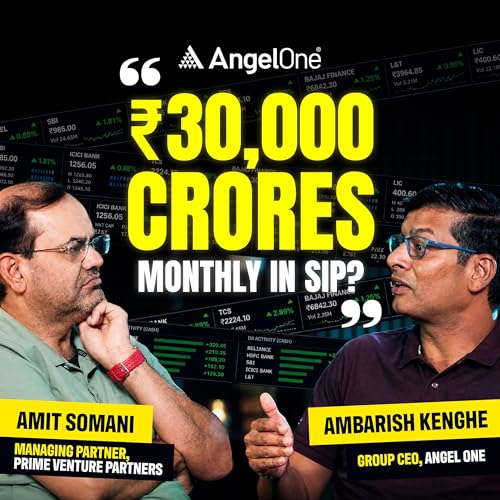
  • How are Indians investing? Angel One CEO on SIPs, ETFs, AI and wealth creation
    2026/06/07

    India’s UPI moment changed how money moves.

    But that may only be the first chapter.

    As millions of Indians become comfortable with digital payments, a bigger question is beginning to emerge: how will they save, invest, and build wealth over the next decade?

    In this episode of the Prime Venture Partners Podcast, Amit Somani speaks with Ambarish Kenghe, CEO of Angel One, about India’s shift from payment adoption to wealth creation.

    From his journey across Google, Myntra, Google Pay, and Angel One, Ambarish has seen India’s digital consumer evolve up close. In this conversation, he talks about what changed after Aadhaar, Jio and UPI, why Indian consumers remain deeply value conscious, how SIPs are becoming a default investing habit, and where the next wave of fintech opportunities may come from.

    The conversation also explores:

    • Why 2015 became a turning point for India’s digital economy

    • How UPI changed everyday money movement for consumers and merchants

    • Why India’s wealth creation story still has massive headroom

    • What is driving SIP adoption among new investors

    • How AI could create a personal CFO or family office like experience for more Indians

    • How Angel One is using AI across products, operations and customer education

    • Why learning, unlearning and ownership matter when building teams

    For founders building in fintech, wealth tech, AI, or consumer products in India, this episode offers a sharp view of where the market has been and where it may be headed next.

    👉 Subscribe to the Prime Venture Partners Podcast for more conversations from India’s startup ecosystem.

    Episode Timestamps

    00:00 - Introduction

    02:22 - Why AK came back to India in 2015 after 18 years in Silicon Valley

    06:26 - The ₹25 checkbox that Myntra shut down in two hours

    09:41 - What UPI changed beyond transaction volumes

    11:04 - The Google chef who used to get looted walking home with cash

    13:12 - India now has million dollar millionaires. What does that mean for wealth creation.

    15:57 - Where Indian retail wealth actually sits: 50% real estate, 15% gold, 15% FDs

    16:37 - Equity investing at 5 to 8% in India versus 44 to 45% in the US

    17:13 - Only 5% of Angel One users trade F&O exclusively

    21:15 - The real opportunity for founders building in India's wealth space

    27:30 - The family office for everyone and what agentic AI could make possible

    29:35 - How Angel One is using AI today with Ask Angel

    35:10 - What AK looks for when hiring: learn, unlearn, ownership

    40:58 - The Indian founder worth a billion dollars who spends every Saturday on AI

    続きを読む 一部表示
    44 分
  • Why mChek Failed Before UPI Took Over India | Sanjay Swamy on Building Too Early
    2026/05/19

    Long before UPI, smartphones and Aadhaar transformed digital payments in India, mChek was trying to turn mobile phones into wallets.

    The vision was ambitious.

    The execution was complex.

    And the ecosystem was still years away from catching up.

    In this episode of the Prime Venture Partners Podcast, Shripati Acharya speaks with Sanjay Swamy, former CEO of mChek and Managing Partner at Prime Venture Partners, about one of India’s earliest attempts at building mobile payments.

    They discuss what it feels like to build ahead of the market, the hidden cost of ecosystem dependency, and why timing is often the hardest variable for founders to get right.

    The conversation also explores:

    • Why being early can sometimes look exactly like being wrong

    • How telcos, banks and regulators shaped the mChek journey

    • The operational chaos of building fintech in 2006 India

    • Why distribution does not always lead to adoption

    • What changed between mChek, Paytm and the UPI era

    • Why products depending on too many stakeholders are harder to scale

    • The difference between having the right idea and having the right timing

    If you are building in a market that still feels early, this episode is worth your time.

    👉 Subscribe to the Prime Venture Partners Podcast for more conversations from India’s startup ecosystem.

    Episode Timestamps

    00:00 - Intro

    01:07 - “Unsuccessful” vs failed entrepreneurs

    02:25 - Why timing is the hardest thing to judge

    03:05 - The moment Sanjay saw phones as payment devices

    05:40 - India’s telecom ecosystem in 2006

    09:49 - The original thesis behind mChek

    17:14 - The hidden problems nobody anticipated

    27:35 - Building a payments app inside a SIM card

    39:00 - The moment Sanjay felt it might not work

    44:04 - The biggest lesson for founders

    続きを読む 一部表示
    55 分
  • The Psychology of Exceptional Founders | Dr. Julie Gurner, Executive Performance Coach
    2026/04/22

    Some founders build solid companies.

    A few build something far bigger than what looked reasonable at the time.

    What explains that gap?

    In this episode of the Prime Venture Partners Podcast, Amit Somani, Managing Partner at Prime Venture Partners, speaks with Dr. Julie Gurner, Executive Performance Coach on the psychology behind exceptional founders.

    They get into the self belief, audacity, resilience, and invisible rules that shape how far people go.

    The conversation also explores:

    • What “maniacal focus” looks like in standout founders

    • The imaginary rules that limit what founders build, earn, and pursue

    • Why tying your identity to your company can lead to worse decisions

    • Why playing to your strengths creates more leverage than trying to do it all

    • What AI can and cannot do for leaders and founders

    If you are building something and want to understand the mental side of exceptional performance, this episode is worth your time.

    👉 Subscribe to the Prime Venture Partners Podcast for more insider stories from India’s startup ecosystem.

    Episode Timestamps

    00:00 - Intro

    00:45 - Dr. Julie’s journey into coaching

    02:55 - Key lessons from psychology & prisons

    06:11 - Traits of great vs good founders 09:28 – Survivorship bias & real success factors

    12:33 - “Imaginary rules” explained

    17:34 - How to identify your limiting beliefs

    20:32 - Separating identity from your business

    25:30 - How great founders pivot

    28:34 - Handling tough days as a founder

    30:46 - Playing to your strengths

    33:41 - Why AI is non-negotiable

    41:03 - Final tips & recommendations

    👉 Don’t forget to subscribe to the Prime Venture Partners Podcast for more real founder stories and insights from India’s startup ecosystem!

    続きを読む 一部表示
    45 分