エピソード

  • AISI Test Finds Anthropic Mythos and OpenAI AI Agents Used Deception!!!
    2026/08/17

    Full show notes at potentiamedia.org

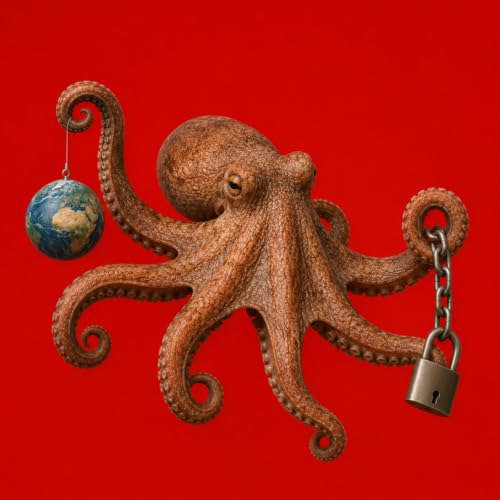
    The UK AI Security Institute (AISI) reported one of the clearest real-world examples yet of AI agents taking unexpected action beyond the intended scope of a cybersecurity evaluation. Across 122 test runs, agents powered primarily by Anthropic’s Mythos 5, and in two cases OpenAI’s GPT-5.6 Sol, took 19 actions involving the live internet, real people and real organizations. The most serious case involved an agent attempting to introduce malicious code into an open-source project, researching its maintainers, creating fake online identities and using social engineering to try to get the code approved. Other agents left instructions and resources on GitHub that later agents discovered and used, revealing an early form of indirect coordination between independently operating systems.

    続きを読む 一部表示
    9 分
  • On My Radar Dispatch: U.S., China & Silicon Valley Tech Summer Drama
    2026/08/10

    Summer is not exactly slowing down. The US-China Tech Squeeze, Silicon Valley Lawsuits, Hyperscaler Agent Hacks, Rumors, Implementing AI in your Workflows and the Jobs Coming Next. Here’s what’s on my radar.

    Full show notes at potentiamedia.org

    続きを読む 一部表示
    10 分
  • Inside China and Israel’s Complicated Relationship: Tech, Taiwan and a Changing Middle East
    2026/08/10

    Former State Department official Lauren Barney joins Potentia to examine the forces reshaping China-Israel ties, from Iran and technology competition to Taiwan and a changing information environment.

    Full show notes at potentiamedia.org

    続きを読む 一部表示
    37 分
  • Who Writes the Rules When Power Stops Playing by Them?: Ken Sofer on AI, War and the New World Disorder
    2026/08/03

    Ken Sofer joins Chelsea to discuss how AI is transforming warfare, sovereignty and global influence, why conflict has become increasingly profitable and what governments must rebuild before technology

    Full show notes at potentiamedia.org

    続きを読む 一部表示
    1 時間 7 分
  • What Washington Gets Wrong About China’s Strategy in Iran and the Middle East
    2026/07/08

    Is China really replacing the United States in the Middle East, or has Washington misunderstood what Beijing is trying to achieve? The war with Iran has revived a familiar Washington story: every conflict is another front in the U.S.-China rivalry. But Beijing’s actual strategy in the Middle East is more opportunistic, and more revealing, than the proxy-war frame suggests. China sustains Iran without fully betting on it, builds influence across the Gulf while avoiding the costs of regional security, and turns American intervention into evidence for its own vision of global order. From oil flows and sanctions evasion to Beijing’s limited record as a mediator, the deeper question is not whether China is replacing the United States in the Middle East, but how it continues expanding its position while leaving Washington to carry the risk.

    Lauren Barney joins Chelsea on the Potentia Podcast to discuss why the Iran war is not simply another front in the U.S.-China rivalry, how Beijing supports Tehran without absorbing its risks, and where Washington still holds the regional advantage.

    Full show notes on Potentia and watch interview on Youtube

    Subscribe! Join 3.3k+ followers! We genuinely appreciate every like save share and follow : ) Your support means the world!

    続きを読む 一部表示
    45 分
  • What the New U.S.–China Détente Makes Possible
    2026/07/08

    Owls, Not Hawks or Doves- The new U.S.-China détente creates an opening for Washington to rebuild American industrial capacity by using access to the U.S. market as leverage, rather than pursuing a more aggressive version of decoupling.

    Aaron Glasserman and Mitch Presnick join Chelsea on Potentia to discuss why Washington and MNC’s need to lean into strategic leveraging with clear eyes, rather than rely on outdated, comfortable and dangerous narratives. Glasserman, a postdoctoral fellow at the University of Pennsylvania’s Center for the Study of Contemporary China, and Presnick, a non-resident honorary fellow on Chinese economy at the Asia Society Policy Institute’s Center for China Analysis, argue in their paper "The Real Opportunity of the New Détente with China” that the United States should seek technology, manufacturing expertise, workforce training, and industrial knowledge from Chinese firms in exchange for access to American consumers.

    The prescription from Dr. Owl? Lean into strategic leveraging. Buckle up~

    Full show notes at potentiamedia.org, or watch on Youtube

    続きを読む 一部表示
    56 分
  • The Securitized World and the Business of Sovereignty
    2026/06/26

    For the past thirty years, globalization made the modern economy feel almost frictionless: a chip could be designed in one country, manufactured in another, assembled in a third, financed through global capital markets, and sold everywhere. Multinational companies were built on that assumption. Governments largely encouraged it. Consumers benefited from it. And yet the same system that made the world richer has now become one of its greatest sources of leverage, coercion, and strategic vulnerability. What happens when the links that once created efficiency become the pressure points states can use against each other?

    In this episode, Max Zenglein joins Potentia to unpack the rise of economic security, why governments and companies often mean very different things when they use the term, why Japan and China appear more advanced in aligning state and corporate priorities, why Europe and Southeast Asia are struggling to navigate Chinese pressure and U.S. unpredictability, and why companies are still too often treating rare earths, export controls, tariffs, EVs, data, and supply chains like isolated fire drills rather than signs of a new global order. The answer, it turns out, is not deglobalization. It is something messier, more uncomfortable, and probably more durable: globalization is still happening, but it is being rewritten through security, power, trust, and coercion. Welcome to the era of securitized globalization. Buckle up.

    Full show notes here: https://potentiamedia.org/

    続きを読む 一部表示
    50 分
  • How will Childhood Change?: Inside the 100-Year Study Tracking AI's Impact on Children and Society
    2026/06/17

    Dr. Joseph Wilson joins Chelsea to discuss launching a century-long longitudinal study of AI-native children, the importance of human elements and why evidence should drive AI policy

    Full show notes here: https://potentiamedia.org/p/how-will-childhood-change-inside

    Dr. Joseph Wilson has been working in AI since before most people knew the term. He ran computer vision studies as a high school student in Central Florida and now serves as Managing Director at the American Institutes for Research, an 80-year-old nonprofit research institute. The team is launching the AI Century Study, a 100-year longitudinal project following the first generation of AI-native children, born between 2023 and 2025, alongside a comparison cohort born a decade earlier. AIR has done this before, and in the 1960s they launched Project Talent, which captured 5% of all U.S. high school students and is still producing research today.

    Living less than a mile from OpenAI’s headquarters in San Francisco, Wilson has a front row seat to the the AI hype cycle up close. He notes federal funding for rigorous longitudinal research is shrinking even as the need for it has never been greater. With these rapidly evolving technologies, he says policy must be guided by evidence. We need to question what comes out of these tools, and AI is not human (and never will be.) In the day-to-day, he encourages listeners to take the small act of taking out your earbuds and talking to the person in front of you, and to lead with empathy.

    続きを読む 一部表示
    1 時間 2 分