

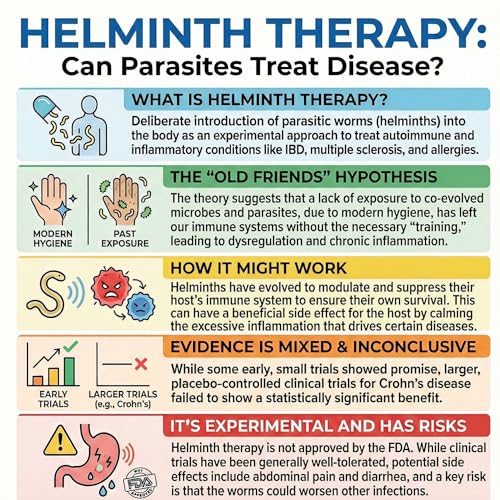
Parasites Are Our Friends? Helminth Therapy
カートのアイテムが多すぎます
カートに追加できませんでした。
ウィッシュリストに追加できませんでした。
ほしい物リストの削除に失敗しました。
ポッドキャストのフォローに失敗しました
ポッドキャストのフォロー解除に失敗しました

Parasites Are Our Friends? Helminth Therapy
-
ナレーター:
-
著者:
このコンテンツについて
Discussing the "Old Friends Hypothesis" and the therapeutic potential of helminths (parasitic worms) in treating chronic inflammatory disorders, particularly Inflammatory Bowel Disease (IBD), which includes Crohn's disease and ulcerative colitis, and allergies. The hygiene hypothesis, a precursor to the "Old Friends Hypothesis," suggests that reduced exposure to microbes and infections in modern societies has led to a failure in immunoregulation, resulting in increased autoimmune and allergic conditions. Several studies, including a systematic review, investigate helminth therapy, such as using Trichuris suis ova (TSO) or Necator americanus, as a novel treatment due to the worms' ability to induce an anti-inflammatory tolerance in the host by increasing regulatory T cells and anti-inflammatory cytokines like IL-10 and TGF-β. While most clinical trials found the therapy to be safe and tolerable, the evidence regarding its efficacy for IBD is mixed and inconclusive, although research continues into using specific helminth products as potential drug candidates.