エピソード

  • Hegseth’s Pentagon Axed a Program Meant to Save Civilian Lives
    2026/03/13

    The US and Israel have continued a large-scale bombing campaign in Iran, killing over 1,300 civilians. On this week’s On the Media, the far-reaching implications of the Department of Defense’s scrapping of an initiative to protect civilians. Plus, how different corners of the MAGA-verse are metabolizing the Epstein files.

    [01:00] Host Brooke Gladstone interviews Wes J. Bryant, a former senior policy advisor at the Pentagon and retired Air Force Master Sergeant, about the civilian protection initiative he was working on for the Department of Defense and the deadly consequences of Secretary Hegseth’s decisions to close it down.

    [31:28] Host Micah Loewinger sits down with David Gilbert, a reporter at WIRED covering disinformation and online extremism, to explore how different segments of the right are reacting to the Epstein files, from far-right commentators like Nick Fuentes to Fox News to Qanon conspiracists.

    Further reading / watching:

    • “The U.S. Built a Blueprint to Avoid Civilian War Casualties. Trump Officials Scrapped It,” by Hannah Allam
    • “MAGA Is Raging Over the Epstein Files. But They’re Not Mad at Donald Trump,” by David Gilbert

    On the Media is supported by listeners like you. Support OTM by donating today (https://pledge.wnyc.org/support/otm). Follow our show on Instagram, Twitter and Facebook @onthemedia, and share your thoughts with us by emailing onthemedia@wnyc.org.

    続きを読む 一部表示
    50 分
  • A Good Sign For the VOA?
    2026/03/11

    Recently a surprising ruling came down from U.S. District Court Judge Royce C. Lamberth. The Reagan-appointed judge found that Kari Lake - (formerly best known as the loser of two state-wide races in Arizona), had acted unlawfully in running the United States Agency for Global Media, the body that oversees Voice of America and the handful of other government-assisted media outlets.

    Kari Lake, wrote the judge "satisfies the requirements of neither the statute nor the Constitution," potentially making all of her actions this past year null and void. Lake, who once described herself to a gaggle of reporters as "your worst fricking nightmare" told NPR that she would appeal the ruling.

    Last spring February when Lake started slashing and burning the 80-year old service, Micah spoke to Nicole Hemmer, a historian at Vanderbilt University to learn about the history the VOA.

    On the Media is supported by listeners like you. Support OTM by donating today (https://pledge.wnyc.org/support/otm). Follow our show on Instagram, Twitter and Facebook @onthemedia, and share your thoughts with us by emailing onthemedia@wnyc.org.

    続きを読む 一部表示
    14 分
  • The AI-Powered War Machines Are Here
    2026/03/07

    The US military used AI tools for real-time targeting in its strikes on Iran. On this week’s On the Media, what recent conflicts can tell us about AI-powered weapons and the dangerous future of warfare. Plus, lessons on democratic resilience from around the world.

    [01:00] Host Brooke Gladstone interviews  Siva Vaidhyanathan about how the U.S. military is using artificial intelligence in its strikes on Iran, and what can be gleaned from recent conflicts about the state of AI-powered warfare. Plus, what does accountability for war mean when AI is involved? Brooke also hears from Alan Rozenshtein, Senior Editor at Lawfare, about the Trump administration’s pressure campaign on AI company Anthropic.

    [33:45] Brooke sits down with Zack Beauchamp, senior correspondent at Vox, to talk about why he got fed up reporting on “democratic backsliding,” and decided to instead investigate “democratic resilience”— and what lessons exist for Americans around the world.

    Further reading / watching:

    • Who’s Deciding Where the Bombs Drop in Iran? Maybe Not Even Humans.by Siva Vaidyanathan
    • “Congress—Not the Pentagon or Anthropic—Should Set Military AI Rules,” by Alan Z. Rozenshtein
    • “What the Defense Production Act Can and Can’t Do to Anthropic,” by Alan Z. Rozenshtein
    • The Reactionary Spirit: How America's Most Insidious Political Tradition Swept the World, by Zack Beauchamp

    On the Media is supported by listeners like you. Support OTM by donating today (https://pledge.wnyc.org/support/otm). Follow our show on Instagram, Twitter and Facebook @onthemedia, and share your thoughts with us by emailing onthemedia@wnyc.org.

    続きを読む 一部表示
    51 分
  • A New Doc Questions The Legacy of "To Catch A Predator"
    2026/03/04

    “To Catch a Predator” aired on television as a segment of NBC’s Dateline in the early 2000's. Men would be lured into talking online to a decoy posing as a child then would show up at a so-called 'sting house' fitted with hidden cameras where the truth of their situation would be revealed.

    The show eventually became one of the biggest and most influential true crime shows ever, drawing seven million viewers per episode by its final season in 2007. The main draw? Watching the humiliation of the would-be child predators play out in front of your eyes.

    David Osit, is a filmmaker whose recent documentary “Predators,” probes the ugly legacy of the show -- how it blurred the lines between justice and entertainment and what it says about us that we watched it.

    On the Media is supported by listeners like you. Support OTM by donating today (https://pledge.wnyc.org/support/otm). Follow our show on Instagram, Twitter and Facebook @onthemedia, and share your thoughts with us by emailing onthemedia@wnyc.org.

    続きを読む 一部表示
    19 分
  • The Ellisons Prepare to Expand Their Media Empire
    2026/02/28

    Netflix is backing out of a bid to acquire Warner Brothers Discovery, clearing the way for Paramount to take over. On this week’s On the Media, what happens to journalism and democracy when a tiny group of billionaires are calling the shots. Plus, four years since Russia’s war on Ukraine began, a look at the legacy of the first American reporter who was killed there.

    [01:00] Host Micah Loewinger speaks with  Victor Pickard, professor of media policy and political economy at the University of Pennsylvania, to discuss why what’s happening at CBS, The Washington Post, and Paramount is simply the latest stage of a phenomena called "media capture," and what we can do to free ourselves from its binds.

    [17:58] Micah first sits down with Miriam Berger, a Pulitzer-finalist who spent two years reporting from Israel on the war in Gaza for The Washington Post, to talk about what we’ve lost with the termination of the paper’s Middle East bureau, and then Jodie Ginsberg, CEO of the Committee to Protect Journalists, on why her organization labeled 2025 the most deadly year for the press since it began collecting data–largely due to Israeli forces in Gaza.

    [35:49] Micah talks to filmmaker Craig Renaud about his Oscar-nominated documentary, “Armed Only With a Camera,” which is part tribute to his brother, Brent Renaud, the first American journalist to be killed by Russian soldiers while covering the war in Ukraine, and part salute to war journalists who are still reporting and risking their lives.

    Further reading / watching:

    • “The American Media Polycrisis: Cascading Layers of Capture,” by Victor Pickard
    • “Lack of tents, food and warm clothes leaves Gazans exposed ahead of winter,” by Miriam Berger
    • “Record 129 press members killed in 2025; Israel responsible for 2/3 of deaths,” by CPJ Staff
    • Armed Only with a Camera: The Life and Death of Brent Renaud, directed by Craig Renaud and Brent Renaud

    On the Media is supported by listeners like you. Support OTM by donating today (https://pledge.wnyc.org/support/otm). Follow our show on Instagram, Twitter and Facebook @onthemedia, and share your thoughts with us by emailing onthemedia@wnyc.org.

    続きを読む 一部表示
    51 分
  • The Century-Long Capture of U.S. Media
    2026/02/25

    As media empires, from The Washington Post to CBS News, continue to be dealt significant blows, uncertainties abound about the remaining strength of a once robust American press landscape—but media scholars have long questioned how strong our system was to begin with. For this week's podcast extra, Micah sits down with Victor Pickard, professor of media policy and political economy at the University of Pennsylvania, to discuss why what we're seeing now is simply the latest stage of a phenomena called, "media capture," and what we can do to free ourselves from the downward slide.

    On the Media is supported by listeners like you. Support OTM by donating today (https://pledge.wnyc.org/support/otm). Follow our show on Instagram, Twitter and Facebook @onthemedia, and share your thoughts with us by emailing onthemedia@wnyc.org.

    続きを読む 一部表示
    21 分
  • The Man With a Plan to Reshape Broadcast TV
    2026/02/21

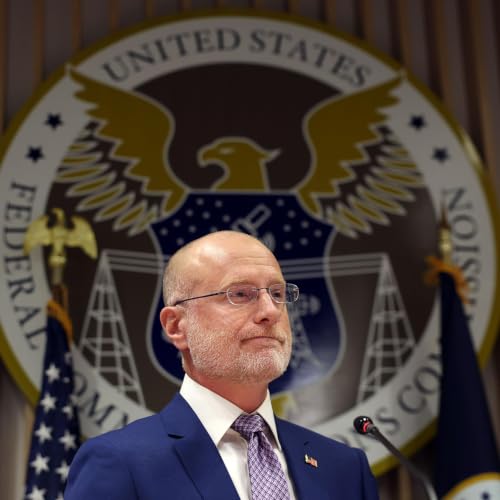
    Late night host Stephen Colbert has accused CBS of spiking an interview for fear of backlash from the Federal Communications Commission. On this week’s On the Media, hear about the MAGA movement trying to shift television to the right. Plus, the legal theory that the FCC is using to put pressure on the networks.

    [01:00] Host Brooke Gladstone speaks with  Jim Rutenberg, writer-at-large for The New York Times, about how Trump’s FCC is reviving a nearly century-old rule to crack down on late-night talk shows. Rutenberg explains why MAGA’s embrace of the FCC’s regulatory powers to go after “liberal bias” in the media signals a shift within the Republican party.

    [25:44] Brooke sits down with Daniel Suhr, the president of a legal advocacy group called the Center for American Rights and the architect behind the legal theory that the FCC is using to put pressure on TV networks. They discuss his goal to make network TV look more like the AM radio band.

    Further reading / watching:

    • “How a Century-Old Rule Is Scrambling Late-Night TV,” by Jim Rutenberg
    • “The MAGA Plan to Take Over TV Is Just Beginning,” by Jim Rutenberg
    • “The FCC’s Public Notice on ‘Bona Fide News,’” by Daniel Suhr
    • “The end of an agency,” by Daniel Suhr
    • “Straight Talk on FCC 'Jawboning'” by Daniel Suhr
    • The Divided Dial: Episode 3 - The Liberal Bias Boogeyman

    On the Media is supported by listeners like you. Support OTM by donating today (https://pledge.wnyc.org/support/otm). Follow our show on Instagram, Twitter and Facebook @onthemedia, and share your thoughts with us by emailing onthemedia@wnyc.org.

    続きを読む 一部表示
    50 分
  • Orson Welles and the Blind Soldier
    2026/02/18

    In 1946, Orson Welles, the actor and director behind Citizen Kane, was at the pinnacle of his career. At the time, he had a national radio show called Orson Welles Commentaries on ABC. After a year on the radio, discussing politics and Hollywood, Welles heard of a shocking crime. It was the end of World War Two. A Black soldier, heading home, was brutally beaten by a white police officer in South Carolina. No one knew the identity of the officer. No one even knew the town where it happened.

    Welles pledged to solve the mystery… on the air...

    In this midweek podcast we're bringing you episode one of a new series from our friends at Radio Diaries called Orson Welles and the Blind Soldier. It’s the story of a crime in a small, southern town…that became a spark for the budding civil rights movement. For the rest of the series, go to the radio diaries website.

    On the Media is supported by listeners like you. Support OTM by donating today (https://pledge.wnyc.org/support/otm). Follow our show on Instagram, Twitter and Facebook @onthemedia, and share your thoughts with us by emailing onthemedia@wnyc.org.

    続きを読む 一部表示
    9 分