Who gets to decide how corporations act, when companies increasingly shape our lives as profoundly as states?
In this episode, Wolfram Eilenberger speaks with Tania Artiga-González, Associate Professor of Finance at Vrije Universiteit Amsterdam and SEN Fellow of the St. Gallen Collegium, about the often misunderstood idea of corporate democracy. At the heart of the conversation lies the question of how firms are governed, what role shareholders truly play, and why corporate decisions have long become political decisions.
Starting from the practice of shareholder voting, Artiga-González explores how far the language of participation and voice in corporate governance resembles – or fundamentally diverges from – democracy in the political sense, and whether corporate democracy represents a favourable governance structure or functions primarily as an image-enhancing narrative. At the same time, she argues that precisely in an era of privatized infrastructures, global corporations, and regulatory gaps, the issue of voice, responsibility, and legitimacy must be reconsidered.
Based on her empirical research, Artiga-González’s discusses how corporations respond to shifts in the political environment. Do companies genuinely change their actions, or do they merely adjust their language? The focus of that discussion lies on the subtle mechanisms shaping corporate decision-making: from nudging in voting processes to the limits of financially driven thinking, and from corporate social responsibility to debates on stakeholder governance. Along the way, Artiga-González challenges widespread myths, including the simplified reading of Milton Friedman’s shareholder doctrine, and calls for a more sober, empirically grounded understanding of corporate responsibility.
The episode makes one thing clear: With corporations becoming ever more powerful in our lives, we must also confront the question of who governs them — and by which rules. Understanding corporate democracy, in this sense, is less a solution than a starting point for a necessary debate about power, freedom, and responsibility in the twenty-first century.
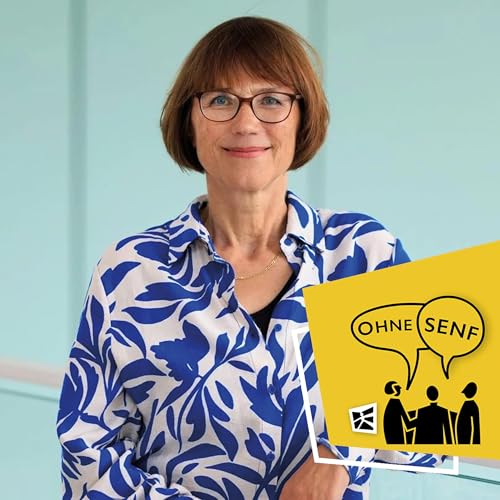
Tanja Artiga-González is Associate Professor of Finance at Vrije Universiteit Amsterdam. Her research bridges corporate governance, finance, and behavioral economics, with a particular focus on shareholder rights, voting processes, and the political implications of corporate power. As a SEN Fellow, she is part of the current cohort of the St. Gallen Collegium.


 1 時間 3 分
 51 分
51 分 1 時間 5 分
 2026/01/261 時間
 2026/03/0154 分