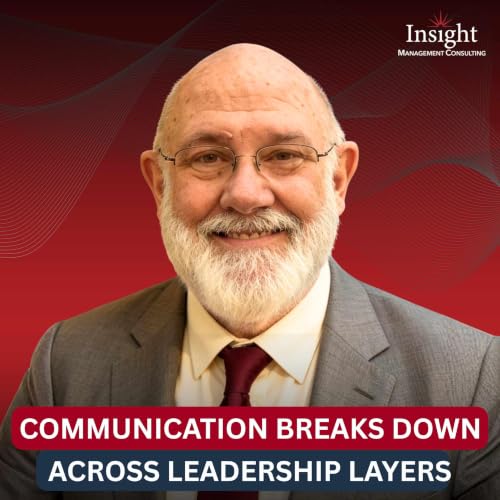
『Nursing Leadership Podcast』のカバーアート

Nursing Leadership Podcast

Nursing Leadership Podcast

著者: Paul McMurray
無料で聴く

Nursing leadership isn’t just about managing schedules or enforcing protocols - it’s about inspiring teams, resolving conflict, and building resilient workplace cultures that achieve critical care goals without sacrificing human relationships. The Nursing Leadership Podcast, hosted by Paul McMurray, Ph.D., explores how healthcare leaders navigate complex organizational dynamics, elevate team communication, and cultivate self-awareness across every level of practice. Drawing on decades of experience across academia, corporate training, government agencies, and small business management, Paul shares evidence-based research, practical communication frameworks, and battle-tested strategies designed for mid-level nursing leaders and healthcare executives. Brought to you by Insight Management Consulting, this podcast provides the coaching insights, consulting wisdom, and actionable leadership skills needed to re-engage your workforce, tackle interpersonal challenges, and unlock your team’s full potential. Tune in to maneuver the waters of leadership, strengthen your organizational mission, and drive lasting results where they matter most.Copyright 2026 Paul McMurray マネジメント マネジメント・リーダーシップ 経済学
エピソード
  • New Episode Coming Soon!
    2026/08/06

    Are you struggling to bridge communication gaps within your clinical teams? Do you worry that interpersonal friction and burnout are holding your unit back from achieving its true potential?

    You don’t have to navigate the complex waters of healthcare management alone.

    Introducing The Nursing Leadership Podcast! Hosted by Dr. Paul McMurray- a seasoned educator and organizational coach with decades of experience helping leaders cultivate self-awareness, resolve conflict, and build resilient workplace cultures. Brought to you by Insight Management Consulting, this show gives you the battle-tested strategies needed to re-engage your workforce without sacrificing vital relationships.

    In each episode, you will gain evidence-based research, practical communication frameworks, and practical coaching insights to inspire your team and drive lasting results.

    The Nursing Leadership Podcast is coming soon to your favorite podcast platform. Hit subscribe now so you don't miss our very first episode!

    続きを読む 一部表示
    1 分
  • The Healthcare Leadership Failure for CNOs Destroying Hospital Culture Across the Leadership Layers
    2026/08/05

    In this solo episode, Paul McMurray, Founder & CEO at Insight Management Consulting explores what actually shapes culture inside healthcare systems - and spoiler: it’s not your executive retreat slides or carefully worded mission statements. Drawing from decades of organizational psychology work and real conversations with nurses on the frontline, he breaks down how leadership layers, communication breakdowns, and everyday interpersonal interactions quietly determine whether hospital culture functions or collapses.

    Key Takeaways:
    1. Culture is Built in Everyday Interactions: Organizational culture is shaped by thousands of small leadership moments, not by strategy documents or executive meetings.
    2. Leadership Messaging Gets Diluted Across Layers: As communication moves from executives to frontline staff, it often gets filtered, altered, or weakened along the way.
    3. The Core Issue is Translation, Not Intent: Most leadership problems come from how messages are interpreted at different levels, not from lack of clarity at the top.
    4. Generational Tension Drives Workplace Conflict: Differences between experienced and newer nurses often create friction, misunderstandings, and resistance on both sides.
    5. Horizontal Conflict is a Real Systemic Issue: “Nurses eat their young” reflects deeper patterns of lateral aggression and lack of structured support between peers.
    6. Retention is Driven by Leadership Quality: People leave organizations more because of poor communication, weak leadership skills, and toxic environments than compensation alone.
    7. Relational Skills Are Core Infrastructure: Communication, feedback, and conflict management are essential leadership capabilities, not optional soft skills.

    Episode Timestamps:

    [00:00:00] – The Hidden Reality of Nursing Culture: Introduction to how frontline nurse experiences reveal deeper cultural breakdowns that leadership often overlooks.

    [00:06:50] – “Nurses Eat Their Young” and the Real Problem Behind It: Examines horizontal violence, misunderstanding between experience levels, and systemic frustration on both sides.

    [00:12:46] – Retention Is a Leadership Problem, Not Just an HR Problem: Why nurses leave due to communication gaps, weak leadership skills, and toxic team environments.

    [00:14:58] – What This Podcast Is Really About: Paul McMurray outlines the purpose of the show and the leaders it aims to spotlight.

    [00:16:32] – Closing Thoughts: Leadership at the Layer Nobody Sees: Final reflection on the unseen human systems that determine organizational success or failure.

    Disclosure: Portions of this episode (such as the introduction or promotional segments) use AI-generated voice narration produced under human editorial review.

    🔗 Connect with the Host Paul McMurray:

    👉 LinkedIn: https://www.linkedin.com/in/paul-mcmurray-ph-d-1382667/

    👉 Facebook: https://www.facebook.com/phmcmurray


    🔗 More from Insight Management Consulting:

    👉 LinkedIn: https://www.linkedin.com/company/insight-management-consulting-llc/

    👉 Website: https://www.findinsight.com/

    👉 YouTube: https://www.youtube.com/@PaulHMcMurray-phd

    続きを読む 一部表示
    17 分
  • The Nurse Retention Crisis for Healthcare Leaders to Fix Toxic Culture Using Leadership Systems
    2026/08/12
    In this episode, Paul McMurray, Founder & CEO at Insight Management Consulting, explores why healthcare organizations must look beyond recruitment when addressing the nurse workforce crisis. The conversation focuses on nurse retention, leadership gaps, psychological safety, communication, and the daily workplace behaviors that influence whether nurses feel supported or pushed out. Paul explains that many nurses do not leave because they lack passion for nursing. Instead, they often leave because of hostile peer dynamics, poor management response, and workplace cultures where people stay silent until they can no longer tolerate the environment.Key Takeaways:Retention Is More Than a Recruitment Problem: Nurse turnover is often tied to culture, relationships, and management response, not just staffing shortages or workload.Nurses Leave Managers and Cultures: Many nurses stay committed to the profession but leave specific hospitals or units because they feel unsupported, unheard, or mistreated.Non-Clinical Leadership Skills Matter: Charge nurses and nurse managers need training in listening, giving and receiving feedback, resolving conflict, and holding people accountable.Staffing Requires Shared Executive Ownership: CNOs and CFOs need mutual purpose when making staffing and budget decisions so teams do not fall into an “us vs. them” mindset.Transparency Builds Trust After Tough Decisions: Leaders gain credibility when they own executive decisions clearly instead of blaming other departments or leadership groups.Strong Cultures Will Attract Nurses and Patients: Healthcare organizations that create supportive environments will stand out to both employees and patients in the years ahead.Episode Timestamps: [00:00:00] – Introduction to Nurse Retention and Leadership: The episode begins with a focus on nurse managers, psychological safety, and communication.[00:05:55] – Nurse Managers and Span of Control: Paul explains why time, culture, and leadership development all affect how managers support their teams.[00:09:09] – Accountability and Real-Time Feedback: Paul shares why leaders need to address behavior quickly and reinforce what good looks like.[00:17:35] – Psychological Safety in Practice: Paul explains how hospitals can create safer responses when staff speak up across power differences.[00:26:50] – CNO and CFO Alignment: The conversation explores how clinical and financial leaders can build shared priorities around staffing decisions.[00:34:31] – The Future of Nurse Retention: Paul shares what will separate healthcare organizations that retain nurses from those that continue struggling.Disclosure: Portions of this episode (such as the introduction or promotional segments) use AI-generated voice narration produced under human editorial review. 🔗 Connect with the Host Paul McMurray:👉 LinkedIn: https://www.linkedin.com/in/paul-mcmurray-ph-d-1382667/👉 Facebook: https://www.facebook.com/phmcmurray🔗 More from Insight Management Consulting:👉 LinkedIn: https://www.linkedin.com/company/insight-management-consulting-llc/👉 Website: https://www.findinsight.com/👉 YouTube: https://www.youtube.com/@PaulHMcMurray-phd
    続きを読む 一部表示
    37 分
adbl_web_anon_alc_button_suppression_t1
まだレビューはありません