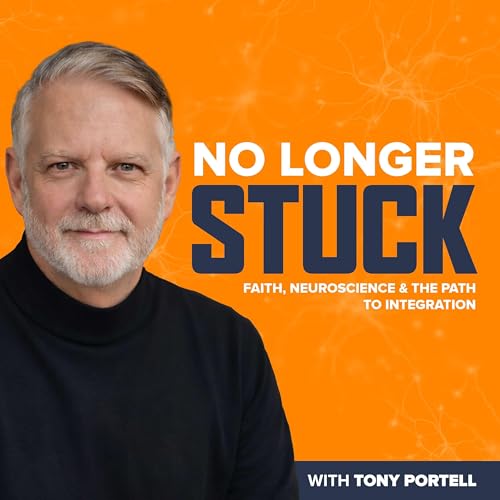
• Why Do I Wake Up at 3AM?
    2026/07/09

    Why Do I Wake Up at 3AM?

    It's 3am. Again. Your eyes open in the dark, your chest is tight, and your mind is already three worries deep — before you've even had a conscious thought. This is one of the most common questions Tony hears, especially from first responders and people in high-stress jobs: why do I wake up at the same time every night, and why can't I get back to sleep?

    In this episode, Tony walks through the real science of why your body wakes you at this hour — sleep cycles, cortisol, and an amygdala that never fully stood down from the day — and what to actually do about it, physically and spiritually.

    What we cover

    • Why sleep gets lighter in the back half of the night (and why that's normal, not a malfunction)
    • How cortisol's natural pre-dawn rise plays a role
    • Why the amygdala — your brain's alarm system — picks 3am to run its scan
    • Why your mind drifts toward the negative when it wanders, and why 3am can feel like a courtroom
    • How to tell the difference between a stress waking and a holy one
    • Five practical moves to work with your body instead of against it


    Key takeaways

    Waking up at 3am does not mean something is wrong with you. Your body is doing exactly what it was designed to do — the problem isn't the waking, it's a nervous system that never fully stands down. The good news: the pattern that got laid down can be re-laid.

    Five moves if you're awake right now

    1. Stop fighting the wakefulness. Name it plainly: "this is my body doing its 3am thing." That sentence alone lowers the stakes.
    2. Breathe in a way that tells your body it's safe. Slow the exhale until it's longer than the inhale — this moves your brain out of the amygdala and back toward the prefrontal cortex.
    3. Give your wandering mind somewhere to go. A short familiar truth, a gratitude memory, a worship song, or reading a psalm out loud gives it a different place to land.
    4. If you're still wired after 20 minutes, get up. Move to a chair, keep the lights low, phone off, and read or pray until you're drowsy — then go back to bed.
    5. Tend the daytime, not just the night. If the alarm never stands down, the fix isn't a better bedtime routine — it's addressing what's keeping the system activated in the first place.


    If you're overwhelmed and not sleeping at all

    If this has become nightly, persistent, and it's wrecking your days — please don't just white-knuckle it. Talk to your doctor, and reach out to Tony directly at Helping Others Heal. Tending your body well is not a lack of faith.

    Closing thought

    If "just pray harder" or "just sleep better" hasn't touched it, that's exactly why Tony wrote No Longer Stuck — the same brain-and-belief integration, worked all the way through. Find it at nolongerstuck.org.


    Ready to find out where you're stuck? Take the free 4-I Quiz at NoLongerStuck.org — four minutes, instant results, and a clear next step personalized to where you actually are in your relationship with God and yourself.

    Want to go deeper? If you're ready for more than an episode — if you want someone to walk alongside you — visit HelpingOthersHeal.org to learn about coaching and counseling options.

    Have a question? Send it to tony@nolongerstuck.org. I read every one, and your question may be answered on a future episode.

    No Longer Stuck — faith, neuroscience, and the path to integration. New episodes every week.

    続きを読む 一部表示
    19 分
  • You Can’t Fix a Crisis, But you can Bring Something to it.
    2026/07/03

    A young boy drowned. I was the chaplain who showed up. And when his mother arrived, I didn't have a single word that could fix what had happened.

    So I did the only thing I've learned to do in forty years of crisis work — I held her, and I prayed for her, and I blessed her. The family was Muslim. I prayed in the name of Jesus. And in that moment I understood something I'd been circling my whole ministry: people in their worst moment don't need more words. They need a presence.

    In this episode, I talk about what I call the ministry of presence — and the deeper truth underneath it: that when we pray, we're not just wishing. We're carrying something into the room. Not our own strength. His.

    We'll look at Mark 1, where Jesus teaches and acts with an authority that stunned the people around him — and what it means that he shares that authority with ordinary people like us, mostly through the quiet, unglamorous act of showing up and praying.

    This isn't about having the right words. It's about carrying the right presence.

    🎧 Full episode + more: NoLongerStuck.org 📖 Book a free Discovery Call if you're carrying heavy things for other people: https://nolongerstuck.org/discovery

    Chapters: 00:00 The call I knew would be bad 04:00 "I need to give them more than words" 09:00 Mark 1 — authority that stops a room 14:00 What "in Jesus' name" actually means 19:00 Praying over a family who didn't share my faith 23:00 Carrying presence into crisis

    Ready to find out where you're stuck? Take the free 4-I Quiz at NoLongerStuck.org — four minutes, instant results, and a clear next step personalized to where you actually are in your relationship with God and yourself.

    Want to go deeper? If you're ready for more than an episode — if you want someone to walk alongside you — visit HelpingOthersHeal.org to learn about coaching and counseling options.

    Have a question? Send it to tony@nolongerstuck.org. I read every one, and your question may be answered on a future episode.

    No Longer Stuck — faith, neuroscience, and the path to integration. New episodes every week.

    続きを読む 一部表示
    16 分
  • The Prodigal Father: Two Sons, One Wound | No Longer Stuck Ep. 8 (Integration)
    2026/06/25

    What if the most extravagant person in the prodigal son story isn't the son at all?

    In this finale of the I4 Framework series, I walk through Luke 15 and the father who runs — and why both sons missed the same thing. One ran from the father's love. One tried to earn it. Neither one simply received it.

    We'll also get into the neuroscience: how your brain's reticular activating system (RAS) quietly feeds you evidence for whatever you already believe about God's love — and how to retrain it with the truth.

    This is where the whole series has been heading: Integration. Not earning God's love. Receiving it.

    ⏱️ Chapters:
    00:00 Introduction to the I4 Framework
    01:32 The Journey to Integration with God
    03:37 The Parable of the Prodigal Son
    11:04 The Father's Extravagant Love
    12:40 The Elder Brother's Perspective
    17:13 Understanding Our Identity in God
    22:18 The Choice of Acceptance
    24:36 Close

    🎯 Which pattern is keeping you stuck? Take the free quiz → NoLongerStuck.org

    🎧 Listen on Apple Podcasts & Spotify (search "No Longer Stuck")
    🔔 Subscribe for new episodes

    Ready to find out where you're stuck? Take the free 4-I Quiz at NoLongerStuck.org — four minutes, instant results, and a clear next step personalized to where you actually are in your relationship with God and yourself.

    Want to go deeper? If you're ready for more than an episode — if you want someone to walk alongside you — visit HelpingOthersHeal.org to learn about coaching and counseling options.

    Have a question? Send it to tony@nolongerstuck.org. I read every one, and your question may be answered on a future episode.

    No Longer Stuck — faith, neuroscience, and the path to integration. New episodes every week.

    続きを読む 一部表示
    25 分
  • Hesed: What the Love of God Actually Feels Like
    2026/06/18

    There's a word in the Old Testament — used 245 times — that no translator has ever fully captured. Six English translations render it 169 different ways. In 1535, Miles Coverdale gave up and coined a brand-new word for it: lovingkindness.

    The word is hesed, and it's how God first chose to describe Himself.

    When Moses asked God who He was, God didn't lead with power or position. He led with love: "compassionate and merciful, slow to anger, filled with unfailing love" (Exodus 34:6). In this episode — week two of our Integration series — Tony unpacks what it means to move from believing God loves you to actually experiencing it, why some of us were never given the capacity to receive that love (A-trauma — the love that was absent), and how the love we finally receive becomes the only love we have worth giving.

    Along the way: the difference between a hundred pennies and four quarters, what Hosea 11 reveals about the heart of a Father who won't let go, and the story of Brennan Manning in a doorway that you won't forget.

    Scriptures referenced: Exodus 34:6 · Genesis 2:24 · Deuteronomy 10:20 · Hosea 2 & 11 · Psalm 66 · Psalm 33:5 · 1 John 4:20 · Philippians 2 · John 3:16

    Take the next step: Not sure which wound is keeping you stuck? Take the free 3-minute quiz at https://nolongerstuck.org — 12 questions to identify whether insignificance, independence, or isolation is keeping you from integration with God.

    Need to talk to someone? The team at Helping Others Heal is available online or in person → https://helpingothersheal.org

    I'm Tony Portell — pastor, fire department chaplain, crisis intervention specialist, and author. Thanks for being with me.

    Ready to find out where you're stuck? Take the free 4-I Quiz at NoLongerStuck.org — four minutes, instant results, and a clear next step personalized to where you actually are in your relationship with God and yourself.

    Want to go deeper? If you're ready for more than an episode — if you want someone to walk alongside you — visit HelpingOthersHeal.org to learn about coaching and counseling options.

    Have a question? Send it to tony@nolongerstuck.org. I read every one, and your question may be answered on a future episode.

    No Longer Stuck — faith, neuroscience, and the path to integration. New episodes every week.

    続きを読む 一部表示
    31 分
  • Healing Through Integration
    2026/06/11

    We've named three wounds in this series — Insignificance, Isolation, and Independence. This week we turn toward the fourth quadrant: Integration. It's the one we're all moving toward, and it's less about fixing yourself than about who's holding the tiller.

    In this episode, Tony unpacks what it means to live so closely connected to God that you sense it in your emotions and know it in your brain — that God is for you. He explains why most healing is a process rather than an instant fix (and why that's by design), shares the sailing story that taught him what integration actually feels like, and reframes the "pruning" of John 15 in a way that lands very differently than most of us were taught: He doesn't cut you off. He lifts you up.

    In this episode:

    • Why the fourth quadrant — Integration — is the goal of the whole framework
    • Why most healing is slow, and what God does in the process
    • The one place Tony has seen instant healing again and again
    • What it feels like to know God is for you (the renewed mind)
    • The sailing lesson: when your Captain has the tiller
    • "Integration is not self-improvement" — connection over effort (John 15:5)
    • The truth about pruning: lifted up, not cut off (John 15:2)

    Key line: "Integration is not self-improvement. It's connection with God that produces fruit you could never produce on your own."

    Take the free Spiritual Identity Quiz (3 minutes) to find out which wound you tend to lean into → https://NolongerStuck.org

    Ready to start healing? Book a free Discovery Call → https://HelpingOthersHeal.org

    Ready to find out where you're stuck? Take the free 4-I Quiz at NoLongerStuck.org — four minutes, instant results, and a clear next step personalized to where you actually are in your relationship with God and yourself.

    Want to go deeper? If you're ready for more than an episode — if you want someone to walk alongside you — visit HelpingOthersHeal.org to learn about coaching and counseling options.

    Have a question? Send it to tony@nolongerstuck.org. I read every one, and your question may be answered on a future episode.

    No Longer Stuck — faith, neuroscience, and the path to integration. New episodes every week.

    続きを読む 一部表示
    13 分
  • The Wound That Hides in Plain Sight (Isolation) Episode 5
    2026/06/05

    You can be married. You can lead a church. You can be surrounded by people who love you — and still feel completely alone. This week we name the quietest of the three wounds: isolation.

    Isolation doesn't always mean you're by yourself. It's the deeper belief — often carried since childhood — that whispers, "I don't deserve anyone. If they knew the real me, they'd leave." Pastor and crisis chaplain Tony Portell looks at where that wound comes from, what's happening in your nervous system when connection starts to feel unsafe, and the path back toward integration with God and a secure sense of who you are.

    In this episode:

    • Why isolation has little to do with how many people are around you
    • The three lies behind the wounds: "I don't matter," "I don't need you," "I don't deserve anyone"
    • Who quietly carries this wound — pastors, leaders, single moms, and trauma survivors
    • The 2023 U.S. Surgeon General advisory and the loneliness epidemic
    • The neuroscience of the freeze state, and what polyvagal theory reveals about why we stop reaching out
    • Elijah under the juniper tree — and how God actually responds to a person in shutdown
    • Three steps to start closing the distance: Reconnect (upward), Reframe (inward), Reach (outward)
    • Why a whisper isn't distance — it's closeness (1 Kings 19; Psalm 46:10)

    Take your next step: Naming the lie by yourself can feel like trying to read the label from inside the bottle. Sometimes you need one person on the outside to help you see it. That's what the Discovery Call is — not a sales pitch, not therapy. Just one conversation, one safe person, to help you find where you're actually stuck and what the next step looks like. Book a free Discovery Call: https://helpingothersheal.org

    Not sure which of the three wounds is yours? Take the free Spiritual Identity Quiz — 12 questions, instant results: https://nolongerstuck.org

    A note on safety: This episode touches on depression and suicide. If you're struggling and feel like you can't go on, you are not alone and you are worth the call. In the U.S., dial or text 988 any time to reach the Suicide & Crisis Lifeline and talk to a real person.

    About the show: No Longer Stuck is where faith and neuroscience combine to bring real healing. Hosted by Tony Portell — pastor, fire department chaplain, crisis intervention specialist, and author — each episode integrates biblical truth with how the brain and body actually work, so you can move from stuck patterns to wholeness.

    Next week: we begin Integration — what healed actually looks like, and how you get there.

    Connect: Helping Others Heal — https://helpingothersheal.org No Longer Stuck — https://nolongerstuck.org

    Ready to find out where you're stuck? Take the free 4-I Quiz at NoLongerStuck.org — four minutes, instant results, and a clear next step personalized to where you actually are in your relationship with God and yourself.

    Want to go deeper? If you're ready for more than an episode — if you want someone to walk alongside you — visit HelpingOthersHeal.org to learn about coaching and counseling options.

    Have a question? Send it to tony@nolongerstuck.org. I read every one, and your question may be answered on a future episode.

    No Longer Stuck — faith, neuroscience, and the path to integration. New episodes every week.

    続きを読む 一部表示
    22 分
  • The Wound That Looks Like Strength | No Longer Stuck Podcast Ep. 4
    2026/05/28

    You're good at what you do. People trust you with things that matter. You show up, figure it out, and get it done.

    So here's an honest question: When was the last time you actually let someone do something for you?

    If that question made you uncomfortable — if there's a part of you that doesn't fully trust anyone else to do it right — this episode is for you.

    Independence is the one identity wound that doesn't feel like a wound. It feels like competence. Like leadership. Like the person everyone can count on.

    But underneath it is a belief that sounds something like: "If I don't handle this, it won't get handled right."

    That's not a leadership style. That's a wound dressed up in a professional outfit.

    In this episode we look at: — Why Independence is the occupational hazard of pastoral work — The story of Saul — and how success slowly replaced obedience — Why Jesus, the one person who could have said "I've got this," said the exact opposite — What the move from Independence to Integration actually looks like in real life

    This wound lived in me. Whether in business, politics, or ministry — I spent years in an endless pursuit of approval and validation, doing it alone and calling it faithfulness.

    Today we're going to call it by its real name.

    Ready to find out where you're stuck? Take the free 4-I Quiz at NoLongerStuck.org — four minutes, instant results, and a clear next step personalized to where you actually are in your relationship with God and yourself.

    Want to go deeper? If you're ready for more than an episode — if you want someone to walk alongside you — visit HelpingOthersHeal.org to learn about coaching and counseling options.

    Have a question? Send it to tony@nolongerstuck.org. I read every one, and your question may be answered on a future episode.

    No Longer Stuck — faith, neuroscience, and the path to integration. New episodes every week.

    続きを読む 一部表示
    19 分
  • The Wound of Insignificance: When the Lie Is That You Don't Matter
    2026/05/25

    Have you ever walked into a room full of people — your church, a gathering, people who know you — and still felt invisible? That feeling has a name. It's not a personality flaw. It's a wound.

    In this episode, Tony unpacks the first of three identity wounds — Insignificance — and traces it from the science of how the brain reinforces it, to two stories that cut straight to the heart of it: Gideon hiding in a winepress arguing with God about his own worth, and George Bailey from It's a Wonderful Life, spending a lifetime believing the world would be better without him.

    Tony also shares his own story — what drove him into ministry for the wrong reasons, and the three weeks of brokenness that changed everything.

    In this episode:

    • Why Insignificance isn't low self-esteem — it's a formed belief the brain actively defends
    • The RAS and how your brain finds evidence for what it already believes
    • Gideon's encounter with God and why "I will be with you" is the only real answer to unworthiness
    • Why persistently arguing with God about your inadequacy isn't humility — it's a subtle form of pride
    • What it actually looks like when this wound begins to heal

    Take the free 3-Minute Spiritual Assessment Quiz at nolongerstuck.org — Find out which identity wound is most active in your life right now.

    Find Tony at helpingothersheal.org | Send your questions to tony@nolongerstuck.org

    Ready to find out where you're stuck? Take the free 4-I Quiz at NoLongerStuck.org — four minutes, instant results, and a clear next step personalized to where you actually are in your relationship with God and yourself.

    Want to go deeper? If you're ready for more than an episode — if you want someone to walk alongside you — visit HelpingOthersHeal.org to learn about coaching and counseling options.

    Have a question? Send it to tony@nolongerstuck.org. I read every one, and your question may be answered on a future episode.

    No Longer Stuck — faith, neuroscience, and the path to integration. New episodes every week.

    続きを読む 一部表示
    17 分