エピソード

  • Cash, Crypto, and what's next for NZ's economy
    2024/12/01

    summary

    In this episode, Darcy Ungaro and Rupert Carlyon discuss the current state of the New Zealand economy, predictions for the Reserve Bank's OCR adjustments, and the broader global economic landscape. They delve into the implications of political decisions on economic policies, the future of cryptocurrency, and the potential for New Zealand to adapt to changing market conditions. The conversation highlights the complexities of economic recovery, the influence of global markets, and the challenges posed by political short-termism.

    takeaways

    • Markets are currently on an upward trend.
    • The Reserve Bank of New Zealand is expected to cut OCR by 0.5%.
    • Future economic forecasts are cautious but show some optimism.
    • Political decisions significantly impact economic recovery.
    • New Zealand's economy faces challenges from global market dynamics.
    • Cryptocurrency is gaining traction and could see significant growth.
    • Interest rates play a crucial role in wealth distribution.
    • The stock market's performance does not reflect the overall economy.
    • Long-term economic strategies are needed to avoid stagnation.
    • The future of Bitcoin looks promising with potential for reaching new highs.
    続きを読む 一部表示
    32 分
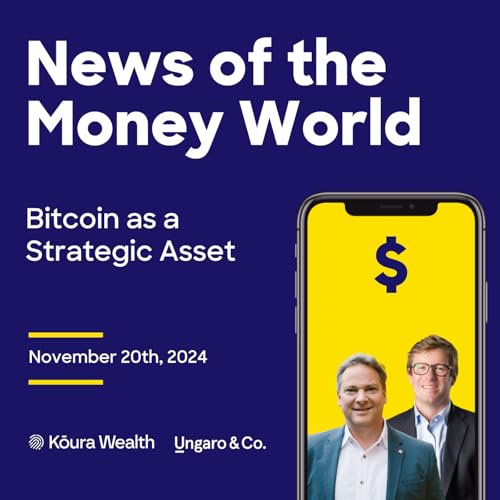
  • Bitcoin as a Strategic Asset
    2024/11/19

    summary

    In this conversation, Darcy Ungaro and Rupert Carlyon discuss the current economic landscape in New Zealand, focusing on interest rates, inflation, and the influence of geopolitical events on markets. They explore the psychology behind market behaviors, the potential future of Bitcoin, and its implications for national debt management. The discussion also touches on investment strategies and predictions for the coming year, emphasizing the importance of understanding market dynamics and the role of Bitcoin in the financial ecosystem.

    takeaways

    • The economy in New Zealand is showing some positive signs according to recent bank reports.
    • Low interest rates are beginning to encourage business investment and consumer spending.
    • Market psychology plays a significant role in economic recovery and investment decisions.
    • There are concerns about government austerity measures impacting economic growth.
    • Interest rates may not drop significantly lower than current levels, affecting mortgage holders.
    • Geopolitical events, particularly in the Middle East, could influence global markets and interest rates.
    • Bitcoin is being considered as a strategic reserve by some governments to manage national debt.
    • The potential for Bitcoin to reach significant price levels is supported by increasing institutional interest.
    • Investment strategies should consider both direct Bitcoin ownership and ETF options for diversification.
    • The future of Bitcoin may involve innovative custody solutions for intergenerational wealth transfer.
    続きを読む 一部表示
    34 分
  • Trump's Return: What a 2024 Victory Means for your Money
    2024/11/07

    In this conversation, Darcy Ungaro and Rupert Carlyon discuss the recent changes in financial markets, the influence of media on public perception, and the political parallels between Donald Trump and Boris Johnson. They explore the implications of tariffs and tax policies on the economy, particularly in relation to global trade dynamics and the potential inflationary effects of these policies. In this conversation, Rupert Carlyon and Darcy Ungaro discuss various economic themes, including the impact of economic uncertainty on gold prices, the implications of deregulation, market reactions in equities and crypto, bond yields as indicators of inflation, government spending strategies, and the challenges posed by demographic changes. They explore how these factors intertwine and affect both the US and New Zealand economies, emphasizing the need for individuals to adapt their financial strategies in response to these evolving economic landscapes.

    takeaways

    • Big changes are happening in financial markets.
    • Media plays a significant role in shaping public reaction.
    • There is a lack of balanced media coverage regarding political figures.
    • Political parallels can be drawn between Trump and Boris Johnson.
    • Tariffs are generally detrimental to consumers.
    • New Zealand's economy is somewhat insulated from US tariffs.
    • Tax cuts can stimulate growth but may lead to higher deficits.
    • Inflation is a concern with increased government spending.
    • The relationship between the US and China is complex and fraught with risk.
    • Every decision in politics comes with potential good and bad outcomes. Economic uncertainty can lead to a premium on gold.
    • Deregulation can stimulate investment and growth, but may have environmental costs.
    • Equity markets are reacting positively to lower taxes and deregulation.
    • Bond yields are rising, indicating inflation concerns.
    • Government spending is effectively a form of taxation, impacting inflation.
    • Demographic changes will challenge current economic structures.
    • Investing a portion of income is crucial for future financial security.
    • Market participants are optimistic about the economic outlook.
    • The relationship between government policy and inflation is complex.
    • Long-term planning is essential for individuals in changing economic climates.
    続きを読む 一部表示
    41 分
  • Money Moves: Riding the Waves of Inflation and Geopolitics
    2024/10/22

    summary

    In this conversation, Darcy Ungaro and Rupert Carlyon discuss the current state of the global economy, focusing on inflation, interest rates, and geopolitical tensions. They explore the implications of the upcoming US election on economic policies and market sentiment, particularly in relation to oil prices and the energy sector. The discussion also delves into the evolving landscape of Bitcoin and its correlation with political events, highlighting the potential for significant changes in the financial system.

    takeaways

    • Inflation rates are showing signs of returning to traditional economic fundamentals.
    • The US economy is experiencing a unique set of challenges leading up to the election.
    • Interest rates are expected to remain elevated as banks maintain high margins.
    • Geopolitical tensions in the Middle East are impacting global oil prices.
    • The energy sector is undergoing a transformation with a shift towards electricity and nuclear power.
    • Bitcoin's market performance is closely tied to political developments and investor sentiment.
    • The yield curve is a critical indicator of economic health and potential recessions.
    • Banks are not passing on lower costs to consumers, leading to higher mortgage rates.
    • The upcoming US election could significantly influence market dynamics and investor behavior.
    • The future of Bitcoin remains uncertain but is influenced by institutional interest and regulatory changes.
    続きを読む 一部表示
    36 分
  • Fears of Japanification: Inflation, and OCR to Plummet
    2024/10/17

    Summary:

    In this episode, Darcy Ungaro and Rupert discuss the current economic landscape in New Zealand, including the recent interest rate cuts by the Reserve Bank and the implications for the economy. They explore China's economic stimulus efforts and the challenges it faces, particularly in light of Japanification trends. The conversation also delves into the future of inflation and interest rates, considering the impact of AI and robotics on global economies, and the potential for geopolitical shifts in the coming weeks.

    Takeaways:

    • The Reserve Bank of New Zealand's recent rate cuts reflect a struggling economy.
    • There is a divide between academic economists and bankers regarding monetary policy.
    • China's stimulus measures may not be sufficient to stabilize its economy.
    • Japanification poses significant risks for global economic stability.
    • Deflation can lead to decreased consumer spending and economic stagnation.
    • AI and robotics could transform economies but may also lead to job losses.
    • The bond market indicates a return to higher interest rates in the future.
    • Central banks are prioritizing economic stability over inflation control.
    • Geopolitical factors will play a crucial role in future economic discussions.
    • The conversation highlights the interconnectedness of global economies and the impact of local policies.
    続きを読む 一部表示
    27 分
  • China Surprise – Markets React
    2024/10/01

    Summary:

    In this conversation, Darcy Ungaro and Rupert discuss the recent economic developments in China, including a significant stimulus package aimed at reviving the economy. They explore the implications of these measures for global markets, particularly New Zealand. The discussion then shifts to the U.S. Federal Reserve's interest rate decisions and the potential for inflation. The conversation also addresses demographic challenges facing New Zealand's economy and the debate surrounding capital gains tax as a solution to wealth inequality. Finally, they contemplate the future of currency and economic solutions in a rapidly changing financial landscape.

    Takeaways

    • China's stimulus package aims to combat deflation and boost growth.
    • The interconnectedness of global markets means China's economy impacts New Zealand.
    • Interest rate decisions in the U.S. reflect uncertainty in economic recovery.
    • Demographic shifts in New Zealand pose significant challenges for the economy.
    • Capital gains tax is debated as a potential solution for wealth inequality.
    • The current tax system disproportionately affects younger workers compared to retirees.
    • There is a growing call for a fairer tax system in New Zealand.
    • The future of currency may involve central bank digital currencies (CBDCs).
    • Economic solutions may emerge from technological innovations rather than traditional tax reforms.
    • The conversation highlights the need for proactive measures to address economic disparities.
    続きを読む 一部表示
    34 分
  • Global Economic Crossroads: Central Banks, Cryptocurrency, and Capital Raising Insights
    2024/09/24

    Summary

    In this conversation, Darcy Ungaro and Rupert Carlyon discuss the recent 50 basis point cut by the US Federal Reserve, comparing it to New Zealand's economic strategies. They delve into the implications of BlackRock's increasing interest in Bitcoin and analyze the challenges facing the Chinese economy. The discussion also covers recent capital raising efforts in New Zealand, particularly focusing on Auckland Airport and Fletcher's.

    Takeaways

    • The US Federal Reserve's decision to cut interest rates by 50 basis points was unexpected and has significant implications for the economy.
    • New Zealand's economic situation is struggling compared to the US, with calls for more aggressive interest rate cuts.
    • BlackRock's shift towards Bitcoin indicates a growing acceptance of cryptocurrency in traditional finance.
    • China's economy is facing severe challenges due to high leverage and political issues, impacting its central bank's effectiveness.
    • Recent capital raises in New Zealand signal a potential recovery in the market, but investors should be cautious about dilution.
    • The dynamics of interest rates and exchange rates are crucial for understanding economic impacts in New Zealand.
    • Credibility of central banks is essential, but flexibility in responding to data is also important.
    • The interconnectedness of global economies means that central banks often move in sync with one another.
    • Investors need to evaluate capital raises carefully, considering the reasons behind them and the potential for future growth.
    • The conversation hints at future discussions on Bitcoin options trading and its implications.
    続きを読む 一部表示
    29 分
  • The 493 Surge and Social Media’s Impact on Investment Narratives
    2024/09/17

    SummaryIn this conversation, Darcy Ungaro and Rupert Carlyon discuss several key topics including the rise of the 493 stocks, the influence of social media on the stock market, the Duval property developer's statutory management situation in New Zealand, and the implications of interest rate changes on the economy. They explore how market sentiment is shifting, the role of diversification in investment strategies, and the potential consequences of regulatory actions in the property sector.

    Takeaways

    • The rise of the 493 indicates a shift in market dynamics.
    • Social media has changed how retail investors influence stock prices.
    • Statutory administration can override traditional creditor rights.
    • Market sentiment is heavily influenced by interest rate expectations.
    • Diversification remains a key strategy in uncertain markets.
    • The economy's health is reflected in small cap stock performance.
    • Investors are reacting to sentiment rather than fundamentals.
    • The Duval case raises questions about regulatory overreach.
    • Interest rate cuts may signal economic weakness rather than strength.
    • The interconnectedness of information affects market volatility.
    続きを読む 一部表示
    33 分