• Ho Chi Minh City, Vietnam: High-Energy Value Play
    2026/05/14

    Read the full article: Ho Chi Minh City, Vietnam: High-Energy Value Play

    Discover more at Moving Abroad Life — Research-Driven Guides to the Best Places to Live

    Excerpt:

    Ho Chi Minh City: A Fast-Paced Value Play

    Ho Chi Minh City (Saigon) is Vietnam’s economic engine – a high-energy metropolis boasting world-class street food, modern malls, and millions of motorbikes. It’s also one of Southeast Asia’s cheapest major cities for expats: guides estimate a comfortable monthly budget around $800–1,400 per person (expatlife.ai) (www.yournewbase.com). Recent data for digital nomads put it in the $1,000–1,500 range (getwherenext.com). Yet HCMC’s blend of searing traffic and bureaucratic quirks poses real dealbreakers for some. Below we break down the essentials – safety, living costs, visa/tax rules, healthcare, climate, infrastructure and cultural surprises – and compare HCMC to Bangkok and Manila to give a clear, data-driven picture of life here.

    ... Continue reading

    続きを読む 一部表示
    13 分
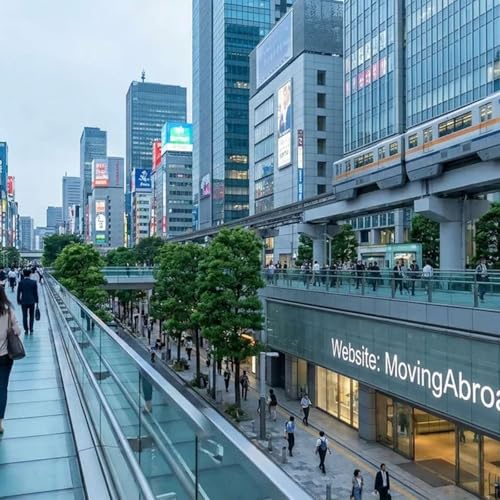
  • Tokyo, Japan: Ultra-Safe Megacity for the Determined
    2026/05/09

    Read the full article: Tokyo, Japan: Ultra-Safe Megacity for the Determined

    Discover more at Moving Abroad Life — Research-Driven Guides to the Best Places to Live

    Excerpt:

    Tokyo, Japan: Ultra-Safe Megacity for the Determined

    Tokyo is consistently ranked one of the world’s safest major cities (impact.economist.com). Violent crime is extremely rare here, and even petty thefts are uncommon. Tokyo’s building codes and urban planning emphasize earthquake resilience and public safety. In fact, among Tokyo’s 23 wards, Setagaya (世田谷区) and Koto (江東区) rank among the safest, placing 3rd and 4th (lowest crime rate) in the city (www.anzen-map.jp). As a result, Tokyo’s residents – locals and expats alike – enjoy walking home at night and living in densely populated neighborhoods without the fear common to many large cities. Drug use and gun violence are virtually nonexistent, and public order is meticulously maintained. (By contrast, expatriates in Seoul or Taipei experience safe cities as well, but Tokyo’s crime rates are exceptionally low even by their standards.)

    ... Continue reading

    続きを読む 一部表示
    16 分
  • Singapore: Ultra-Safe, Hyper-Connected, and Pricey
    2026/05/06

    Read the full article: Singapore: Ultra-Safe, Hyper-Connected, and Pricey

    Discover more at Moving Abroad Life — Research-Driven Guides to the Best Places to Live

    Excerpt:

    Introduction Singapore is often described as ultra-safe and hyper-connected, but also pricey. The city-state’s strict laws and efficient governance mean crime rates are among the world’s lowest (www.singstat.gov.sg), and it boasts world-class infrastructure (airport, MRT, broadband). However, these benefits come with a high personal cost. Every aspect of living – housing, education, healthcare, even everyday essentials – is expensive by regional standards. This guide dives into the data-driven realities of expat life in Singapore: rental markets by area, typical budgets (single and family), costs for schools and childcare, the visa/PR process, healthcare quality, tax rates, climate (including haze), transit and airport connectivity, and finally the dealbreakers: sky-high housing and schooling costs, rigid regulations, and a challenging path to permanent residency. Where relevant, we contrast Singapore’s trade-offs with Kuala Lumpur and Hong Kong to help you weigh your options.

    Rental Market by Neighborhood Housing is Singapore’s biggest expense. Most foreigners rent private condominiums (HDB flat rentals are very limited or unavailable to non-citizens). Rents vary dramatically by location. In the city center (Downtown Core/Orchard), even a one-bedroom condo often rents for S$3,000–5,500 per month (rumavi.com). For example, listings show Orchard/River Valley 1BR units ~S$3,800–5,500/m (rumavi.com). In the CBD neighborhoods like Telok Ayer, full apartments average nearly S$4,700/month (blog.cove.sg). Living downtown trades cost for convenience: Telok Ayer’s $4,700 average is more than twice the island median rent (blog.cove.sg).

    ... Continue reading

    続きを読む 一部表示
    19 分
  • Auckland, New Zealand: Green City at the Edge of the Map
    2026/05/02

    Read the full article: Auckland, New Zealand: Green City at the Edge of the Map

    Discover more at Moving Abroad Life — Research-Driven Guides to the Best Places to Live

    Excerpt:

    Auckland, New Zealand: Green City at the Edge of the Map

    Nestled on an isthmus in the North Island, Auckland is New Zealand’s largest city and its economic hub. It sprawls between two harbours and the Hauraki Gulf, earning nicknames like the “City of Sails” for its famous waterfront and boat culture. Auckland’s reputation is of a vibrant, multicultural urban center set amid volcanic cones, lakes and greenery – the “green city” at the western edge of the Pacific Rim. For anyone considering a move here, it helps to look beyond the postcard images. In this comprehensive guide we’ll examine what life in Auckland is really like: safety and crime trends, housing costs by neighborhood, how living costs stack up to cities like Melbourne or Vancouver, work visas and residency options, taxes and healthcare, climate and natural hazards, transit and schooling, and the key trade-offs (like housing shortages and travel distances) that define living in this distant southern metropolis.

    ... Continue reading

    続きを読む 一部表示
    22 分
  • Tbilisi, Georgia: High Freedom, Low Friction Base in the Caucasus
    2026/04/29

    Read the full article: Tbilisi, Georgia: High Freedom, Low Friction Base in the Caucasus

    Discover more at Moving Abroad Life — Research-Driven Guides to the Best Places to Live

    Excerpt:

    Introduction

    Tbilisi, Georgia’s sunlit capital, has emerged as a high-freedom, low-friction hub for expats and digital nomads. The country’s open-door policies – including visa-free stays up to a full year for citizens of 95+ nations【TheGeorgianGuide】 – make getting started remarkably easy. Georgia’s modernizing economy offers affordable living, robust digital infrastructure, and enticing tax perks (like a flat-1% small-business tax), all wrapped into a unique Caucasus ambience. In this guide, we break down safety, housing costs (from Vake to Saburtalo), healthcare, climate, connectivity and more. We also weigh the trade-offs – such as language barriers and regulatory quirks – and compare Tbilisi to nearby alternatives like Yerevan (Armenia) and Budapest (Hungary). Our aim is to give you an honest, data-driven portrait so you can decide if Tbilisi is the right base for your next chapter.

    ... Continue reading

    続きを読む 一部表示
    22 分
  • Penang, Malaysia: Slower-Paced Island With Top Hospitals
    2026/04/28

    Read the full article: Penang, Malaysia: Slower-Paced Island With Top Hospitals

    Discover more at Moving Abroad Life — Research-Driven Guides to the Best Places to Live

    Excerpt:

    Penang, Malaysia: Slower-Paced Island With Top Hospitals

    Penang is Malaysia’s scenic island state renowned for heritage streets, tropical beaches, and a laid-back lifestyle. For many retirees and expats, it offers a blend of modern amenities with an easygoing pace. In terms of safety, cost, healthcare and lifestyle, Penang often feels more relaxed than Kuala Lumpur but still has big-city comforts. This guide examines Penang’s safety, neighborhood rents (notably Tanjung Tokong, Tanjung Bungah and Georgetown), monthly budgets for retirees and families, the Malaysia My Second Home (MM2H) program, private healthcare quality, tax rules on foreign income, and lifestyle factors like climate, walkability, and travel connections. We also highlight tradeoffs – from job opportunities to traffic and tourism – and benchmark Penang against Chiang Mai (Thailand) and Da Nang (Vietnam). By the end, you’ll have a data-backed portrait of Penang’s real upsides and downsides for expats.

    ... Continue reading

    続きを読む 一部表示
    18 分
  • Lisbon, Portugal: Atlantic Tech Hub With Old-World Charm
    2026/04/26

    Read the full article: Lisbon, Portugal: Atlantic Tech Hub With Old-World Charm

    Discover more at Moving Abroad Life — Research-Driven Guides to the Best Places to Live

    Excerpt:

    Lisbon, Portugal: Atlantic Tech Hub with Old-World Charm

    Lisbon has quietly become a darling of the modern expat and remote-work scene. In recent surveys it regularly ranks among the top digital-nomad and remote-work destinations worldwide (lisboasecreta.co), thanks to its sunny climate, fast internet and vibrant startup culture. Once you arrive, you’ll find a city of striking contrasts: historic neighborhoods brimming with tile-roofed mansions and fado music on one hand, and a growing tech/creative sector on the other. That mix – plus relatively low crime and an affordable cost of living – is why many retirees, families and remote professionals are seriously considering Lisbon. This guide digs into the data: safety by neighborhood, rent and budget figures, visa and tax rules (D7 vs D8, NHR changes), healthcare access, infrastructure and schools. In each area we highlight the realities – good and bad – so you can judge how Lisbon compares to other popular expat cities (like Valencia or Berlin) before you pack your bags.

    ... Continue reading

    続きを読む 一部表示
    23 分
  • Malaga & Costa del Sol, Spain: Sunbelt Living With Big-Flight Access
    2026/04/23

    Read the full article: Malaga & Costa del Sol, Spain: Sunbelt Living With Big-Flight Access

    Discover more at Moving Abroad Life — Research-Driven Guides to the Best Places to Live

    Excerpt:

    Málaga & Costa del Sol, Spain: Sunbelt Living With Big-Flight Access

    The Malaga province and Costa del Sol are famous for year-round sunshine, beaches and big-city amenities. Málaga city itself is a midsize Mediterranean port, while towns like Fuengirola, Benalmádena and Marbella range from bustling suburbs to upscale resorts. Together they form one of Spain’s most international regions. Thanks to Málaga-Costa del Sol Airport (25 M passengers in 2024 (www.aena.es)) with dozens of European routes (60% of traffic is international (www.aena.es), led by the UK and Germany), the area offers big-flight access to the UK and elsewhere. Nor is it a remote outpost: Málaga city has a metro and extensive Cercanías commuter rail (C-1) linking the airport through Torremolinos and Benalmádena to Fuengirola (www.malagaweb.com). However, much of the Costa del Sol is still car-dependent outside these rail corridors. In fact, surveys show 64% of locals drive to work, and nearly 68% say they would use transit if it were practical (www.theolivepress.es). In short, while the core city and train-linked towns (Torremolinos, Benalmádena, Fuengirola) are quite walkable, most sea-side and inland communities still rely on car or sparse bus service.

    ... Continue reading

    続きを読む 一部表示
    19 分