『Mouthy Money: Building wealth with long term investing and saving strategies』のカバーアート

Mouthy Money: Building wealth with long term investing and saving strategies

Mouthy Money: Building wealth with long term investing and saving strategies

著者: Mouthy Money | UK finance podcast on building wealth
無料で聴く

概要

Edmund Greaves and Chris Tuite host Mouthy Money - a UK finance podcast on building wealth with long term investing and saving strategies. From the stock market for beginners, to mortgage rates, fears of economic recession, whether to invest in gold and silver or what the consumer price index is, we look at complicated financial topics through a personal lens. With regular financial expert guests to unpick knotty issues, we've got you covered with weekly episodes.Mouthy Money | UK finance podcast on building wealth 個人ファイナンス 経済学
エピソード
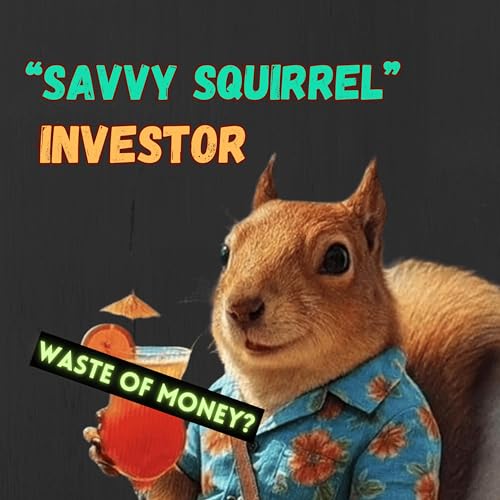
  • An AI Squirrel Won’t Fix Britain’s Investing Problem
    2026/02/26

    Why are so many Brits still afraid to invest? And can an AI squirrel really change that?

    In this episode of the Mouthy Money podcast, Edmund Greaves and Chris Tuite look at the Government’s push to get more people investing, including a controversial marketing campaign reportedly built around a “savvy” AI-generated squirrel. Will a multi-million pound advertising drive boost retail investing in the UK, or is it missing the real barriers holding people back?

    We explore:

    ▇ Why investing in the stock market still feels intimidating to many people

    ▇ The psychology of “investophobia” and risk aversion

    ▇ Why most people are already investors through their workplace pension

    ▇ The cultural stigma around being an “investor”

    ▇ Cash ISAs vs Stocks & Shares ISAs and whether tax policy can shift behaviour

    ▇ Why pensions are often described as “free money”

    ▇ The legacy of the 1980s TellSid campaign and what modern campaigns can learn from it

    ▇ How index funds, diversification and long-term investing actually work

    ▇ Practical ways to overcome inertia and start investing

    We also debate whether the UK needs clearer messaging, stronger financial education, or even a government-backed investment fund to kickstart a new investment culture.

    Subscribe for straight-talking conversations about personal finance, investing, pensions, ISAs and building long-term wealth.

    Chapters

    00:00 – The government wants more people investing

    02:00 – The £7–10m AI squirrel campaign explained

    05:30 – TellSid vs modern financial marketing

    08:00 – Investophobia: why people fear the stock market

    11:30 – Risk warnings, paralysis and choice overload

    14:00 – The cultural cringe around being an “investor”

    17:30 – You’re already an investor (thanks to your pension)

    21:00 – How capitalism rewards investors

    23:30 – Index funds, diversification and long-term returns

    25:30 – Cash ISAs, tax policy and behaviour change

    27:30 – “Free money”: the workplace pension argument

    29:30 – What would actually get Britain investing?

    31:00 – Final thoughts and practical takeaways

    MOUTHY MONEY

    *Our substack* mouthymoney.substack.co.uk

    *Get in touch* ⁠⁠editors@mouthymoney.co.uk ⁠⁠

    DISCLAIMER

    This video is produced for general informational purposes only. It should not be construed as investment, legal, tax, mortgage or other forms of financial advice. If in any doubt about the themes expressed, consider consulting with a regulated financial professional for your own personal situation. Past performance is no guarantee of future results. Investments can go down as well as up and you may get back less than you started with. Investments are speculative and can be affected by volatility. Never invest more than you can afford to lose. For more information visit ⁠⁠⁠www.fca.org.uk/investsmart⁠. Please note, video captions are auto-generated and may not be 100% accurate.

    続きを読む 一部表示
    32 分
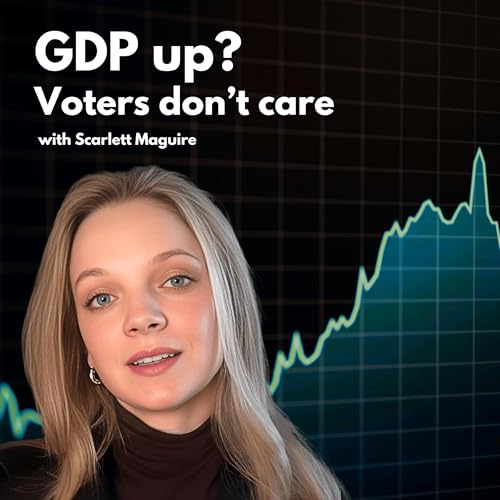
  • Voters don't care about GDP. They just want lower bills.
    2026/02/19

    Politicians keep telling us the economy is improving. GDP is growing. Inflation is falling. So why does it still feel like we’re getting poorer?

    In this episode of Mouthy Money, we dig into the widening gap between headline economic data and everyday reality. Polling expert Scarlett Maguire, founder of Merlin Strategy, explains why voters don’t associate economic growth with improvements in their own lives - and why energy bills, housing costs, food prices and tax matter far more than GDP figures.

    We explore why anger at regulators and utility companies is rising, why demands for direct Government intervention are growing and how this disconnect is fuelling political instability on both the left and the right.

    Even if growth returns, will people actually feel better off?

    *Chapters*

    00:00 GDP Growth vs Cost of Living Crisis (UK Economy Explained)

    01:15 Who Is Scarlett Maguire? Political Polling & Economic Research

    02:10 Why UK Voters Don’t Care About GDP Growth

    04:30 What “Cost of Living” Really Means (Housing, Energy, Food, Tax)

    07:20 Inflation Falling – Why Prices Still Feel High

    09:05 Has the Pandemic Made Britain Poorer?12:40 Economic Anxiety and the Rise of Populism

    15:10 The Misery Index: Inflation + Unemployment Explained

    17:45 Why UK Energy Bills Are So High

    20:50 Ofgem, Price Caps and Energy Market Regulation

    23:35 Should the Government Cut Energy Bills?

    25:15 Why Brits Don’t Invest (Savings, Pensions, Risk)

    28:05 Are We Heading for UK Economic Recovery?

    31:00 Youth Unemployment and the Housing Crisis

    33:30 What Happens If Growth Returns – Will Voters Feel It?

    MOUTHY MONEY

    *Our substack* mouthymoney.substack.co.uk

    *Get in touch* ⁠⁠editors@mouthymoney.co.uk ⁠⁠

    DISCLAIMER

    This video is produced for general informational purposes only. It should not be construed as investment, legal, tax, mortgage or other forms of financial advice. If in any doubt about the themes expressed, consider consulting with a regulated financial professional for your own personal situation. Past performance is no guarantee of future results. Investments can go down as well as up and you may get back less than you started with. Investments are speculative and can be affected by volatility. Never invest more than you can afford to lose. For more information visit ⁠⁠⁠www.fca.org.uk/investsmart⁠. Please note, video captions are auto-generated and may not be 100% accurate.

    続きを読む 一部表示
    33 分
  • Dragon’s Den £50K Deal: Can This App Help You Pay Off Your Mortgage Faster?
    2026/02/16

    After securing £50,000 on BBC Dragon’s Den, fintech founder Jinesh Vohra joins us to discuss a question facing millions of homeowners: should you be paying off your mortgage early?

    In this episode, we explore the fundamentals of mortgage overpayments, how interest is front-loaded in the early years of a loan, and whether it makes more sense to reduce debt or focus on long-term investing — particularly in today’s UK interest rate environment.

    Jinesh explains how his app, Sprive, helps homeowners chip away at their mortgage using cashback, spare cash automation and smarter refinancing. We also go behind the scenes of Dragon’s Den — what the Dragons look for in a fintech business, and why trust is critical in UK finance.

    If you’re thinking about building wealth, managing debt strategically, or balancing mortgage overpayments with long-term investing, this episode will help you think more clearly about your options.

    We cover:

    • The case for (and against) paying off your mortgage early
    • How amortisation works and why early overpayments matter
    • Mortgage freedom vs long-term investing
    • Financial trust in fintech
    • What really happens on Dragon’s Den

    MOUTHY MONEY

    *Our substack* mouthymoney.substack.co.uk

    *Get in touch* ⁠⁠editors@mouthymoney.co.uk ⁠⁠

    DISCLAIMER

    _This video is produced for general informational purposes only. It should not be construed as investment, legal, tax, mortgage or other forms of financial advice. If in any doubt about the themes expressed, consider consulting with a regulated financial professional for your own personal situation. Past performance is no guarantee of future results. Investments can go down as well as up and you may get back less than you started with. Investments are speculative and can be affected by volatility. Never invest more than you can afford to lose. For more information visit ⁠⁠⁠www.fca.org.uk/investsmart⁠. Please note, video captions are auto-generated and may not be 100% accurate._

    続きを読む 一部表示
    32 分
まだレビューはありません