『Meta Whistleblower Testifies "Profits Won," Judge Strikes Ghost-Gun Rule SCOTUS Upheld & Trump's Law-Firm Privilege Claim』のカバーアート

Meta Whistleblower Testifies "Profits Won," Judge Strikes Ghost-Gun Rule SCOTUS Upheld & Trump's Law-Firm Privilege Claim

Meta Whistleblower Testifies "Profits Won," Judge Strikes Ghost-Gun Rule SCOTUS Upheld & Trump's Law-Firm Privilege Claim

無料で聴く

ポッドキャストの詳細を見る
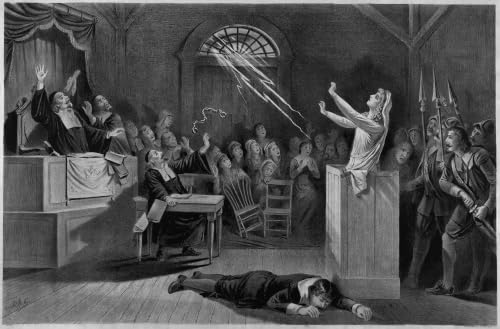
We’ve launched Minimum Competence CLE, and our first course is now available completely free. Researching Federal Tax Issues After Loper Bright looks at how the Supreme Court’s decision ending Chevron deference changes the way lawyers should research and evaluate Treasury regulations, IRS guidance, and other federal tax authorities.Take the course and earn CLE credit at cle.minimumcomp.com.This Day in Legal History: The Salem Witch TrialsOn August 19, 1692, five people—George Burroughs, John Proctor, John Willard, Martha Carrier, and George Jacobs Sr.—were hanged at Salem, Massachusetts, convicted of witchcraft. It was one of the darkest days in a period that has become the enduring American shorthand for a legal system gone catastrophically wrong.What makes the Salem trials so instructive for lawyers is that they weren’t lawless in form—they had judges, juries, indictments, and testimony. They failed on substance, and specifically on evidence. The courts admitted so-called “spectral evidence”: testimony from accusers that the defendant’s ghostly apparition had tormented them, something no one else could see or disprove. It was, by its nature, impossible to rebut—the perfect engine for convicting the innocent. The case of George Burroughs, a Harvard-educated former minister, captures the horror of it. At the gallows, Burroughs recited the Lord’s Prayer flawlessly—something a witch, according to popular belief, should have been incapable of doing. The crowd was shaken; it looked like proof of innocence. He was hanged anyway. When the evidence and the conclusion pointed in opposite directions, the conclusion won.The significance of August 19, 1692 is that it became a permanent cautionary tale baked into American law. Within months, prominent voices—including the minister Increase Mather, who gave us today’s opening quote about the danger of condemning the innocent—turned against the use of spectral evidence, and the trials collapsed. In the centuries since, the reforms we associate with due process—rules of evidence, the presumption of innocence, the requirement of proof that can actually be tested and challenged—are in many ways a long answer to Salem. It’s a fitting backdrop for a day when two of our stories turn on evidence: what an insider witness reveals under oath, and what a litigant is allowed to keep hidden. Salem is the reminder of what happens when a legal system stops caring whether its evidence is real.In the landmark trial where 29 states accuse Meta of designing its platforms to addict and harm children, jurors heard from a powerful first witness: Arturo Bejar, a former Facebook engineering director turned whistleblower. Bejar worked at the company for years, and he told the Oakland jury that internal culture put growth ahead of kids’ safety—that “move fast and break things” was the mantra, that Meta took a “don’t ask, don’t tell” approach to whether children under 13 were on the platform, and that the company used the softer euphemism “problematic use” instead of “addiction” in a way that, he testified, undercounted the real harm. His central accusation is that Meta’s leadership knew, from its own internal research, what its products were doing to young users—and chose not to act. There’s a revealing legal sub-story here, too. Meta tried hard to keep Bejar off the stand, arguing he’d failed to preserve evidence because he deleted some Signal messages with former colleagues. Judge Yvonne Gonzalez Rogers rejected that as a long-shot bid to eliminate a key witness. Meta, for its part, flatly denies the claims, insisting it never set out to hook children and has worked to make its platforms safer. The significance is that this is the evidentiary heart of the case: not abstract allegations about algorithms, but an insider describing, under oath, what he says the company knew and how it talked about it internally. It’s the same pattern that broke open the tobacco cases—a witness from inside translating the company’s own euphemisms back into plain English for a jury. Whether jurors believe him will shape one of the most consequential product cases in years. Former Meta engineer resumes testimony in landmark trial over social media’s harm to young users | ReutersThe Globe and Mail · LPM / NPRA federal judge in Texas has declared the Biden-era “ghost gun” rule unconstitutional—a striking move, because the Supreme Court upheld that very rule just last year. Some background: ghost guns are firearms assembled from parts or kits that lack serial numbers, making them largely untraceable, and in 2022 the ATF issued a rule bringing those parts and kits under federal firearms regulation. Judge Reed O’Connor in Fort Worth had originally struck the rule down as exceeding the agency’s statutory authority—but in March 2025, the Supreme Court reversed him, holding the rule was a permissible reading of the Gun Control Act. ...
adbl_web_anon_alc_button_suppression_t1
まだレビューはありません