エピソード

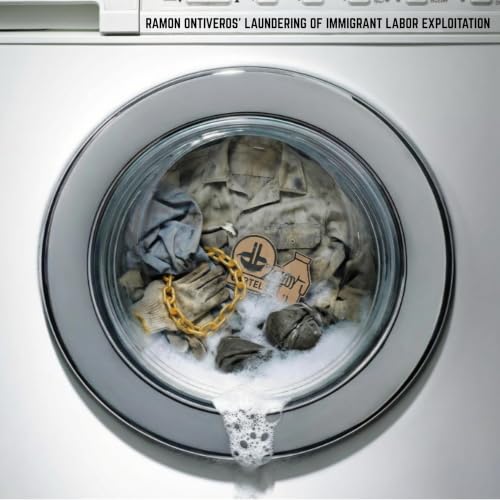
  • Ramon Ontiveros' Laundering of Immigrants' Labor Exploitation Through the Myth of the Drug Cartel Power: An Open Letter to the Juárez Cartel
    2026/04/08

    Ramon Ontiveros' Laundering of Immigrants' Labor Exploitation Through the Myth of the Drug Cartel Power is an open letter addressed to the Juárez Cartel that documents the laundering of immigrant labor exploitation through the invocation of cartel power mythology by Ramon Ontiveros, situating individual acts of coercion within broader structures of state failure, immigration precarity, and administrative violence in the United States–Mexico border region. Drawing from the author’s lived experience as a survivor of human trafficking, including labor exploitation, wage theft, forced starvation, housing deprivation, intimidation, retaliation, immigration-based threats, and sexual exploitation, Samuel Martínez Roque examines how the symbolic power of organized crime is weaponized by private actors to enforce compliance and silence victims when formal legal systems refuse to intervene. This open letter interrogates two destabilizing possibilities: either Ramon Ontiveros' cartel affiliation is real and functions as an extrajudicial enforcement mechanism tolerated by institutional inaction, or that cartel identity is being impersonated by Ramon Ontiveros to manufacture fear and impunity in the absence of effective labor, immigration, and human trafficking enforcement. In both cases, the result is the same: systemic abandonment of Mexican immigrant workers whose exploitation is rendered administratively manageable rather than urgently prosecutable.

    続きを読む 一部表示
    6 分
  • Wet Paper
    2026/03/25

    Wet Paper is a human trafficking survivor's testimony that examines labor trafficking not as a past event, but as a condition that can be resurrected through coercion, retaliation, and the intentional limitation of alternatives. Using the embodied metaphor of eating wet paper to survive hunger, Samuel Martínez Roque traces how deprivation, wage theft, digital interference, immigration threats, and abuse of legal process function together as a system of control. The narrative documents a multi-year pattern of labor exploitation and retaliation carried out by Ramon Ontiveros, spanning from 2021 through 2026. It argues that human trafficking does not require physical captivity to persist; it can continue through economic sabotage, platform manipulation, impersonation, and the strategic disruption of a victim’s ability to secure food, housing, medical care, or lawful income. Martínez Roque documents through this testimony how silence, procedural neglect, and digital infrastructures enable continued harm while rendering victims “free” in form but bound in practice.

    続きを読む 一部表示
    14 分
  • El Paso's House of Cards: The Police Department’s Architecture of Negligence and Complicity
    2026/03/22

    El Paso's House of Cards: The Police Department’s Architecture of Negligence and Complicity exposes the shocking truth behind institutional failure, systemic abuse, and the calculated indifference that allows human traffickers and abusers like Ramon Ontiveros to operate with impunity. This harrowing chapter chronicles Samuel Martínez Roque’s ordeal of human trafficking, labor exploitation, forced starvation, digital harassment, and the bureaucratic abandonment that followed when the El Paso Police Department who was supposed to protect him refused to act. It is a forensic autopsy of a system that weaponizes silence, dismisses evidence, and protects human traffickers while punishing human trafficking survivors. Scandalous, unflinching, and devastating, this work reveals how negligence and complicity are engineered into the very structures meant to safeguard justice.

    続きを読む 一部表示
    16 分
  • This Is What Human Trafficking in the Form of Ramon Ontiveros Looks Like
    2026/02/25

    This is What Human Trafficking in the Form of Ramon Ontiveros Looks Like advances a dual-accountability framework for understanding contemporary human trafficking and labor exploitation by holding personal responsibility and structural responsibility simultaneously, without allowing either to negate theher. It argues that Ramon Ontiveros is directly accountable for leveraging hunger, exploiting dependency, benefiting from institutional delay, and participating in coercive practices that deprived an immigrant worker of basic needs and autonomy. These actions are named as deliberate choices, not misunderstandings or accidents. At the same time, Samuel Martínez Roque demonstrates that such exploitation was made viable by a State-constructed environment characterized by immigration precarity, weak labor enforcement, bureaucratic delay, and the normalization of deprivation as “process.” These conditions do not excuse individual wrongdoing; they enable it. Ramon Ontiveros did not invent the system that allowed exploitation to persist, but he understood how it functioned and acted competently within it to extract labor, silence, and compliance while minimizing risk.

    続きを読む 一部表示
    11 分
  • Not If I Still Hunger
    2026/02/11

    Not If I Still Hunger (Explicit) is a first-person political testimony that examines hunger not as metaphor, but as a mechanism of power operating at the intersection of human trafficking, labor exploitation, and institutional delay. Written from the lived experience of an immigrant survivor, Samuel Martínez Roque argues that deprivation of food, safety, stability, and recognition is routinely weaponized to discipline vulnerable populations into silence and compliance. Through a sustained critique of waiting, “process,” and forced forgiveness, this episode exposes how bureaucratic language launder violence by recasting harm as procedure and survival as patience. Central to the narrative is Ramon Ontiveros, named not as an anomaly but as an enactment of a broader structural logic in which wage withholding, forced starvation, and retaliation function as tools of control in the context of human trafficking and labor exploitation. Martínez Roque rejects regret and closure as moral obligations imposed on the harmed while conditions of exploitation remain ongoing. Instead, hunger is reframed as historical memory and political refusal, an embodied indictment of systems that demand endurance without repair. By foregrounding voice, certainty, and non-consent, this episode challenges legal and social frameworks that require victims to neutralize their own testimony in order to be believed, arguing that enforced silence is not civility but a continuation of violence by other means.

    続きを読む 一部表示
    11 分
  • Killed In USA, Part 2
    2026/01/28

    Killed in USA, Part 2 (Explicit) rips the veil off the machinery of American power, revealing a system that thrives on human suffering. Bureaucracy does not just fail, it weaponizes survival, turning it into evidence against the living while absolving itself of responsibility. Through detailed accounts of coerced labor, withheld wages, threats, and systemic indifference, this episode exposes how the State and its institutions profit politically, socially, and morally from death, fear, and exploitation. Survival becomes a liability; injustice is rewarded; and the mechanisms of American governance operate like a scandalous enterprise, protecting themselves while ensuring the vulnerable remain invisible. Far from abstract, this is a brutal indictment of a nation where the administration of death is as clean, calculable, and profitable as filling out a form.

    続きを読む 一部表示
    11 分
  • Killed In USA
    2026/01/14

    Killed in USA (Explicit) reveals the shocking truth the State of Texas doesn’t want you to see. Immigrants are starved, threatened, and forced to endure years of coercion and wage theft, yet their suffering is dismissed because it doesn’t fit bureaucratic checkboxes. In America, even twenty-four consecutive days of documented starvation, coerced labor, and death threats are ignored if the victim survives, because only a corpse can satisfy the state’s definition of a “substantial threat of personal injury or death.” Samuel Martínez Roque exposes how government indifference, legal loopholes, and clerical cruelty protect perpetrators while punishing the living. This is human trafficking and labor exploitation hidden in plain sight, a systemic failure that turns survival into a liability and makes justice nearly impossible. The evidence is clear, the harm undeniable, but the system refuses to act proving that in the United States paperwork can be deadlier than a gun.

    続きを読む 一部表示
    12 分
  • The Price of an Immigrant's Life in America
    2025/12/31

    The Price of an Immigrant’s Life in America exposes a constitutional fracture hiding in plain sight. For nearly four years, he endured labor trafficking, forced starvation, wage theft, retaliation, and death threats, only to be abandoned by the very institutions that promise protection. After surviving 24 days without food, swallowing expired medication and household chemicals to make the pain of hunger go away while Ramon Ontiveros weaponized his hunger as a tool of control, Samuel Martínez Roque reported his abuse to every agency available. Instead of safety, the institutions meant to protect him stayed silent. A brutal, unfiltered letter to the U.S. Supreme Court that is more than a testimony of violence; it is an indictment of institutional indifference. It confronts the moral contradiction of a nation that demands trust from victims while offering only paperwork, closed cases, and inaction. At its peak, Martínez Roque asks the Justices of the Supreme Court, and the country, a question no human being should ever have to ask: what is an immigrant’s life worth in America?

    続きを読む 一部表示
    12 分