『MD Newsline Oncology Brief』のカバーアート

MD Newsline Oncology Brief

MD Newsline Oncology Brief

著者: MD Newsline
無料で聴く

Welcome to MD Newsline Oncology Brief, your go-to source for concise, expert-led updates in the ever-evolving field of oncology. Designed for busy healthcare professionals, this podcast delivers focused insights from leading oncologists, researchers, and clinical experts. Each episode highlights the latest breakthroughs in cancer care, including emerging therapies, clinical trial updates, and practical treatment strategies. From immunotherapy advancements to real-world patient care approaches, we break down complex topics into clear, actionable takeaways. Whether you're an oncologist, physician, or part of the broader medical community, Oncology Brief helps you stay current without the noise. Our mission is to provide relevant, timely knowledge that supports better decision-making and improved patient outcomes. Tune in for quick, impactful conversations shaping the future of cancer care.2026 衛生・健康的な生活 身体的病い・疾患
エピソード
  • The Future of CML Care: From TKIs to Treatment-Free Remission
    2026/07/14

    In this episode of MD Newsline, Dr. Andreas Hochhaus, Professor of Internal Medicine, Hematology, and Oncology at the Comprehensive Cancer Center in Jena, Germany, shares his expertise on the evolution of chronic myeloid leukemia (CML) therapies. He reflects on decades of progress in CML treatment, from interferon to targeted TKIs, and highlights the importance of tolerability, patient-centered care, and innovative trial data shaping the future of CML management.

    Episode Highlights:

    The Evolution of CML Therapy

    Dr. Hochhaus outlines the transformation of CML treatment, from interferon to imatinib, and the development of second- and third-generation TKIs. He emphasizes advances in efficacy while acknowledging the persistent challenge of drug resistance.

    Managing Tolerability and Side Effects

    Toxicities such as cardiovascular, hepatic, and renal complications remain key concerns. Dr. Hochhaus discusses how improving tolerability is central to optimizing patient quality of life.

    Enliven-01 Trial

    He highlights the unique pharmacologic profile of Enliven-01, with fewer off-target effects and encouraging safety data, underscoring its potential as a novel therapeutic option.

    ASCIMINIB as a New Standard Comparing

    ASCIMINIB with nilotinib, Dr. Hochhaus explains its superior tolerability and efficacy, positioning it as a game-changer in frontline CML therapy.

    Patient-Centered Care and Future Directions

    Dr. Hochhaus stresses the importance of shared decision-making, molecular monitoring, and pathways to treatment-free remission, while also pointing to challenges such as additional gene mutations and resistance mechanisms.

    Key Takeaway:

    The future of CML treatment lies in balancing efficacy, safety, and patient quality of life. With emerging therapies like Enliven-01 and ASCIMINIB, clinicians can provide more personalized and effective care while expanding opportunities for treatment-free remission.

    Resources:

    Website: https://mdnewsline.com/
    Newsletter: https://mdnewsline.com/subscribe/
    Connect with Dr. Andreas Hochhaus LinkedIn

    続きを読む 一部表示
    32 分
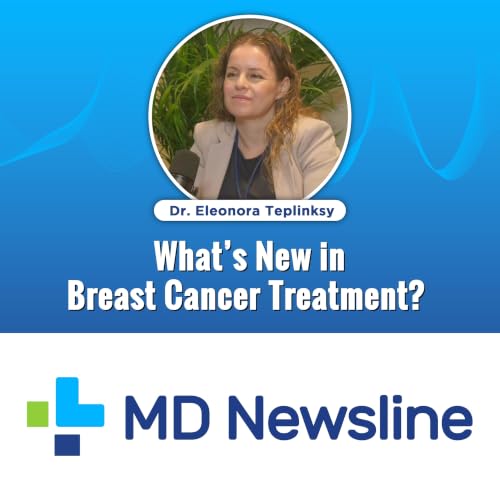
  • What's New in Breast Cancer Treatment?
    2026/07/07

    In this episode of MD Newsline, Dr. Eleonora Teplinksy, a breast and gynecologic medical oncologist at Valley Health System and clinical assistant professor at the Icahn School of Medicine at Mount Sinai, shares key updates from the ASCO annual meeting. She discusses transformative clinical trials that are reshaping the landscape of metastatic breast cancer treatment across subtypes including hormone receptor-positive, HER2-positive, and triple-negative breast cancer.

    Dr. Teplinksy highlights the promise of early mutation detection, the potential of antibody-drug conjugates, and the power of liquid biopsies. She also addresses pressing concerns around clinical trial diversity, treatment access, and the need for multidisciplinary care.

    Episode Highlights:

    Early Detection in HR+ Breast Cancer:

    The SERENA-6 Trial The SERENA-6 trial investigates whether switching to camizestrant—an oral SERD—upon early ESR1 mutation detection via liquid biopsy (before radiographic progression) improves progression-free survival. The study showed a 56% reduction in disease progression risk. However, issues around FDA approval, cost, testing frequency, and racial representation remain key concerns.

    Advancing Triple-Negative Breast Cancer Care:

    ASCENT-04 The ASCENT-04 trial evaluates sacituzumab govitecan plus pembrolizumab vs. standard chemo-immunotherapy in PD-L1+ patients. Results revealed improved PFS (7.8 to 11.2 months), showing promise for first-line triple-negative treatment, though insurance coverage may delay clinical implementation.

    HER2+ Breast Cancer Innovation:

    DESTINY-Breast09 This trial demonstrated that combining T-DXd with pertuzumab improved PFS from 26.9 to 40 months, suggesting a new standard for HER2+ metastatic breast cancer. Still, side effects like interstitial lung disease and lack of clarity on endocrine therapy integration must be addressed.

    Real-World Barriers:

    Cost, Toxicity, and Care Access Dr. Teplinksy emphasizes challenges patients face—from time toxicity to insurance denials—and calls for thoughtful side-effect management and patient-centered treatment planning.

    Multidisciplinary Collaboration and Future of AI in Oncology

    She underlines the role of interdisciplinary care and the need to bridge gaps across specialties. With AI and machine learning emerging, Dr. Teplinksy envisions more tailored treatments driven by biomarkers and real-world insights.

    Key Takeaway:

    Dr. Teplinksy stresses the importance of early intervention, clinical trial equity, and multidisciplinary care in improving breast cancer outcomes. As the field embraces antibody-drug conjugates and AI-driven personalization, collaboration and access must evolve in step.

    Resources:

    Website: https://mdnewsline.com/
    Newsletter: https://mdnewsline.com/subscribe/
    Connect with Dr. Eleonora Teplinksy: Here

    続きを読む 一部表示
    21 分
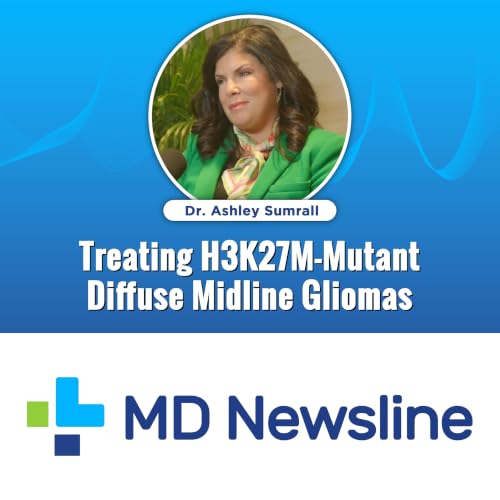
  • Treating H3K27M-Mutant Diffuse Midline Gliomas
    2026/06/30

    In this episode of MD Newsline, Dr. Ashley Sumrall, a neuro-oncologist and Section Chief at Atrium Health Levine Cancer Institute, shares groundbreaking insights into the treatment of diffuse midline gliomas with the H3K27M mutation. Dr. Sumrall presents data from pediatric and adult studies using Dordaviprone (ONC201), highlighting its promising response rates and tolerability. She also discusses the evolving role of AI in neuro-oncology, the value of multidisciplinary care, and the need for advocacy in biomarker access and healthcare policy.

    Episode Highlights:

    Advancements in Treating Rare Brain Tumors

    Dr. Sumrall introduces updated clinical findings on Dordaviprone for diffuse midline gliomas, a rare and aggressive brain tumor affecting children and young adults. The combined adult and pediatric studies showed a 20% overall response rate and minimal serious side effects, offering a new sense of hope in an area with limited treatment options.

    Pediatric-Adult Trial Integration

    She explains the rationale for combining data from adult and pediatric studies due to the rarity of the disease and evolving definitions of pediatric age groups. This integrated approach offers valuable insights into treatment effectiveness across the age spectrum.

    Promise of AI in Neuro-Oncology

    Dr. Sumrall emphasizes how machine learning and AI tools like OpenEvidence and ChatGPT can streamline imaging analysis, assist in clinical trial design, and improve diagnostic efficiency. She foresees AI as a co-pilot in tumor boards and day-to-day clinical decisions.

    Well-Tolerated Therapy and Quality of Life

    Unlike many cancer treatments, ONC201 demonstrates a low side effect profile, with zero serious adverse events reported. This is especially significant for brain tumor patients who often face limited options beyond surgery and radiation.

    Biomarkers and Access Challenges

    She highlights the importance of biomarker testing in classifying tumors and guiding therapy. However, she warns of ongoing disparities in access due to high costs and limited insurance coverage, particularly in community care settings.

    Advocacy for Research Funding and Access

    Dr. Sumrall underscores the role of physician and patient advocacy in preserving NIH and NCI funding, expanding access to biomarker profiling, and supporting legislation to streamline patient care.

    Collaborative Oncology Models

    She describes her work in multidisciplinary tumor boards and genetic predisposition clinics, where oncologists, geneticists, and endocrinologists jointly tailor proactive care plans—an approach she believes should be the gold standard in oncology.

    Key Takeaway:

    Dr. Sumrall reinforces that innovation in rare brain tumor treatment must be matched by advocacy, access to biomarker testing, and the adoption of AI-powered tools. The progress with ONC201 offers hope not just in extending life but also in improving the quality of life for patients once left without options.

    Resources:

    Website: https://mdnewsline.com/
    Newsletter: https://mdnewsline.com/subscribe/
    Connect with Dr. Ashley Sumrall: Here

    続きを読む 一部表示
    26 分
adbl_web_anon_alc_button_suppression_t1
まだレビューはありません