エピソード

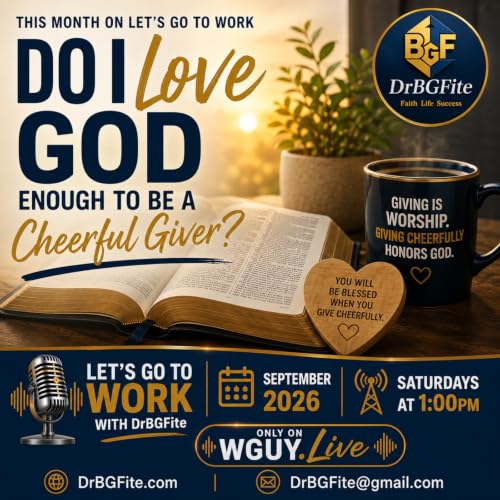
  • Do I Love God Enough To Be a Cheerful Giver - Part 1
    2026/10/06

    Hey! I'd love to hear your thoughts, send me a voice note.

    What if everything we thought we knew about tithing was built on a foundation we never fully examined? This session takes us deep into the biblical roots of giving, and what we find there is both surprising and liberating. The conversation centers on Malachi 3:8, where God speaks to Israel about robbing Him in tithes and offerings. But to truly understand that charge, we have to go back further, into the law of Moses and the agricultural world in which that law was given. The giving system God established was not a simple ten-percent rule. It was a carefully structured 50-year cycle, built around two distinct tithes, gleaning for the vulnerable, and a sabbatical year of rest. When we see the full picture, we begin to realize that the system we have inherited in many of our churches today does not actually reflect what scripture describes. There were no bills, no grocery stores, no mortgages, and no taxes in the world where these instructions were given. That context matters enormously. Rather than leaving us with nothing to stand on, this foundation invites us into a deeper and more honest conversation about what God truly desires from us as givers. The goal is not to dismantle generosity but to rebuild it on truth, so that what we give flows from love and understanding rather than obligation or fear.

    続きを読む 一部表示
    1 時間
  • How to Use A Bible - Part 4
    2026/09/29

    Hey! I'd love to hear your thoughts, send me a voice note.

    What does it truly mean to believe? This session takes us deep into the Gospel of John, where we discover that belief was never meant to be passive. From the very opening of John's Gospel, we encounter a bold declaration found in John 1:4, where the life brought by the Messiah is described as the light not of some people, but of all people. That distinction matters more than we might first realize. As we trace the theme of 'come and see' through the first chapter of John, we watch how each person, Andrew, Simon Peter, Philip, and Nathaniel, arrives at faith through an entirely different encounter. No two journeys look the same, yet all of them lead to the same transformative moment. This is the genius of the invitation. We are not called to argue anyone into the kingdom. We are called to invite them into an encounter. The lesson for us is both simple and radical: our job is not to convince, it is to invite. And when we invite authentically, the encounter does the rest.

    続きを読む 一部表示
    1 時間 1 分
  • How To Use A Bible - Part 3
    2026/09/22

    Hey! I'd love to hear your thoughts, send me a voice note.

    What if the way we have always read the Bible has been missing the point entirely? So many of us approach scripture with the goal of knowing and understanding it, but there is a deeper challenge being laid before us: to live what we learn. The Bible is not simply a book of knowledge to be mastered. It is an instruction manual for a grace relationship with Yahweh, and the evidence of true understanding is not knowing scripture but doing what it says. This teaching pushes us to ask one transformative question every time we open the word: What is my action in response to this information? That single shift in perspective changes everything. It moves us from passive readers to active participants in the plan of God, and it confronts us honestly with the sobering reality that many of us may know exactly what God requires while still choosing not to live it.

    続きを読む 一部表示
    1 時間
  • How to Use a Bible - Part 2
    2026/09/15

    Hey! I'd love to hear your thoughts, send me a voice note.

    There is a 10 second delay after the introduction.

    2026-08-08 - Let's Go To Work with DrBGFite

    What does it truly mean to engage with the word of God? Not just to glance at it, but to wrestle with it, sit with it, and let it reshape how we think and live? This teaching takes us into the heart of that question by drawing a powerful distinction between reading and studying scripture -- and then making the case that we actually need both, working together. The insight is simple but transformative: when we read the same passage we are actively studying, the reading deepens the study and the study sharpens the reading. Each time we return to the text, we see something new. This is not a coincidence. It is the nature of living scripture. We are also challenged to stop treating the Bible as a collection of isolated verses to be searched and matched, and instead begin seeing it as a unified relational document -- the story of Yahweh's pursuit of a relationship with humanity. From Genesis to Revelation, every section of scripture is a chapter in that ongoing story. When we understand where a book fits within that larger story, we stop reading words and start hearing a voice.

    続きを読む 一部表示
    1 時間 1 分
  • How to Use a Bible - Part 1
    2026/09/08

    Hey! I'd love to hear your thoughts, send me a voice note.

    2026-08-01 - Let's Go To Work with DrBGFite

    What does it really mean to hold the word of God in our hands? We carry our Bibles to church, we quote familiar verses, and we build entire belief systems around passages we have heard since childhood. But what if some of what we think we know has been shaped less by the original meaning of scripture and more by the limitations, agendas, and honest mistakes of the people tasked with translating it? That is the unsettling and liberating question at the heart of this teaching. We are invited to look honestly at the difference between a translation and a transliteration, and to understand why that distinction matters enormously for our faith. When a translator matches letters to preserve pronunciation rather than digging deep to preserve meaning, the result can be a word that sounds right but points us in the wrong direction entirely. The name we use for our savior and the word mansions in John 14:2, where the original context points not to heavenly real estate but to us becoming dwelling places for the Holy Spirit, are two striking examples of how a single word choice can quietly redirect an entire theological conversation. The lesson is not that our Bibles are unreliable. The lesson is that our Bibles are tools, and like any tool, they must be understood and used with intention and care.

    続きを読む 一部表示
    1 時間 2 分
  • Making Disciples at Home - Part 4
    2026/09/01

    Hey! I'd love to hear your thoughts, send me a voice note.

    2026-07-25 - Let's Go To Work with DrBGFite

    What does it truly mean to secure our lives against spiritual attack? This message challenges us to think beyond physical locks and alarm systems and consider the invisible perimeters we either build or neglect in our spiritual lives. We explore how the enemy's most effective strategy is not a frontal assault but a gradual blurring of the lines between righteousness and sin. When standards become optional, they eventually become unnecessary, and that is where vulnerability takes root. From worship attendance to prayer to generosity, the disciplines we treat as negotiable become the very openings through which darkness enters. The call here is clear and direct: live by distinct, defined standards so that compromise is immediately recognizable. This is not about legalism but about clarity, the kind of clarity that keeps us alert, grounded, and protected. As we reflect on our own lives, we are invited to ask ourselves honestly: what have we quietly made optional that was never meant to be?

    続きを読む 一部表示
    1 時間
  • Making Disciples at Home - Part 3
    2026/08/25

    Hey! I'd love to hear your thoughts, send me a voice note.

    2026-07-18 - Let's Go To Work with DrBGFite

    What if the greatest threats to our spiritual lives are not the obvious ones we can see, but the subtle openings we have unknowingly left unguarded? This message challenges us to think seriously about spiritual security in a way most of us never have. Just as we install locks, alarms, and cameras to protect our homes, we are called to examine the unmonitored entry points in our lives that give the enemy room to operate. Drawing from Ephesians 6:12, where Paul reminds us that our struggle is not against flesh and blood but against cosmic powers and spiritual forces of darkness, we are confronted with a sobering truth: if we were truly untouchable, there would be no need to wrestle. The very existence of that struggle tells us something important about our vulnerability. The message walks us through three common portals that most of us carry into our homes every day, the television, the cell phone, and our friendships, not to condemn them, but to help us understand how each one, without proper spiritual monitoring, can become an open door for influence, misdirection, and gradual compromise. This is not about fear. It is about wisdom, discernment, and the kind of intentional living that keeps us grounded in truth.

    続きを読む 一部表示
    1 時間
  • Making Disciples at Home - Part 2
    2026/08/18

    Hey! I'd love to hear your thoughts, send me a voice note.

    2026-07-11 - Let's Go To Work with DrBGFite

    What does it truly mean to be a disciple of Christ? This powerful teaching challenges us to move beyond simply attending church services and into the transformative work of learning, living, and sharing the teachings of Yeshua. Drawing from Matthew 6:14-15 and the parable in Matthew 18:21-35, we're confronted with a sobering truth: if we refuse to extend grace and forgiveness to others, we forfeit the grace we've received from God. The servant who was forgiven an unpayable debt of 10,000 talents yet refused to forgive a fellow servant's small debt of 100 denarii becomes a mirror for our own hearts. Are we truly grateful for the forgiveness we've received, or are we holding onto bitterness and unforgiveness? The message goes deeper still, taking us to the conclusion of the Sermon on the Mount where Yeshua distinguishes between two houses—one built on rock and one on sand. Both heard the word, both faced storms, but only one stood firm. The difference wasn't in hearing or even in spiritual power, but in doing what Yeshua commanded. This teaching calls us to examine whether we're merely consumers of sermons or true disciples who implement Christ's teachings into our daily lives, becoming disciple-makers ourselves.

    続きを読む 一部表示
    1 時間