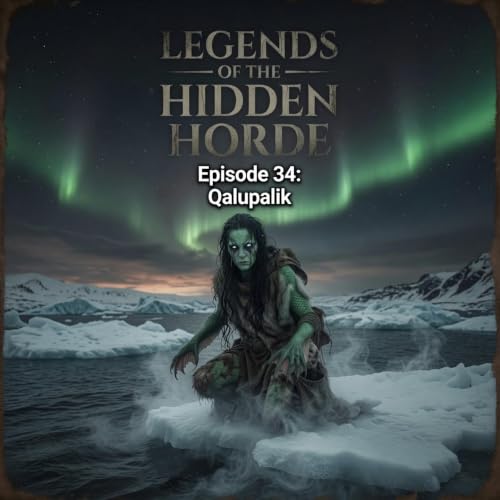
『Legends of the Hidden Horde』のカバーアート

Legends of the Hidden Horde

Legends of the Hidden Horde

著者: Lance Martin
無料で聴く

Legends of the Hidden Horde is a biweekly podcast that dives deep into the shadows of folklore, cryptids, and enigmatic creatures from around the world. Hosted by Lance Martin, each episode delivers a chilling, atmospheric tale grounded in real legends, eyewitness accounts, and cultural lore, brought to life through immersive, creative storytelling. Imagine slipping into the mist-shrouded swamps of the Bridgewater Triangle where Pukwudgie tricksters lurk, or facing the skinless Boo Hag that steals skins to walk among us at night. Or encountering storm-riding Blue Men of the Minch who challenge sailors with deadly rhymes, or river monsters like Borinkus haunting blackwater bends. These aren’t dusty retellings, they’re vivid, cinematic journeys that blend the eerie beauty of myth with the haunting possibility that something truly waits in the unknown. Creative folklore with bite: Episodes weave historical context, eyewitness reports, and imaginative twists into gripping narratives. Expect rich sensory details, cultural depth, and explorations of origins, societal impacts, and “what if they’re real?” implications(ethical, existential, and ecological). Short and immersive: All episodes clock in at 15 minutes or less—perfect for late-night listens, commutes, or quick escapes into the strange. Two new episodes drop weekly, building your horde of hidden legends steadily. Tone: Dark, mysterious, and wondrous. It channels classic horror podcast vibes and fireside ghost stories with modern production. Think vivid narration, subtle sound design cues, and a respectful nod to source cultures while amplifying the uncanny. The podcast spans global traditions and local terrors: - The Blue Men of Minch → Storm kelpies of Scotland’s treacherous straits. - Borinkus (St. John’s River Monster) → Florida’s elusive river beast. - The Tikbalang → Horse-headed trickster of Philippine forests. - The Boo Hag → Skin-stealing nightmare of Gullah lore. - The Pukwudgie → Mischievous swamp dwellers of New England. - The Piasa Bird, Jenny Greenteeth, Lac Wood Screecher, and more—from Native American rock art horrors to English bog witches. If you love podcasts like Lore, Monsters Among Us, or The Midnight Library but want tighter, more cinematic bites, or if cryptid shows like Sasquatch Chronicles appeal but you crave global folklore with creative flair, Legends of the Hidden Horde delivers. It transforms ancient whispers and modern sightings into stories that linger, making you scan the treeline, check the water’s edge, or wonder what’s really out there in the dark. Keep your eyes open. You never know what might be lurking in the shadows.Lance Martin SF
エピソード
  • The Kludde
    2026/07/09

    In the oral traditions of the Flemish people, passed down through generations in farmhouses and along lonely paths, lives the Kludde, a shapeshifting spirit of torment and trickery.

    This is not a creature of distant myth but a figure rooted in the lived fears and warnings of local communities: a guardian of boundaries between safety and peril, light and shadow, the known path and the treacherous unknown. This is Episode 36: The Kludde.

    Sources


    https://abookofcreatures.com/2019/06/07/kludde/

    (detailed English summary with historical references)


    https://nl.wikipedia.org/wiki/Kludde

    (Dutch Wikipedia entry on Flemish folklore)


    https://mythlok.com/kludde/

    (overview of traits and regional context)


    Historical collections referenced in sources above, including 19th-century accounts by Baron of Saint-Genois, Teirlinck’s Le Folklore Flamand, and related volumes like Northern Mythology.


    続きを読む 一部表示
    9 分
  • The Processional Giants of Mons
    2026/07/06

    In Belgian culture, the processional giants stand as towering emblems of identity, resilience, and communal memory. Belgium is home to more than 2,000 of these colossal figures, some of the highest concentrations in the world for such a small nation, with Flanders particularly rich in them. Many date back to the late Middle Ages, originally appearing in religious processions to educate and inspire before evolving into proud symbols of civic independence and local heritage. Inscribed on UNESCO’s Representative List of the Intangible Cultural Heritage of Humanity alongside their French counterparts, they dance through festivals like the Ducasse de Mons and the Ommegang, carried by dedicated bearers and celebrated by entire communities. They are not mere decorations but living vessels of history, blending myth, faith, and folk tradition into spectacles that bind past and present.

    This is Episode 35: The Processional Giants of Mons


    Sources


    https://en.wikipedia.org/wiki/Ducasse_de_Mons


    https://en.wikipedia.org/wiki/Ommegang_of_Brussels


    https://historiek.net/silvius-brabo-druon-antigoon/80323/ (Druon Antigoon legend)


    Additional heritage documentation from Wallonia-Brussels living heritage resources and historical accounts of the Lumeçon combat.


    続きを読む 一部表示
    11 分
  • Qalupalik
    2026/07/02

    This is Episode 34: Qalupalik


    In the long night of the Arctic, where the sea breathes under thick ice and the wind carries secrets older than memory, the people of the camps knew to listen.

    They gathered in the warmth of the Qulliq, its flame flickering against walls of snow and stone. Elders spoke in low voices of the beings that shared the land and water, not as fairy tales for comfort, but as truths woven into survival. Among them was the Qalupalik, the one who waits beneath the ice edge.


    Sources


    Wikipedia overview (with references to Boas and variations): https://en.wikipedia.org/wiki/Qallupilluit


    Folktales America retelling and context: https://folktalesamerica.com/Qalupalik-the-sea-creature-that-takes-children/


    Inhabit Media / Elisha Kilabuk The Qalupalik (kah-loo-pah-leek) (kah-loo-pah-leek) (kah-loo-pah-leek) book details and descriptions: https://quillandquire.com/review/the-Qalupalik


    NFB/Nunavut Animation Lab short film adaptation: Search “Nunavut Animation Lab Qalupalik” on YouTube or nfb.ca


    Tell Story site with traditional variations (including Boas-inspired grandmother tale): https://tellstory.net/stories/inuit/folk-tale/the-child-taken-by-the-qallupilluit/

    Additional context on cultural role and modern graphic adaptations: References in NightTide Magazine or CM: Canadian Review of Materials for Putuguq & Kublu and the Qalupalik


    続きを読む 一部表示
    12 分
adbl_web_anon_alc_button_suppression_t1
まだレビューはありません