『Legal News for Thurs 4/23 - AI Copyright Battles, Joint Employer Rule Proposal at DOL, and SCOTUS Fight over FCC Fines and Jury Trial Rights』のカバーアート

Legal News for Thurs 4/23 - AI Copyright Battles, Joint Employer Rule Proposal at DOL, and SCOTUS Fight over FCC Fines and Jury Trial Rights

Legal News for Thurs 4/23 - AI Copyright Battles, Joint Employer Rule Proposal at DOL, and SCOTUS Fight over FCC Fines and Jury Trial Rights

無料で聴く

ポッドキャストの詳細を見る

概要

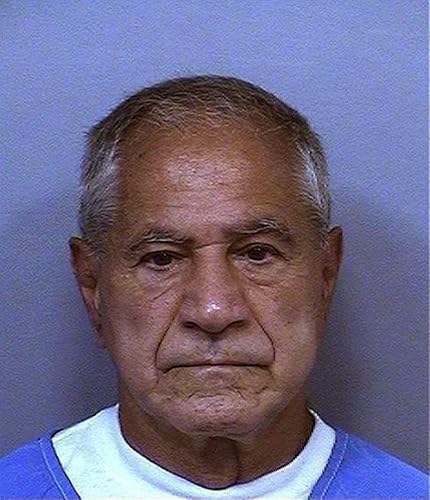
This Day in Legal History: Sirhan Sirhan SentencedOn April 23, 1969, Sirhan Sirhan was formally sentenced to death for the assassination of Robert F. Kennedy, a crime that had shaken the United States the previous year. The sentencing came after a highly publicized trial in Los Angeles, where prosecutors argued that the killing was deliberate and politically motivated. Evidence presented at trial included eyewitness accounts placing Sirhan at the scene and actively firing the fatal shots. His own recorded statements, which expressed hostility toward Kennedy, played a key role in establishing intent. The defense raised questions about Sirhan’s mental state, but these arguments did not overcome the prosecution’s narrative of premeditation.The jury ultimately found him guilty of first-degree murder, leading to the imposition of the death penalty under California law at the time. The sentence reflected both the gravity of the crime and the broader national trauma surrounding political assassinations in the 1960s. However, the legal status of capital punishment in California soon shifted dramatically. In 1972, the California Supreme Court decided People v. Anderson, which held that the death penalty as then applied violated the state constitution. As a result, Sirhan’s sentence was commuted to life imprisonment, aligning his case with others affected by the ruling.The Sirhan case remains significant in legal history for its intersection with issues of political violence and criminal accountability. It also illustrates how broader constitutional developments can reshape individual sentences long after a trial concludes. Debates about his culpability and mental state have persisted, raising ongoing questions about the standards for criminal responsibility. At the same time, the case is frequently cited in discussions about the fairness and consistency of the death penalty. It stands as a reminder of how legal systems respond to acts that carry both criminal and profound national consequences.Anthropic has asked a federal court in California to rule in its favor in a copyright lawsuit brought by major music publishers, including Universal Music Group, over the use of song lyrics to train its AI chatbot, Claude. The company argues that its use of copyrighted lyrics qualifies as “fair use” because it is transformative, meaning the material was used to help the AI understand language rather than to reproduce songs. Anthropic claims this kind of use supports innovation across fields like science, business, and education.The publishers, including Concord and ABKCO, disagree and argue that the AI system can generate outputs that resemble or compete with their lyrics, potentially harming the market for original works. They originally filed the lawsuit in 2023, alleging that Anthropic copied lyrics from hundreds of songs by well-known artists without permission. This dispute is part of a broader wave of legal challenges against AI companies, including OpenAI, Microsoft, and Meta Platforms, over how training data is used.Anthropic is seeking summary judgment, which would allow it to win the case without a full trial if the judge agrees that its actions were legally protected fair use. The outcome could be highly influential, as courts are currently split on whether AI training on copyrighted material is permissible. The company also emphasizes that copyright law is intended to benefit the public by encouraging innovation, not just to compensate creators.At the center of the case is a key legal question: whether copying large amounts of copyrighted material to train AI systems can be considered transformative use under copyright law. This issue is likely to shape future rulings as similar cases continue to move through the courts.Anthropic seeks pivotal court win in music publisher lawsuit over AI training | ReutersThe U.S. Department of Labor has introduced a proposed rule to clarify when multiple employers can be held jointly responsible for wage and hour violations. The rule, titled Joint Employer Status Under the Fair Labor Standards Act, Family and Medical Leave Act, and Migrant and Seasonal Agricultural Worker Protection Act, is designed to create a clearer and more consistent standard across federal law. Officials say the goal is to resolve conflicting interpretations among federal courts and make compliance easier for businesses.According to acting Labor Secretary Keith Sonderling, the proposal aims to both simplify regulations for employers and strengthen protections for workers. The rule would mark the agency’s first formal guidance on joint employment since the prior regulation from an earlier administration was rescinded without replacement. Unlike that earlier version, the new proposal would apply to multiple statutes, including the Fair Labor Standards Act and the Family and Medical Leave Act.The Department believes a uniform standard will reduce confusion, encourage better business practices, ...
adbl_web_anon_alc_button_suppression_c
まだレビューはありません