エピソード

  • Everything You Want To Know About Quantum Mechanics - Maria Violaris - #22
    2026/05/25

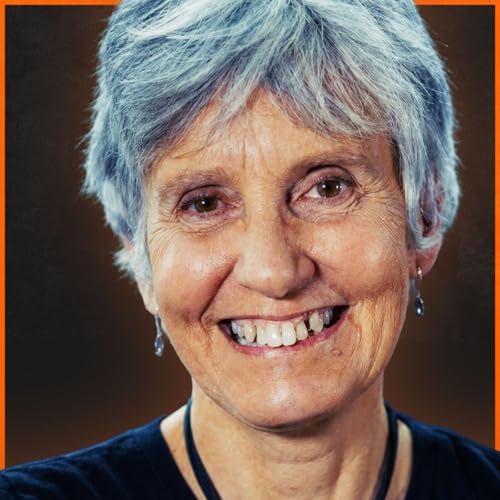
    Maria Violaris is a quantum physicist and science communicator based in Oxford, UK, and a researcher at Oxford Quantum Circuits, an Oxford University spin-out. She holds a PhD in the foundations of quantum information from the University of Oxford, where her research examined the quantum arrow of time, measurement paradoxes, and locality in entanglement. Alongside her doctorate she built outreach programmes with IBM Quantum and Riverlane, founded Oxford University Quantum Information Society, and wrote for Physics World. She hosts the Quantum Foundations Podcast on her YouTube channel, The Quantum Channel, where she interviews active researchers on the deepest open questions in the field.

    Expect to learn how quantum mechanics is defined as our most precisely tested theory of matter, why Einstein objected to quantum randomness and what he meant by spooky action at a distance, how the double slit experiment reveals wave-particle duality in single photons, why introducing any detector destroys the interference pattern through entanglement rather than a mysterious act of observation, what the simulation hypothesis has to do with why particles exist in superposition until measured, how decoherence explains why quantum superpositions collapse so rapidly in warm everyday environments, why building a quantum computer requires fighting the universe's constant tendency to measure and collapse quantum states, what use cases quantum computers are most likely to deliver first including drug discovery and materials science, why Copenhagen's failure to define an observer makes it an incomplete interpretation, how Schrodinger's cat shows that every element of the experiment including the hammer the poison and the cat equally counts as a measurement device, and how a reversibility test on a quantum computer could in principle distinguish the many worlds interpretation from objective collapse theories.

    Maria Violaris online:

    YouTube: Dr Maria Violaris (youtube.com/@maria_violaris)

    Podcast: Quantum Foundations Podcast (mariaviolaris.podbean.com)

    X: @maria__violaris

    Instagram: @maria.violaris

    LinkedIn: Maria Violaris

    Website: mariaviolaris.com

    続きを読む 一部表示
    1 時間 12 分
  • How To Stop Being a People Pleaser - Frederik Herre - #21
    2026/05/21

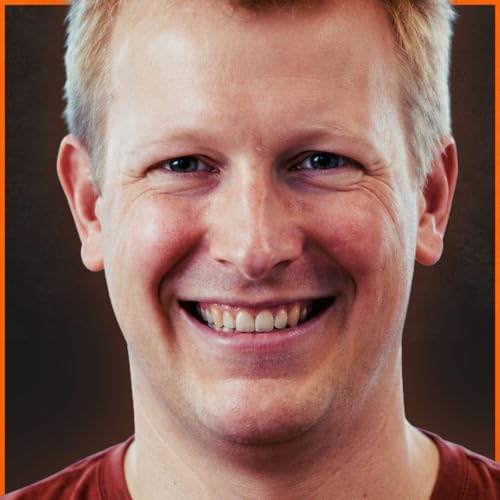
    Frederik Herre is a German men's coach and facilitator based in Bali, Indonesia, formerly Berlin, who specialises in helping men overcome people-pleasing and nice-guy patterns. After spending his twenties isolated, conflict-avoidant, and single for nine years, he discovered the concept of people pleasing through a friend's observation and began a two-year personal transformation. He now runs men's circles under the name Men's Embodiment Group, coaches clients one-on-one, and delivered a live talk titled Boys Deserve Love 2 on the psychology of masculine self-worth. This episode is the first in-person recording of Julius Moorman's podcast, taped in Bali.

    Expect to learn what a people pleaser actually is and why the behaviour is driven by hidden manipulation rather than genuine kindness, how Fred spent nine years single because he was too afraid to communicate romantic interest, why nice-guy patterns show up equally in work and entrepreneurial life through overgiving and an inability to charge fairly, what the three-step framework of awareness, in-the-moment recognition, and evidence-building looks like in practice, how the thought-emotion-action-outcome model can be reverse-engineered to change behaviour, why identity shifts rather than willpower are the engine of lasting change, what baby steps Fred took to break his own dating paralysis, how to avoid overcorrecting from people pleaser to the opposite extreme, why men's circles are the foundational support structure for this kind of growth, what the Industrial Revolution did to male socialisation and how that explains the epidemic of nice guys, how push versus pull motivation determines whether change lasts, and where Frederik stands in his own journey two years after hitting rock bottom in Berlin.

    続きを読む 一部表示
    1 時間 21 分
  • What I Learned From 20 Podcasts - Julius Moorman - #20
    2026/05/18

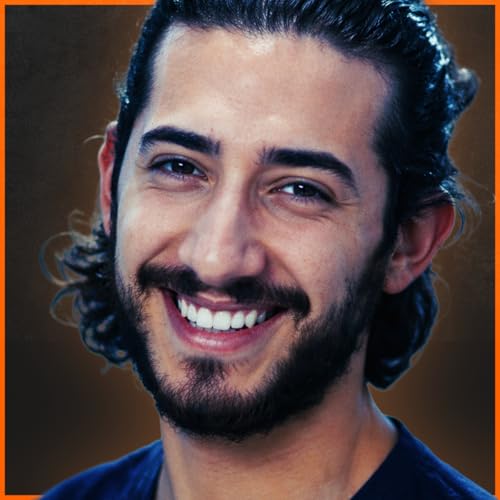
    Julius Moorman is a Dutch journalist, documentary creator, and podcast host based in Amsterdam, currently living in Bali, Indonesia. He trained as a tax lawyer at Leiden University and began his career as an international tax advisor at Deloitte before pivoting to journalism, writing for major Dutch outlets including Quote magazine and NOS. He subsequently launched the YouTube channel nowweknow, producing documentary-style explainers on science, technology, and society. This episode marks the twentieth milestone of his podcast, and Julius hosts it solo, reflecting on everything he has learned since quitting corporate law, stumbling through YouTube, and committing fully to long-form conversation.

    Expect to learn why Julius walked away from a stable legal career despite having no plan, how a COVID lockdown forced him to confront his dissatisfaction with law and led him to writing, what made a single 300-word Dutch-language article go viral and land him a journalism internship, why he spent years grinding at documentary video only to conclude it was not the right format for him, how the invisible production work behind a podcast episode far outweighs the recorded conversation itself, what Julius overestimated about getting guests to say yes to a new show, why he would refuse to have his dream guest on tomorrow even if he could arrange it, how he thinks about podcasting as an infinite game tied to becoming a better communicator, what the Henry Shevlin and Anders Sandberg episodes taught him about AI consciousness and transhumanism, and why he believes consistency rooted in genuine enjoyment always beats raw motivation.

    Julius Moorman online:
    YouTube: @juliusmoorman.
    Instagram: @juliusmoorman
    TikTok: @juliusmoorman
    Website: juliusmoorman.com

    続きを読む 一部表示
    1 時間 5 分
  • 7 Fascinating Facts About DNA - Sander Wuyts - #19
    2026/05/14

    Sander Wuyts is a bioscience engineer and CEO of ImmuneWatch, a Belgian biotech startup using machine learning to decode the immune system's DNA for pharma and cancer drug development. He holds a PhD in computational microbiology from the University of Antwerp and Vrije Universiteit Brussel, where he studied the bacteria in fermented foods using DNA sequencing before completing a postdoc at EMBL Heidelberg on the human microbiome. After his academic career he co-founded ImmuneWatch, which helps pharma and biotech companies understand what the immune system is attacking, whether a cancer cell, a virus, or a bacterium, by reading the DNA of immune cells. In 2018, while still a PhD student, he made international headlines by becoming the first person in the world to crack the Davos DNA Bitcoin Challenge, a three-year-old public puzzle set by EMBL-EBI scientist Nick Goldman at the 2015 World Economic Forum, claiming a Bitcoin worth around 9,500 euros in the process.

    Expect to learn how DNA stores biological information using just four nucleotide building blocks, what Gregor Mendel's pea plant experiments revealed about inheritance centuries before DNA was discovered, how the central dogma of molecular biology connects DNA to RNA to proteins, why we still do not fully understand what every part of the human genome encodes, how CRISPR-Cas changed the way scientists edit and study genes, how DNA forensics works and why the falling cost of sequencing transformed criminal investigations, what ancestry testing companies actually measure when they compare your DNA to other populations, why editing tomatoes and editing humans raise very different ethical questions, how Nick Goldman encoded a Bitcoin inside a physical DNA sample and what it took to decode it, why DNA is a theoretically compelling but practically challenging medium for long-term digital data storage, how ImmuneWatch uses DNA readouts and machine learning to reveal what the immune system is targeting in real time, and what DNA origami and aptamers could one day make possible for targeted drug delivery.

    Sander Wuyts online:

    LinkedIn: linkedin.com/in/sander-wuyts

    Website: sanderwuyts.com

    ImmuneWatch: immunewatch.com

    0:00 How Sander got interested in DNA

    1:00 Gregor Mendel and the origin of genetics

    3:30 From chromosomes to the double helix

    5:56 DNA as the basis of all life

    6:23 The central dogma: DNA, RNA, and proteins

    8:05 How four bases store all biological information

    11:42 The Human Genome Project

    12:34 CRISPR and gene editing tools

    15:52 DNA evidence at crime scenes

    19:23 Ancestry testing and consumer DNA services

    25:47 How much do we actually understand the genome

    28:53 Synthetic biology and engineering organisms

    30:00 Ethics of human genetic editing and GMOs

    35:10 DNA as a digital data storage medium

    35:44 The Davos Bitcoin Challenge explained

    40:00 How Sander decoded the Bitcoin

    43:03 Winning the Bitcoin and what he did with it

    47:22 Current state and future of DNA storage

    55:17 ImmuneWatch and reading the immune system

    59:09 How ImmuneWatch helps pharma and cancer trials

    1:01:23 DNA origami, aptamers, and future applications

    続きを読む 一部表示
    1 時間 5 分
  • Can We Build a Computer From Living Brain Cells? - Dr. Ewelina Kurtys - #18
    2026/05/11

    Dr. Ewelina Kurtys is a neuroscientist and strategic advisor at FinalSpark, a Swiss biocomputing startup building computers from living human neurons. She holds a PhD in neuroscience from the University of Groningen and completed postdoctoral research in brain imaging in London before moving into AI commercialization and deep-tech strategy. At FinalSpark, she works on the commercial side of the Neuroplatform, the world's first remotely accessible bioprocessor, bridging laboratory research with paying clients, university collaborators, and investors. The episode explores FinalSpark's audacious goal of replacing silicon with biology, reducing AI energy consumption by a factor of one million, and cracking the still-unsolved language of neuronal communication.

    Expect to learn how neurons process and store information differently from digital computers, what a brain organoid is and how FinalSpark grows them from human skin stem cells, why living neurons are estimated to be one million times more energy efficient than silicon processors, how the Neuroplatform works as a remotely accessible biocomputing lab, what the fundamental unsolved challenge of encoding and decoding neuronal signals means for the field, how AI and generative tools are being used to accelerate biocomputing research, why FinalSpark believes a bio-cloud server is more practical than a portable biocomputer, what the biggest misconception people have about wetware computing actually is, whether organoids could ever be considered conscious and how philosophers are being brought into that conversation, how university researchers and commercial clients are already running experiments on living neurons from anywhere in the world, what it would take to call the project a success, and how biocomputing compares to quantum computing as a next-generation computing paradigm.

    Dr. Ewelina Kurtys online:

    Website: finalspark.com

    LinkedIn: linkedin.com/in/ewelina-kurtys

    続きを読む 一部表示
    1 時間 1 分
  • Finite and Infinite Games - Prof. Niki Harré - #17
    2026/05/07

    Niki Harre is a professor of psychology and head of the School of Psychology at the University of Auckland, New Zealand, known for applying psychological research to questions of sustainability, community, and how people live well together. She has published over 200 scholarly articles and is the author of Psychology for a Better World: Working with People to Save the Planet and The Infinite Game: How to Live Well Together, both published by Auckland University Press in 2018. In 2021, during a sabbatical year, she appointed herself a secular priest, read the entire Bible, attended church weekly, delivered her own Sunday services, and took personal vows of simplicity, hospitality, and pause, an experiment she undertook as a committed atheist to discover what the secular world loses when religion fades. Her account of that year is documented in her 2026 book The Calling: A Year Exploring What the Secular World Can Learn from Religion, published by Auckland University Press.

    Expect to learn what distinguishes finite games from infinite games and why that distinction changes how you see competition and ambition, how the goalpost-moving trap works in money and fitness and why it keeps people perpetually dissatisfied, why chasing wealth does not qualify as an infinite game, how finite games can serve a larger infinite purpose when used deliberately, what drove an atheist psychology professor to spend a year attending church and reading scripture, what she expected would happen versus what actually happened when she ran secular services for the public, why the Christian community she encountered was far more welcoming than her secular peers, what psychological wisdom she found in Christian literature that her academic training had never touched, why the concept of self-esteem is, in her view, one of the more damaging ideas her own discipline has produced, how humility and genuine confidence are more closely connected than most people assume, whether secular society has found anything that does the job religion once did, and what she thinks is genuinely irreplaceable about religious practice for those who want to live outwardly rather than inwardly.

    Niki Harre online:

    Website: nikiharre.com

    University profile: profiles.auckland.ac.nz/n-harre

    Secular priest project: secularpriest.org

    The Infinite Game (2018): aucklanduniversitypress.co.nz

    The Calling (2026): aucklanduniversitypress.co.nz

    続きを読む 一部表示
    1 時間 12 分
  • Should We Have the Right to Modify Our Bodies? - Dr. Anders Sandberg - #16
    2026/05/04

    Anders Sandberg is a Swedish researcher, futurist, and transhumanist at the Future of Humanity Institute at the University of Oxford, holding a PhD in computational neuroscience from Stockholm University. His research covers the ethics and societal implications of human enhancement, whole brain emulation, existential and global catastrophic risk, and the very long-range future of intelligent life. He is co-founder of the Swedish Transhumanist Association, a former chairman of that body, and has been described as a philosopher, neuroscientist, futurist, and computer graphics artist whose work ranges from formal academic papers to his famous 2018 viral piece calculating what would happen if the Earth were replaced with blueberries. He is signed up for cryonic preservation after death and is at work on a book titled Grand Futures exploring what intelligent life could ultimately achieve within the laws of physics.

    Expect to learn how a bored Swedish child reading 1970s science fiction ended up at the Future of Humanity Institute at Oxford, what transhumanism actually means and how it differs from the science-fiction caricature, why there is no fundamental philosophical distinction between taking a pill and getting a brain implant, how the concept of morphological freedom works and why it cuts both ways, what makes genetic enhancement of children ethically distinct from self-modification, how Anders thinks about the accessibility objection to human enhancement technologies, why he is personally signed up for cryonic preservation and how the process actually works in practice, what whole brain emulation is and why he calls mind uploading a term that makes him cringe, whether a digitally emulated brain could be genuinely conscious and how that question changes the ethics of running simulations, what neuro rights are and why Anders thinks they will become one of the defining legal battlegrounds of the coming decades, how being frozen makes civilizational collapse a deeply personal risk and what that means for his research priorities, and why he considers himself an optimist despite spending his career cataloguing ways the future could go wrong.

    Anders Sandberg online:

    Website: aleph.se

    Twitter/X: @anderssandberg

    Oxford profile: ox.ac.uk/news-and-events/find-an-expert/dr-anders-sandberg

    Grand Futures (forthcoming): search Anders Sandberg Grand Futures

    続きを読む 一部表示
    1 時間 6 分
  • The Philosophy of Funmaxxing - Christian Gonzalez-Capizzi - #14
    2026/04/27

    Christian Gonzalez-Capizzi is a philosopher, podcaster, and content creator based in New York, known online as the philosophical architect connecting analytic and esoteric philosophy. He double-majored in philosophy and physics before spending four years living across Spain, where his interest in convergence between moral traditions deepened. His Substack, Instagram, and YouTube channel explore how ideas from Plato, Derek Parfit, Buddhist thought, and modern physics all point toward the same underlying account of how to live well. A video he produced on flow maxing reached a wide audience and became the centrepiece of a growing body of work on perception, desire, and the good life.

    Expect to learn how Christian first encountered moral philosophy through Aristotle's teleological argument in a Catholic high school ethics class, what it means to call yourself a philosophical architect and why he positions himself between analytic and continental traditions, why he chose Plato, Spinoza, Wittgenstein, and Derek Parfit as his four defining philosophers and what each contributes to a unified picture, how Parfit's arguments dismantle subjectivism and why judgment must precede desire rather than follow from it, what flow maxing is and why reducing inner conflict mirrors the Platonic, Taoist, and Buddhist models of acting in harmony with reality, why chasing external goals produces a hedonic treadmill and how to find intrinsic motivation in the process itself rather than the outcome, how dopamine overstimulation from social media destroys the boredom necessary for genuine reflection and what to do about it, why Christian left a startup to pursue philosophy and content creation full-time and what that transition revealed about meaning and purpose, how living in Madrid and Barcelona for four years shaped his thinking about ambition, culture, and the difference between European and American attitudes toward success, why the most important intellectual conversations are currently happening in American tier-one cities and what Europe would need to change to compete, how predictive processing and perception shape which opportunities you notice in life and why mindset is not merely self-help but a philosophically grounded claim, and whether the interest humans have in the big questions of life will survive the TikTokification of attention.

    続きを読む 一部表示
    1 時間 7 分