

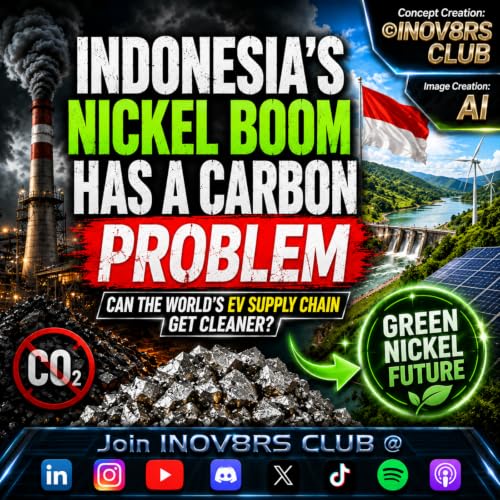
#Indonesia #Nickel Industry: The Carbon Problem Behind the Boom
カートのアイテムが多すぎます
カートに追加できませんでした。
ウィッシュリストに追加できませんでした。
ほしい物リストの削除に失敗しました。
ポッドキャストのフォローに失敗しました
ポッドキャストのフォロー解除に失敗しました

#Indonesia #Nickel Industry: The Carbon Problem Behind the Boom
-
ナレーター:
-
著者:
🌏 #Indonesia’s #Nickel Boom Has a Carbon Problem: Can the #EV Supply Chain Get Cleaner?
Indonesia has become the world’s dominant nickel producer and a critical player in the global electric-vehicle battery supply chain. But behind the country’s extraordinary nickel boom is a growing challenge: much of the metal is processed using energy from coal.
🏭 The Carbon Problem Behind Indonesia’s Nickel Boom
Nickel processing requires enormous amounts of electricity. Many Indonesian smelters operate in remote industrial areas and rely on captive coal-fired power plants. This means nickel destined for stainless steel, batteries and clean-energy technologies can carry a substantial carbon footprint before reaching manufacturers.
🔋 Why Nickel Matters for Electric Vehicles
Nickel is an important ingredient in several lithium-ion battery chemistries. As global EV production expands, Indonesia’s enormous nickel resources have become strategically important to automakers, battery manufacturers and governments seeking secure supplies of critical minerals.
⚡ Coal Power vs. Green Nickel
Indonesia now faces an important question: can the world’s largest nickel producer reduce its dependence on coal?
Renewable electricity from hydropower, solar and wind, combined with improved energy efficiency and electricity infrastructure, could significantly reduce emissions from nickel processing.
🌱 Could Green Nickel Become the Future?
Indonesia already has examples of nickel operations using hydropower, demonstrating that lower-carbon production is possible.
The future supply chain could increasingly look like:
Nickel Mining → Low-Carbon Processing → Battery Materials → EV Batteries → Electric Vehicles
If automakers begin prioritizing lower-carbon materials, cleaner nickel could become a valuable competitive advantage.
🌎 Why Indonesia’s Nickel Industry Matters Globally
Indonesia’s dominance means changes to its nickel industry could influence global commodity markets, battery manufacturing and the environmental footprint of electric vehicles.
Can Indonesia transform its nickel industry from a coal-dependent powerhouse into a global leader in green nickel?