エピソード

  • God's Passion Must Become Our Passion | Justice 13-3
    2026/09/24
    Send us Fan MailWhat if the real test of a prophetic word isn't how bold it sounds, but whether you can hear the tears underneath it?Picking up where Episode 2 left off, Tim and Steve move from the prophetic tradition into what the prophets actually said about social justice — walking through Jeremiah 22, Psalm 72, Deuteronomy 10, Isaiah 57, and Zechariah 7 to the same claim: caring for the poor, the widow, the orphan, and the alien isn't a footnote to knowing God, it is what it means to know him (Jeremiah 22:16).Steve also resolves a tension he's carried for years — contemplation or social justice? — by noting that a deeper relationship with God means caring about what God cares about. That leads to the line he wants listeners to leave with above all else: "God's passion must become our passion."Two real stories, both nearly two decades old, ground the teaching: a single mother abandoned with five children who was given land instead of a handout, now a thriving community of 75 households who own their land outright; and Jyoti, a widow once rescued from a suicide attempt in India, now part of a sewing-school network that has trained close to 9,000 women into self-sufficient careers. Steve calls this "justice as God intended it" — not charity, but restored dignity and ownership.From there, the conversation turns to the cost of prophetic honesty: how religion becomes a "chaplain of the state" when it trades truth for access to power, why the church has largely lost the practice of lament, and Steve's charge that every prophet — and every believer — fights the temptation to just get along rather than let God's passion become their own. Tim and Steve also open a harder question they'll keep circling all season — where personal responsibility for justice ends and a nation's biblical accountability begins, especially toward immigrants — and deliberately leave it unresolved.In This EpisodeWhy intimacy with God and social justice are the same call lived at different depthsThe line Steve wants you to leave with above all else: "God's passion must become our passion"Two real, decades-spanning stories: a mother given land instead of a handout, and Jyoti, a widow rescued from a suicide attempt in IndiaHow Impact Nations' Skills & Business programs have equipped more than 5,000 people since 2008What it means for religion to become "chaplain of the state" — and why Amos said God hated Israel's worship for itWhy the church has largely lost the practice of lament, and what it loses by forgetting how to grieve honestly before GodA mentor's charge that reframed how Steve listens to prophecy: "listen for the sound of tears"Four Old Testament prophets — Jeremiah, Elijah, Zechariah, and Isaiah — who paid a real price for speaking the truthAn open question the series will keep returning to: where personal responsibility ends and a nation's accountability beginsThis is a conversation, not a lecture — Tim and Steve want your questions and pushback, especially on the harder edges of this one. Comment on YouTube, text us through your podcast app, or email podcast@impactnations.com. Follow or subscribe so you don't miss next week, when the series turns to Jesus and the prophetic tradition.Programs like the one that gave Jyoti a sewing machine and a career are still running today, funded largely by gifts from listeners. Giving to Impact Nations is one concrete way to let God's passion become yours.Featured ResourcesSkills & Business Training: Impact Nations' vocational and business programs referenced throughout this episode: impactnations.com/skills-business Embodied Hope by Dr. Kelly M. Kapic: amazon.com/dp/0830851798Explore Impact NationsWebsite: impactnations.com Journeys of Compassion: impactnations.com/journeys-of-compassion All links: linktr.ee/impact.nations YouTube: @ImpactNations Facebook: impactnationsministries Instagram: @impact.nations LinkedIn: Impact Nations TikTok: @impact_nations Give: impactnations.com/donateHashtags#JusticeAndPeace #Season13 #ImpactNations #ChristianPodcast #SocialJustice #OldTestament #FaithInAction
    続きを読む 一部表示
    59 分
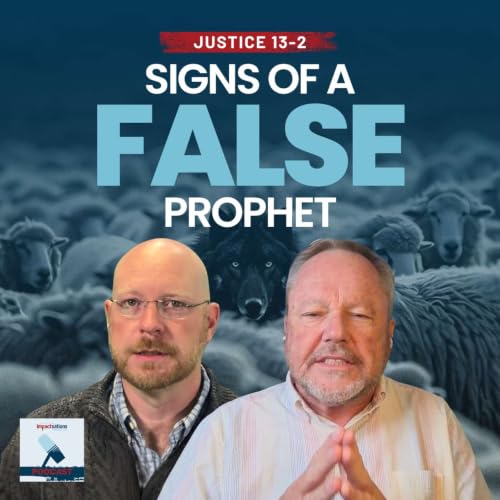
  • Two Marks of a False Prophet | Justice 13-2
    2026/09/17
    Send us Fan MailWhat if spotting a false prophet has less to do with predicting the future and everything to do with what they refuse to say?Episode 2 of the Justice & Peace series continues with Tim and Steve Stewart, digging into the Old Testament prophetic tradition as the foundation for everything this season will cover. Steve opens with Amos 5:24 — "let justice roll on like a river" — and argues that before the church tackles immigration, poverty, or war, it has to recover what it means to be a prophetic community: one that declares the kingdom of God and lives it out.Steve distinguishes popular "foretelling" (a personal word about a job or a relationship) from biblical "forth-telling": speaking God's heart, especially against collective injustice. Drawing on a framework from Dr. Obery Hendricks (a past podcast guest), he names two elements of true prophecy — a real encounter with God, and a message of moral and political judgment — and two marks of a false prophet: silence about social justice, and uncritical support of those in power, becoming "chaplains of the state."Leaning on Abraham Heschel's classic The Prophets, Steve and Tim trace how Amos, Micah, and Isaiah emerged during Israel's widest-ever rich-poor gap in the 8th century BC, confronting leaders who built wealth through extortion and manipulated scarcity. The conversation turns to how war gets wrapped in religious and patriotic language, then and now — touching on the 2026 U.S.–Iran war, religious leaders praying over the decision to strike, Defense Secretary Pete Hegseth's reported quoting of a fabricated "Bible verse" from Pulp Fiction, and Pope Leo XIV's public statements against the war. Tim raises a genuine counterpoint — the case for military action in defense of freedom — and they wrestle with it honestly rather than settling for an easy answer.They close with the prophets' harder claim: that the prophetic word ultimately outlasts the king, and that history is heading toward the day swords are hammered into plowshares.In This EpisodeWhy the church is called to be a "prophetic community" that declares and lives out the kingdom of God"Foretelling" vs. "forth-telling": the difference between a personal word and speaking God's heart on injusticeTwo marks of a false prophet: silence on social justice, and uncritical support of those in powerWhy Amos, Micah, and Isaiah emerged during Israel's widest-ever rich-poor gapHow ancient and modern nations wrap war in religious language — with real examples from the 2026 U.S.–Iran warAn honest, unresolved conversation about military action in defense of freedomWhy the prophetic word is ultimately more powerful than the king's powerThe prophets' vision of a day when "nation will no longer fight against nation" (Isaiah 2:4)This is a conversation, not a lecture — comment on YouTube, text us via your podcast app, or email podcast@impactnations.com. Follow or subscribe so you don't miss the rest of the series.With USAID funding cut, Impact Nations' partners see longer clinic lines and more repeat trafficking victims for lack of funds to patrol the borders. Giving is one concrete way to act on justice.Featured ResourcesThe Prophets by Abraham Joshua Heschel — the classic study Steve draws on throughout this episode: https://www.amazon.com/Prophets-Perennial-Classics-Abraham-Heschel/dp/0060936991The Politics of Jesus by Dr. Obery M. Hendricks Jr. — the past guest whose framing of biblical prophecy Steve references: https://www.penguinrandomhouse.com/books/78499/the-politics-of-jesus-by-obery-hendricks/For context on the current events discussed: Pope Leo XIV's statements on the Iran war: https://www.americamagazine.org/news/2026/04/10/pope-leo-war-iran-criticism/ Pete Hegseth's Pulp Fiction quote at a Pentagon prayer service: https://www.hollywoodreporter.com/movies/movie-news/pete-hegseth-pulp-fiction-bible-quote-1236566414/Explore Impact NationsWebsite: https://www.impactnations.comJourneys of Compassion: https://www.impactnations.com/journeys-of-compassionAll Impact Nations links: https://linktr.ee/impact.nationsYouTube: https://www.youtube.com/@ImpactNationsFacebook: https://www.facebook.com/impactnationsministriesInstagram: https://www.instagram.com/impact.nationsLinkedIn: https://www.linkedin.com/company/impact-nations-international-ministries-incTikTok: https://www.tiktok.com/@impact_nationsGive: https://www.impactnations.com/donateHashtags#JusticeAndPeace #Season13 #ImpactNations #ChristianPodcast #BiblicalProphecy #OldTestament #FaithAndJustice
    続きを読む 一部表示
    52 分
  • Steve & Tim Stewart: “The Church's Silence Has A Cost - Justice 13-1"
    2026/09/10
    Send us Fan MailThe gap between the world's rich and poor is wider today than at any point in recorded history — in any nation, at any time. So what does that have to do with the gospel?Season 13 of the Impact Nations Podcast launches with a new format and a new sense of urgency. Tim Stewart is joined each week this season by his father, Steve Stewart, Founder and President of Impact Nations, teaching from his home office as Tim responds in real time with the same questions you might be asking. Together they're beginning a season-long series on justice and peace, originally planned as "Peace and Justice" until Steve felt the Lord redirect him: justice has to come first, as the foundation everything else is built on.In this opening episode, Steve explains why he set aside a planned continuation of their Genesis series to address this topic with what he calls a greater sense of urgency than any series he's taught before. He walks through where we are: historic political polarization spreading across the U.S., Western Europe, Canada, and Australia; record economic inequality; and flashpoint issues like immigration and racial justice that dominate the news cycle. Steve and Tim compare this moment to the tumultuous 1960s, and Steve makes the case, twice, that "there is no such thing as a nonpolitical gospel or a nonpolitical Jesus" — while carefully distinguishing speaking prophetically about what Jesus cared about from aligning the church with any political party.The conversation covers what justice actually means biblically (over 2,000 verses touch on it), what peace meant to Jesus and the early church versus the "tame," privatized version many of us inherited, and a real-world picture of both sides of justice at once: Impact Nations' partners in Malawi, who intercept human traffickers at the border and also minister inside the prisons where offenders are held accountable, pursuing restoration for both survivor and perpetrator.Steve closes by previewing where the season is headed: the prophetic tradition from the Old Testament through Jesus and the early church, the "powers" behind systemic injustice, what the Bible says about immigration, Christian nationalism, Jesus and women, peacemaking, and just war theory.In This Episode Why Steve set aside a planned Genesis series to teach on justice and peace with unusual urgencyWhy he renamed the series from "Peace and Justice" to "Justice and Peace"The historic scale of today's economic inequality and political polarization, by the numbersHow this moment compares to the polarization of the 1960s — and how it's differentWhy Steve insists "there is no such thing as a nonpolitical gospel or a nonpolitical Jesus," without making Jesus a member of any partyWhat justice means biblically, and how Jesus's first public message was itself a justice declarationHow Impact Nations' partners in Malawi pursue both accountability and restoration in the fight against human traffickingWhy Steve distinguishes the "tame" gospel of inner peace from the gospel of peace Jesus and the early church actually preachedA look ahead at the rest of the season: the prophetic tradition, systemic "powers," immigration, Christian nationalism, Jesus and women, and just war theoryThis is a season Tim and Steve want to be a real conversation, not a lecture. If something here challenges you, encourages you, or makes you uncomfortable, they want to hear about it — leave a respectful, thoughtful comment on YouTube or send a note through your podcast app. And if you're new here, follow or subscribe so you don't miss the rest of the series.As always, this season will include real stories of Impact Nations partners participating in God's justice around the world. If you'd like to join that work, you can give at Impact Nations' website below.Featured ResourcesWhen Everything Changes: Healing, Justice & the Kingdom of God — Steve Stewart's earlier book, source of some of the material he references in this episode: https://www.amazon.com/When-Everything-Changes-Healing-Justice/dp/0981140955 The Prophetic Imagination by Walter Brueggemann — the book Steve draws on for the season's framing of "totalism" and prophetic imagination: https://www.fortresspress.com/store/product/9781506449302/The-Prophetic-ImaginationExplore Impact NationsWebsite: https://www.impactnations.comJourneys of Compassion: https://www.impactnations.com/journeys-of-compassion All Impact Nations links: https://linktr.ee/impact.nations YouTube: https://www.youtube.com/@ImpactNations Facebook: https://www.facebook.com/impactnationsministries Instagram: https://www.instagram.com/impact.nations LinkedIn: https://www.linkedin.com/company/impact-nations-international-ministries-incTikTok: https://www.tiktok.com/@impact_nations Give: https://www.impactnations.com/donateHashtags#JusticeAndPeace #Season13 #ImpactNations #ChristianPodcast #BiblicalJustice #ChurchAndPolitics #PropheticVoice
    続きを読む 一部表示
    1 時間
  • Brian Zahnd: Where Is Heaven, Really? | Summer Series 2026
    2026/09/03
    Send us Fan MailWhat if heaven isn’t somewhere far away—but a dimension of reality surrounding us right now?To close out the Summer Series, Tim Stewart welcomes back Brian Zahnd for a fascinating conversation about heaven, pilgrimage, wonder, the false self, and his new book, Unseen Existences: Of Heaven, Earth, and the Divine Mystery in All Things.Brian explains why heaven has become an embarrassment in serious theological circles, lumped in with escapist "fly away" thinking, sentimental clichés about departed loved ones on clouds, and sensationalized "I went to heaven and back" books. His pushback: heaven isn't a distant location somewhere past the clouds, but another dimension of reality, "the heavens," that surrounds us right now. Tim and Brian also talk through where Brian gently disagrees with N.T. Wright's caution around Platonic thought, recruiting C.S. Lewis to make his case.The conversation moves into life as pilgrimage. Brian, who has walked the 500-mile Camino de Santiago four times, describes what a spiritual journey teaches that a plane ticket to the same destination never could, and how doubt, wonder, and even losing old certainties along the way can be part of authentic faith rather than a threat to it. He shares one of the sharper lines from the book: "Christianity without transcendence degenerates into politics," and what a "holy ambivalence" toward political partisanship might look like instead.Tim and Brian also dig into one of the book's most striking chapters, "Depart From Me," reconciling Jesus's gentle response to Peter's confession of sin with his far more sobering words at the judgment, "I never knew you." Brian explains why he believes that verdict falls on the false self we try to become, not the person God actually made us to be. Along the way, Brian tells the story behind "The Reverend," a haunting short story cut from the final manuscript about a Puritan pastor who blessed a massacre, and what it imagines happening when that pastor stands before Christ.In This EpisodeWhy heaven has "gone missing" from serious theological conversation, and the three unhelpful ways people talk about it insteadWhy Brian says heaven isn't a distant place but "a different dimension" that is all around us right nowWhere Brian pushes back on N.T. Wright's caution toward Platonic thought, with help from C.S. LewisWhy Brian argues that "Christianity without transcendence degenerates into politics"What walking the Camino de Santiago four times taught Brian about pilgrimage, friendship, and spiritual transformationWhy losing our sense of wonder isn't inevitable, and a simple daily discipline for reclaiming itHow to hold together Jesus's compassion toward Peter and his sobering words, "I never knew you," at the judgmentThe story behind "The Reverend," the short story cut from the book, and its message about mercy at the final judgmentThis wraps thirteen weeks of Summer Series conversations exploring who God really is. If any of these episodes have challenged or encouraged you, follow or subscribe to the Impact Nations Podcast, and share your favorite conversation with someone who'd value it too.Featured ResourcesUnseen Existences by Brian Zahnd (available now from InterVarsity Press): IVP: https://www.ivpress.com/unseen-existences Amazon: https://www.amazon.com/Unseen-Existences-Heaven-Divine-Mystery/dp/1514005646“The Reverend” (the short story Brian mentions, plus its audio performance): https://brianzahnd.substack.com/p/audio-performance-of-the-reverendBrian Zahnd's website: https://brianzahnd.comBrian Zahnd on Substack: https://brianzahnd.substack.comWord of Life Church: https://wolc.comExplore Impact NationsWebsite: https://www.impactnations.comJourneys of Compassion (upcoming trips to Zimbabwe, the Philippines, and Nicaragua): https://impactnations.com/jocAll Impact Nations links: https://linktr.ee/impact.nationsYouTube: https://www.youtube.com/@ImpactNationsFacebook: https://www.facebook.com/impactnationsministriesInstagram: https://www.instagram.com/impact.nationsLinkedIn: https://www.linkedin.com/company/impact-nations-international-ministries-incTikTok: https://www.tiktok.com/@impact_nationsGive: https://www.impactnations.com/donateHashtags#BrianZahnd #UnseenExistences #SummerSeries2026 #ChristianPodcast #ImpactNations #Heaven #Pilgrimage
    続きを読む 一部表示
    59 分
  • Kenneth Tanner: The Vulnerable God Who Redefines Power | Summer Series 2026
    2026/08/27
    Send us Fan MailWhat if the truest picture of power we'll ever see isn't a throne or an army, but a baby who can't lift his own head—or a man nailed to a cross who refuses to fight back?In this Summer Series conversation, Tim Stewart welcomes Kenneth Tanner, pastor of Holy Redeemer in Rochester Hills, Michigan, theologian, and author of the new book Vulnerable God: How Jesus Upends Our Assumptions About God—and Shows Us How to Be Human, releasing September 29 with a foreword by Brian Zahnd.Kenneth makes the case that we shouldn't start with abstract ideas about God's power, sovereignty, or holiness and then try to squeeze Jesus into them. We should start with Jesus and let his life rearrange everything else. Tim and Kenneth talk through what it means to call Jesus "the human God," why weakness and humility aren't the opposite of divine power but its actual source, and how the incarnation—from the vulnerability of an infant to the vulnerability of the cross—reveals a strength the world rarely recognizes as strength at all.The conversation moves into what it means to be truly human. Kenneth reframes salvation less as rescue from an angry God and more as restoration of an image already present in us, borrowing Athanasius's picture of a master restorer cleaning centuries of grime off a painting to bring the original colors back to the surface. He also challenges the popular idea of a "sin nature," arguing instead that our nature is good and has been infected by sin—a disease with a cure, not an identity we're stuck with.They also dig into some of the Bible's hardest passages, including violent Old Testament stories, and why reading every text through Jesus—rather than reading Jesus through every text—changes the questions we're even allowed to ask. Kenneth shares two deeply personal stories: one from the day the Challenger shuttle exploded, when a grieving professor's words reshaped his entire theology of suffering, and another about sitting with a family after a young man drowned, that together show what it looks like to trust a God who suffers with us rather than one who causes our suffering.In This EpisodeWhy we should start with Jesus, not an abstract idea of God, when we ask what power really looks likeWhat it means to call Jesus "the human God"Why a woman healed by touching Jesus's robe and a baby lying in a manger reveal the same kind of powerHow Athanasius's image of a master art restorer reframes salvation as restoration rather than rescue from wrathWhy Kenneth rejects the popular idea of a "sin nature"—and what he says insteadHow Irenaeus's mosaic-floor illustration changes the way we read violent Old Testament passagesWhat Kenneth learned about God and suffering the day the Challenger shuttle explodedHow to sit with someone who's suffering without becoming one of Job's unhelpful friendsWhy Kenneth believes Jesus was inside the water with a young man who drowned, not just watching from the shoreIf this conversation gives you a new way to see Jesus, follow or subscribe to the Impact Nations Podcast so you don't miss the rest of the Summer Series. Please share this episode with someone who has ever wondered where God is in their suffering, or who could use a more hopeful picture of who God actually is.Featured ResourcesVulnerable God by Kenneth Tanner (releases September 29 — foreword by Brian Zahnd): Baker Publishing Group: https://bakerpublishinggroup.com/products/9781540902771_vulnerable-god Pre-order on Amazon: https://www.amazon.com/Vulnerable-God-Reviving-God-Us/dp/1540902773Kenneth Tanner on Substack: https://substack.com/@kennethtannerKenneth Tanner on Instagram: https://www.instagram.com/kentanner/Holy Redeemer (Kenneth's church): https://www.holyredeemer.usExplore Impact NationsWebsite: https://www.impactnations.comJourneys of Compassion: https://www.impactnations.com/journeys-of-compassionAll Impact Nations links: https://linktr.ee/impact.nationsYouTube: https://www.youtube.com/@ImpactNationsFacebook: https://www.facebook.com/impactnationsministriesInstagram: https://www.instagram.com/impact.nationsLinkedIn: https://www.linkedin.com/company/impact-nations-international-ministries-incTikTok: https://www.tiktok.com/@impact_nationsGive: https://www.impactnations.com/donateHashtags#KennethTanner #VulnerableGod #SummerSeries2026 #ChristianPodcast #ImpactNations #Incarnation #Restoration #FaithAndSuffering
    続きを読む 一部表示
    1 時間 16 分
  • Dr. Jay Augustine: Prophetic, Not Partisan | Summer Series 2026
    2026/08/20

    Send us Fan Mail

    Jesus spoke truth to power, confronted injustice, and stood with people pushed to the margins. But does that make the church political—and if so, how can it engage public life without becoming captive to a political party?

    In this Summer Series conversation, Tim Stewart is joined by Rev. Dr. Jonathan C. “Jay” Augustine, Senior Pastor of Big Bethel AME Church in Atlanta. Dr. Augustine is a pastor, author, legal scholar, educator, military veteran, and public theologian whose work brings together faith, justice, reconciliation, and the public calling of the church.

    Jay shares how his mother’s instruction to “call a thing a thing” shaped his life in law, ministry, and public service. He and Tim explore the crucial difference between being prophetic and being partisan, why Jesus provides the clearest model of speaking truth to institutions of power, and what happens when the church becomes more interested in acquiring power than following Christ.

    The conversation also moves beyond public statements and political debates. What does a communal gospel require of us? How can churches stand alongside people affected by injustice, meet practical needs, and become living signs of reconciliation? And why does faithful civic participation still matter?


    IN THIS EPISODE

    ● What it means to “call a thing a thing”

    ● Why prophetic ministry is political—but not partisan

    ● Jesus as the model for speaking truth to power

    ● How Christian nationalism can confuse faith with the pursuit of power

    ● Why Christian faith is communal, not merely individual

    ● How churches can meet the practical needs of marginalized communities

    ● The vertical and horizontal dimensions of reconciliation

    ● Why informed civic participation and voting still matter

    Follow or subscribe to the Impact Nations Podcast for more honest conversations about following Jesus in the real world. If this episode challenges or encourages you, share it with someone wrestling with the church’s role in public life.


    FEATURED RESOURCES

    Dr. Jay Augustine:
    https://www.jayaugustine.com

    Big Bethel AME Church:
    https://www.bigbethelame.org

    When Prophets Preach:
    Leadership and the Politics of the Pulpit

    Called to Reconciliation:
    How the Church Can Model Justice, Diversity, and Inclusion


    EXPLORE IMPACT NATIONS

    Impact Nations:
    https://www.impactnations.com

    Journeys of Compassion:
    https://www.impactnations.com/journeys-of-compassion

    Give:
    https://www.impactnations.com/donate

    Follow Impact Nations on TikTok:
    https://www.tiktok.com/@impact_nations


    HASHTAGS

    #JayAugustine #FaithAndJustice #ChurchAndPolitics #ChristianPodcast #ImpactNations

    続きを読む 一部表示
    56 分
  • Mercy Aiken: It’s Not Your Job to Convert Anyone | Summer Series 2026
    2026/08/13

    Send us Fan Mail

    What happens when sharing Jesus becomes a project to manage rather than a relationship built on love?

    In this Summer Series conversation, Tim Stewart welcomes back Mercy Aiken, a peace advocate, author, and pilgrimage leader serving with Peace Catalyst International in Jordan.

    Mercy shares what she is hearing from people from Gaza who have come to Jordan for medical care. She also tells stories of local teams providing food, shelter, practical care, prayer, and the simple assurance that those they serve have not been forgotten.

    The conversation then turns toward a deeper question: How do followers of Jesus build genuine friendships across religious and cultural lines without treating people as projects?

    Mercy challenges common assumptions about Christians in Palestine, reflects on the hospitality she has experienced among Muslims, and explains why she believes it is the Holy Spirit’s job to convert people. Our role is to love, listen, bear witness, and make room for the Spirit to work.

    Mercy also reflects on the unique invitation of Jesus to know God as Father and shares stories of profound spiritual openness among Muslim and Jewish friends.

    This is a candid conversation about suffering, peacemaking, dignity, and the quiet power of presence.

    In This Episode

    • What Mercy is building through Peace Catalyst International in Jordan
    • What she is hearing from Gazans receiving medical care outside Gaza
    • How practical relief and compassionate presence help people know they are seen
    • Why the Christian presence in Palestine must not be forgotten
    • How Christians can build genuine friendships with Muslim neighbours
    • The difference between sharing Jesus and trying to control the outcome
    • Mercy’s understanding of Jesus as the way to know God as Father
    • Why conversion belongs to the Holy Spirit


    Follow and Share

    If this conversation helps you see peacemaking, mission, or the Middle East differently, follow or subscribe to the Impact Nations Podcast.

    Please share this episode with someone who would value a thoughtful conversation about following Jesus in a divided world.

    Featured Resources

    Impact Nations Gaza Relief

    Help provide practical support through Impact Nations’ trusted partners and teams serving families in Gaza:

    https://www.impactnations.com/relief-gaza

    Peace Catalyst International

    Explore Christian peacemaking resources and learn more about the work Mercy is helping lead:

    https://peacecatalyst.org

    Explore Impact Nations

    Impact Nations Website
    https://www.impactnations.com

    All Impact Nations Links
    https://linktr.ee/impact.nations

    YouTube
    https://www.youtube.com/@ImpactNations

    Instagram
    https://www.instagram.com/impact.nations

    LinkedIn
    https://www.linkedin.com/company/impact-nations-international-ministries-inc

    TikTok
    https://www.tiktok.com/@impact_nations

    Hashtags
    #MercyAiken #SummerSeries2026 #ChristianPodcast #ImpactNations #ChristianPeacemaking #GazaRelief #ChristiansInPalestine #HolySpirit

    続きを読む 一部表示
    1 時間 2 分
  • Dr. Bradley Jersak: Finding Christ Where We Were Taught Not to Look | Summer Series 2026
    2026/08/06
    Send us Fan MailWhat if Christ is already present in the people we overlook—and what if sin has not separated us from the God who is holding us together?In this Summer Series conversation, Tim Stewart sits down with his dear friend Dr. Bradley Jersak, Principal of St. Stephen’s University, Director of the SSU School of Theology & Culture, author of more than twenty books—including A More Christlike God and A More Christlike Word—and a member of the Impact Nations Board of Directors.Bradley begins with the message at the heart of his life and work: “God is exactly like Jesus.” From there, Tim and Bradley explore what it means to encounter Christ in unexpected people and places, especially among those the Church has been trained to approach as projects rather than partners.They reconsider familiar assumptions about Christian mission, the Great Commission, salvation, and separation from God. Bradley shares stories of meeting Christ among unhoused neighbours, learning from Indigenous wisdom, and witnessing restoration in someone experiencing profound addiction and brokenness.The conversation also turns inward. How much of our anger, judgment, and religious certainty is driven by fear or untreated wounds? How can we understand the wounds beneath destructive behaviour without excusing the harm? And how do we pursue justice without allowing resentment, contempt, or rage bait to shape our hearts?This is a warm, candid conversation about mercy, mutuality, healing, and learning to recognize the work Christ may already be doing before we arrive.In This EpisodeWhy “God is exactly like Jesus” has become Bradley’s central life messageHow younger people respond to a more Christlike vision of GodWhy serving marginalized people must involve listening, partnership, and mutualityThe Indigenous elder who told Christian visitors, “Christ was here 500 years before the first Christians arrived”How colonial assumptions have shaped common readings of the Great CommissionWhat it means to say that all people exist in ChristWhy Bradley distinguishes alienation from actual separation from GodSalvation as a past, present, and future journey of whole-person restorationHow fear, wounds, resentment, and contempt affect the way we treat othersIf this conversation gives you something new to consider, follow or subscribe to the Impact Nations Podcast so you don’t miss the rest of the Summer Series. Share this episode with someone who is rethinking mission, salvation, or what it means to recognize Christ in others.Featured ResourcesBradley Jersak’s website:https://bradjersak.comBradley Jersak on Substack:https://substack.com/@bradleyjersakBradley Jersak on Instagram:https://www.instagram.com/bradley.jersak/Bradley’s books, including A More Christlike God and A More Christlike Word:https://bradjersak.com/books/St. Stephen’s University:https://www.ssu.caCertificate in Transformative Leadership:https://www.ssu.ca/cert-in-transformative-leadershipMaster of Arts in Transformative Leadership:https://www.ssu.ca/ma-in-transformative-leadershipConnect With Impact NationsWebsite:https://www.impactnations.comJourneys of Compassion:https://www.impactnations.com/journeys-of-compassionAll Impact Nations links:https://linktr.ee/impact.nationsYouTube:https://www.youtube.com/@ImpactNationsFacebook:https://www.facebook.com/impactnationsministriesInstagram:https://www.instagram.com/impact.nationsLinkedIn:https://www.linkedin.com/company/impact-nations-international-ministries-incTikTok:https://www.tiktok.com/@impact_nationsHelp Make Restoration PossibleBecome a Monthly Impact Champion and help Impact Nations keep showing up with practical compassion, trusted local leadership, and long-term pathways toward restoration:https://www.impactnations.com/monthly-impact-championsGive to Impact Nations:https://www.impactnations.com/donate#BradleyJersak #SummerSeries2026 #ChristianPodcast #ImpactNations #ChristlikeGod #FaithAndJustice #ChristianMission #Restoration
    続きを読む 一部表示
    1 時間 6 分