エピソード

  • The Great American Pie Company — Classic Humor by Ellis Parker Butler
    2026/07/02

    Eph Deacon sells pies for a living, or rather his wife bakes them and he carries the basket, which suits his philosophy just fine. Then Phineas Doolittle starts undercutting him from across the river, and what begins as a squabble on a bridge turns into something much bigger, and much sillier. Before long the two men have talked themselves into buying up farms, bakeries, and even a railroad, all in the name of cornering the pie market once and for all. Ellis Parker Butler, the man who gave the world "Pigs Is Pigs," turns small-town rivalry into an empire of hot air, one slice at a time.


    Ellis Parker Butler was an Iowa-born humorist who wrote more than two thousand stories, essays, and poems over a career spanning four decades, though he never quite escaped the shadow of his most famous creation, "Pigs Is Pigs." Published in 1904, "The Great American Pie Company" shows off the same gift for watching ordinary ambition curdle into absurdity, set against the folksy backdrop of a small Midwestern town not unlike the one Butler grew up in.

    Hosted on Acast. See acast.com/privacy for more information.

    続きを読む 一部表示
    27 分
  • My Financial Career — A Short Classic Humorous Tale by Stephen Leacock
    2026/07/02

    43lYPq2nxsWENQX9hw7f

    He only wants to open an account. That's all. Fifty-six dollars, a polite request, and maybe two minutes of a bank manager's time. But the moment our narrator steps inside the building, something happens to his brain, and every word that comes out of his mouth makes the situation worse. Stephen Leacock built an entire career on watching ordinary people crumble under ordinary pressure, and few pieces do it faster, or funnier, than this one.


    Stephen Leacock was a Canadian economist, political scientist, and, by wide agreement, the funniest English-speaking writer of the early twentieth century, with Mark Twain among those who said so. Drawing on his own academic training, Leacock had a particular gift for turning institutions, banks, universities, small towns, into stages for quiet human panic, and "My Financial Career," first published in 1910, remains one of the sharpest few minutes of comic writing he ever produced.

    Hosted on Acast. See acast.com/privacy for more information.

    続きを読む 一部表示
    7 分
  • The £1,000,000 Bank-Note — A Classic Tale by Mark Twain
    2026/07/01

    Henry Adams has one dollar to his name, a coat gone thin at the elbows, and a hunger that's stopped being polite about it. Then two rich old brothers hand him an envelope and vanish for thirty days, leaving him holding the single strangest piece of paper in London. It isn't counterfeit. It isn't a joke. And it is worth more than Henry can spend, prove, or even safely admit to owning. Mark Twain turns a penniless clerk loose on Victorian high society and lets the absurdity do exactly what it wants.


    Mark Twain, born Samuel Langhorne Clemens, remains one of America's sharpest satirists, a writer who could turn a tall tale into a mirror held up to an entire society. Published in 1893, "The £1,000,000 Bank-Note" takes his gift for skewering wealth and appearances and sets it loose on Victorian London, decades before Hollywood borrowed the premise more than once.

    Hosted on Acast. See acast.com/privacy for more information.

    続きを読む 一部表示
    45 分
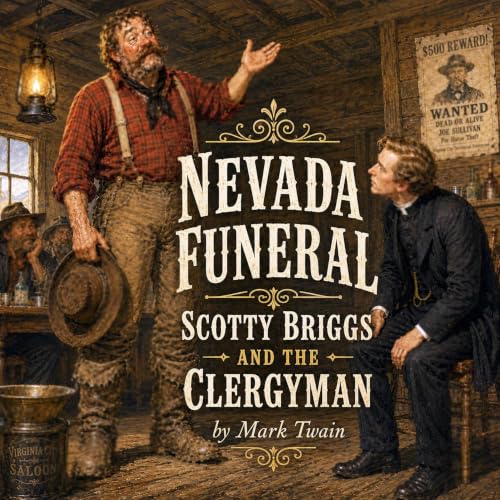
  • Nevada Funeral – Scotty Briggs and the Clergyman by Mark Twain
    2026/07/01

    Out in the Nevada mining camps of the 1870s, men learned to speak a language all their own, part slang, part swagger, part pure invention, and woe to the outsider who couldn't keep up. When a rough-hewn miner named Scotty Briggs marches into town to fetch a proper burial for a fallen friend, he finds himself face to face with a young, freshly minted clergyman who speaks only the King's English, and neither man has the faintest idea what the other is talking about. What follows is one of Mark Twain's funniest, and strangely most tender, character sketches, a collision of two American dialects, two worlds, and two men who, despite everything, manage to understand each other where it counts.


    Before he was Mark Twain, he was Samuel Langhorne Clemens, a Missouri riverboat pilot who traded the Mississippi for the Nevada silver fields and, when the mining didn't pan out, picked up a pen instead of a pickaxe. He spent the 1860s knocking around the boomtowns of the Comstock Lode, filing dispatches for the Territorial Enterprise under a borrowed riverboat term, a leadsman's call meaning safe water, two fathoms deep. The camps he covered, and the characters who populated them, miners, con men, preachers, and everyone in between, gave him a lifetime's worth of material and an ear for the peculiar poetry of American speech. He'd go on to write the books that made him famous, but the West made him a writer first.

    Hosted on Acast. See acast.com/privacy for more information.

    続きを読む 一部表示
    11 分
  • Eve's Diary — Translated from the Original by Mark Twain
    2026/07/01

    Where Adam's diary gave us one grumpy, bewildered account of those first days in Eden, Twain gives Eve her own version, and it changes everything. She's curious about everything, endlessly talkative, and cheerfully certain she's right about most of it. It's Twain at his funniest, and, by the end, at his most tender. This one will surprise you.


    Mark Twain, born Samuel Langhorne Clemens in 1835, remains one of America's most enduring literary voices, celebrated for wit as sharp as his social criticism. Eve's Diary stands apart in his body of work, a companion piece to Extracts from Adam's Diary that reveals a gentler, more affectionate side of a writer usually known for satire. Twain wrote it, in part, as a tribute to his own wife, Olivia.


    For more great stories, visit shortstoryverses.com

    Hosted on Acast. See acast.com/privacy for more information.

    続きを読む 一部表示
    42 分
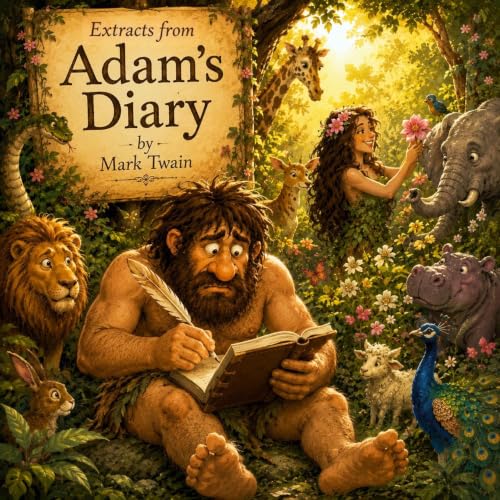
  • Excerpts from Adam's Diary by Mark Twain
    2026/07/01

    Before there was marriage counseling, there was Adam's diary. Mark Twain's comic monologue imagines the Garden of Eden's first resident keeping a running, increasingly exasperated account of the strange new creature who's moved in, started naming his animals, and rewritten the rules of the place without asking. It's Genesis as domestic comedy, and it's every bit as sharp as Twain at his best.


    Mark Twain, born Samuel Langhorne Clemens in 1835, remains one of America's most enduring literary voices, known for wit as sharp as his social criticism. From The Adventures of Huckleberry Finn to shorter satirical pieces like this one, Twain had a gift for finding the absurd in the everyday, even when the everyday happened to be the Garden of Eden.

    Hosted on Acast. See acast.com/privacy for more information.

    続きを読む 一部表示
    27 分
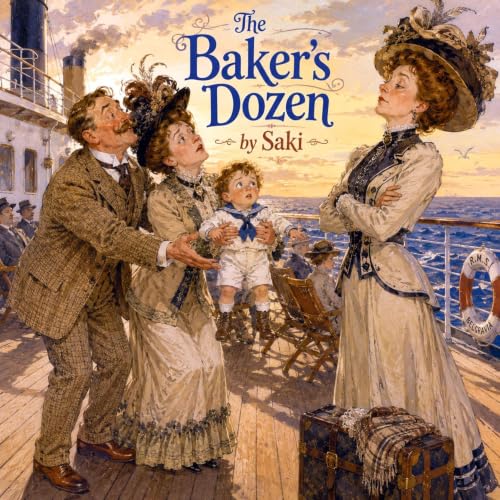
  • The Baker's Dozen — A Humorous Playlet by Saki
    2026/07/01

    Major Richard Dumbarton and Emily Carewe haven't seen each other in years, not since old grudges and other marriages got in the way. A chance reunion aboard an eastward-bound steamer changes that fast, deck chairs bribed into place and all. But romance runs into arithmetic when the subject of children comes up, and the resulting scramble to make the numbers work is pure Saki mischief. A quick, witty shipboard farce about love, superstition, and creative counting.


    Hector Hugh Munro, better known by his pen name Saki, was a British writer active in the early twentieth century, celebrated for short fiction that pairs drawing-room manners with a sly, sometimes wicked wit. His stories favor sudden reversals and characters whose composure cracks under the weight of their own absurdities, whether the setting is a country house, a dinner table, or, here, the deck of an ocean liner. Saki wrote several of his pieces as brief one-act playlets, letting dialogue alone carry the comic timing. He died in 1916, but his stories remain a staple of Edwardian comic fiction for their brevity, their bite, and their refusal to take romance, or superstition, entirely seriously.


    Be sure to check out all of our narrative podcasts at shortstoryverses.com

    Hosted on Acast. See acast.com/privacy for more information.

    続きを読む 一部表示
    12 分
  • Pigs is Pigs — A Classic Farce by Ellis Parker Butler
    2026/07/01

    This story a small masterpiece of exasperation from 1905. Ellis Parker Butler wrote "Pigs Is Pigs" as a jab at corporate red tape, and somehow, more than a hundred years on, it has only gotten funnier. Two guinea pigs arrive at a railway express office. A clerk named Mike Flannery decides they are pigs, the customer insists they are pets, and a single nickel of disagreement sets off a cascade of letters, departments, and, well, arithmetic. You'll see.


    Ellis Parker Butler, 1869 to 1937, was one of America's most prolific humorists, an Iowa-born writer who turned out thousands of stories, essays, and poems across a long career. He published more than thirty books, helped found the Authors' League of America, and wrote for nearly every major magazine of his day. Yet it was a single short story, "Pigs Is Pigs," dashed off in 1905, that made his name. It sold in the hundreds of thousands, inspired stage and screen adaptations, and quietly seeded a whole comic tradition of small creatures multiplying beyond all reason, a lineage that runs straight through to the tribbles of Star Trek. Not bad for two guinea pigs and a stubborn clerk.


    HumorUs is part of Short Storyverses, a growing network of fiction podcasts bringing the world's best stories to your ears. Explore all of our story universes, Litreading, FRIGHTLY, Readastorus, Season's Readings, and more wherever you listen or at shortstoryverses.com

    Hosted on Acast. See acast.com/privacy for more information.

    続きを読む 一部表示
    22 分