エピソード

  • Cynthia Miller - Idriss | How Distrust Fuels Extremism
    2025/12/02

    In this episode of How to Fix Democracy, host Andrew Keen sits down with Cynthia Miller-Idriss - scholar of extremism, founder of the Polarization and Extremism Research and Innovation Lab (PERIL), and author of Man Up: The New Misogyny and the Rise of Violent Extremism. Together they eplore one of democracy's most fragile foundations: trust.

    From gender polarization and the rise of the "manosphere", to the declining institutional confidence, to why young men are increasingly vulnerable to online radicalization, Miller-Idriss explains how mistrust is reshaping politics, culture, and everyday relationships. She also discussed what might work to rebuild trust - from community level engagement to national service models - and why belonging, meaning and purpose might be the most powerful antidotes to extremism.

    A wide-ranging, urgent conversation about loneliness, democracy and whether America can restore trust before it is too late. Miller-Idriss offers a note of cautios optimism: most people, she argues, don't actually want to live this way.

    続きを読む 一部表示
    38 分
  • From FDR to AI: Derek Leebaert on Trust and Democracy
    2025/10/30

    In this episode of How to Fix Democracy, host Andrew Keen speaks with Derek Leebaert - historian, technologist and author of Unlikely Heroes - about the shifting foundations of trust in democracy. From Franklin D. Roosevelt's efforts to rebuild confidence in government during the New Deal era to today's rapid rise of articifical intelligence, Leebaert traces how accelerating technological change has shortened the lifespan in trust in institutions, leaders, and even truth itself.

    As AI transforms knowledge, work and power, is it a threat to democracy or a chance to renew it? Leebaert explores what "responsible AI" might look like - and why transparancy, accountability, and common-sense regulation are vital in restoring trust in a digital age.

    続きを読む 一部表示
    38 分
  • Burt Neuborne | Law, Trust, and the American Constitution
    2025/09/29

    Can democracy survive without trust in the law? In this episode of How to Fix Democracy, host Andrew Keen speaks with Burt Neuborne, founding legal director of the Brennan Center for Justice and professor of law at NYU, about the complex relationship between law and trust in America. From Hobbes and Rousseau to Madison, Lincoln, and the U.S. Constitution itself, Neuborne explores how law can both deter or worst instincts and inspire our better angels.

    続きを読む 一部表示
    39 分
  • Richard Kreitner | Trust, Mistrust, and the Myth of American Unity
    2025/09/09

    Is mistrust a defining feature and flaw in American democracy? Or is it a manifestation of basic opposition against long-term democratic and aspirational concepts such as "all men are created equally"? In this thought provoking conversation author and historian Richard Kreitner joins Andrew Keen to explore the deep mistrust in U.S. political life. Drawing on themes from his book Break it up: Secession, Division, and the Secret History of America's Imperfect Union. Kreitner traces the fractured origins of the American project, argues that national cohesion may be neither possible nor desirable at the continental scale, and makes the provocative case, that mistrust - even secessionist thinking - can sometimes be a rational response to genuine democratic failures. A timely conversation that challenges prevailing narratives about unity and the Constitution in an age of polarization and rising political anxiety.

    続きを読む 一部表示
    32 分
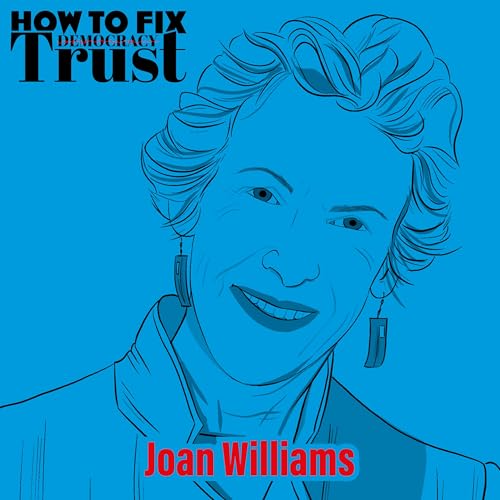
  • Joan Williams | Outclassed: Rebuilding Trust Between Political Elites and the Working Class
    2025/07/01

    Legal scholar and author Joan Williams joins How to Fix Democracy to unpack the breakdown of trust between political elites and the American working class. Drawing from her new book Outclassed, Williams explores how class-blindness, cultural signaling, and economic inequality have shaped political divides - and what the left must do to win back working class voters. From language to long-term coalition-building, this episode offers a sobering but essential roadmap for restoring trust.

    続きを読む 一部表示
    33 分
  • Jonathan Rauch | High Tech and Low Trust - An American Quandary
    2025/06/06

    In this episode Brookings's scholar Jonathan Rauch explores America's historically unprecendented position as a "high-tech, low trust society" - a dangerous combination where technological advancement coexists with collapsing social trust. Trust levels have plummeted since the 1970s warns Rauch, with America now ranking 52nd globally in believing strangers would return a lost wallet. He traces this decline to systematic attacks on institutions from both left and right, formented by libertarian populists. He warns that without rebuilding trust - which is seven times more important in determining life satisfaction- democracy itself will remain at existential risk.

    続きを読む 一部表示
    38 分
  • Sally Lehrman & The Trust Project
    2025/04/16

    In this episode of How to Fix Democracy, host Andrew Keen, speaks with journalist Sally Lehrman, founder of the Trust Project - a global initiative aimed at restoring trust in journalism. They discuss the origins of the project, inspired in part by the 1947 Hutchins Commission report on media responsibility, and how today's digital landscape has blurred the lines between news and content. Lehrman outlines the Trust Project's "Eight Trust Indicators" which help news outlets demonstrate transparency, ethical standards, and commitment to diverse voices. She also addresses the challenges posed by ideological biais, opinion vs news, and journalism on platforms such as Substack. The conversation explores how media organizations can rebuild credibility, empower the public, and support a healthy democracy through responsible, clearly-labeled reporting.

    続きを読む 一部表示
    33 分
  • Francis Fukuyama on How to Fix Trust
    2025/03/06

    In this episode, host Andrew Keen sits down with Francis Fukuyama to explore the concept of trust. Fukuyama defines it as a byproduct of virtuous behaviors like reliability, truthfulness, transparency, and keeping commitments. He describes trust as a crucial "lubricant" for social interactions and distinguishes between interpersonal and institutional trust, both of which are built through experiences of reliability and can be eroded by betrayal and disappointment. Fukuyama discusses how trust originates within families and extends to broader social circles. He also examines the global decline in trust over the past 30 years, attributing it to several key factors: the rise of technology and anonymous online interactions, higher education fostering more critical thinking, increased transparency exposing institutional failures, and growing political polarization reinforcing tribal identitities. Connecting trust to his earlier work on "the struggle for recognition, " he argues that as liberal democracies secure equal rights, individuals increasingly seek recognition for specific identities - such as religion, ethnicity, or gender - which can contribute to societal fragmentation. To address this decline, Fukuyama emphasizes the importance of governments reliably delivering on promises and providing expected services. However, he acknowledges that while competent governance is essential, it alone may not be enough to fully restore trust in institutions and society.

    続きを読む 一部表示
    32 分