『How I Operate』のカバーアート

How I Operate

How I Operate

著者: The Plastics Fella
無料で聴く

The Plastics Fella talks to leading expert in Plastic Surgery. How I Operate takes you behind the scenes of plastic and reconstructive surgery, exploring the stories, expertise, and decisions behind the work. Each episode features candid conversations with people shaping the industry, from their clinical process to the lessons they’ve learned along the way.The Plastics Fella 衛生・健康的な生活 身体的病い・疾患
エピソード
  • Inside the Creation of the Mathes & Nahai Classification, With Dr. Foad Nahai
    2026/07/13

    📩 Subscribe to The Plastics Paper Newsletter:
    www.theplasticsfella.com/theplasticspaper-newsletter/

    In the second episode of How I Operate, Ryan Sugrue (ThePlasticsFella) sits down with Professor Foad Nahai, co-creator of the Mathes & Nahai classification, one of the most influential frameworks in reconstructive surgery.


    More than four decades after its publication, the classification remains a cornerstone of plastic surgery training and clinical practice. Professor Nahai reflects on the anatomy lab discoveries, clinical challenges, and collaborative work with Dr. Stephen Mathes that led to the development of a system that transformed how surgeons understand muscle flaps. Together, they explore the origins of the classification, its lasting relevance, and the principles that continue to shape reconstructive surgery today.


    Key Takeaways:

    • How the Mathes & Nahai classification was developed from anatomical research.
    • Why understanding vascular anatomy changed the reliability of muscle flaps.
    • The role of anatomy in advancing reconstructive and microsurgical techniques.
    • Lessons learned from creating a framework that has remained relevant for over 40 years.
    • Why simplicity, clinical relevance, and practicality are key to lasting surgical innovation.

    Chapters:

    00:00 – Introducing the Mathes & Nahai Classification
    04:09 – Muscle Flaps Before the Classification
    09:04 – Reconstruction, Microsurgery, and a Changing Specialty
    13:13 – Why Anatomy Still Matters
    17:06 – Discovering the Pattern in the Anatomy Lab
    22:40 – Publishing the Research and Early Reception
    24:40 – Building a Framework That Lasted
    31:16 – Seeing the Classification Adopted Worldwide
    34:18 – Clinical Impact Beyond the Classification
    38:48 – Advice for the Next Generation of Surgeons

    Thank you for listening to How I Operate. Brought to you by ThePlasticsFella.


    If you enjoyed this episode, please follow the show, leave a rating, and share it with colleagues. New episodes are released bi-weekly, exploring the ideas, techniques, and innovations that continue to shape modern plastic surgery.

    続きを読む 一部表示
    43 分
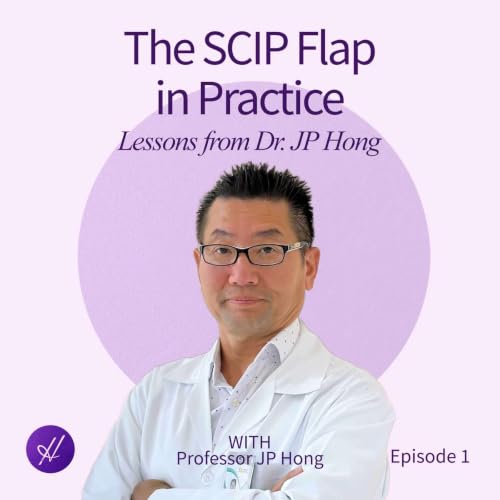
  • The SCIP Flap in Practice: Lessons from Dr. JP Hong
    2026/06/29

    📩 Read more on thePlasticsFella.com and subscribe to The Plastics Paper Newsletter:
    www.theplasticsfella.com/theplasticspaper-newsletter/


    In the first episode of How I Operate, Ryan Sugrue is joined by Professor JP Hong, one of the leading innovators in modern reconstructive microsurgery and a pioneer of the SCIP flap.


    From its origins as a modification of the traditional groin flap to its evolution into one of the most versatile perforator flaps in reconstructive surgery, Professor Hong shares the anatomical discoveries, technical refinements, and clinical insights that transformed the SCIP flap into a global workhorse. Along the way, he discusses the importance of continuous innovation, the role of ultrasound in modern flap surgery, and the principles that guide his approach to surgical problem-solving.


    Key Takeaways:

    • How the SCIP flap evolved from the traditional groin flap.
    • The anatomical principles that improved flap reliability and reduced complications.
    • Why understanding perforator anatomy remains fundamental to successful reconstruction.
    • The growing role of ultrasound in flap planning and surgical decision-making.
    • How incremental improvements can transform a good operation into a great one.
    • Professor Hong's philosophy on innovation, teaching, and building a lasting surgical legacy.

    Chapters:

    00:00 – Introducing the SCIP Flap
    03:20 – The Evolution of the Groin Flap
    09:15 – Early Modifications and the Work of Dr Kashima
    16:30 – Understanding Perforator Anatomy
    24:45 – Improving Reliability Through Anatomical Research
    34:20 – The Role of Veins and Flap Design
    45:10 – When to Use (and Not Use) the SCIP Flap
    55:35 – Ultrasound as a Microsurgical Tool
    01:06:30 – SCIP Flap Design and Surgical Technique
    01:25:40 – Innovation, Legacy, and Lessons for Future Surgeons

    Thank you for listening to How I Operate. Brought to you by ThePlasticsFella.

    If you enjoyed this episode, please follow the show, leave a rating and review, and share it with colleagues. New episodes are released bi-weekly, featuring the surgeons, innovators, and ideas that continue to shape modern plastic surgery.

    続きを読む 一部表示
    1 時間 1 分
  • Trailer - How I Operate
    2026/06/07

    We’re excited to announce the upcoming release of our new podcast series, “How I Operate”, featuring discussions with leading experts in plastic and reconstructive surgery.


    Here’s a teaser from an upcoming episode where Professor JP Hong explores the SCIP flap and the evolution of modern reconstructive microsurgery.
    This upcoming podcast series is designed to go beyond textbook learning and give insight into how world experts approach operative planning, technique, and decision-making.


    🎙️ Stay tuned for more details on the release!

    続きを読む 一部表示
    2 分
adbl_web_anon_alc_button_suppression_t1
まだレビューはありません